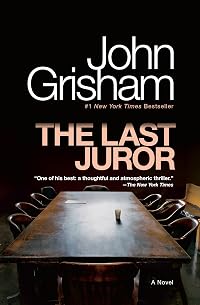
The Last Juror
by John Grisham
On This Page
Description
In 1970, one of Mississippi's more colorful weekly newspapers went bankrupt. To the surprise and dismay of many, ownership was assumed by a 23 year-old college dropout, named Willie Traynor. The future of the paper looked grim until a young mother was brutally raped and murdered by a member of the notorious Padgitt family. Willie Traynor reported all the gruesome details and the paper began to prosper. The murderer, Danny Padgitt was tried before a packed courthouse in Clanton, Mississippi. show more The trial came to a startling and dramatic end when he was found guilty. He was sentenced to life in prison, but in Mississippi, in 1970, "life" didn't necessarily mean "life" and nine years later Danny Padgitt managed to get himself paroled. He returned to Ford County and the retribution began. show lessTags
Recommendations

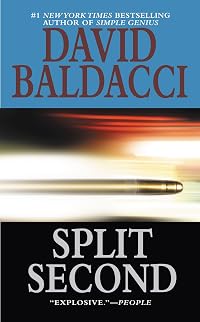
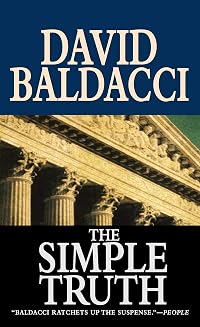
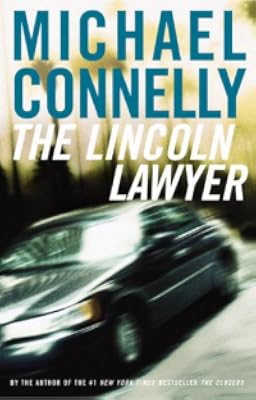
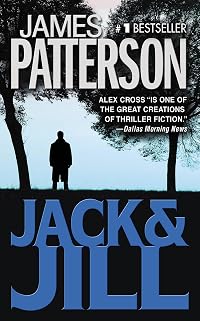

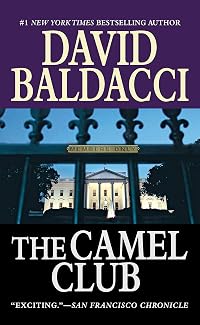
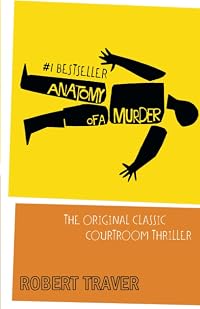
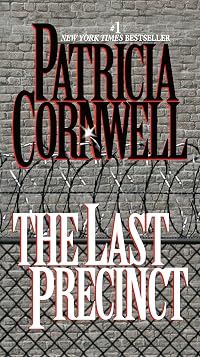
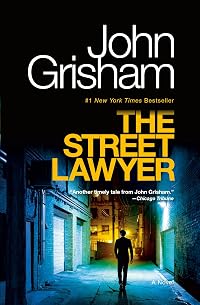
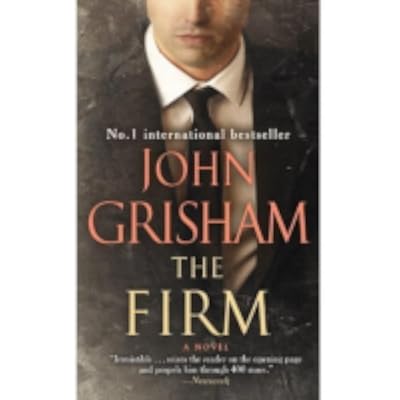
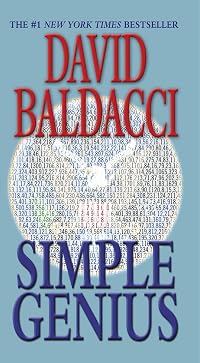
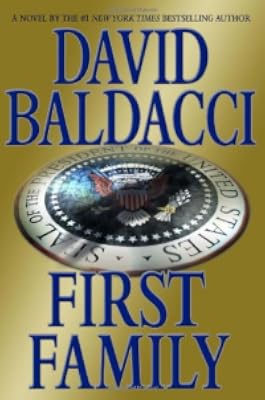
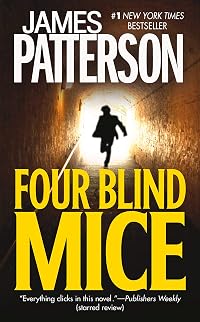
Member Recommendations
Member Reviews
Willie Traynor, a newly graduated journalist, moves from the north to a small town in Ford County, Mississippi, and takes over the local newspaper. In 1970, shortly after he’s taken over the paper, Danny Padgitt is arrested for raping and murdering a young mother, in her home, while her kids woke up and witnessed what was happening. Willie’s coverage of the story puts him in the path of the entire Padgitt family, who tend to keep to themselves. In the meantime, Willie has become friends with a local black woman, a woman who becomes the first black woman to serve on a jury in Ford County. After the trial, the town moves on and Willie continues to cover the news over the next decade or so… and jury members from the old Padgitt trial show more start to turn up, murdered.
I really liked this one. I have to admit that the middle section slowed down, but I really liked the first section and it picked up again at the end. I also really liked the friendship between Willie and Miss Callie. show less
I really liked this one. I have to admit that the middle section slowed down, but I really liked the first section and it picked up again at the end. I also really liked the friendship between Willie and Miss Callie. show less
OK, the little free library found a good one this time. I would never have paid money to find out whether Grisham was reasonable, but I saw this one and though "what have I got to lose?"
And I really enjoyed it. Characterization was well done, the language was not objectionable (although the rape incident itself was definitely horrendous). He kept me in suspense most of the way through, although when I was about 75% done, I wondered how he could possibly knock off all the remaining jurors.
I will return this book to the library, and probably read more by this author. One of my friends claimed that Grisham stories have lots of plot holes, but I didn't find it so in this one, anyway. At least not bad enough to bother me.
And I really enjoyed it. Characterization was well done, the language was not objectionable (although the rape incident itself was definitely horrendous). He kept me in suspense most of the way through, although when I was about 75% done, I wondered how he could possibly knock off all the remaining jurors.
I will return this book to the library, and probably read more by this author. One of my friends claimed that Grisham stories have lots of plot holes, but I didn't find it so in this one, anyway. At least not bad enough to bother me.
This book was different than I envisioned it based on the back cover blurb. The blurb talked more about Danny Padgitt swearing to get revenge on those who helped convict him and that life in prison isn't really life in prison, so Padgitt is now out. In reality, that was only a small portion of the book. The book focused more on how Willie Traynor came to Clanton and how he met Callie Ruffin. It details their friendship's development and how it endures. Willie met Callie prior to the trial. She became one of the jurors for Padgitt's trial and the county's first African American juror.
So much better than The King of Torts. This is written by a young regional newspaper editor, an outsider in a small country community – so much of the subject matter is social observation, alongside the usual riveting legal case. We touch on segregation and de-segregation, mob families, huge families, the role of an editor in a small town, insanity, the Vietnam War, the popularisation of drugs, and the difficulties of being accepted into a closed community, in 500 short pages (I whipped through it and would have completed it easily in one sitting had I not been 5 days from getting married and thus spewing organisational information from the eyeballs).
Because Grisham doesn’t rely on the thrill of the money and the litigation, the show more pace is a little slower but much more pleasant. He also takes the time to develop some great characters (the Italian-speaking, 7 PhDs-raising chef extraordinaire Miss Callie has to be one of his best creations) and entertaining atmosphere – the brand new editor having war declared on him in a courtroom and delivered via a bomb, for example – which puts this several shelves ahead of King of Torts. show less
Because Grisham doesn’t rely on the thrill of the money and the litigation, the show more pace is a little slower but much more pleasant. He also takes the time to develop some great characters (the Italian-speaking, 7 PhDs-raising chef extraordinaire Miss Callie has to be one of his best creations) and entertaining atmosphere – the brand new editor having war declared on him in a courtroom and delivered via a bomb, for example – which puts this several shelves ahead of King of Torts. show less
Seems like the 'vintage' Grishams are the best; this was an intriguing plot, albeit perhaps a little far-fetched. The premise that the judicial system in "the Deep South" is deeply corrupt might not be credible, although it is as prone to unscrupulous manipulation as many elected judge and constabulary forces have been shown. The character development was superb. Grisham's smooth writing persuades you to buy into the scenarios. His vintage endings are unpredictable. In a re-reading, the story was less entertaining and seemed to drag repetitively in places.
I haven't read a John Grisham book in many years, though I did read his novels fervently in my early teen years. This one has that comfortable Grisham readability, but no real intrigue or intensity. The plot just kind of hums along. Predictable and forgettable, kind of like a chill paddle boat ride.
Edit: I hadn't read the back cover or Goodreads summary before touching the book or leaving my review. If you DID have that info, I would say that book would go from "chill" to tedious. It's predictable without a plot pathway.
Edit: I hadn't read the back cover or Goodreads summary before touching the book or leaving my review. If you DID have that info, I would say that book would go from "chill" to tedious. It's predictable without a plot pathway.
Grisham’s Greatest
Using a small Mississippi town during the 1970s as a backdrop, John Grisham renders, what I believe, is his finest novel.
Unforgettable characters, traumatic events, unforeseen twists and a life-like conclusion combine to create this fast-paced read. Too many of Grisham’s books, in my opinion, conclude with forced endings. It is almost as if the author is worn-out by the plot and his characters so he forces the story into an unreal finish.
That is not the case with this book. Set in the south during desegregation, the end of the Viet Nam War and the beginning of suburban and rural sprawl, Grisham characters are believable. They reflect the times in which they live. They live; they die. They enjoy success; they show more struggle with life’s dilemmas.
This is not your typical Grisham novel. I, for one, am grateful for that. Novelists should grow with experience. With this book, Grisham leaps from the category of “popular novelist” to “great writer.” show less
Using a small Mississippi town during the 1970s as a backdrop, John Grisham renders, what I believe, is his finest novel.
Unforgettable characters, traumatic events, unforeseen twists and a life-like conclusion combine to create this fast-paced read. Too many of Grisham’s books, in my opinion, conclude with forced endings. It is almost as if the author is worn-out by the plot and his characters so he forces the story into an unreal finish.
That is not the case with this book. Set in the south during desegregation, the end of the Viet Nam War and the beginning of suburban and rural sprawl, Grisham characters are believable. They reflect the times in which they live. They live; they die. They enjoy success; they show more struggle with life’s dilemmas.
This is not your typical Grisham novel. I, for one, am grateful for that. Novelists should grow with experience. With this book, Grisham leaps from the category of “popular novelist” to “great writer.” show less
Members
- Recently Added By
Lists

Legal Stories
84 works; 12 members

Crime and Mysteries to Read
746 works; 31 members
Southern Fiction
212 works; 52 members

Blue Pyramid 1,276 Best Books of All Time
1,248 works; 32 members

Books Read in 2017
4,249 works; 129 members

Books Read in 2004
200 works; 7 members

Swinging Seventies
255 works; 18 members
Author Information

323+ Works 291,092 Members
John Grisham was born in Jonesboro, Arkansas on February 8, 1955. He received a bachelor's degree in accounting from Mississippi State University. He was admitted to the bar in Mississippi in 1981 after receiving a law degree from the University of Mississippi, specializing in criminal law. While a lawyer in private practice in Southaven, show more Mississippi, Grisham served as a Democrat in the Mississippi House of Representatives from 1983 until 1990. He left the law and politics to become a full-time author. His first novel, A Time to Kill, was published in 1989. His other novels include The Partner, The Street Lawyer, The Testament, The Brethren, The Summons, The King of Torts, Bleachers, The Last Juror, The Broker, Playing for Pizza, The Appeal, Calico Joe, The Racketeer, Gray Mountain, Rogue Lawyer, The Confession, The Litigators, The Whistler, Camino Island, The Rooster Bar, and the Theodore Boone series. Several of his novels were adapted into films including The Firm, The Pelican Brief, The Client, A Time to Kill, The Rainmaker, The Chamber, A Painted House, The Runaway Jury, and Skipping Christmas. (Bowker Author Biography) show less
Some Editions
Awards and Honors
Distinctions
Work Relationships
Is contained in
Is abridged in
Reader's Digest Condensed Books: The Last Juror • The Various Haunts of Men • The Codex • Life and Limb by Reader's Digest
Het Beste Boek 231: Het laatste jurylid / Nordica / Lijf en leden / De valse belofte by Reader's Digest
Has as a student's study guide
Has as a teacher's guide
Common Knowledge
- Canonical title*
- Het laatste jurylid
- Original title
- The Last Juror
- Original publication date
- 2004-02-03
- People/Characters
- Joyner William "Willie" Traynor; Danny Padgitt; Harry Rex Vonner; Hank Hooten; Esau Ruffin; Baggy Suggs (show all 63); Wiley Meek; Sam Ruffin; Massimo "Max" Ruffin, Ph.D.; Leonardo "Leon" Ruffin, Ph.D.; Mackie Don Coley; Emma Caudle; Wilson "Spot" Caudle; Walter Sullivan; Rhoda Kassellaw; Michael Kassellaw; Teresa Kassellaw; Aaron Deece; Max Hocutt; Wilma Hocutt; Gilma Hocutt; Melberta Hocutt; Hon. Reed Loopas; Lucien Wilbanks; Rocky Childers; Mackey Don Coley; Piston; Calia "Miss Callie" Ruffin; Ernie Gaddis; Walter Pickard; Alberto "Al" Ruffin, Ph.D.; Roberto "Bobby" Ruffin, Ph.D.; Gloria Ruffin Sanderford, Ph.D.; Charlotte Ruffin, Ph.D.; Mario Ruffin, Ph.D.; Hank Hooten; Chuck Elliot; Ginger McClure; Mo Teale; Lydia Vince; Malcolm Vince; Lettie Padgitt; Davey Bigmouth Bass; Stan Atcavage; Pud Perryman; Harvey Kohn; Margaret Wright; Theo Morton; Bubba Crockett; Darrell Radke; Barrett Ray Jeter; Horace Adler; Lenny Fargarson; Gary McGrew; Ray Noble; Travel McNatt; Lester Klump, sr.; Lester Klump, jr.; Ethel Twitty; J.B. Cooper; Earl Youry; Maxine Root; Rufus Buckley
- Important places
- Clanton, Mississippi, USA; Ford County, Mississippi, USA; Memphis, Tennessee, USA; Corinth, Mississippi, USA; Iuka, Mississippi, USA; Broomfield, Mississippi, USA
- First words
- After decades of patient mismanagement and loving neglect, The Ford County Times went bankrupt in 1970.
- Last words
- (Click to show. Warning: May contain spoilers.)Eventually, slowly, with great agony, I began the last obituary.
- Original language
- English
*Some information comes from Common Knowledge in other languages. Click "Edit" for more information.
Classifications
Statistics
- Members
- 9,213
- Popularity
- 1,153
- Reviews
- 102
- Rating
- (3.59)
- Languages
- 16 — Catalan, Czech, Danish, Dutch, English, Finnish, French, German, Greek, Hungarian, Italian, Norwegian (Bokmål), Polish, Portuguese, Spanish, Swedish
- Media
- Paper, Audiobook, Ebook
- ISBNs
- 108
- UPCs
- 1
- ASINs
- 41