On This Page
Description
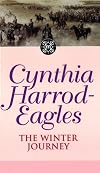
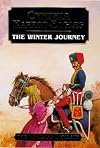
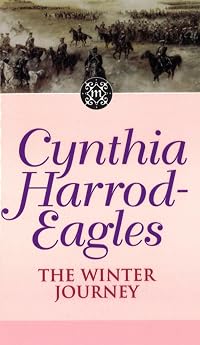
In 1851 the fortunes of the Morland family are more buoyant than they have been for years. Morland Place is recovering under Benjamin's steady hands - happy at last with Sibella. Charlotte, now Duchess of Southport, is shortly to give birth to hersecond child and on the point of opening her modern hospital for the poor. Cavendish's engagement to the ethereally beautiful but slightly silly Miss Phipps causes a stir in the drawing rooms of Mayfair and his wedding causes his family some show more misgivings. Then the storms in Europe spill in to Britain when the army is forced to defend Turkey against the Tsar. Within weeks Cavendish is in the Crimea and disappears in the Charge of the Light Brigade. Another moving and beautifully portrayed episode in the riveting Morland saga. show lessTags
Recommendations

















Member Reviews
A brilliant 20th instalment of the Morland Dynasty series. This one packs so much in as Charlotte, Duchess of Southport, sets up a hospital and her brother, Cavendish, leaves to fight in the Crimea. There is so much history between the pages of these books and I especially love to see women subverting the belief that a lady should not be interested in medicine. Fabulous - onto book 21 now.
Medicine, marriage, and the military. These are the central historical developments that fill Cynthia Harrod-Eagles’s 20th Morland Dynasty novel. The Winter Journey begins in 1851, with the central characters from The Hidden Shore coping with marriage and/or parenthood; some happily, and others not so happily. Charlotte has more or less taken over the role of principal Morland heroine, but Fanny and Mary get some attention, as does Benedict, Rosamund, and Lucy.
The focus on Charlotte means that much of the action takes place in London, rather than in Yorkshire, but Charlotte’s charitable activities allow readers to step outside the world of the rich and see a different side of London. This is, I believe, one of the advantages that show more the historical fiction author has over authors from the actual period. Yes, Victorian novelists wrote about the poor, often with great compassion and insight, but it would have been less than respectable for them to write in such detail about the living conditions of the poor. I’ve also been continually impressed with how she shows the limitations of various mind-sets of the past without adopting a sense of “presentism” in which today’s attitudes are always to be preferred. Every era has strengths and weaknesses, and Harrod-Eagles seems to understand that. It’s one of the things that makes this series so good.
Besides Charlotte’s charitable work, which focuses on medical reform and advances and allows her to cross paths with Florence Nightingale, the book also looks at the power dynamics between husbands and wives, mostly though the eyes of Fanny. The last half of the book takes several characters to Russia for the Crimean War and the charge of the light brigade. As always, Harrod-Eagles does a wonderful job writing battle scenes, and the details about the field hospitals and the horrifying winter the soldiers faced in the Crimea made for gripping reading.
See my complete review at Shelf Love. show less
The focus on Charlotte means that much of the action takes place in London, rather than in Yorkshire, but Charlotte’s charitable activities allow readers to step outside the world of the rich and see a different side of London. This is, I believe, one of the advantages that show more the historical fiction author has over authors from the actual period. Yes, Victorian novelists wrote about the poor, often with great compassion and insight, but it would have been less than respectable for them to write in such detail about the living conditions of the poor. I’ve also been continually impressed with how she shows the limitations of various mind-sets of the past without adopting a sense of “presentism” in which today’s attitudes are always to be preferred. Every era has strengths and weaknesses, and Harrod-Eagles seems to understand that. It’s one of the things that makes this series so good.
Besides Charlotte’s charitable work, which focuses on medical reform and advances and allows her to cross paths with Florence Nightingale, the book also looks at the power dynamics between husbands and wives, mostly though the eyes of Fanny. The last half of the book takes several characters to Russia for the Crimean War and the charge of the light brigade. As always, Harrod-Eagles does a wonderful job writing battle scenes, and the details about the field hospitals and the horrifying winter the soldiers faced in the Crimea made for gripping reading.
See my complete review at Shelf Love. show less
#20: 1851-1855: Covers the Great Exhibition; Crimean War
In The Winter Journey, the story of the Morland family shifts focus for a bit. A distant cousin arrives from South Carolina in time for the Great Exhibition. Charlotte, happily married to Oliver Fleetwood, uses her wealth and influence to help build a hospital, in London just as cholera strikes. Her brother, Cavendish, is a cavalry officer called to the Crimea; and Oliver, an intelligence officer, goes there too, along with Charlotte.
The family takes a bit of a back seat to the historical events that are taking place. The Crimean War takes up a good chunk of the novel, especially the tragic Charge of the Light Brigade, which I’d obviously heard about but never really knew much show more of. Cynthia Harrod-Eagles gives her readers a good fictional account of what happened that day, as well as the other battles that occurred during that war. It’s the Morlands’ participation in the big (and small) events in history that makes this series so appealing, and this novel didn’t disappoint in that regard. As you might expect from a book in this series, lots of famous people make cameos; through Charlotte’s hospital work, predictably she meets Florence Nightingale. But I do enjoy seeing these real people from history walk across the stage at various points.
As I’ve said the family watch from the sidelines as history is taking place; but what I love about these characters is that Harrod-Eagles never foces a modern mindset upon them. They all behave with this same mores that you would expect from the period, so that Charlotte isn’t some modern feminist or something! In this way, the author makes her characters seem more real. show less
In The Winter Journey, the story of the Morland family shifts focus for a bit. A distant cousin arrives from South Carolina in time for the Great Exhibition. Charlotte, happily married to Oliver Fleetwood, uses her wealth and influence to help build a hospital, in London just as cholera strikes. Her brother, Cavendish, is a cavalry officer called to the Crimea; and Oliver, an intelligence officer, goes there too, along with Charlotte.
The family takes a bit of a back seat to the historical events that are taking place. The Crimean War takes up a good chunk of the novel, especially the tragic Charge of the Light Brigade, which I’d obviously heard about but never really knew much show more of. Cynthia Harrod-Eagles gives her readers a good fictional account of what happened that day, as well as the other battles that occurred during that war. It’s the Morlands’ participation in the big (and small) events in history that makes this series so appealing, and this novel didn’t disappoint in that regard. As you might expect from a book in this series, lots of famous people make cameos; through Charlotte’s hospital work, predictably she meets Florence Nightingale. But I do enjoy seeing these real people from history walk across the stage at various points.
As I’ve said the family watch from the sidelines as history is taking place; but what I love about these characters is that Harrod-Eagles never foces a modern mindset upon them. They all behave with this same mores that you would expect from the period, so that Charlotte isn’t some modern feminist or something! In this way, the author makes her characters seem more real. show less
Another interesting tale in the saga of the Morland family. Good descriptions of the war in Crimea.
Ratings
Members
- Recently Added By
Author Information

127+ Works 5,849 Members
Cynthia Harrod-Eagles was born in London in 1948. She attended the University of Edinburgh and University College London, where she studied English, history and philosophy. She wrote her first novel while in college and won the Young Writers' Award for The Waiting Game in 1972, but did not become a full-time writer until 1979 with the start of the show more Morland Dynasty series. In 1993, she won the RNA Novel of the Year Award for Emily, the third volume of the Kirov Trilogy. She also writes the Bill Slider Mystery series and under the pen names Elizabeth Bennett and Emma Woodhouse. (Bowker Author Biography) show less
Series

Common Knowledge
- Canonical title
- The Winter Journey
- Original publication date
- 1997-05-01
- People/Characters
- Benedict Morland; Sibella Morland; Mary Morland; Harry Anstey; Fenwick Morland; Charlotte, Duchess of Southport (show all 15); Oliver, Duke of Southport; Rosamund Countess of Blatchford; Jesmond, Duke of Blatchford; Cavendish, Lord Blithfield; Alice, Lady Blithfield, nee Phipps; Tom Weston; Emily Weston, nee Thorn; Fanny Anthony, nee Hobsbaum; Dr. Philip Anthony
- Important places
- London, England, UK; Crimea; Manchester, England, UK
- Important events
- Crimean War
- Dedication
- To Tony, who gets me through, with love and thanks
- First words
- 1851
It was cool when they rode out in the morning, with that pale, clear coolness of a June day that is going to be hot. - Last words
- (Click to show. Warning: May contain spoilers.)She felt the carriage dip to the left as the footman climbed up, and then the coachman cracked his whip, the horses took the collar, and they moved off into the traffic, homeward bound.
- Original language
- English
Classifications
Statistics
- Members
- 64
- Popularity
- 487,461
- Reviews
- 4
- Rating
- (4.13)
- Languages
- English
- Media
- Paper, Audiobook, Ebook
- ISBNs
- 3
- ASINs
- 4