A Wayside Tavern
by Norah Lofts
On This Page
Description
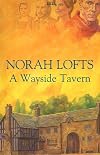
A Wayside Tavern tells the story of a Suffolk drinking place from the end of the Roman occupation of Britain, until the present day. The Roman veteran, crippled and left behind, worshipped Mithras, so the place became known as the One Bull and down through the centuries it became a clearing house for contraband, a miniature Hell Fire Club, a fashionable hotel, a mere pub. Across the yard, was the church of St Cerdic, king and martyr, who fought the Danes and was famous for the miracles show more performed at his shrine. His remains were lost in the Reformation but something remained. Inside the inn, despite all external changes, one passion raged - to retain possession. show lessTags
Recommendations






























Member Reviews
Paulus, a crippled Roman soldier deserted by his legion at the end of the Roman occupation of Britain, and Gilda, a former slave girl - dedicate a wine shop with a mosaic-patterned floor to Mithras - the god whom the soldier worships. So it was from such humble beginnings that the 'One Bull at Mallow' was born. Yet, from the fourth century right down to present-day Suffolk, the building has remained in the hands of one particular family, known as the Gildersons. And, through the years the building has served a variety of different purposes: wine shop, ale house, coaching inn, hotel, and a pub of varying reputation - yes, the One Bull at Mallow has always provided respite for many weary travelers during its long and rich history.
Just show more across the inn's courtyard, stands the church of St. Cerdic, dedicated to the memory of a sixth-century martyr - someone who died at the hands of the Danes. Since its creation, the church has been closely associated with the One Bull - and St. Cerdic was venerated until the dissolution of the monasteries. His image was commemorated in a stained glass window which even a carefully hidden pig of lead couldn't protect; yet his grave, once a place of miracles, still remains a place for remarkable changes of heart.
Yet through all these centuries of upheaval - while the One Bull expands and contracts over the ages - battling for survival as a smuggling post, a secretive men's club, as well as the site of murder and suicide, it has remained in the hands of the Gilderson family throughout the generations. However, the One Bull has always represented a source of hope and disillusionment for the family as well. A Wayside Tavern is ultimately a story of survival: survival of a place, of a people, and of the legacies that they leave behind them.
I have to say that as with so many of Norah Lofts books, I thoroughly enjoyed reading this story. I found it to have an intriguing plot that was historically accurate and that really captured my attention right from the beginning. Although having said that, I must admit that at least in my own opinion, A Wayside Tavern by Norah Lofts was perhaps not her best work. However, I would still give this book a very definite A+! show less
Just show more across the inn's courtyard, stands the church of St. Cerdic, dedicated to the memory of a sixth-century martyr - someone who died at the hands of the Danes. Since its creation, the church has been closely associated with the One Bull - and St. Cerdic was venerated until the dissolution of the monasteries. His image was commemorated in a stained glass window which even a carefully hidden pig of lead couldn't protect; yet his grave, once a place of miracles, still remains a place for remarkable changes of heart.
Yet through all these centuries of upheaval - while the One Bull expands and contracts over the ages - battling for survival as a smuggling post, a secretive men's club, as well as the site of murder and suicide, it has remained in the hands of the Gilderson family throughout the generations. However, the One Bull has always represented a source of hope and disillusionment for the family as well. A Wayside Tavern is ultimately a story of survival: survival of a place, of a people, and of the legacies that they leave behind them.
I have to say that as with so many of Norah Lofts books, I thoroughly enjoyed reading this story. I found it to have an intriguing plot that was historically accurate and that really captured my attention right from the beginning. Although having said that, I must admit that at least in my own opinion, A Wayside Tavern by Norah Lofts was perhaps not her best work. However, I would still give this book a very definite A+! show less
I like all of Norah Lofts books. This is sort of like Ken Follet's Pillars of the Earth books, but better. It's just about a tavern instead of a church.
Ratings
Members
- Recently Added By
Lists

History in the long view
55 works; 3 members
Author Information

84+ Works 6,088 Members
Celebrated novelist Norah Lofts perfected the art of bringing the past alive in her works of historical fiction. She remains one of England's most distinguished and best loved women of letters, selling more than a million books and captivating generations of readers. Lofts' first novel, "I Met a Gypsy", won the American Booksellers' Award for show more 1935. In her long and prolific career, she wrote more than 60 books of nonfiction, biography and historical fiction, animating history and yet preserving historical accuracy. In works such as "Scent of Cloves" (1940), "Bless This House" (1954), and "Crown of Aloes" (1979), period detail and language are blended with a masterful storytelling technique. Lofts is also well known for biographical novels about great and fascinating women of history such as Anne Boleyn and Catherine of Aragon. In addition, Lofts has written thrillers under the pseudonym Peter Curtis and novels as Juliet Astley. Norah (Robinson) Lofts was born in Norfolk, England on August 27, 1904. She credited her history-teaching years, 1925 to 1936, for developing a sense of history which became the foundation for her writings. Married and the mother of two sons, she lived in an ancient English city, among medieval ruins, in a 250-year-old house. She died there on September 10, 1983. (Bowker Author Biography) show less
Common Knowledge
- Original publication date
- 1980
- Epigraph
- And as the cock crew, those who stood before
The Tavern shouted - "Open then the door!
You know how little time we have to stay,
And, once departed, may return no more."
--Omar Khayyam
...the present, like a note in music is nothing
save as it appertains to the past and what is to come.
--W.S. Landor - First words
- "Deserted," on of the men in the front rank said as the little settlement came into view.
- Last words
- (Click to show. Warning: May contain spoilers.)Tonight, however, the creaking did not sound sad or plaintive, just blatantly triumphant.
Classifications
Statistics
- Members
- 127
- Popularity
- 256,196
- Reviews
- 2
- Rating
- (3.62)
- Languages
- English, Finnish
- Media
- Paper, Audiobook, Ebook
- ISBNs
- 13
- ASINs
- 4