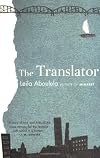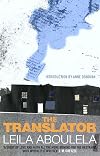
The Translator
by Leila Aboulela
On This Page
Description
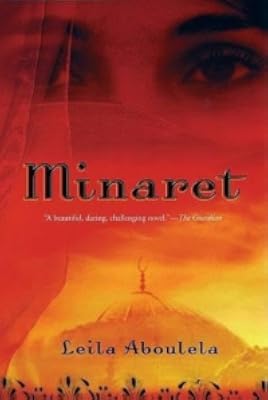
American readers were introduced to the award-winning Sudanese author Leila Aboulela with Minaret, a delicate tale of a privileged young African Muslim woman adjusting to her new life as a maid in London. Now, for the first time in North America, we step back to her extraordinarily assured debut about a widowed Muslim mother living in Aberdeen who falls in love with a Scottish secular academic. Sammar is a Sudanese widow working as an Arabic translator at a Scottish university. Since the show more sudden death of her husband, her young son has gone to live with family in Khartoum, leaving Sammar alone in cold, gray Aberdeen, grieving and isolated. But when she begins to translate for Rae, a Scottish Islamic scholar, the two develop a deep friendship that awakens in Sammar all the longing for life she has repressed. As Rae and Sammar fall in love, she knows they will have to address his lack of faith in all that Sammar holds sacred. An exquisitely crafted meditation on love, both human and divine, The Translator is ultimately the story of one woman's courage to stay true to her beliefs, herself, and her newfound love. show lessTags
Recommendations










Member Reviews
After the untimely death of her husband, Sammar sent her infant boy back to her family in Sudan and stayed in Aberdeen, Scotland, trying to knit her life back together while grieving and working as a translator. One of the professors she often works with is Rae, an Islamic scholar who understand her religion and the way she thinks. It is almost inevitable that the two of them will try to find a way towards each other. Except that for Sammar, Islam is her life - she is born to be a wife and she is Muslim first and anything else after that. Rae on the other hand studies and understands it - but does not believe and does not want to convert (and have a lot of valid reasons besides the fact that he simply does not believe).
That could have show more been the setup for a wonderful slow burn of a novel. Using the two different settings for the two parts of the novel (the cold Aberdeen and the sunny Sudan) add even more to the feeling of separation. Sammar and Rae do not seem to have anything in common and yet, their connection is there - even when they both deny it. Except that Sammar is unwilling to change and consider anything but what she thinks is right - even if that means never seeing Rae again.
And herein lies the problem. Had the roles been reversed, with the man insisting on his faith and his way and the woman being expected to submit to it and change, the novel would have probably never been published. Writing the novel this way, with Sammar essentially filling that cliched male role of past romance novels, diminishes the power of the novel considerably. It could have been an exploration of faith and religion (not even remotely the same except in Sammar's thinking) and of finding a way to bridge the differences between cultures. Instead it ended up a reversed romance cliche more than anything.
The writing is good and there are a lot of well-written and well-thought sequences in the book. It probably draws on the author's life in places and these insights into her thinking do make up for the strained main story. I just wish she had not tried to mold it so close to the standard stories (with the genders reversed). show less
That could have show more been the setup for a wonderful slow burn of a novel. Using the two different settings for the two parts of the novel (the cold Aberdeen and the sunny Sudan) add even more to the feeling of separation. Sammar and Rae do not seem to have anything in common and yet, their connection is there - even when they both deny it. Except that Sammar is unwilling to change and consider anything but what she thinks is right - even if that means never seeing Rae again.
And herein lies the problem. Had the roles been reversed, with the man insisting on his faith and his way and the woman being expected to submit to it and change, the novel would have probably never been published. Writing the novel this way, with Sammar essentially filling that cliched male role of past romance novels, diminishes the power of the novel considerably. It could have been an exploration of faith and religion (not even remotely the same except in Sammar's thinking) and of finding a way to bridge the differences between cultures. Instead it ended up a reversed romance cliche more than anything.
The writing is good and there are a lot of well-written and well-thought sequences in the book. It probably draws on the author's life in places and these insights into her thinking do make up for the strained main story. I just wish she had not tried to mold it so close to the standard stories (with the genders reversed). show less
I wanted to like this but too many things annoy me about it.
The character spent the first 7 years of her life in Britain, then returned to Sudan with her parents and went to school there. Yet in the setting of the novel, she's now living in Aberdeen, Scotland and constantly referring to how alien it is. Every chapter has reflections on how weird the weather/light/weather-appropriate-clothing/etc. is in Scotland. This may be true, but it strikes me as implausible that someone who spent her first 7 years in Scotland would later find the climate so startlingly alien. She might grow unaccustomed to it but surely some familiarity would linger? It might make sense if the character had left when still a baby, but a 7-year-old can show more remember.
Next, the translator works in academia, but the author has portrayed academia with a series of lazy tropes that are pretty inexcusable from someone who works in academia herself (as her bio states). It's a common trope in literature and television that professors have a cushy office and a host of secretaries taking care of all their menial tasks for them. This is not how academia is and hasn't been for decades (if it ever was). It's annoying to see these lazy stereotypes here.
The weird dream descriptions became distracting and didn't really add anything to the story. I'm not sure why they were included, to be honest.
Finally, the part that really makes me give this just 2 stars, is that the main character is just so annoyingly selfish it hurts. Everything is about her. Even when she makes a decision near the end of the book that she tells herself is for another person, it's really for her because the end goal is to make that person how she wants them to be. Not only is there no compromise, it never once occurs to the character that the other person's beliefs and values are important to him and worth consideration from her. (The fact that the religion involved here is Islam is irrelevant; this kind of behavior would be equally self-righteous and self-centered if it were any other religion or lack thereof.) The result is a spoiled, uninteresting character. show less
The character spent the first 7 years of her life in Britain, then returned to Sudan with her parents and went to school there. Yet in the setting of the novel, she's now living in Aberdeen, Scotland and constantly referring to how alien it is. Every chapter has reflections on how weird the weather/light/weather-appropriate-clothing/etc. is in Scotland. This may be true, but it strikes me as implausible that someone who spent her first 7 years in Scotland would later find the climate so startlingly alien. She might grow unaccustomed to it but surely some familiarity would linger? It might make sense if the character had left when still a baby, but a 7-year-old can show more remember.
Next, the translator works in academia, but the author has portrayed academia with a series of lazy tropes that are pretty inexcusable from someone who works in academia herself (as her bio states). It's a common trope in literature and television that professors have a cushy office and a host of secretaries taking care of all their menial tasks for them. This is not how academia is and hasn't been for decades (if it ever was). It's annoying to see these lazy stereotypes here.
The weird dream descriptions became distracting and didn't really add anything to the story. I'm not sure why they were included, to be honest.
Finally, the part that really makes me give this just 2 stars, is that the main character is just so annoyingly selfish it hurts. Everything is about her. Even when she makes a decision near the end of the book that she tells herself is for another person, it's really for her because the end goal is to make that person how she wants them to be. Not only is there no compromise, it never once occurs to the character that the other person's beliefs and values are important to him and worth consideration from her. (The fact that the religion involved here is Islam is irrelevant; this kind of behavior would be equally self-righteous and self-centered if it were any other religion or lack thereof.) The result is a spoiled, uninteresting character. show less
'It's a lonely thing,' he said, 'you can't avoid it.'
'What?'
'The spiritual path. Everyone is on his own in this.'
-From The Translator, page 202-
Sammar, a Sudanese widow who has left her child in the care of her aunt and moved to Scotland to become an Arabic translator, narrates this poetic novel of love and faith.
I have read some critical reviews of this book which condemn it as "only a love story." The Translator is, in fact, a love story - but it is also much more. Aboulela is a controlled, meditative writer who weaves a deeper meaning into her novel. The gapping maw between cultures and religions are exposed in this simple story with a subtleness I appreciated. The author explores grief, and moving on, and clinging to one's faith - show more all anchored in an exquisite atmosphere of place.
Aboulela has a finely tuned sense of what it means to love. In one scene, Sammar is cooking soup for Rae, a man who Sammar loves and who has been ill. In this uncomplicated act, Aboulela reveals something about Sammar's character which anyone who has loved another can relate to.
'She made soup for him. She cut up courgettes, celery and onion. Her feelings were in the soup. The froth that rose to the surface of the water when she boiled the chicken, the softened, shapeless tomatoes. Pasta shaped into the smallest stars. Spice that she had to search for, the name unknown in English, not in any of the Arabic-English dictionaries that she had.' -From The Translator, page 97-
The Translator transports the reader to another culture, offering glimpses into what it means to have faith and how difficult it is to abide by one's beliefs. It is not a complicated novel; but it left me contemplating the larger issues of life.
Recommended. show less
'What?'
'The spiritual path. Everyone is on his own in this.'
-From The Translator, page 202-
Sammar, a Sudanese widow who has left her child in the care of her aunt and moved to Scotland to become an Arabic translator, narrates this poetic novel of love and faith.
I have read some critical reviews of this book which condemn it as "only a love story." The Translator is, in fact, a love story - but it is also much more. Aboulela is a controlled, meditative writer who weaves a deeper meaning into her novel. The gapping maw between cultures and religions are exposed in this simple story with a subtleness I appreciated. The author explores grief, and moving on, and clinging to one's faith - show more all anchored in an exquisite atmosphere of place.
Aboulela has a finely tuned sense of what it means to love. In one scene, Sammar is cooking soup for Rae, a man who Sammar loves and who has been ill. In this uncomplicated act, Aboulela reveals something about Sammar's character which anyone who has loved another can relate to.
'She made soup for him. She cut up courgettes, celery and onion. Her feelings were in the soup. The froth that rose to the surface of the water when she boiled the chicken, the softened, shapeless tomatoes. Pasta shaped into the smallest stars. Spice that she had to search for, the name unknown in English, not in any of the Arabic-English dictionaries that she had.' -From The Translator, page 97-
The Translator transports the reader to another culture, offering glimpses into what it means to have faith and how difficult it is to abide by one's beliefs. It is not a complicated novel; but it left me contemplating the larger issues of life.
Recommended. show less
Sammar is a Sudanese widow living in Scotland. In the four years since her husband's death, she has lived in a tiny one room apartment, indifferent to her threadbare clothing, her poverty and even the mold on her cheese. But as she gradually falls for Rae, her Scottish employer and Islamic scholar, she wakes up to the world around her. Rae is gifted with the ability to make her feel at home in a strange country, but their differences in faith seem almost impossible to negotiate. Finding out if they'll be able to resolve these conflicts creates suspense in the novel.
Reading this book reminded me of eating the extra-creamy milk chocolate bar my boyfriend bought me: it's undeniably good, but so heavy it's hard to take in more than a little show more at a time. With only 200 pages of text, writer Leila Aboulela clearly hasn't gone overboard with descriptive writing. Yet, every page of the novel is drenched with atmosphere. Reading just five pages sometimes made me feel so full I had to put the book down. This is probably why it took me a long time to get into the story. But, once the novel caught hold of me, I was fully absorbed. As I neared the home stretch, I could see dozens of possible ways for the book to end. What the writer chose surprised me a little, but I feel she chose the best possible ending: one that tied up enough loose ends to leave you feeling satisfied, but with plenty left over for your imagination. There's a "solution" for each one of the characters, but none are without complications.
I enjoyed this book as both an example of Muslim women's writing and as a document of the immigrant experience. Unlike a lot of Muslim women in the media these days, Sammar, the main character, doesn't feel oppressed by her religion. Fulfilling the requirements of her faith demands self-discipline and difficult decisions, but she never doubts it's a positive force in her life. Because we see only through her eyes, we get an authentic perspective on both Islam and the experience of an immigrant in Scotland. She's not trying to explain her faith to a Western audience; she simply lives it and lets us see it. I savored the small culture shocks of her adopted country, like seeing women walking huge dogs that seem capable of eating babies. Little moments like these brought home her outsider status far more effectively than long monologues on isolation.
Recommended: for people who are curious about the world and don't mind a small book that takes a long time to read. show less
Reading this book reminded me of eating the extra-creamy milk chocolate bar my boyfriend bought me: it's undeniably good, but so heavy it's hard to take in more than a little show more at a time. With only 200 pages of text, writer Leila Aboulela clearly hasn't gone overboard with descriptive writing. Yet, every page of the novel is drenched with atmosphere. Reading just five pages sometimes made me feel so full I had to put the book down. This is probably why it took me a long time to get into the story. But, once the novel caught hold of me, I was fully absorbed. As I neared the home stretch, I could see dozens of possible ways for the book to end. What the writer chose surprised me a little, but I feel she chose the best possible ending: one that tied up enough loose ends to leave you feeling satisfied, but with plenty left over for your imagination. There's a "solution" for each one of the characters, but none are without complications.
I enjoyed this book as both an example of Muslim women's writing and as a document of the immigrant experience. Unlike a lot of Muslim women in the media these days, Sammar, the main character, doesn't feel oppressed by her religion. Fulfilling the requirements of her faith demands self-discipline and difficult decisions, but she never doubts it's a positive force in her life. Because we see only through her eyes, we get an authentic perspective on both Islam and the experience of an immigrant in Scotland. She's not trying to explain her faith to a Western audience; she simply lives it and lets us see it. I savored the small culture shocks of her adopted country, like seeing women walking huge dogs that seem capable of eating babies. Little moments like these brought home her outsider status far more effectively than long monologues on isolation.
Recommended: for people who are curious about the world and don't mind a small book that takes a long time to read. show less
a very rare 5 stars for a book i finished yesterday and still thinking about today and i've got a feeling will be reminded of it all my life
sameera's character resonated with me most
i shifted to stay in scotland north of aberdeen as a teenager and stayed there for the next 20 years on and off
the weather and its affect on everything still strums a chord inside me
her rejection in love and her reaction to rejection - so real - could have should have been me
no spoilers but loved right through to the end
sameera's character resonated with me most
i shifted to stay in scotland north of aberdeen as a teenager and stayed there for the next 20 years on and off
the weather and its affect on everything still strums a chord inside me
her rejection in love and her reaction to rejection - so real - could have should have been me
no spoilers but loved right through to the end
Sammar is a Sudanese woman, working at a university in Aberdeen as an Arabic translator. She is tormented with grief over her husband's tragic death four years ago, and the manner in which she was subsequently ostracized by her mother-in-law. Her young son, Amir, remained in Khartoum and is being raised by her mother-in-law and other relatives. Sammar lives in a spartan apartment; she has not decorated, nor has she bought any new clothing, since becoming a widow. She struggles to cope with the Scottish customs and weather, and her only social contact is with her university colleagues.
Most of her translation work is done for Rae, an Islamic scholar and department head at the university. Rae is divorced and lonely, and it seems almost show more inevitable that Rae and Sammar become close. Yet the customs of Sammar's culture, and of the Islamic religion, do not make it easy to express her feelings. She does so in small gestures, which seem bold to her: visiting him in hospital, and meticulously making soup to help him heal. Rae does not practice any particular religion, and Sammar knows the only way their relationship can be sanctioned is if he were to convert to Islam. This is not a subject the pair can discuss openly, yet Sammar hold fast to her beliefs.
Rae arranges for Sammar to travel to Egypt for some translation work, and she then goes to Khartoum for an extended stay with family and a reunion with her son. There is much to comfort her here, but her relationship with her mother-in-law is still strained. While she is in Africa, Rae experiences a journey of his own; one of faith, which he describes, "... it didn't have anything to do with how much I've read or how many facts I've learned about Islam. Knowledge is necessary, that's true. But faith, it comes direct from Allah."
Leila Aboulela's prose is dreamy and wonderful. This was a short book, and yet I found myself setting it down every 50 pages or so, just to reflect on the text and allow it to wash over me. show less
Most of her translation work is done for Rae, an Islamic scholar and department head at the university. Rae is divorced and lonely, and it seems almost show more inevitable that Rae and Sammar become close. Yet the customs of Sammar's culture, and of the Islamic religion, do not make it easy to express her feelings. She does so in small gestures, which seem bold to her: visiting him in hospital, and meticulously making soup to help him heal. Rae does not practice any particular religion, and Sammar knows the only way their relationship can be sanctioned is if he were to convert to Islam. This is not a subject the pair can discuss openly, yet Sammar hold fast to her beliefs.
Rae arranges for Sammar to travel to Egypt for some translation work, and she then goes to Khartoum for an extended stay with family and a reunion with her son. There is much to comfort her here, but her relationship with her mother-in-law is still strained. While she is in Africa, Rae experiences a journey of his own; one of faith, which he describes, "... it didn't have anything to do with how much I've read or how many facts I've learned about Islam. Knowledge is necessary, that's true. But faith, it comes direct from Allah."
Leila Aboulela's prose is dreamy and wonderful. This was a short book, and yet I found myself setting it down every 50 pages or so, just to reflect on the text and allow it to wash over me. show less
A lot of the reviews on the cover of this book refer to the “restraint” with which it is written, and I would have to say that restraint was the main impression it left me with. It was like watching TV through a veil. The central idea was really interesting – the relationship between a Muslim woman and her boss, a Scottish academic who is an expert on Islam but not a convert. To be honest, I couldn’t hear enough about this particular conundrum, but there seemed a determination not to overcook it, to step back and consider other matters. Heck, why not leave the country altogether.
Undeniably, the writing was elegant, and I liked the way the author helped us to see the UK through foreign eyes. There was poetry in every line, and show more somehow with only a scraping of backstory, it managed to paint a rounded picture of the characters’ lives. On the other hand, I really wanted a clearer understanding of what led to the story’s ultimate resolution. It was a bit like going to one of those really posh restaurants where everything is cooked to perfection but there is very little of it. show less
Undeniably, the writing was elegant, and I liked the way the author helped us to see the UK through foreign eyes. There was poetry in every line, and show more somehow with only a scraping of backstory, it managed to paint a rounded picture of the characters’ lives. On the other hand, I really wanted a clearer understanding of what led to the story’s ultimate resolution. It was a bit like going to one of those really posh restaurants where everything is cooked to perfection but there is very little of it. show less
Members
- Recently Added By
Lists

Favourite Women's Prize for Fiction, Orange & Bailey's Prize contenders
132 works; 52 members

Novels featuring language professionals
98 works; 12 members

Books Read in 2016
4,666 works; 199 members

BingoDOG - Language in Fiction
35 works; 12 members

Same Title
115 works; 3 members
Author Information

12+ Works 1,553 Members
Some Editions
Awards and Honors
Common Knowledge
- Original publication date
- 1999
- People/Characters
- Sammar; Rae
- Important places
- Egypte; Soedan; Aberdeen, Scotland, UK
- Epigraph
- But I say what comes to me
From my inner thoughts
Denying my eyes.
--Abu Nuwas (757-814) - First words
- She dreamt that it rained and she could not go out to meet him as planned.
- Quotations
- 'It means conversations with friends, late at night. It's what the desert nomads liked to do, talk leisurely by the light of the moon, when it was no longer so hot and the day's work was over.'
The familiar names of towns, in black type against the yellow, moved her. Kassala, Dafur, Sennar. Kaduli, Karima, Wau. Inside her was their sheer dust and meagreness. Sunshine and poverty. Voices of those who endured because ... (show all)they asked so little of life.
Outside, Sammar stepped into a hallucination in which the world had swung around. Home had come here. Its dimly lit streets, its sky and the feel of home had come here and balanced just for her. She saw the sky cloudless with... (show all) too many stars, imagined the night warm, warmer than indoors. She smelled dust and heard the barking of stray dogs among the street's rubble and pot-holes. A bicycle bell tinkled, frogs croaked, the muezzin coughed into the microphone and began the azan for the Isha prayer.
'But you can never tell about people,' said Sammar.
She could hardly open her eyes to put the key in the lock, light was a source of suffering. And a headache, pain greater than childbirth. Inside, she wanted to hit her head against something to dislodge what was inside.
When sleep finally came it was desperate unconsciousness. She woke up clear, weightless, full of calm.
Tarig was plucked from this world without warning, without being ill, like a little facial hair is pulled out by tweezers.
She learnt, then, the meaning of his kindness. That he knew she was heavy with other loyalties, full to the brim with distant places, voices in a language that was not his own.
It was like that from the day Sammar brought Tarig home from Aberdeen and she the one who was carrying failure, her life ripped, totally changed, losing aim, losing focus, while Mahasen and Hanan went on as before and Amir co... (show all)uld not miss the father he could not remember.
There was something unendearing about her son: a strength, an inner privacy she knew nothing about, shut out by guilt and her years away.
Laughter on hot evenings in the garden, her aunt smiling like in the past, grasshoppers and frogs as loud as the children.
This was the exile from him then. Never hearing his name. Living in a place where no one knew him.
She was going to leave Dalia and not be close to her anymore, the day by day closeness, the eating, sleeping, closeness. - Last words
- (Click to show. Warning: May contain spoilers.)'Admiration,' he said.
- Original language
- English
Classifications
Statistics
- Members
- 414
- Popularity
- 75,201
- Reviews
- 22
- Rating
- (3.56)
- Languages
- 6 — Dutch, English, French, German, Japanese, Spanish
- Media
- Paper, Audiobook, Ebook
- ISBNs
- 14
- ASINs
- 5