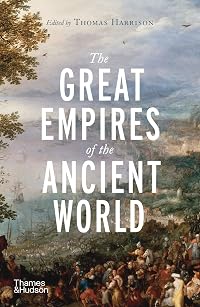
The Great Empires of the Ancient World
by Thomas Harrison (Editor)
On This Page
Description
A team of internationally renowned scholars surveys the major imperial powers of the ancient world, from 1600 B.C. to A.D. 500, and ranging geographically from the ancient Mediterranean to East Asia. The authors investigate the nature of empires--including Egypt, Rome, Babylonia, Persia, India, and China--and their legacies in the modern age. Highlights include fascinating character profiles of great rulers such as the warrior pharaohs Thutmose and Rameses of Egypt, the self-obsessed First show more Emperor of China, who desperately tried to cheat death, and the brilliant Roman emperor Augustus, who created the most powerful empire the world had ever seen. "Witness to Empire" spreads bring these civilizations to life in the words of their leaders and inhabitants. Not only will this book appeal to scholars and students, but its accessible text and wealth of illustrations also will feed the popular interest in this subject matter reflected in the recent success of films, television series, and museum exhibitions showcasing ancient cultures. show lessTags
Recommendations










Member Reviews
Some chapters are pretty good, for instance the one on the Maurya, Kushan and Gupta empires in India (and it is great to see that these are included!). Others however are flimsy and seem hastily written. The chapter about the Parthian and Sasanian empires is written entirely from a western, that is, Roman perspective. All authors are men and only few of them actually work in the field of empire studies. There are no recurring questions to give the volume cohesion.
Several authors say that their respective empires are probably not empires by any "modern definition of empire" because they are not unified and centralized. But no definition of "empire" is ever given, not even in the introduction. They probably mean "a definition of modern show more empire"; they seem unware of the fact that virtually all definitions of premodern, non-western empires would emphasize their diversity, forms of indirect rule, and lack of unity and centralization. And most empires in world history ARE premodern and non-western.
The authors who were given the chapter on the Hellenistic period are so in awe of Alexander "the Great" that they forget to give sufficient attention to the three long-lasting successor polities, the Seleucid, Ptolemaic, and Antigonid empires. The Caliphate/Umayyad Empire is conspicuously absent even from the chapter that deals with the Sasanians. show less
Several authors say that their respective empires are probably not empires by any "modern definition of empire" because they are not unified and centralized. But no definition of "empire" is ever given, not even in the introduction. They probably mean "a definition of modern show more empire"; they seem unware of the fact that virtually all definitions of premodern, non-western empires would emphasize their diversity, forms of indirect rule, and lack of unity and centralization. And most empires in world history ARE premodern and non-western.
The authors who were given the chapter on the Hellenistic period are so in awe of Alexander "the Great" that they forget to give sufficient attention to the three long-lasting successor polities, the Seleucid, Ptolemaic, and Antigonid empires. The Caliphate/Umayyad Empire is conspicuously absent even from the chapter that deals with the Sasanians. show less
Ratings
Members
- Recently Added By
Author Information
All Editions
Classifications
Statistics
- Members
- 79
- Popularity
- 400,287
- Reviews
- 1
- Rating
- (2.88)
- Languages
- English
- Media
- Paper, Ebook
- ISBNs
- 4