
Lloyd Llewellyn-Jones
Author of Persians: The Age of the Great Kings
About the Author
Lloyd Llewellyn-Jones is Professor of Ancient History at Cardiff University.
Works by Lloyd Llewellyn-Jones
Ctesias' 'History of Persia': Tales of the Orient (Routledge Classical Translations) (2009) 21 copies
King and Court in Ancient Persia 559 to 331 BCE (Debates and Documents in Ancient History) (2013) 20 copies
The Hellenistic Court: Monarchic Power and Elite Society from Alexander to Cleopatra (2017) — Editor — 6 copies
Sister-Queens in the High Hellenistic Period: Kleopatra Thea and Kleopatra III (Routledge Studies in Ancient History) (2022) 4 copies
Associated Works
Sex in Antiquity: Exploring Gender and Sexuality in the Ancient World (Rewriting Antiquity) (2014) — Introduction — 28 copies
Responses to Oliver Stone's Alexander: Film, History, and Cultural Studies (2010) — Contributor — 21 copies, 2 reviews
Greco-Egyptian interactions : literature, translation, and culture, 500 BCE-300 CE (2016) — Contributor — 9 copies
The reception of ancient virtues and vices in modern popular culture : beauty, bravery, blood and glory (2017) — Contributor — 3 copies
Tagged
Common Knowledge
- Birthdate
- 20th Century
- Gender
- male
- Education
- Cardiff University
University of Hull
Cynffig Comprehensive School - Nationality
- Wales
- Birthplace
- Bridgend, Wales, UK
- Associated Place (for map)
- Bridgend, Wales, UK
Members
Reviews
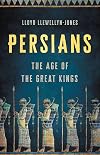
History is generally written by the victors; thus, attempting to come to a coherent understanding of a foe, especially one deemed "the other," can prove challenging. Such is especially true about the Achaemenid Persians.
The author has set out to write a history of the Persians which attempts to distance itself from the self-congratulating Greek narratives about who the Persians were and what they were about, instead attempting to let the Persians tell their own story based on inscriptional show more and archaeological evidence from the ancient Near East.
The author sets forth the story of the Persians from their arrival on the Iranian plains until Darius the Great; he then spends time talking about Persian religion, culture, court, harem, slavery, and other cultural aspects; he then tells the story from Xerxes until the end of the empire at the hands of Alexander the Great. The epilogue details modern Iran's relationship with the Achaemenid heritage.
The goal of de-centering Greek witness is commendable even if impractical: the author is still forced to grapple with the Greek sources at almost every opportunity because of the paucity of other source. Nevertheless, he does well to elevate our view and understanding of the Persians: they did create the first world empire worthy of the name, established greater stability than was seen before with the Assyrians/Babylonians or after under the Seleucids; developed a bureaucratic system which would become the model for all future world empires; and maintained their strength throughout, falling prey to a brilliant and powerful Alexander. The author notes, and it is worth the reminder, that the Persians are spoken of favorably in the Old Testament, even though there did seem to be a couple of rebellions in Judea that could have caused great distress.
While it is important to not allow the Greeks to define the way we understand the Persians, we must also remember that the Achaemenid Persians presented themselves the way they wanted to be seen. Yes, the Greek invasions were probably not as significant to the Persians as they were to the Greeks, but that does not mean they are insignificant; relative Persian silence may actually be rather deafening. Why the author feels the need to be apologetic about the slave system in Persia is historically baffling; of course there were slaves, as there were in the previous and future empires. Doesn't make it right or good, of course; but it comes with the territory.
Nevertheless, it is a recently updated history of the Persians, which is always good to have, and provides a good perspective. Recommended.
**--galley received as part of early review program show less
The author has set out to write a history of the Persians which attempts to distance itself from the self-congratulating Greek narratives about who the Persians were and what they were about, instead attempting to let the Persians tell their own story based on inscriptional show more and archaeological evidence from the ancient Near East.
The author sets forth the story of the Persians from their arrival on the Iranian plains until Darius the Great; he then spends time talking about Persian religion, culture, court, harem, slavery, and other cultural aspects; he then tells the story from Xerxes until the end of the empire at the hands of Alexander the Great. The epilogue details modern Iran's relationship with the Achaemenid heritage.
The goal of de-centering Greek witness is commendable even if impractical: the author is still forced to grapple with the Greek sources at almost every opportunity because of the paucity of other source. Nevertheless, he does well to elevate our view and understanding of the Persians: they did create the first world empire worthy of the name, established greater stability than was seen before with the Assyrians/Babylonians or after under the Seleucids; developed a bureaucratic system which would become the model for all future world empires; and maintained their strength throughout, falling prey to a brilliant and powerful Alexander. The author notes, and it is worth the reminder, that the Persians are spoken of favorably in the Old Testament, even though there did seem to be a couple of rebellions in Judea that could have caused great distress.
While it is important to not allow the Greeks to define the way we understand the Persians, we must also remember that the Achaemenid Persians presented themselves the way they wanted to be seen. Yes, the Greek invasions were probably not as significant to the Persians as they were to the Greeks, but that does not mean they are insignificant; relative Persian silence may actually be rather deafening. Why the author feels the need to be apologetic about the slave system in Persia is historically baffling; of course there were slaves, as there were in the previous and future empires. Doesn't make it right or good, of course; but it comes with the territory.
Nevertheless, it is a recently updated history of the Persians, which is always good to have, and provides a good perspective. Recommended.
**--galley received as part of early review program show less
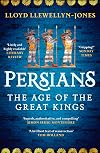
A fast-paced and informative account of the Achaemenid rulers of ancient Persia, culminating with Alexander's defeat of Darius III in 330 BC. The story is ne replete with ruthless ambitions, unforgiving retributions, and epic failures and achievements. For a reader from the subcontinent, what may be of greatest interest is the widely divergent paths taken by two descendants of what was probably a shared Indo-Iranian, or Aryan, cultural world: the close parallels between old Persian and Vedic show more Sanskrit make them seem almost as dialects of a common ancestor language, with parallels in liturgy, rituals, and so on. The Indian branch developed highest realms of speculative and spiritual thinking that emphasized the unity of all things, whereas the Iranian branch developed (or descended?) into a starkly dualistic and retributive view that surely must have influenced the further development of western thought in the Semitic-Christian versions with its prediction of a fight to death between the forces of Good and Evil, the redemption in the final destruction of the world, Armageddon, Apocalypse, and other such implacable world scenarios. To the average reader, the unreasonable levels of violence in the Persian world, and by extension in the modern world shaped mainly by Western Judeo-Christian values, would probably be ascribable to this unrelentingly dualistic view first broadcast by the Persians. show less
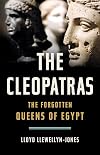
While obviously well researched, the author seemed compelled to include tremendous unnecessary detail - to the point where the dizzying numbers of sisters, brothers, fathers, mothers, cousins, etc. become simply tedious. This style compels the reader to try to sift through the minutia to understand the basic characters and their significance.
More problematic is that the author seems less a historian and more a cheerleader for the Cleopatras and their feminist cause. The reality is the show more information on most of these women is sparse. Nonetheless, the author dismisses all of the ancient authorities out of hand and always favors a unrealistically positive spin to the point where he is seemingly more interested in praising than evaluating.
As such, most of this book was at best mildly interesting, and at worst lacking in scholarly objectivity. show less
More problematic is that the author seems less a historian and more a cheerleader for the Cleopatras and their feminist cause. The reality is the show more information on most of these women is sparse. Nonetheless, the author dismisses all of the ancient authorities out of hand and always favors a unrealistically positive spin to the point where he is seemingly more interested in praising than evaluating.
As such, most of this book was at best mildly interesting, and at worst lacking in scholarly objectivity. show less
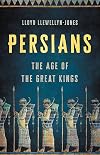
I was drawn to this title when I heard the author was "Drawing on Iranian inscriptions, cuneiform tablets, art, and archaeology..." Using such deep and recent sources, here is told the story from the tribal roots of the Persians in competition with the Medes, through the long-lived rivalry with Greece, a golden age of empire building, and final transformation into a Hellenized nation under the conquering Macedonians. There are plenty of illustrations and the writing is engaging and lively. show more Personally, I would have liked to hear more of the ancient voices in direct translation while being very pleased with this book. Supporting material includes a dramatis personae and detailed bibliography. A very interesting Epilogue looking back from modern Iran (where the author has very positive research experiences) and explains an adoration of Cyrus The Great and his age by a largely young and secular population enduring theocratic rule. show less
Lists
Awards


You May Also Like


Associated Authors
Statistics
- Works
- 19
- Also by
- 16
- Members
- 676
- Popularity
- #37,361
- Rating
- 3.8
- Reviews
- 7
- ISBNs
- 63
- Languages
- 5