
Michael Kulikowski
Author of Rome's Gothic Wars
About the Author
Michael Kulikowski is associate professor of history at the University of Tennessee-Knoxville. A recipient of the Solmsen Fellowship at the Institute for Research in the Humanities at the University of Wisconsin, Madison, he is the author of Late Roman Spain and Its Cities, which was awarded an show more Honorable Mention in Classics and Archaeology from the Association of American University Presses show less
Series
Works by Michael Kulikowski
The Tragedy of Empire: From Constantine to the Destruction of Roman Italy (2019) 133 copies, 2 reviews
Associated Works
War and Warfare in Late Antiquity (2 vol. set) (Late Antique Archaeology) (2013) — Contributor — 15 copies
On Barbarian Identity: Critical Approaches to Ethnicity in the Early Middle Ages (Studies in the Early Middle Ages, 4) (2002) — Contributor — 14 copies, 1 review
Empires and Exchanges in Eurasian Late Antiquity: Rome, China, Iran, and the Steppe, ca. 250–750 (2018) — Contributor — 14 copies
Contested Monarchy: Integrating the Roman Empire in the Fourth Century AD (2014) — Contributor — 13 copies
A Companion to Late Antique Literature (Blackwell Companions to the Ancient World) (2018) — Contributor — 13 copies
Mercury's Wings: Exploring Modes of Communication in the Ancient World (2017) — Contributor — 10 copies
Desperta Ferro Especiales. La Legión Romana ( VIII ) Las últimas legiones (2021) — Contributor — 3 copies
Desperta Ferro Especiales. La legión romana (VII) El ocaso del Imperio (2020) — Contributor — 3 copies
Tagged
Common Knowledge
- Birthdate
- 1970
- Gender
- male
- Education
- University of Toronto (MA, PhD)
Rutgers University (BA) - Occupations
- historian
professor (History and Classics and Ancient Mediterranean Studies) - Organizations
- Pennsylvania State University
University of Tennessee at Knoxville
Smith College
Washington and Lee University - Nationality
- USA
- Associated Place (for map)
- USA
Members
Reviews
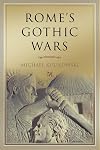
Recently, I’ve been reading a lot of ancient and medieval history books that illustrate the difference between classical historical methods - that assign preeminence to the written word; and more modern techniques - that incorporate archaeological evidence and critical readings of the original texts.
Michael Kulikowski’s Rome’s Gothic Wars is an example of modern methods, and goes a long way toward explaining how a tribal group of overly made-up teenage girls with fuchsia-streaked hair show more and multiple facial piercings managed to conquer the mighty Roman empire.
As Kulikowski explains, every previous history of the Goths has been heavily influenced by Jordanes’ 6th century AD Getica. Jordane’s history has the Goths originating in Sweden, migrating across the Baltic to Poland, wandering around eastern Europe, settling in the Ukraine for a while, and eventually picking up and moving west to overrun the Roman empire. Since Jordanes also had a Gothic princess marrying Philip of Macedon, and the migrating Goths take a side trip to conquer Egypt, reasonable historians, even in a more credulous age, shouldn’t have taken Jordanes’ account very seriously. Unfortunately, the idea of a quasi-Germanic group conquering most of Europe and a good chunk of Russia had a certain appeal to a subgroup of European historians in the 19th and early 20th century. They explained that the more fanciful parts of Jordanes were later inventions but the basic migratory history was correct, a product of “racial memory” and the transmission of historic accounts by a small, elite group of Gothic nobles – and that Jordanes justified the modern descendents of the Goths in their effort to reclaim all their “ancestral” territory.
Combining archaeological evidence and more circumspect reading of Jordanes and other ancient authors, Kulikowski concludes that the “Goths” were, to a large extent, the product of a Roman tendency to combine loosely associated tribal groups into peoples, like “Gauls”, “Brittons”, “Germans”, and “Goths”. To be sure, there was a common archaeological culture in the traditionally Gothic area – the Sântana-de-Mureş/Černjachov culture (which will called SMC from now on, for obvious reasons) – and there probably was some degree of self-identification among the tribal groups. The impetus for the Gothic “invasion” of the Roman empire came from outside pressure by the Huns, who overran eastern Gothic tribes (without, interestingly enough, making great changes in the SMC culture). A single Gothic tribe, the Tervingi, appealed for admission to the Empire to escape the Huns, with the promise to be well-behaved and to provide military units. This might have actually worked, had not corrupt Roman officials intercepted and sold the food supplies supposed to sustain the Goths until they could reestablish their agricultural base. That led to a “rebellion”, which was probably more like the response of a bunch of hungry and heavily armed warriors to local foraging opportunities. This wouldn’t do, though, so Emperor Valens led an army out of Constantinople to put down the “rebellion”. The main body of Goths under Fritigern was somewhat smaller than Valen’s army, and Fritigern played for time, commencing negotiations. In the meantime, two more large Gothic groups turned up, so that the Gothic army now outnumbered the Romans. The battle of Adrianople commenced and the Goths annihilated the Roman Army (the Emperor, all the main generals, and two-thirds of the soldiers died).
Subsequent Roman emperors restored some stability and the Goths more or less settled down in the Eastern empire. However, thirty years later they were on the move again, this time toward the west. Kulikowski admits he isn’t quite sure why; possibly the Goths under their general Alaric were used to getting subsidies from the eastern Empire and they dried up. At any rate, he and his warband showed up at the Italian border. They were initially opposed by the last of the great Roman generals, Stilchio, who fought a series of inconclusive battles while various usurpers were playing musical emperors behind him (in Ravenna, where the capital had moved from Rome). Eventual, however, the ironically named emperor Honorious was persuaded that Stilchio was planning a coup and he was seized and executed. (Kulikowski notes that with the resources at his disposal, Stilchio could have easily overthrown the emperor but decided not to).
That left Alaric with the only organized military force in Italy. He was surprisingly patient, merely camping near Rome in a sort of informal siege; since Rome was entirely dependent on outside food sources Alaric tightened or loosened the blockade depending on how negotiations with Ravenna were going. Eventually his patience ran out and he sacked Rome on August 27, 410 (just celebrated the anniversary of that, interestingly enough). Oddly, it didn’t do him much good; although there were wagon loads of treasure there was no food, and Alaric took his army south, perhaps intended to cross to the farmlands of Sicily or Africa but dying of disease before he got there. The remainder of the Goths went through their own “musical leaders” process until then eventually, apparently without planning to, ended up in Gaul and settled down.
I found this an easy read and quite interesting; the first third or so of the book is not Gothic history so much as Gothic historiography; Kulikowski portrays how the conception of what “Goths” changed through European history (and as noted above, changed that history). I found this fascinating. There are only large scale maps, which is understandable because nobody really knows details of what happened at any of the battles mentioned. There are two excellent glossaries, one of historical personages and one of historical sources. Recommended if you like this sort of thing. show less
Michael Kulikowski’s Rome’s Gothic Wars is an example of modern methods, and goes a long way toward explaining how a tribal group of overly made-up teenage girls with fuchsia-streaked hair show more and multiple facial piercings managed to conquer the mighty Roman empire.
As Kulikowski explains, every previous history of the Goths has been heavily influenced by Jordanes’ 6th century AD Getica. Jordane’s history has the Goths originating in Sweden, migrating across the Baltic to Poland, wandering around eastern Europe, settling in the Ukraine for a while, and eventually picking up and moving west to overrun the Roman empire. Since Jordanes also had a Gothic princess marrying Philip of Macedon, and the migrating Goths take a side trip to conquer Egypt, reasonable historians, even in a more credulous age, shouldn’t have taken Jordanes’ account very seriously. Unfortunately, the idea of a quasi-Germanic group conquering most of Europe and a good chunk of Russia had a certain appeal to a subgroup of European historians in the 19th and early 20th century. They explained that the more fanciful parts of Jordanes were later inventions but the basic migratory history was correct, a product of “racial memory” and the transmission of historic accounts by a small, elite group of Gothic nobles – and that Jordanes justified the modern descendents of the Goths in their effort to reclaim all their “ancestral” territory.
Combining archaeological evidence and more circumspect reading of Jordanes and other ancient authors, Kulikowski concludes that the “Goths” were, to a large extent, the product of a Roman tendency to combine loosely associated tribal groups into peoples, like “Gauls”, “Brittons”, “Germans”, and “Goths”. To be sure, there was a common archaeological culture in the traditionally Gothic area – the Sântana-de-Mureş/Černjachov culture (which will called SMC from now on, for obvious reasons) – and there probably was some degree of self-identification among the tribal groups. The impetus for the Gothic “invasion” of the Roman empire came from outside pressure by the Huns, who overran eastern Gothic tribes (without, interestingly enough, making great changes in the SMC culture). A single Gothic tribe, the Tervingi, appealed for admission to the Empire to escape the Huns, with the promise to be well-behaved and to provide military units. This might have actually worked, had not corrupt Roman officials intercepted and sold the food supplies supposed to sustain the Goths until they could reestablish their agricultural base. That led to a “rebellion”, which was probably more like the response of a bunch of hungry and heavily armed warriors to local foraging opportunities. This wouldn’t do, though, so Emperor Valens led an army out of Constantinople to put down the “rebellion”. The main body of Goths under Fritigern was somewhat smaller than Valen’s army, and Fritigern played for time, commencing negotiations. In the meantime, two more large Gothic groups turned up, so that the Gothic army now outnumbered the Romans. The battle of Adrianople commenced and the Goths annihilated the Roman Army (the Emperor, all the main generals, and two-thirds of the soldiers died).
Subsequent Roman emperors restored some stability and the Goths more or less settled down in the Eastern empire. However, thirty years later they were on the move again, this time toward the west. Kulikowski admits he isn’t quite sure why; possibly the Goths under their general Alaric were used to getting subsidies from the eastern Empire and they dried up. At any rate, he and his warband showed up at the Italian border. They were initially opposed by the last of the great Roman generals, Stilchio, who fought a series of inconclusive battles while various usurpers were playing musical emperors behind him (in Ravenna, where the capital had moved from Rome). Eventual, however, the ironically named emperor Honorious was persuaded that Stilchio was planning a coup and he was seized and executed. (Kulikowski notes that with the resources at his disposal, Stilchio could have easily overthrown the emperor but decided not to).
That left Alaric with the only organized military force in Italy. He was surprisingly patient, merely camping near Rome in a sort of informal siege; since Rome was entirely dependent on outside food sources Alaric tightened or loosened the blockade depending on how negotiations with Ravenna were going. Eventually his patience ran out and he sacked Rome on August 27, 410 (just celebrated the anniversary of that, interestingly enough). Oddly, it didn’t do him much good; although there were wagon loads of treasure there was no food, and Alaric took his army south, perhaps intended to cross to the farmlands of Sicily or Africa but dying of disease before he got there. The remainder of the Goths went through their own “musical leaders” process until then eventually, apparently without planning to, ended up in Gaul and settled down.
I found this an easy read and quite interesting; the first third or so of the book is not Gothic history so much as Gothic historiography; Kulikowski portrays how the conception of what “Goths” changed through European history (and as noted above, changed that history). I found this fascinating. There are only large scale maps, which is understandable because nobody really knows details of what happened at any of the battles mentioned. There are two excellent glossaries, one of historical personages and one of historical sources. Recommended if you like this sort of thing. show less
Rome's Gothic Wars: From the Third Century to Alaric (Key Conflicts of Classical Antiquity) by Michael Kulikowski
Quite a short but an incisive book, worth reading even if you are interested in the wider 'barbarian' question, like me.
How living on the edges of an empire creates barbarian groups and polities. The Goths did not exist until Romans told them they did.
So much of this is consonant with the situation in China, re its steppe barbarians. From the way the luxuries trade creates and controls an elite beholden to the empire, down to the massacres of barbarian leaders at feasts. Popular tactic.
The show more great strength of this book was to discuss historiography. As he says at the start, most introductions to a subject don't make historiographical issues transparent, but write as if conclusions are certain. Kulikowski argues that admitting to the uncertainties of history-practice needn't be confusing -- on the contrary, the puzzles and the conflicting interpretations are themselves the most exciting part of doing history. Amen to that. So he is transparent about the steps by which he works towards his views. This doesn't make a difficult read.
I find him persuasive, along with Halsall's Barbarian Migrations and the Roman West, 376-568. They have a different take to Peter Heather who looms largely over the field.
One funny thing about this book is that he begins in story format, with Alaric at the gates of Rome being bad-tempered (as if we know he was an angry individual. He was a barbarian, so he must be). Then Kulikowski straight away explains that that kind of history is impossible to write without its being fiction. But I'd almost put his book down -- so be more patient than I am. show less
How living on the edges of an empire creates barbarian groups and polities. The Goths did not exist until Romans told them they did.
So much of this is consonant with the situation in China, re its steppe barbarians. From the way the luxuries trade creates and controls an elite beholden to the empire, down to the massacres of barbarian leaders at feasts. Popular tactic.
The show more great strength of this book was to discuss historiography. As he says at the start, most introductions to a subject don't make historiographical issues transparent, but write as if conclusions are certain. Kulikowski argues that admitting to the uncertainties of history-practice needn't be confusing -- on the contrary, the puzzles and the conflicting interpretations are themselves the most exciting part of doing history. Amen to that. So he is transparent about the steps by which he works towards his views. This doesn't make a difficult read.
I find him persuasive, along with Halsall's Barbarian Migrations and the Roman West, 376-568. They have a different take to Peter Heather who looms largely over the field.
One funny thing about this book is that he begins in story format, with Alaric at the gates of Rome being bad-tempered (as if we know he was an angry individual. He was a barbarian, so he must be). Then Kulikowski straight away explains that that kind of history is impossible to write without its being fiction. But I'd almost put his book down -- so be more patient than I am. show less
The Tragedy of Empire: From Constantine to the Destruction of Roman Italy (History of the Ancient World) by Michael Kulikowski
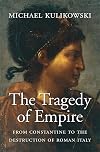
Another book that I've been meaning to read for years, but put off because I recognized that it was going to be a serious intellectual workout. Was it worth the effort? On the whole, yes. Kulikowski is essentially writing about the collapse of the Post-Constantine empire as a study of system failure, pointing to the inability of the ruling elite to rise above their personal power games in terms of maintaining those structures and institutions that really made the empire work. Yes the show more "Barbarians" are present in this work, though Kulikowski has little patience with narratives that tend to blame these human waves for being the primary cause of collapse. As often as not these people were part of the solution, not the problem, with the problem being the failure of elite leadership. Also, Kulikowski is another non-fan of Justinian, as reflected in the sub-title of this work.
So, would I personally recommend this study? If you want a comprehensive overview of the last 200 years of the Empire as a working whole, that includes a serious examination of religion as ideology, yes. As a starting point for the general reader, probably not; they would be better off starting with the works of Peter Heather.
Also, while Kulikowsky does make a nod towards issues of plague and environmental collapse as elements in the fall of the Empire, its just a nod. Whatever else this book is it's a summation of several generations of study of "Late Antiquity." show less
So, would I personally recommend this study? If you want a comprehensive overview of the last 200 years of the Empire as a working whole, that includes a serious examination of religion as ideology, yes. As a starting point for the general reader, probably not; they would be better off starting with the works of Peter Heather.
Also, while Kulikowsky does make a nod towards issues of plague and environmental collapse as elements in the fall of the Empire, its just a nod. Whatever else this book is it's a summation of several generations of study of "Late Antiquity." show less
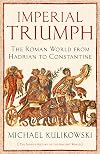
Let the reader beware that this book is a political history. This is not a criticism, just a caveat since the subtitle promises to look at the whole Roman world. It is no introduction to the culture, society, economy, etc of the Roman imperial world. Nevertheless, this is a very enjoyable and very readable book, especially for those of us who have closely studied the Late Republic and Early Empire (so rich in sources), favourites for university lecturers. Kulikowski writes with verve and show more authority to skilfully chart a trajectory of the top levels of the Roman world and their story and progress down to the death of Constantius II. He even makes sense of the third century chaos of the Soldier Emperors. One constant theme he develops is the steady fading of senatorial gentlemen from the government of the empire and their replacement by a professional equestrian bureaucracy. Along with this is the increasing divergence of civilian and military careers. A third theme is the extension of Roman law to all citizens and consolidation of the empire from an ad hoc patchwork of self-governing communities into a universal administration presided over by the emperor and his professional and far-reaching government. show less
Lists
Awards


You May Also Like


Associated Authors
Statistics
- Works
- 9
- Also by
- 12
- Members
- 517
- Popularity
- #48,025
- Rating
- 3.8
- Reviews
- 7
- ISBNs
- 34
- Languages
- 4