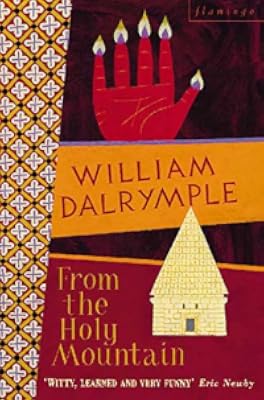
From the Holy Mountain: A Journey in the Shadow of Byzantium
by William Dalrymple
On This Page
Description
A rich blend of history and spirituality, adventure and politics, laced with the thread of black comedy familiar to readers of William Dalrymple's previous work. In AD 587, two monks, John Moschos and Sophronius the Sophist, embarked on an extraordinary journey across the Byzantine world, from the shores of the Bosphorus to the sand dunes of Egypt. Their aim: to collect the wisdom of the sages and mystics of the Byzantine East before their fragile world shattered under the eruption of Islam. show more Almost 1500 years later, using the writings of John Moschos as his guide, William Dalrymple set off to retrace their footsteps. Taking in a civil war in Turkey, the ruins of Beirut, the tensions of the West Bank and a fundamentalist uprising in Egypt, William Dalrymple's account is a stirring elegy to the dying civilization of Eastern Christianity. show lessTags
Recommendations













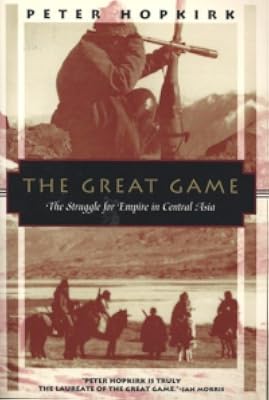
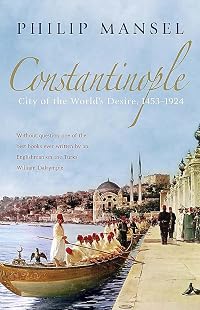
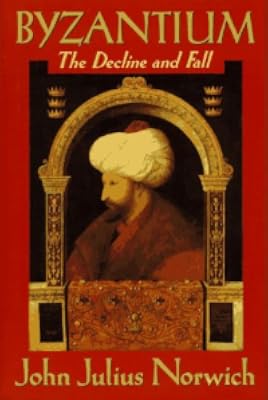
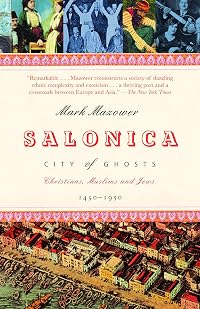

Member Recommendations
Member Reviews
A masterful travelogue by Dalrymple, following the footsteps of Byzantine monk John Moschus as he travelled from Mt Athos to the Great Karga Oasis in southern Egypt.
From the Holy Mountain covers Dalrymple's mid-1990s trip through the Christian Middle East, visiting the holy mountain Mt Athos in Greece, to Constantinople and through Turkey, Syria, Lebanon, Israel, Palestine and Egypt, reporting on the (precarious) state of Christianity in the region. As Dalrymple charts the dangers facing Christians, whether they be Orthodox (of whatever stripe), Maronite, Assyrian, Coptic or others, this atheist became evermore depressed, especially the wilful destruction of millennia old churches and related architecture. Indeed, the rare positive show more example of Christians and Muslims living peacefully side by side in Aleppo, combined with Dalrymple's descriptions of the Aleppo architecture, would have caused me to pencil Aleppo in for a future visit if not for the hindsight that Aleppo has all but been destroyed.
Dalrymple may get carried away at times, going into perhaps more depth than needed about Byzantine art or some aspects of religion, but otherwise I have a yen to reread From the Holy Mountain, and there are few books that I make that claim about. show less
From the Holy Mountain covers Dalrymple's mid-1990s trip through the Christian Middle East, visiting the holy mountain Mt Athos in Greece, to Constantinople and through Turkey, Syria, Lebanon, Israel, Palestine and Egypt, reporting on the (precarious) state of Christianity in the region. As Dalrymple charts the dangers facing Christians, whether they be Orthodox (of whatever stripe), Maronite, Assyrian, Coptic or others, this atheist became evermore depressed, especially the wilful destruction of millennia old churches and related architecture. Indeed, the rare positive show more example of Christians and Muslims living peacefully side by side in Aleppo, combined with Dalrymple's descriptions of the Aleppo architecture, would have caused me to pencil Aleppo in for a future visit if not for the hindsight that Aleppo has all but been destroyed.
Dalrymple may get carried away at times, going into perhaps more depth than needed about Byzantine art or some aspects of religion, but otherwise I have a yen to reread From the Holy Mountain, and there are few books that I make that claim about. show less
William Dalrymple is a Scottish-born travel writer and historian, specialising in books about the Near and Far East. 'From the Holy Mountain' is a deceptively simple description of Dalrymple's travels as he follows in the footsteps of John Moschos's 'The Spiritual Meadow', a 6th century guide to the Christian monasteries of the Byzantine empire, beginning at Mt. Ethos in Greece through Turkey, Syria, Lebanon, Israel (including the occupied West Bank) and Egypt, ending at the Al Kharga Oasis deep in the deserts of Upper Egypt. Along the way he focuses on meeting the remaining Christian (almost exclusively Orthodox) communities in these countries. The stories he hears are by turns surprising and expected (depressingly so).
That the show more countries and governments of the Near East are growing more strongly Islamist and increasingly aggressive towards other religions is well known, although many will be unfamiliar with the specific stories revealed here of persecutions both old and ongoing. More surprising is the reminder that the Byzantine Empire was Christian and many communities have a longer history and stronger claim to the land than Muslims or Jews would like everyone to think. Further, given the antagonism between Islam and Christianity being offered today, it is ironic to learn that much of the religious practice of Islam was drawn from early Orthodox Christianity. As Dalrymple points out, Were John Moschos to return today he might find more familiar in the worship in a mosque than in a Western Christian church.
Dalrymple writes well, with humour and compassion for all the people he meets. He draws you into his journey and helps you see what he has seen with his own eyes. As an armchair traveller too scared to leave his home town, Dalrymple stirred my wanderlust. What better recommendation for this book? show less
That the show more countries and governments of the Near East are growing more strongly Islamist and increasingly aggressive towards other religions is well known, although many will be unfamiliar with the specific stories revealed here of persecutions both old and ongoing. More surprising is the reminder that the Byzantine Empire was Christian and many communities have a longer history and stronger claim to the land than Muslims or Jews would like everyone to think. Further, given the antagonism between Islam and Christianity being offered today, it is ironic to learn that much of the religious practice of Islam was drawn from early Orthodox Christianity. As Dalrymple points out, Were John Moschos to return today he might find more familiar in the worship in a mosque than in a Western Christian church.
Dalrymple writes well, with humour and compassion for all the people he meets. He draws you into his journey and helps you see what he has seen with his own eyes. As an armchair traveller too scared to leave his home town, Dalrymple stirred my wanderlust. What better recommendation for this book? show less
http://nhw.livejournal.com/913672.html
It is a tremendous book. Dalrymple travels through Greece, Turkey, Lebanon, Syria, Israel, the West Bank and Egypt, following the seventhy-century travels of John Moschos, looking for the remaining evidence of Christianity in archtitecture, culture and population. It is a terrifically sad book. Many of the communities he visits were dwindling at the time of writing, in 1994; several of them wonder if they will even still be there in ten years' time. He is fantastic at capturing the characters he meets, especially among the dwindling Christians: some are stupid, some are bigoted, some are deluded, but all are part of a chain of culture going back two thousand years.
He is also at pains to stress that show more Islamic fundamentalism is not really the problem. In south-eastern Turkey, the local Christians are bit-players in the war between the Turkish state and the PKK. In Lebanon, sections of the Christian community have been the authors of their own misfortune. In the Holy Land, Christian Palestinians face the same pressure from Israel as their Muslim neighbours (and do not understand why their co-religionists in the West do not speak up for them). In 1994, Islamic fundamentalists were a big part of the picture only in Egypt.
Turks and Israelis may well feel that Dalrymple's picture is not balanced. I would agree; but I think it is fair. He is writing here of a particular religious tradition at a particular time, and the systematic destruction of their monuments and erosion of their population base is a big part of the story. Of course there are and have been Christian cities and countries where other religions have been oppressed, but that sort of point-scoring is not relevant to Dalrymple's approach. Instead he is at pains to avoid essentialism; to attribute government policies to government leaders themselves, rather than to their religion or race; and to look for links between the cultures of the region, and for insights into how the past remains present.
It would be interesting to read a follow-up of what the situation is now for some of these communities. I can't imagine that many of them (except perhaps the Lebanese) have seen much improvement in their lot since 1994. Anyway, this is fascinating stuff. Strongly recommended. show less
It is a tremendous book. Dalrymple travels through Greece, Turkey, Lebanon, Syria, Israel, the West Bank and Egypt, following the seventhy-century travels of John Moschos, looking for the remaining evidence of Christianity in archtitecture, culture and population. It is a terrifically sad book. Many of the communities he visits were dwindling at the time of writing, in 1994; several of them wonder if they will even still be there in ten years' time. He is fantastic at capturing the characters he meets, especially among the dwindling Christians: some are stupid, some are bigoted, some are deluded, but all are part of a chain of culture going back two thousand years.
He is also at pains to stress that show more Islamic fundamentalism is not really the problem. In south-eastern Turkey, the local Christians are bit-players in the war between the Turkish state and the PKK. In Lebanon, sections of the Christian community have been the authors of their own misfortune. In the Holy Land, Christian Palestinians face the same pressure from Israel as their Muslim neighbours (and do not understand why their co-religionists in the West do not speak up for them). In 1994, Islamic fundamentalists were a big part of the picture only in Egypt.
Turks and Israelis may well feel that Dalrymple's picture is not balanced. I would agree; but I think it is fair. He is writing here of a particular religious tradition at a particular time, and the systematic destruction of their monuments and erosion of their population base is a big part of the story. Of course there are and have been Christian cities and countries where other religions have been oppressed, but that sort of point-scoring is not relevant to Dalrymple's approach. Instead he is at pains to avoid essentialism; to attribute government policies to government leaders themselves, rather than to their religion or race; and to look for links between the cultures of the region, and for insights into how the past remains present.
It would be interesting to read a follow-up of what the situation is now for some of these communities. I can't imagine that many of them (except perhaps the Lebanese) have seen much improvement in their lot since 1994. Anyway, this is fascinating stuff. Strongly recommended. show less
A fascinating glimpse into a forgotten part of middle east culture and its origins. For me there was a double sadness in the book: the impending loss of Christian communities in the region, already well advanced when this was written and I can only imagine now much more so; and the reminder of what those communities had become so quickly in their history. Dalrymple's observations are always sympathetic but never sentimental and communicate a real sense of those communities and their very varied concerns. 3 Oct 2015
As good as advertised, and perhaps even more so twenty years after publication, given all that has happened in the meantime. If you're not inclined to sadness over lost traditions, you probably won't care, but I almost cried when the Taliban blew up the Bamiyan Buddha, and I have literally no social or cultural connection to Buddhism whatsoever, so I was basically free for the taking on this one.
In From the Holy Mountain, William Dalrymple chronicles his travels through the Middle East and gives voice to the experiences and predicaments of the most often ignored Christians who reside there. Dalrymple’s style is excellent for the genre. His expertly sketched depictions of contemporary life in the Middle East shift into historical explanation and anecdotes that are clearly defined and yet, seamlessly interwoven. While a morbid sense of humor and appreciation for the absurd ease the tension where Dalrymple himself is in a dangerous situation, he maintains a serious and earnest voice when discusses the problems faced by religious minorities in the Middle East.
Several themes reoccur throughout Dalrymple’s travels. The first of show more these is the existence of a religious unity in practice among many of the inhabitants. He notes that “the Eastern Christians and the Muslims have lived together side by side for nearly one and a half millennia, and have only been able to do so due to a degree of mutual tolerance and shared customs unimaginable in the Christian West” (188, emphasis mine). Dalrymple notes a number of customs and popular expressions of piety that are shared by Christians and Muslims throughout the Middle East. At a church in Seidnaya, the attendees at the service are mostly Muslim women with their husbands seeking the intercessions of the Theotokos to help them in conceiving a child. A nun explains to Dalrymple that all are “children of God . . . the All Holy One brings us together” (190). Similar occurrences are reported throughout the book. Taken together with the statement of the nun, these incidences serve to create a sense of universal human worth and suggest the real belief in the possibility of universal salvation.
The theme of shared practice and sacred places is repeated just outside of Jerusalem at the shrine of St. George. The shrine used to be a site of pilgrimage for Christians, Muslims, and Jews, and while Dalrymple found that Israeli Jews rarely visited anymore, both Palestinian Christians and Muslims both continued to come to the shrine to request the intercession of the saint. (339-341) Interestingly, both of overlapping Christian and Muslim pious practices Dalrymple notes in the book are centered on fertility. Muslim women flock to Seidnaya to venerate the icon of the Theotokos because it is believed that she can help them conceive. While St. George appears to be a little more of a multipurpose saint, the roots of the Muslim veneration of the shrine are linked to “the legendary saint of fertility known simply as Khidr, Arabic for green” (339). The name Khidr is used by all Palestinians, Christian and Muslim alike, and he invoked for aid with fertility – either personal or agricultural (341). As Dalrymple briefly notes, the function of the saint’s cult and manner of repaying the saint for his help (sheep to sacrifice) appears related to pagan practices.
Dalrymple also reports a convergence of artistic trends and traditions. He manages to obtain permission from one of the Lebanese warlords, who in his alternate life is a mild-mannered scholar of history (225), to view his collection of Byzantine mosaics, which he preserved from the destruction of the civil war. In comparison with other Byzantine mosaics, this collection eschews humanism in the choice of subjects and demonstrates a preference for geometric designs. Dalrymple links the difference in the mood of the mosaics to a shift in cultural mood that led to the iconoclast movement in the Byzantine Empire. Additionally, this collection of mosaics provides another bridge between the Christians of the Levant and their Muslim neighbors, who turned a preference for non-figurative designs into a prohibition on the depiction of human images (234). In Alexandria, Dalrymple notes the earlier adoption of pagan motifs and images by early forms of Christian art (386). The “cross-fertilization,” to borrow from Dalrymple, of art points to back to the rich web of practices shared amongst the inhabitants of the Middle East and illustrates the existence of a strong inclusivist attitude.
The deeper and richer sense of time and history is another feature Dalrymple highlights in his journal. Introducing the monastery of Mar Saba, he comments that landscape is strange, but “it is stranger still to find many of their superstitions, fears, and prejudices alive in the conversation of this, the last of the ancient monasteries of the Holy Land to survive as a functioning community” (279). A nun, who tends the grave of John Moschos at the Abbey of St. Theodosius, repeats the theme of a long, near timeless memory. Asked when Persians attacked the monastery, she replies, “Not so long ago . . . around 614 A.D.” (284).
The long memory of the Middle East and the intermingling of religious practice and sacred places have contributed to the manner in which the effects of modern nationalism and European colonialism have played out in the region. Dalrymple dates the being of the end for religious tolerance and syncretism to the twentieth century (188). The violent political ferment of the area is not some innate and inexplicable hatred between tribes. Western colonialism, and particularly the way in which official colonialism of the Middle East was brought to an end, bear much of the responsibility. Additionally, the long memory of the region shapes the way in which conflicts have played out.
The Maronite communities of Lebanon were created as a persecuted by minority by being named heretics by the ecclesiastic authorities of the Byzantine Empire. They retreated to the mountains and lived essentially under siege until the Crusades, when they came into communion with Rome and under the protection of France. After the fall of the Ottoman Empire, they were granted their own state. (197) The Maronites have created their own national mythology and adopted the language and culture of France. Their mythology of a different ethnic extraction from the rest of the area grounded a “contempt for their Muslim neighbors” (198).
Until very recently, the Maronites were a numerical majority in Lebanon, and could thus, easily maintain political control. The echoes of their history as a persecuted minority living under siege can be heard in their response when they became a cultural and religious minority. Rather than attempting to renegotiate the political system into one that could serve all groups in the Lebanese population, the Maronites prepared for a civil war and resurrected the mythology of the Crusades as a rallying point. In this case both the memory of the distant past of the Maronite community and the constructed national mythology have played into the present political situation of the region. A lingering siege mentality seems to have informed the blanket refusal to share power, and the self-righteous brutality of the Crusades followed with the trappings adopted by the Maronite militias (198).
The manipulation of the past by the modern Israeli state differs from the manipulation by the Maronites. Dalrymple focuses on the ways in which archaeology is used by the Israeli government to create the appearance of a national history in support of the political agenda of the modern nation-state. The Armenian Bishop Hagop shows Dalrymple a newly constructed highway and described the Greek and Armenian monasteries over which it was constructed. He then points to a garden built to protect a section of wall constructed by King Herod. The Bishop describes the presence of the archaeological garden without any commemoration of the presence of the monasteries as “nationalistic bigotry” (331). He claims that the monasteries were problematic for the Israeli government because they “are evidence of a Christian-dominated Jerusalem” (330) and thus a challenge to national mythology that the Jews have a right to the land of Palestine. News reports later looked up by Dalrymple confirmed the Bishop’s indignation. The supposed archaeological identification of ancient Jewish settlements has been used as justification for new Israeli settlements on land confiscated from Palestinians (333).
Another facet of the political turmoil of the Middle East which was brought to light by Dalrymple was the way in which Palestinian Christians have been and continue to be overlooked in the coverage of the conflict by the American media which prefers to reduce the tension to a conflict between Jews and the Muslims. Dalrymple visits a Palestinian Christian family who lives in exile, poverty, and constant low-level terror in Lebanon (266-275). The American government’s near-unconditional support of the Israeli government is baffling to Palestinian Christians. A Christian priest comments to Dalrymple, “Because we are Christians no one seems to care” (359).
The erasure of Palestinian Christians by the American media seems based in a conflation of Christian with Western, European, and White. Thus, acknowledging the plight of Palestinian Christians (or to be more timely, Christians in Iraq) would conflict with American ideology of America as the chosen, Christian nation who must rescue, save, and dominate the heathen nations. The idea that Christians suffer from the political and foreign policies of the United States troubles the American national myth of messianic nation mandate. I’ve frequently heard that American dominance in the Middle East is justified because people who have never heard the gospel can be evangelized. The continued invisibility of Christians in the Middle East allows for the continuation of this reasoning.
From the Holy Mountain complicates the overly simplistic portrayal of the state of religion in the Middle East by the Western media. The idea of discrete divisions between religions is undermined by Dalrymple’s observance of overlapping pious practices held in common, presently, by both Christians and Muslims, and in the past by Jews, Christians, and Muslims. Dalrymple’s work also highlights the presence of Christians in a conflict that tends to be reduced to a battle of the Jews against the Arabs. show less
Several themes reoccur throughout Dalrymple’s travels. The first of show more these is the existence of a religious unity in practice among many of the inhabitants. He notes that “the Eastern Christians and the Muslims have lived together side by side for nearly one and a half millennia, and have only been able to do so due to a degree of mutual tolerance and shared customs unimaginable in the Christian West” (188, emphasis mine). Dalrymple notes a number of customs and popular expressions of piety that are shared by Christians and Muslims throughout the Middle East. At a church in Seidnaya, the attendees at the service are mostly Muslim women with their husbands seeking the intercessions of the Theotokos to help them in conceiving a child. A nun explains to Dalrymple that all are “children of God . . . the All Holy One brings us together” (190). Similar occurrences are reported throughout the book. Taken together with the statement of the nun, these incidences serve to create a sense of universal human worth and suggest the real belief in the possibility of universal salvation.
The theme of shared practice and sacred places is repeated just outside of Jerusalem at the shrine of St. George. The shrine used to be a site of pilgrimage for Christians, Muslims, and Jews, and while Dalrymple found that Israeli Jews rarely visited anymore, both Palestinian Christians and Muslims both continued to come to the shrine to request the intercession of the saint. (339-341) Interestingly, both of overlapping Christian and Muslim pious practices Dalrymple notes in the book are centered on fertility. Muslim women flock to Seidnaya to venerate the icon of the Theotokos because it is believed that she can help them conceive. While St. George appears to be a little more of a multipurpose saint, the roots of the Muslim veneration of the shrine are linked to “the legendary saint of fertility known simply as Khidr, Arabic for green” (339). The name Khidr is used by all Palestinians, Christian and Muslim alike, and he invoked for aid with fertility – either personal or agricultural (341). As Dalrymple briefly notes, the function of the saint’s cult and manner of repaying the saint for his help (sheep to sacrifice) appears related to pagan practices.
Dalrymple also reports a convergence of artistic trends and traditions. He manages to obtain permission from one of the Lebanese warlords, who in his alternate life is a mild-mannered scholar of history (225), to view his collection of Byzantine mosaics, which he preserved from the destruction of the civil war. In comparison with other Byzantine mosaics, this collection eschews humanism in the choice of subjects and demonstrates a preference for geometric designs. Dalrymple links the difference in the mood of the mosaics to a shift in cultural mood that led to the iconoclast movement in the Byzantine Empire. Additionally, this collection of mosaics provides another bridge between the Christians of the Levant and their Muslim neighbors, who turned a preference for non-figurative designs into a prohibition on the depiction of human images (234). In Alexandria, Dalrymple notes the earlier adoption of pagan motifs and images by early forms of Christian art (386). The “cross-fertilization,” to borrow from Dalrymple, of art points to back to the rich web of practices shared amongst the inhabitants of the Middle East and illustrates the existence of a strong inclusivist attitude.
The deeper and richer sense of time and history is another feature Dalrymple highlights in his journal. Introducing the monastery of Mar Saba, he comments that landscape is strange, but “it is stranger still to find many of their superstitions, fears, and prejudices alive in the conversation of this, the last of the ancient monasteries of the Holy Land to survive as a functioning community” (279). A nun, who tends the grave of John Moschos at the Abbey of St. Theodosius, repeats the theme of a long, near timeless memory. Asked when Persians attacked the monastery, she replies, “Not so long ago . . . around 614 A.D.” (284).
The long memory of the Middle East and the intermingling of religious practice and sacred places have contributed to the manner in which the effects of modern nationalism and European colonialism have played out in the region. Dalrymple dates the being of the end for religious tolerance and syncretism to the twentieth century (188). The violent political ferment of the area is not some innate and inexplicable hatred between tribes. Western colonialism, and particularly the way in which official colonialism of the Middle East was brought to an end, bear much of the responsibility. Additionally, the long memory of the region shapes the way in which conflicts have played out.
The Maronite communities of Lebanon were created as a persecuted by minority by being named heretics by the ecclesiastic authorities of the Byzantine Empire. They retreated to the mountains and lived essentially under siege until the Crusades, when they came into communion with Rome and under the protection of France. After the fall of the Ottoman Empire, they were granted their own state. (197) The Maronites have created their own national mythology and adopted the language and culture of France. Their mythology of a different ethnic extraction from the rest of the area grounded a “contempt for their Muslim neighbors” (198).
Until very recently, the Maronites were a numerical majority in Lebanon, and could thus, easily maintain political control. The echoes of their history as a persecuted minority living under siege can be heard in their response when they became a cultural and religious minority. Rather than attempting to renegotiate the political system into one that could serve all groups in the Lebanese population, the Maronites prepared for a civil war and resurrected the mythology of the Crusades as a rallying point. In this case both the memory of the distant past of the Maronite community and the constructed national mythology have played into the present political situation of the region. A lingering siege mentality seems to have informed the blanket refusal to share power, and the self-righteous brutality of the Crusades followed with the trappings adopted by the Maronite militias (198).
The manipulation of the past by the modern Israeli state differs from the manipulation by the Maronites. Dalrymple focuses on the ways in which archaeology is used by the Israeli government to create the appearance of a national history in support of the political agenda of the modern nation-state. The Armenian Bishop Hagop shows Dalrymple a newly constructed highway and described the Greek and Armenian monasteries over which it was constructed. He then points to a garden built to protect a section of wall constructed by King Herod. The Bishop describes the presence of the archaeological garden without any commemoration of the presence of the monasteries as “nationalistic bigotry” (331). He claims that the monasteries were problematic for the Israeli government because they “are evidence of a Christian-dominated Jerusalem” (330) and thus a challenge to national mythology that the Jews have a right to the land of Palestine. News reports later looked up by Dalrymple confirmed the Bishop’s indignation. The supposed archaeological identification of ancient Jewish settlements has been used as justification for new Israeli settlements on land confiscated from Palestinians (333).
Another facet of the political turmoil of the Middle East which was brought to light by Dalrymple was the way in which Palestinian Christians have been and continue to be overlooked in the coverage of the conflict by the American media which prefers to reduce the tension to a conflict between Jews and the Muslims. Dalrymple visits a Palestinian Christian family who lives in exile, poverty, and constant low-level terror in Lebanon (266-275). The American government’s near-unconditional support of the Israeli government is baffling to Palestinian Christians. A Christian priest comments to Dalrymple, “Because we are Christians no one seems to care” (359).
The erasure of Palestinian Christians by the American media seems based in a conflation of Christian with Western, European, and White. Thus, acknowledging the plight of Palestinian Christians (or to be more timely, Christians in Iraq) would conflict with American ideology of America as the chosen, Christian nation who must rescue, save, and dominate the heathen nations. The idea that Christians suffer from the political and foreign policies of the United States troubles the American national myth of messianic nation mandate. I’ve frequently heard that American dominance in the Middle East is justified because people who have never heard the gospel can be evangelized. The continued invisibility of Christians in the Middle East allows for the continuation of this reasoning.
From the Holy Mountain complicates the overly simplistic portrayal of the state of religion in the Middle East by the Western media. The idea of discrete divisions between religions is undermined by Dalrymple’s observance of overlapping pious practices held in common, presently, by both Christians and Muslims, and in the past by Jews, Christians, and Muslims. Dalrymple’s work also highlights the presence of Christians in a conflict that tends to be reduced to a battle of the Jews against the Arabs. show less
Dalrymple's speciality is going to dead places that the modern world has killed, and rooting around to discover those trace elements of its mysterious golden past that still exist below the surface.
He comes across as a modest man of learning and good humour; certainly he has good eyes and ears. For me this book worked at every level; finely observed cameos of people and places, most definitely educational, and sometimes powerfully moving in its evocation of the tragedies and heroism of this region.
He comes across as a modest man of learning and good humour; certainly he has good eyes and ears. For me this book worked at every level; finely observed cameos of people and places, most definitely educational, and sometimes powerfully moving in its evocation of the tragedies and heroism of this region.
Members
- Recently Added By
Lists

Best of Travel Narratives
142 works; 28 members

Really Good Narrative Non-Fiction
65 works; 24 members

Best Travel Narrative
32 works; 20 members

BBC Radio 4 Bookclub
341 works; 13 members

Further Reading Recommended by Herrin's Byzantium
151 works; 1 member
Author Information

37+ Works 12,607 Members
William Dalrymple wrote the highly acclaimed British best-seller In Xanadu when he was twenty-two. It won the 1990 Yorkshire Post Best First Work Award and a Scottish Arts Council Spring Book Award; it was also shortlisted for the John Llewelyn Rhys Memorial Prize. His second book, City of Djinns, won the 1994 Thomas Cook Travel Book Award and the show more Sunday Times Young British Writer of the Year Award. From the Holy Mountain was awarded the Scottish Arts Council Autumn Book Award for 1997; it was also shortlisted for the 1998 Thomas Cook Award, the John Lewelyn Rhys Memorial Prize, and the Duff Cooper Prize. A collection of his essays on India, The Age of Kali, was published in 1998. Dalrymple is a fellow of the Royal Society of Literature and of the Royal Asiatic Society and in 2002 was awarded the Mungo Park Medal by the Royal Scottish Geographic Society for his "outstanding contribution to travel literature." He is married to the artist Olivia Fraser, and they have three children. They now divide their time between London and Delhi show less
All Editions
Some Editions
Awards and Honors
Work Relationships
Was inspired by
Common Knowledge
- Canonical title*
- Från det heliga berget : en resa i skuggan av det bysantiska riket
- Original title
- From the Holy Mountain: A Journey in the Shadow of Byzantium
- Alternate titles
- From the Holy Mountain: A Journey among the Christians of the Middle East
- Original publication date
- 1997
- People/Characters
- William Dalrymple; John Moschus; Robert Curzon; Herman Tischendorff; Virginia Somers; John I Tzimiskes, Byzantine Emperor (show all 38); Steven Runciman; Anthemius of Tralles; Isidore of Miletus; Sophronius of Jerusalem; Procopius; Gregory of Nyssa (Saint, or Gregory Nyssen, c. 335 | c. 395); Mustafa Kemal Atatürk; John Chrysostom (Saint, c 349 | 407); Theodore of Tarsus, Archbishop of Canterbury; Symeon the Stylite; Simeon Stylites; Apollonius of Tyana; Bardaisan of Edessa; Augustine of Hippo (Saint, 354-430); Lucian of Samosata (c.125-after 180); Eusebius of Caesarea; Julian the Apostate; St. Romanos the melodist; Hilary of Poitiers (Saint); Efrem of Edessa; Khalil Gibran; Leo III, Byzantine Emperor; Samir Geagea; Robert Fisk; Lawrence Durrell; C. P. Cavafy; Diodorus Siculus; Hypatia of Alexandria; Andre Malraux; Bernard Grenfell; Arthur Surridge Hunt; Jerome (Jerome of Stridon, Saint, Doctor of the Church)
- Important places
- Mount Athos, Greece; Lebanon; Egypt; Middle East; Greece; Turkey (show all 11); Israel; Syria; The Levant; Palestine; Jordan
- Dedication
- For my parents
with love and gratitude - First words
- My cell is bare and austere.
- Last words
- (Click to show. Warning: May contain spoilers.)Darkness was drawing in, and behind me at the top of the hill a chill wind was howling through the tombs.
- Blurbers
- Levi, Peter; Norwich, John Julius; Wheeler, Sara; Dirda, Michael; Sattin, Anthony; Taylor, Alan (show all 22); Macdonald, Hugh; Glass, Charles; Stewart, Lucretia; Marsden, Philip; Forsyth, Alex; Jones, J.D.F.; Ritchie, Harry; Glazebrook, Philip; Spivey, Nigel; Ford, Adam; Mansel, Philip; Armstrong, Karen; Barlow, William; Walker, Christopher; Moraes, Dom; Newby, Eric
*Some information comes from Common Knowledge in other languages. Click "Edit" for more information.
Classifications
- Genres
- Travel, Religion & Spirituality, Nonfiction, General Nonfiction
- DDC/MDS
- 910 — History & geography Geography & travel modified standard subdivisions of Geography and travel
- LCC
- DS49.7 .D24 — History of Europe, Asia, Africa and Oceania Asia History of Asia Middle East. Southwestern Asia. Ancient Orient.
- BISAC
Statistics
- Members
- 1,521
- Popularity
- 15,233
- Reviews
- 23
- Rating
- (4.25)
- Languages
- 9 — Dutch, English, French, Greek, Italian, Norwegian (Bokmål), Norwegian, Spanish, Swedish
- Media
- Paper, Ebook
- ISBNs
- 24
- UPCs
- 1
- ASINs
- 9