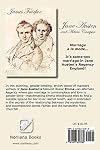
James Fairfax
by Jane Austen, Adam Campan (Author)
On This Page
Description
Same-sex marriage in Jane Austen's Regency England! In this stunning, gender-bending, stylish dance-of-manners version of Jane Austen's beloved classic novel Emma¿an alternate Regency where gay marriage is commonplace and love is gender-blind¿matchmaking Emma Woodhouse tries to find a suitable spouse for her lover Harriet Smith, and is embroiled in the secrets of the relationship between the mysterious and accomplished James Fairfax and the handsome Frank Churchill...Tags
Member Reviews
(This duplicates my review on LJ.)
Genderbending and gender flips are popular these days, whether it's putting Disney princesses in their princes' outfits or designing gender-flipped casts for movies. One interesting example I came across recently is James Fairfax, a retelling of Jane Austen's Emma, by Adam Campan.
In this retelling quiet, reserved secondary-character-with-a-secret Jane Fairfax becomes James Fairfax. That's change no. 1. But the story also posits that progressive Enlightenment thought and the affections of certain royal personages has resulted in same-sex marriages becoming legal and, by the time the action of the story takes place, widely accepted.
Campan weaves information that establishes the resultant differences in show more expectation and behavior into Jane Austen's prose, so that this alternative reality seems entirely natural for the times. For example, when it comes to dancing,and dancing partners:
and later:
Because same-sex attachments are not an issue, Emma's distress over Mr. Knightley's possible romantic interest in Jane Fairfax translates easily enough when her friend Mrs. Taylor suggests the same possibility regarding James Fairfax:
It's a wonderful conjuring, this past in which same-sex courtship and marriage are simply not an issue. It made me a little wistful, reading it!
If you're intrigued by this type of literary play, and if you enjoy Emma, I highly recommend it. show less
Genderbending and gender flips are popular these days, whether it's putting Disney princesses in their princes' outfits or designing gender-flipped casts for movies. One interesting example I came across recently is James Fairfax, a retelling of Jane Austen's Emma, by Adam Campan.
In this retelling quiet, reserved secondary-character-with-a-secret Jane Fairfax becomes James Fairfax. That's change no. 1. But the story also posits that progressive Enlightenment thought and the affections of certain royal personages has resulted in same-sex marriages becoming legal and, by the time the action of the story takes place, widely accepted.
Campan weaves information that establishes the resultant differences in show more expectation and behavior into Jane Austen's prose, so that this alternative reality seems entirely natural for the times. For example, when it comes to dancing,and dancing partners:
Young ladies, unless secure in their powers of attaching partners, much preferred a bal nouveau, as the new rule permitted women to ask partners to dance. Thus no woman must sit at the side wishing to dance, given enough possible partners in attendance.
and later:
James was on the other side of the room, being pressed to dance by Miss Anne Cox and the eldest Miss Cole, who were pushed aside by Mr. Thomas Cole, who wanted a fast and boisterous male partner for the gavotte. The girls went off to take their place in the forming line, followed by James Fairfax and Mr. Thomas Cole.
Because same-sex attachments are not an issue, Emma's distress over Mr. Knightley's possible romantic interest in Jane Fairfax translates easily enough when her friend Mrs. Taylor suggests the same possibility regarding James Fairfax:
“Mr. Knightley!--Mr. Knightley must not fall in love!”
“Why not? You would deny him happiness?”
“Oh! No, not at all.”
“Well, then. Surely you are not a traditionalist?”
“I am only a traditionalist in believing that one must marry for better reasons than one’s admiration of another’s playing of Bach ... Mr. Knightley in love? Mr. Knightley marry? No, I have never had such an idea, and I cannot adopt it now.”
It's a wonderful conjuring, this past in which same-sex courtship and marriage are simply not an issue. It made me a little wistful, reading it!
If you're intrigued by this type of literary play, and if you enjoy Emma, I highly recommend it. show less
(This duplicates my review on LJ.)
Genderbending and gender flips are popular these days, whether it's putting Disney princesses in their princes' outfits or designing gender-flipped casts for movies. One interesting example I came across recently is James Fairfax, a retelling of Jane Austen's Emma, by Adam Campan.
In this retelling quiet, reserved secondary-character-with-a-secret Jane Fairfax becomes James Fairfax. That's change no. 1. But the story also posits that progressive Enlightenment thought and the affections of certain royal personages has resulted in same-sex marriages becoming legal and, by the time the action of the story takes place, widely accepted.
Campan weaves information that establishes the resultant differences in show more expectation and behavior into Jane Austen's prose, so that this alternative reality seems entirely natural for the times. For example, when it comes to dancing,and dancing partners:
and later:
Because same-sex attachments are not an issue, Emma's distress over Mr. Knightley's possible romantic interest in Jane Fairfax translates easily enough when her friend Mrs. Taylor suggests the same possibility regarding James Fairfax:
It's a wonderful conjuring, this past in which same-sex courtship and marriage are simply not an issue. It made me a little wistful, reading it!
If you're intrigued by this type of literary play, and if you enjoy Emma, I highly recommend it. show less
Genderbending and gender flips are popular these days, whether it's putting Disney princesses in their princes' outfits or designing gender-flipped casts for movies. One interesting example I came across recently is James Fairfax, a retelling of Jane Austen's Emma, by Adam Campan.
In this retelling quiet, reserved secondary-character-with-a-secret Jane Fairfax becomes James Fairfax. That's change no. 1. But the story also posits that progressive Enlightenment thought and the affections of certain royal personages has resulted in same-sex marriages becoming legal and, by the time the action of the story takes place, widely accepted.
Campan weaves information that establishes the resultant differences in show more expectation and behavior into Jane Austen's prose, so that this alternative reality seems entirely natural for the times. For example, when it comes to dancing,and dancing partners:
Young ladies, unless secure in their powers of attaching partners, much preferred a bal nouveau, as the new rule permitted women to ask partners to dance. Thus no woman must sit at the side wishing to dance, given enough possible partners in attendance.
and later:
James was on the other side of the room, being pressed to dance by Miss Anne Cox and the eldest Miss Cole, who were pushed aside by Mr. Thomas Cole, who wanted a fast and boisterous male partner for the gavotte. The girls went off to take their place in the forming line, followed by James Fairfax and Mr. Thomas Cole.
Because same-sex attachments are not an issue, Emma's distress over Mr. Knightley's possible romantic interest in Jane Fairfax translates easily enough when her friend Mrs. Taylor suggests the same possibility regarding James Fairfax:
“Mr. Knightley!--Mr. Knightley must not fall in love!”
“Why not? You would deny him happiness?”
“Oh! No, not at all.”
“Well, then. Surely you are not a traditionalist?”
“I am only a traditionalist in believing that one must marry for better reasons than one’s admiration of another’s playing of Bach ... Mr. Knightley in love? Mr. Knightley marry? No, I have never had such an idea, and I cannot adopt it now.”
It's a wonderful conjuring, this past in which same-sex courtship and marriage are simply not an issue. It made me a little wistful, reading it!
If you're intrigued by this type of literary play, and if you enjoy Emma, I highly recommend it. show less
Ratings
Members
- Recently Added By
Published Reviews
The time is perhaps ripe for a gay/lesbian take on one of Austen’s novels. One could imagine, for instance, a young Edmund or Edward Woodhouse—handsome, rich and opinionated—who finds himself after various misadventures drawn to the excellent Mr. Knightley. Whether dealing with a hero or a heroine, one could in such a novel explore some aspects of Georgian and Regency sexuality: the show more secretive, but not yet illegal world of gay men; the more anxiety-provoking ideas of incest, as expressed both in the popular novel The Monk and in the public’s attitudes towards Lord Byron’s alleged affair with his half-sister; the Ladies of Llangollen; the Hell-Fire Club and so on. A novel such as this would require research, reflection and creativity.
To produce a “gay romance” it is not, however, sufficient to take an e-text of Emma and use the global “search and replace” function to change “Jane Fairfax” to “James Fairfax,” transform “Mr. Weston” into “Mrs. Weston” and have that wealthy and genial widow woo and win Miss Taylor, who upon her marriage to Mrs. Weston rather confusingly becomes Mrs. Taylor, turn all the “she saids” to “he saids,” and then dust off one’s hands and call it a day. show less
To produce a “gay romance” it is not, however, sufficient to take an e-text of Emma and use the global “search and replace” function to change “Jane Fairfax” to “James Fairfax,” transform “Mr. Weston” into “Mrs. Weston” and have that wealthy and genial widow woo and win Miss Taylor, who upon her marriage to Mrs. Weston rather confusingly becomes Mrs. Taylor, turn all the “she saids” to “he saids,” and then dust off one’s hands and call it a day. show less
added by AustenBlog
Author Information

696+ Works 312,979 Members
Jane Austen's life is striking for the contrast between the great works she wrote in secret and the outward appearance of being quite dull and ordinary. Austen was born in the small English town of Steventon in Hampshire, and educated at home by her clergyman father. She was deeply devoted to her family. For a short time, the Austens lived in the show more resort city of Bath, but when her father died, they returned to Steventon, where Austen lived until her death at the age of 41. Austen was drawn to literature early, she began writing novels that satirized both the writers and the manners of the 1790's. Her sharp sense of humor and keen eye for the ridiculous in human behavior gave her works lasting appeal. She is at her best in such books as Pride and Prejudice (1813), Mansfield Park (1814), and Emma (1816), in which she examines and often ridicules the behavior of small groups of middle-class characters. Austen relies heavily on conversations among her characters to reveal their personalities, and at times her novels read almost like plays. Several of them have, in fact, been made into films. She is considered to be one of the most beloved British authors. (Bowker Author Biography) show less
Work Relationships
Is a reply to
Emma by Jane Austen
Common Knowledge
- Original publication date
- 2009-08-01; 2013-06-04
- People/Characters
- Emma Woodhouse; James Fairfax; Harriet Smith; Frank Churchill
- Important places
- Highbury, Surrey, England, UK; Surrey, England, UK
Classifications
Statistics
- Members
- 16
- Popularity
- 1,512,314
- Reviews
- 2
- Rating
- (4.00)
- Languages
- English
- Media
- Paper, Ebook
- ISBNs
- 2
- ASINs
- 1