On This Page
Description
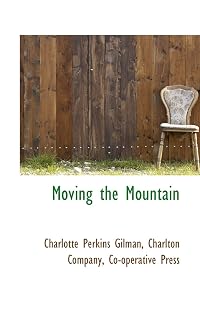
Moving the Mountain is the first book in Charlotte Perkins Stetson Gilman's well known trilogy. The second book in the trilogy is her land mark classic Herland. Moving Mountain delivers Gilman's program for reforming society. She concentrates on measures of rationality and efficiency that could be instituted in her own time, largely with greater social cooperation - equal education and treatment for girls and boys, day-care centers for working women, and other issues still relevant a century show more later. Yet Gilman also allows for technological progress: electric power is the motive force in industry and urban society, power generated largely by the tides, wind-mills, water mills, and solar engines. Wilder Publications is a green publisher. All of our books are printed to order. This reduces waste and helps us keep prices low while greatly reducing our impact on the environment. show lessTags
Recommendations

































Member Reviews
This book was an odd one, in the way that a lot of utopian books are: unendingly didactic explaining how society perfected itself, full of the prejudices of the time in which it was published (talk of eugenics and the little mention of race was derogatory), fantastically unrealistic that everyone would just agree to live together in a society that is "beyond socialism," and horrifyingly soul-crushing as it deals with many of the same issues we face today. That being said it was thought provoking and I'm inclined to try reading the second book in the trilogy just to see if there is more of a narrative
The one real problem I had with this book is that its feminist message is undercut when the male narrator whoends up saving his female show more cousin from her ultra conservative and reactionary father by marrying her and taking her away from that place, even though he had been lost in Tibet for 30 years and ignorant of the changes to his America -- ugh. show less
The one real problem I had with this book is that its feminist message is undercut when the male narrator who
started off well, but then got to sterilizing undesirables, shaming people into socially desired activities, flat out killing people, and whooooo racism.
Ratings
Members
- Recently Added By
Lists

Bookriot's 100 Must-Read Sci-Fi Fantasy Novels By Female Authors
100 works; 9 members
Author Information

142+ Works 14,834 Members
Charlotte Perkins Gilman was born in 1860 in Hartford, Conn. Her traumatic childhood led to depression and to her eventual suicide. Gilman's father abandoned the family when she was a child and her mother, who was not an affectionate woman, recruited relatives to help raise her children. Among these relatives was Harriet Beecher Stowe, the author show more of Uncle Tom's Cabin. Due to her family situation, Gilman learned independence, but also became alienated from her many female relatives. Gilman married in 1884 and was soon diagnosed with depression. She was prescribed bed rest, which only seemed to aggravate her condition and she eventually divorced her husband, fearing that marriage was partly responsible for her depressed state. After this, Gilman became involved in feminist activities and the writing that made her a major figure in the women's movement. Books such as Women and Economics, written in 1898, are proof of her importance as a feminist. Here she states that only when women learn to be economically independent can true equality be achieved. Her fiction works, particularly The Yellow Wallpaper, are also written with feminist ideals. A frequent lecturer, she also founded the feminist magazine Forerunner in 1909. Gilman, suffering from cancer, chose to end her own life and committed suicide on August 17, 1935. More information about this fascinating figure can be found in her book The Living of Charlotte Perkins Gilman: An Autobiography, published in 1935. (Bowker Author Biography) Charlotte Perkins Gilman was born in 1860 in Hartford, Conn. Her traumatic childhood led to depression and to her eventual suicide. Gilman's father abandoned the family when she was a child and her mother, who was not an affectionate woman, recruited relatives to help raise her children. Among these relatives was Harriet Beecher Stowe, the author of Uncle Tom's Cabin. Due to her family situation, Gilman learned independence, but also became alienated from her many female relatives. Gilman married in 1884 and was soon diagnosed with depression. She was prescribed bed rest, which only seemed to aggravate her condition and she eventually divorced her husband, fearing that marriage was partly responsible for her depressed state. After this, Gilman became involved in feminist activities and the writing that made her a major figure in the women's movement. Books such as Women and Economics, written in 1898, are proof of her importance as a feminist. Here she states that only when women learn to be economically independent can true equality be achieved. Her fiction works, particularly The Yellow Wallpaper, are also written with feminist ideals. A frequent lecturer, she also founded the feminist magazine Forerunner in 1909. Gilman, suffering from cancer, chose to end her own life and committed suicide on August 17, 1935. More information about this fascinating figure can be found in her book The Living of Charlotte Perkins Gilman: An Autobiography, published in 1935. (Bowker Author Biography) show less
Series

Work Relationships
Classifications
- Genres
- Fiction and Literature, General Fiction, Science Fiction
- DDC/MDS
- 813.4 — Literature & rhetoric American literature in English American fiction in English Later 19th Century 1861-1900
- LCC
- PS1744 .G57 .M68 — Language and Literature American literature American literature Individual authors 19th century
- BISAC
Statistics
- Members
- 60
- Popularity
- 514,850
- Reviews
- 2
- Rating
- (3.38)
- Languages
- English
- Media
- Paper, Ebook
- ISBNs
- 18
- ASINs
- 2