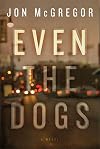
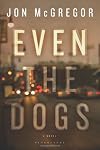
Even the Dogs
by Jon McGregor
On This Page
Description
WINNER OF THE 2012 IMPAC DUBLIN AWARDOn a cold, quiet day between Christmas and the New Year, a man's body is found in an abandoned apartment. His friends look on, but they're dead, too. Their bodies found in squats and sheds and alleyways across the city. Victims of a bad batch of heroin, they're in the shadows, a chorus keeping vigil as the hours pass, paying their own particular homage as their friend's body is taken away, examined, investigated, and cremated.All of their stories are laid show more out piece by broken piece through a series of fractured narratives. We meet Robert, the deceased, the only alcoholic in a sprawling group of junkies; Danny, just back from uncomfortable holidays with family, who discovers the body and futiley searches for his other friends to share the news of Robert's death; Laura, Robert's daughter, who stumbles into the junky's life when she moves in with her father after years apart; Heather, who has her own place for the first time since she was a teenager; Mike, the Falklands War vet; and all the others. Theirs are stories of lives fallen through the cracks, hopes flaring and dying, love overwhelmed by a stronger need, and the havoc wrought by drugs, distress, and the disregard of the wider world. These invisible people live in a parallel reality, out of reach of basic creature comforts, like food and shelter. In their sudden deaths, it becomes clear, they are treated with more respect than they ever were in their short lives.Intense, exhilarating, and shot through with hope and fury, Even the Dogs is an intimate exploration of life at the edges of society--littered with love, loss, despair, and a half-glimpse of redemption. show lessTags
Recommendations










Member Recommendations
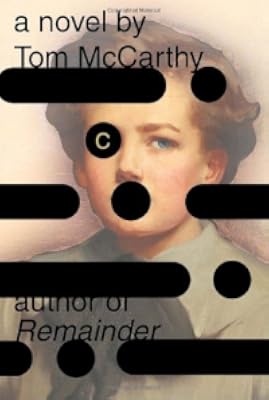
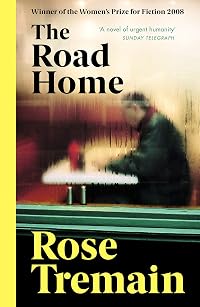
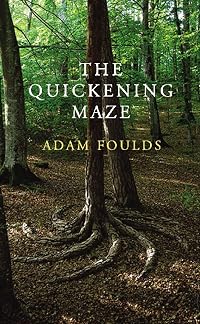
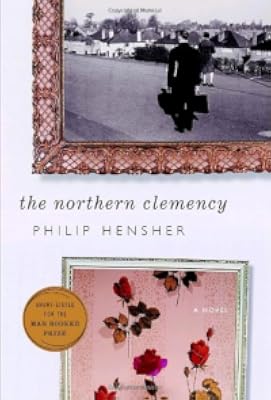
sanddancer Both bleak but well-written stories of addiction.
Member Reviews
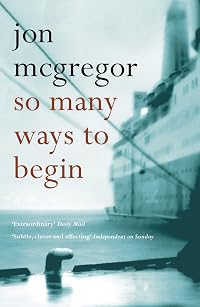
I love Jon McGregor's writing style. I think I've said before that he has a poetic, lyrical quality to his work that makes it stand out from the rest. This book is no different in this respect, but unlike his previous books (If No-one Speaks of Remarkable Things & So Many Ways to Begin) this subject matter is harder hitting, gritty.
We're following the story of Robert, a housebound alcholic. After his wife leaves, taking their small daughter with her, he becomes increasingly isolated, never leaving the house, steadily drinking more and more. As time passes, he becomes 'friends' with a selection of the underclass of life: various homeless with various addictions and issues.
But we find this out in flashback - our story starts when his body show more is discovered in the flat having been there for some days. We follow the journey of the corpse as it goes through the various procedures: police arriving, soc officers doing their jobs, the body being removed and stored, the autopsy, the coroner's court and finally the services before cremation. All through this journey we are accompanied by 'we' - at the beginning, we don't know who 'we' are, but as the story progresses it becomes increasingly clear and 'We' are acting as some sort of Greek Chorus, following the events and commenting on how we got here.... and the story unfolds.
Despite the subject and procedures that are being described, it's a very empathetic book. You feel for these people, each of them brought low by circumstances. (One story is particularly moving: p114, end of Chapter3, where we find out Ant's back story, juxtaposed with the journey of drugs into the country. In fact, this is one of the pieces that Jon McGregor read at the Edinburgh Book Fest last year and part of why I wanted to read this book). You also see the dignity of how each part of the process treats the body (again, one part that moved me was during the autopsy (p129/130) where the corpse is washed, gently, delicately & the final sentence of that section " Nearest he's come to a bath in years".)
As the story progresses, you can see all too clearly (too painfully) what must have happened and what became of each of our cast of characters. The sheer pity of it all, so many wasted lives blighted by circumstance & a spiral of degredation. A harsh, but probably true, comment on our society today.
I'm so glad I read this!
btw @jon_mcgregor actually tweeted me when I tweeted that this was my #fridayread and apparently he's nearly finished his next book:
"New book nearly done. "This Isn't The Sort Of Thing That Happens To Someone Like You." Long title, short stories."
"Out Feb next year, as long as I finish it by the end of this month... Short stories, with a long title."
I can't wait!
Also see the synopsis on the Waterstones website: http://www.waterstones.com/waterstonesweb/products/jon mcgregor/even the dogs/7785881/ show less
We're following the story of Robert, a housebound alcholic. After his wife leaves, taking their small daughter with her, he becomes increasingly isolated, never leaving the house, steadily drinking more and more. As time passes, he becomes 'friends' with a selection of the underclass of life: various homeless with various addictions and issues.
But we find this out in flashback - our story starts when his body show more is discovered in the flat having been there for some days. We follow the journey of the corpse as it goes through the various procedures: police arriving, soc officers doing their jobs, the body being removed and stored, the autopsy, the coroner's court and finally the services before cremation. All through this journey we are accompanied by 'we' - at the beginning, we don't know who 'we' are, but as the story progresses it becomes increasingly clear and 'We' are acting as some sort of Greek Chorus, following the events and commenting on how we got here.... and the story unfolds.
Despite the subject and procedures that are being described, it's a very empathetic book. You feel for these people, each of them brought low by circumstances. (One story is particularly moving: p114, end of Chapter3, where we find out Ant's back story, juxtaposed with the journey of drugs into the country. In fact, this is one of the pieces that Jon McGregor read at the Edinburgh Book Fest last year and part of why I wanted to read this book). You also see the dignity of how each part of the process treats the body (again, one part that moved me was during the autopsy (p129/130) where the corpse is washed, gently, delicately & the final sentence of that section " Nearest he's come to a bath in years".)
As the story progresses, you can see all too clearly (too painfully) what must have happened and what became of each of our cast of characters. The sheer pity of it all, so many wasted lives blighted by circumstance & a spiral of degredation. A harsh, but probably true, comment on our society today.
I'm so glad I read this!
btw @jon_mcgregor actually tweeted me when I tweeted that this was my #fridayread and apparently he's nearly finished his next book:
"New book nearly done. "This Isn't The Sort Of Thing That Happens To Someone Like You." Long title, short stories."
"Out Feb next year, as long as I finish it by the end of this month... Short stories, with a long title."
I can't wait!
Also see the synopsis on the Waterstones website: http://www.waterstones.com/waterstonesweb/products/jon mcgregor/even the dogs/7785881/ show less
My review of Even The Dogs was one that I took under careful consideration. This was an unusual book which, it was clear, would shock some readers, while hitting home with others. In a technical sense, the author shows his mastery of the craft of writing, and his deep understanding of the human condition as it applies to those who frequent the underbelly of society. Is this through a personal acquaintance with a seamy, dark life among the scavengers of a middle class existence, of those who do not "succeed" but chase after the crumbs and detritus of the lives they never quite "managed"? Or does McGregor have the gift of placing himself in the skin of his characters so completely that his stream-of-consciousness dialogue becomes show more disturbing to the reader? This dialogue, often trailing off mid-sentence, or seeming to lose its focus as it begins another story within a story, is often an indictment of those of us who can observe the "low crawlers" of this society and feel nothing but contempt for their apparent weakness in the face of temptation. In fact, the dialogue is a tool McGregor employs that carries the reader from the scene at hand to events that led to the present catastrophe or dilemma, or has the potential to suggest redemption, just out of reach of the speaker. Some readers may feel only compassion for the ruined lives before them, the bad choices, the potential unrecognized, the humanity withheld, while other readers wonder how to feel pity for these people who choose to live their lives in dirty holes, apartments full of used needles and the vomit of past trips into an ecstasy only felt, never realized in any concrete world? Either way, McGregor has accomplished his task of placing before his readers a world of dark and light, depending from where the reader views it. It is a book filled with only a few days, but days jammed full of the existence of people who fill every minute with a desperation that makes the time seem longer, the end seem closer, the parallels more distant. I think the novel is a success. Its success makes it neither easier to read nor more pleasant for the reader. It makes Jon McGregor a master at manipulating dialogue and characterization into a world clamoring to be remembered, a literary device that allows each reader to carry away from "Even The Dogs" what they will, be it positive or negative. It seems a given that it will not be forgotten easily. show less
 This review was written for LibraryThing Early Reviewers.
Dismal, bleak and mercifully short. This was like Melvin Burgess's [b:Junk|98973|Junk|Melvin Burgess|https://d.gr-assets.com/books/1171430616s/98973.jpg|2756729] crossed with Jim Crace's [b:Being Dead|92559|Being Dead|Jim Crace|https://d.gr-assets.com/books/1362225657s/92559.jpg|1239782]. Cut off sentences add urgency but also stand for muddled minds unable to focus. I thought this was a powerful work about loneliness, addiction and people living beyond the borders of society. Impressive.
I was leary of reading this book after reading so many reviewers who hated the disjointed writing style. The grim subject matter didn't concern me as much. I should have had my thinking reversed. The writing style was actually beautifuly crafted, well suited to the subject matter of the story. But grim is an understatement. I wasn't expecting how raw this book would leave me feeling. I'm not complaining at all though, in my opinion any book that can give me such an emotional response-even if it's not a happy one- is a rarity any more and much appreciated.
This review was written for LibraryThing Early Reviewers.When I began reading this book the characters disgusted me. The world McGregor portrays is so foreign and sinister to what I am used to (thank goodness I suppose) that I found it quite unsettling reading. It is a world of drug users, alcoholics and delinquents; where the most urgent and important need is to make enough money for the next score. By the end of the novel, i can't say i liked any of the characters, but they became more human. I pitied them. I hoped for something positive amongst the ashes and squalor.
I found it to be a rather cautionary tale; nothing good comes from this lifestyle, and most of the characters come to a rather gristly end. Yet it gives the addicts; the homeless; the forgotten people in society a face and a show more voice - even if what that voice says is something that makes us uncomfortable, and we would rather be deaf to it.
Well written and thought provoking. show less
I found it to be a rather cautionary tale; nothing good comes from this lifestyle, and most of the characters come to a rather gristly end. Yet it gives the addicts; the homeless; the forgotten people in society a face and a show more voice - even if what that voice says is something that makes us uncomfortable, and we would rather be deaf to it.
Well written and thought provoking. show less
I’m one of many LT members that feel they don’t want to know too much about a book before I read it, so when I opted to receive Even the Dogs by Jon McGregor as an ER book, I didn’t know anything about the book. I did know that the author was long listed for the Booker Prize for a previous novel he had written. Let me save all of you who are now reading this review from the torture that is included within the pages of this novel, and I use that term very loosely, for, to call it a novel, is to assume it has a plot. It doesn’t.
I’ll tell you what it is and then you can decide if you want to expose yourself to this bunch of words on paper pages. Can you say “stream of consciousness”? In dialect??? Grammar and punctuation are show more foreign to this author for most of the book. Here’s the gist of what goes on: the dead body of an alcoholic is discovered by his friend, a drug addict (Danny). For most of the book he rants about trying to find the alcoholic’s daughter Laura, who is also a drug addict. Interlaced throughout is a great deal of profanity. Oh yeah, also looking on as Danny goes on and on all over the place looking for Laura, from one street corner and run down building to another, are all his friends. And they add to the stream of consciousness too. However, they are all also dead.
Finally, there is a coroner’s inquest and for this McGregor reverts to a script like dialogue such as:
Coroner: He hadn’t said anything about wanting to stop drinking?
Laura: No, only (inaudible).
Coroner: Only what?
Laura: Only, I mean, he knew about me going to rehab, he found out about it like. I told him, I mean. He might have thought, after that, you know.
You get the idea. Unless you prefer the stream of consciousness:
“So that’s all it was I wasn’t trying to shaft you, you know that la, you know I wouldn’t do that, it was just, it was just a pure out-of-necessity thing you know what I’m saying it was just, only it turned Benny boy was wrong and them blokes didn’t turn up neither, but still like it was I had the best of intentions it was out of necessity it was the mother of what is it like you know what I’m saying la”
Right.
Mercifully the book is short (less than 200 pages). That is it’s only redeeming quality. So be my guest; maybe this is your cup of tea. For me it was like bamboo under the fingernails. show less
I’ll tell you what it is and then you can decide if you want to expose yourself to this bunch of words on paper pages. Can you say “stream of consciousness”? In dialect??? Grammar and punctuation are show more foreign to this author for most of the book. Here’s the gist of what goes on: the dead body of an alcoholic is discovered by his friend, a drug addict (Danny). For most of the book he rants about trying to find the alcoholic’s daughter Laura, who is also a drug addict. Interlaced throughout is a great deal of profanity. Oh yeah, also looking on as Danny goes on and on all over the place looking for Laura, from one street corner and run down building to another, are all his friends. And they add to the stream of consciousness too. However, they are all also dead.
Finally, there is a coroner’s inquest and for this McGregor reverts to a script like dialogue such as:
Coroner: He hadn’t said anything about wanting to stop drinking?
Laura: No, only (inaudible).
Coroner: Only what?
Laura: Only, I mean, he knew about me going to rehab, he found out about it like. I told him, I mean. He might have thought, after that, you know.
You get the idea. Unless you prefer the stream of consciousness:
“So that’s all it was I wasn’t trying to shaft you, you know that la, you know I wouldn’t do that, it was just, it was just a pure out-of-necessity thing you know what I’m saying it was just, only it turned Benny boy was wrong and them blokes didn’t turn up neither, but still like it was I had the best of intentions it was out of necessity it was the mother of what is it like you know what I’m saying la”
Right.
Mercifully the book is short (less than 200 pages). That is it’s only redeeming quality. So be my guest; maybe this is your cup of tea. For me it was like bamboo under the fingernails. show less
This review was written for LibraryThing Early Reviewers.Even the Dogs takes us into the grimy subculture of heroin addiction in a British urban centre. The story is rudimentary. The body of Robert Radcliffe is discovered in a squalid, chaotic apartment about a week after his death from the accumulated effects of long-term alcohol abuse and general physical neglect. Prior to this event Robert’s apartment was the nexus for a group of addicts to whom he permitted use the place to get high so long as they contributed to the supply of food and drink. But Robert’s death, which happens between Christmas and New Year’s, sends the group scattering into the streets, and once police and a forensics team move in the apartment is off limits. The remainder of the novel chronicles, often in grisly show more detail, the fates of the addicts as well as the agonizing journey of Robert’s body from point of discovery through to autopsy and, finally, disposal. Jon McGregor’s fiction is routinely cited for bold departures from conventional storytelling strategies and techniques. In Even the Dogs he utilizes a collective narrative voice to depict events as they happen, writing from the perspective of the group of addicts, who serve as a kind of Greek chorus, observing the proceedings from the shadows as police, medical examiners and others go about their business. The novel is at its best when the narrative zeroes in on the individual addicts—Danny, Mike, Ben, Laura, Ant—and we learn how circumstances conspired to lead them down a tragic and desperate path. The novel is densely written in prose that echoes an urban streetwise vernacular, and McGregor conveys, vividly and dispassionately, the painful craving of drug addiction and the catastrophic decisions it forces on its sufferers. But it’s impossible to ignore the fact that the book also presents a case of technique overwhelming story. After a while the reader longs for a simple, straightforward description or scrap of dialogue that would enable us to connect with a character. The book’s brilliance is that it shows us everything and turns away from nothing. But the tone throughout is clinical, and in the final analysis our response to this novel is blunted by its lack of emotional depth. show less
Members
- Recently Added By
Published Reviews
ThingScore 75
“Even the Dogs,” McGregor’s third novel, continues his experiments with the devices of fiction. The book is narrated by a group of urban ghosts, victims of drug overdoses who look on as someone they know, Robert Radcliffe, is found dead in his shabby apartment. Other friends, family members and acquaintances, most of whom were part of Robert’s life, come in and out of focus as they show more move around the city looking for their next fixes and, along with the police and investigators, respond to Robert’s death.
As a novel about the consequences of addiction — particularly heroin addiction — “Even the Dogs” is harrowing. It details the physical, psychological, social and environmental damage, and portrays the all-consuming nature of the life: “Always working and watching and chasing around for a bag of that. Jesus but. The man-hours that go into living like this. Takes some dedication.” show less
As a novel about the consequences of addiction — particularly heroin addiction — “Even the Dogs” is harrowing. It details the physical, psychological, social and environmental damage, and portrays the all-consuming nature of the life: “Always working and watching and chasing around for a bag of that. Jesus but. The man-hours that go into living like this. Takes some dedication.” show less
added by kidzdoc
Even the Dogs is set among the underclass of an anonymous English city. The narrative is structured around the sudden death of Robert, a chronic alcoholic, and follows the state's processing of his corpse and the impact of its discovery on the ragged group of addicts and down-and-outs who surround him in his final years.
Their story is narrated in a voice that, like them, is both striking and show more elusive. It inhabits the first person plural, often functioning like the directions in a film script ("We see someone getting out of a taxi") but also showing signs of having its own history ("We never met Yvonne but we see her now") and attitudes ("We're not sure what else we can do").
Even the Dogs is a courageous and passionate novel and shows McGregor to be one of the few young English writers taking genuine risks with language and form. If some of them fail to pay off, there is no less to admire, no less nerve and ingenuity, in the attempt. show less
Their story is narrated in a voice that, like them, is both striking and show more elusive. It inhabits the first person plural, often functioning like the directions in a film script ("We see someone getting out of a taxi") but also showing signs of having its own history ("We never met Yvonne but we see her now") and attitudes ("We're not sure what else we can do").
Even the Dogs is a courageous and passionate novel and shows McGregor to be one of the few young English writers taking genuine risks with language and form. If some of them fail to pay off, there is no less to admire, no less nerve and ingenuity, in the attempt. show less
added by kidzdoc
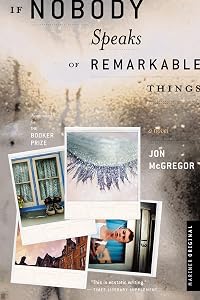
On his website, McGregor – who's best known for his Booker-longlisted first novel, If Nobody Speaks of Remarkable Things (2002) – names James Kelman and William Faulkner as the new book's literary models. With their help, he strikes a neat balance between depicting a semi-abstract landscape of suffering and grounding the characters' experiences firmly in history. His occasional use of the show more language of damnation and salvation doesn't tip over into would-be Beckett-like posturing, while the deep backgrounds to some of his character's problems – the Falklands war, Thatcher-era unemployment and, in one memorable passage, Afghanistan – are neither deployed as clinching revelations nor put on show as grand themes. McGregor also shows a fine ear for several varieties of regional speech, and exerts strict but not obsessive control over his initially formless-looking story. His reportorial absorption in the characters' world, with its restricted range of tone and incident, makes this powerful novel seem all the more resourcefully put together. show less
added by kidzdoc
Lists

Books featuring alcoholics
103 works; 18 members

International IMPAC Dublin Literary Award
179 works; 6 members

Books Read in 2017
4,249 works; 130 members

"We" narration
49 works; 2 members
Author Information

18+ Works 4,342 Members
Awards and Honors
Awards
Common Knowledge
- Canonical title
- Even the Dogs
- Original title
- Even the Dogs
- Original publication date
- 2010-02-01
- People/Characters
- Robert
- Important places
- England, UK
- Epigraph
- Cut off from hope, we live on in desire.
—Dante Aligheri, The Inferno - Dedication
- to Alice
- First words
- They break down the door at the end of December and carry the body away.
- Last words
- (Click to show. Warning: May contain spoilers.)We rise. What else can we do, we fucking rise.
- Blurbers
- Haddon, Mark; McCann, Colum
Classifications
Statistics
- Members
- 455
- Popularity
- 67,215
- Reviews
- 50
- Rating
- (3.27)
- Languages
- 7 — Dutch, English, French, German, Italian, Polish, Spanish
- Media
- Paper, Audiobook, Ebook
- ISBNs
- 20
- ASINs
- 6