On This Page
Description
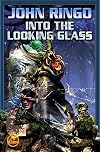
Formerly of the 82nd Airborne Division, New York Times best-selling author John Ringo brings unmatched authenticity to his military science fiction. When a subatomic physics experiment causes a massive explosion, interdimensional gateways open in Florida-and aliens pour out. Some intend to bring Earth to its knees. Others seem willing to help, but will annihilate the planet if Navy SEAL Command Master Chief Robert Miller can't stop the menace from spreading.Tags
Recommendations
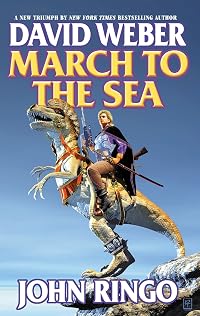
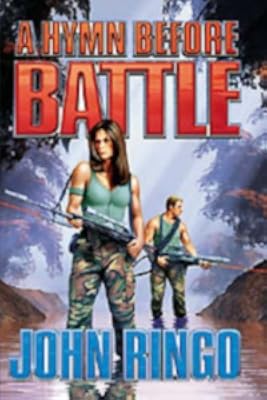
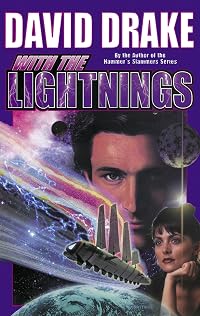

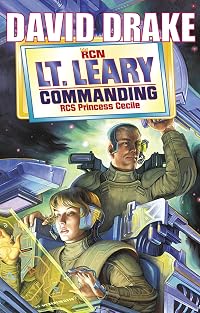
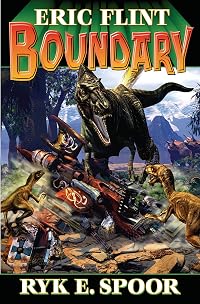

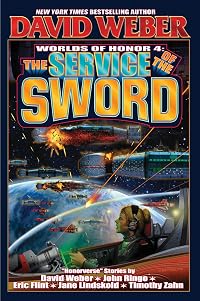
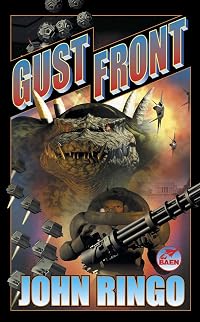
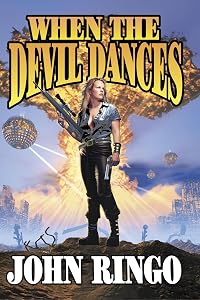
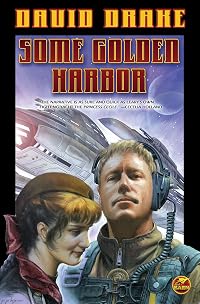
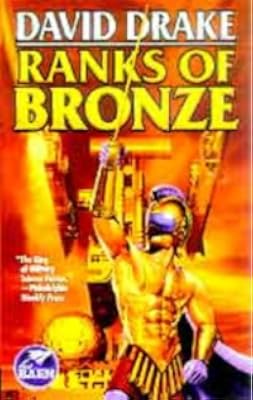


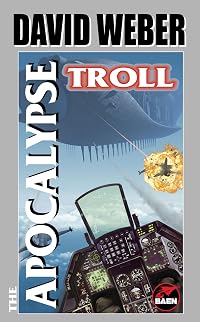
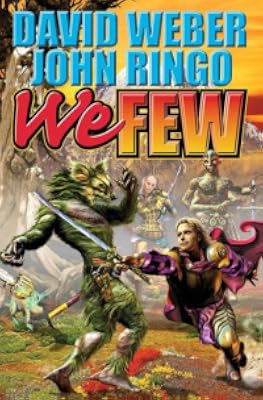
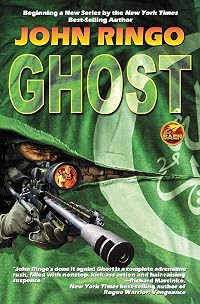
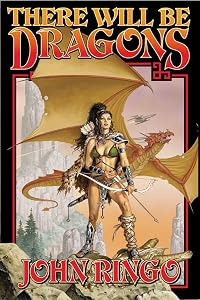
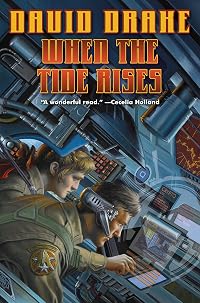

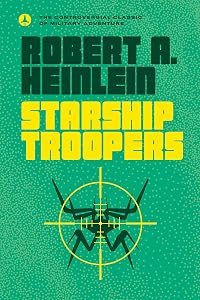
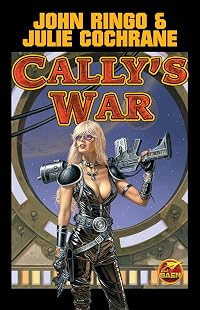
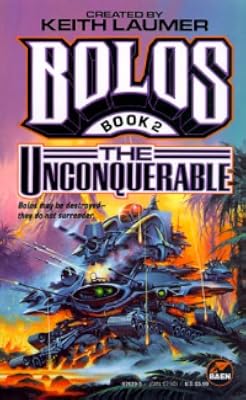
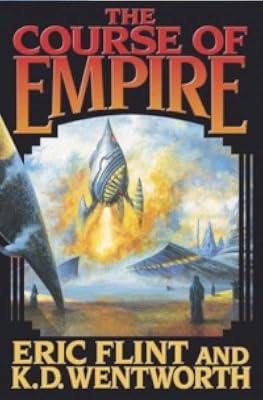
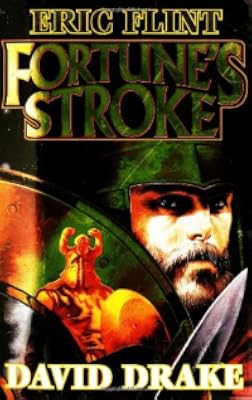
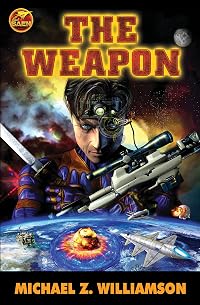
Member Recommendations
crazybatcow Death's Head is quite a bit more "noir" but they're both military sci-fi with competent butt-kicking and mature themes.
Member Reviews
A physics experiment in Orlando creates a nuke-sized fireball that opens up a gateway to other inhabited dimensions. It’s a book by John Ringo, so warfare commences immediately.
Into the Looking Glass is good at all the things Ringo is usually good at: exciting combat scenes against overwhelming odds, precise descriptions of all kinds of weapons, and plenty of what the pulps would have called B.E.M.s, bug-eyed monsters, for you kids. But the science is less believable than usual, and the politics are more paleolithic than ever.
Into the Looking Glass is good at all the things Ringo is usually good at: exciting combat scenes against overwhelming odds, precise descriptions of all kinds of weapons, and plenty of what the pulps would have called B.E.M.s, bug-eyed monsters, for you kids. But the science is less believable than usual, and the politics are more paleolithic than ever.
This is the second time I've read this. It's not bad. I like William Weaver, the science is neat (if way over my head), the aliens are interesting in many different ways (pity about which ones are real allies and which ones are fakes, though). The fighting is rather too bloody and detailed for me, but then it's a Ringo. I sort of skim it - the same way I skim Weber's acceleration numbers. Though I have to say, if Ringo really wanted (as he says in the afterword) to make a book that had real science in it...he could have left out Mimi and Tuffy. Of course then Weaver would have had to have been even more of a genius, with eurekas happening regularly instead of only occasionally without any trigger. But whatever. Fun story.
Never let it be said that I don't give people second chances. After my unhappiness with the story buzz-killing politics found when I read his The Tuloriad, I decided to try John Ringo, straight up, to see if another novel of his might have more of the good stuff and less of the thud and blunder.
And so I picked up Into the Looking Glass, a completely different series and world, and unlike the Tulorian, written without a co-author.
The set up and the basic scenario are interesting and clever: A high energy particle accident opens up potential gates to other worlds. Through these gates come contacts of several different kinds, including a malevolent force intent on turning the Earth into more territory for itself by an endless churning out show more of units that reminded me of the Zerg in Starcraft.
A ragtag group of soldiers, a "redneck physicist" and others fight to keep the aliens off of our turf, make contact with friendly aliens, and try to keep a situation spiraling out of control from going completely off of the rails.
I liked the basic premise as far as it went. The strength of the basic premise allowed me enough forward momentum to continue the book. Although implausible, I liked the "battletech" prototype technology employed against the hostile aliens.
However, the negative aspects of the book outweigh the positives.
After a good opening, the second half of the movie drags and loses momentum. Ringo also leaves a lot of dangling plot threads that seem more sloppiness than setting up a sequel. And the out-of-nowhere epilogue with trying to build a star drive is one of the worst tacked on last portions of a book I've read since Ender's Game. It almost seems like to me that Ringo was writing the book to frantically get the plot and scenario to the situation where we get that star drive, but the book is too short to make it plausible. It's a leap too far.
Character development is implausible. Our physicist hero goes from never firing a gun to being an expert in a shockingly short amount of time. Other characters are flat, wooden and without personality. Also, the government response to "tuffy", an extra-dimensional alien that may literally be a manifestation of God, is implausible, at best.
Female characters are another problem in this book. Sure, the novel mainly focuses on soldiers and a military response to it, but the number of significant female characters is thin on the ground. I expect better in a modern SF novel.
Now the politics. I dislike novels which turn into political tracts and grist for the mill to promote a political viewpoint rather than an actual story.Into the Looking Glass takes pot shots at liberals and the French. However, what he has to say about Arabs made my blood boil. The schadenfreude the author and the characters seem to have at the plight of those in the path of a Gate in the Middle East disgusted me.
"Any word on what we we're going to do?" Bill asked.
"Well, the Teams are sitting back, watching the tube and laughing in their beer." Miller answered. "The Ayrabs (sic) can't fight for shit. There's a lot of cultural reasons for it...Wait a year and there won't be enough mujaheddin left on earth to bury the bodies...The ragheads will also see,clearly, what the U.S. can do if it cares enough to send the very best. Nuclear weapons rising where the mullahs cannot ignore them."
If I want to re-read an alien invasion novel, I will read Pournelle and Niven's Footfall. There are two authors, no liberals they, who understand how to write an alien invasion novel, make it believable, and not take every opportunity to score political points.
Sorry, Mr. Ringo, I'm done trying to read your work. Good luck in your future endeavors. show less
And so I picked up Into the Looking Glass, a completely different series and world, and unlike the Tulorian, written without a co-author.
The set up and the basic scenario are interesting and clever: A high energy particle accident opens up potential gates to other worlds. Through these gates come contacts of several different kinds, including a malevolent force intent on turning the Earth into more territory for itself by an endless churning out show more of units that reminded me of the Zerg in Starcraft.
A ragtag group of soldiers, a "redneck physicist" and others fight to keep the aliens off of our turf, make contact with friendly aliens, and try to keep a situation spiraling out of control from going completely off of the rails.
I liked the basic premise as far as it went. The strength of the basic premise allowed me enough forward momentum to continue the book. Although implausible, I liked the "battletech" prototype technology employed against the hostile aliens.
However, the negative aspects of the book outweigh the positives.
After a good opening, the second half of the movie drags and loses momentum. Ringo also leaves a lot of dangling plot threads that seem more sloppiness than setting up a sequel. And the out-of-nowhere epilogue with trying to build a star drive is one of the worst tacked on last portions of a book I've read since Ender's Game. It almost seems like to me that Ringo was writing the book to frantically get the plot and scenario to the situation where we get that star drive, but the book is too short to make it plausible. It's a leap too far.
Character development is implausible. Our physicist hero goes from never firing a gun to being an expert in a shockingly short amount of time. Other characters are flat, wooden and without personality. Also, the government response to "tuffy", an extra-dimensional alien that may literally be a manifestation of God, is implausible, at best.
Female characters are another problem in this book. Sure, the novel mainly focuses on soldiers and a military response to it, but the number of significant female characters is thin on the ground. I expect better in a modern SF novel.
Now the politics. I dislike novels which turn into political tracts and grist for the mill to promote a political viewpoint rather than an actual story.Into the Looking Glass takes pot shots at liberals and the French. However, what he has to say about Arabs made my blood boil. The schadenfreude the author and the characters seem to have at the plight of those in the path of a Gate in the Middle East disgusted me.
"Any word on what we we're going to do?" Bill asked.
"Well, the Teams are sitting back, watching the tube and laughing in their beer." Miller answered. "The Ayrabs (sic) can't fight for shit. There's a lot of cultural reasons for it...Wait a year and there won't be enough mujaheddin left on earth to bury the bodies...The ragheads will also see,clearly, what the U.S. can do if it cares enough to send the very best. Nuclear weapons rising where the mullahs cannot ignore them."
If I want to re-read an alien invasion novel, I will read Pournelle and Niven's Footfall. There are two authors, no liberals they, who understand how to write an alien invasion novel, make it believable, and not take every opportunity to score political points.
Sorry, Mr. Ringo, I'm done trying to read your work. Good luck in your future endeavors. show less
If you're looking for a military science fiction book - that's what you'll find in this book. It's not a terrifically written novel, by any means, and there's a lot of the author's political opinions interspersed throughout, but there is also a lot of aliens getting blown up, humans getting blown up, and saving of world(s) being done.
It does fall into a bit of a slump/slowdown near the middle where Ringo seems to be trying to make too many scientific/political points and lost track of the fact that he was writing a military sci-fi, not a treatise on religious belief or Middle Eastern politics. The book does pick up again after this, but there is a lot of anti-Middle East "commentary" from about 1/3 of the way in to the very end of the show more book (and it's very noticeable in the final chapter and epilogue). If you don't agree with his politics, this section might even border on being offensive.
But if you can accept his political views, it's a strong, mostly action-packed, military sci-fi story with a plot that is wrapped up in the end. The narration is very good. I'll be reading the others in this series.
It's along the same lines as David Gunn's Death's Head series or Steakley's Armor if you're looking for read-alikes. show less
It does fall into a bit of a slump/slowdown near the middle where Ringo seems to be trying to make too many scientific/political points and lost track of the fact that he was writing a military sci-fi, not a treatise on religious belief or Middle Eastern politics. The book does pick up again after this, but there is a lot of anti-Middle East "commentary" from about 1/3 of the way in to the very end of the show more book (and it's very noticeable in the final chapter and epilogue). If you don't agree with his politics, this section might even border on being offensive.
But if you can accept his political views, it's a strong, mostly action-packed, military sci-fi story with a plot that is wrapped up in the end. The narration is very good. I'll be reading the others in this series.
It's along the same lines as David Gunn's Death's Head series or Steakley's Armor if you're looking for read-alikes. show less
When a physics experiment gone awry blows up a good chunk of Florida the closest scientist with the right background and clearances is one Bill Weaver. The explosion does more, however: it also opens up a series of shiny portals to other worlds. Just luckily he's in both mental and physical condition to take on not just the mental gymnastics of the explosion, but also it's aftermath, when it turns out there's aliens in them thar holes. And not the happy Disney kind.
The science is more than a bit over my head (not that I'm complaining), but the story makes up for the math. Ringo has an endearing habit of fully describing his characters right before he kills them off - not surprisingly, it enhances the storyline, as there are a very great show more MANY people getting blown up, eaten, dissolved, turned into alien goo.... At any rate, this was a re-read for me, as I grabbed it when if first came out. This time round I was able to read the continuations in immediate sequence. I was really looking forward to more of Tuffy & Mimi. show less
The science is more than a bit over my head (not that I'm complaining), but the story makes up for the math. Ringo has an endearing habit of fully describing his characters right before he kills them off - not surprisingly, it enhances the storyline, as there are a very great show more MANY people getting blown up, eaten, dissolved, turned into alien goo.... At any rate, this was a re-read for me, as I grabbed it when if first came out. This time round I was able to read the continuations in immediate sequence. I was really looking forward to more of Tuffy & Mimi. show less
I really enjoyed this book, and there are some parts that made me actually laugh. This is very similar to Ringo's Posleen war series, except this time the aliens are 'demons' invading from another universe/other planets via gates that mysteriously open on Earth. Instead of powered armor suits, this time we're fighting back with larger Mechwarrior style mechs. Still no Air Force involved to speak of, this is still strongly slanted towards infantry. The demons don't use technology, instead they breed various types of warrior creatures, including several nasty biological 'tanks'. Good military sci-fi again.
One fine day in the near future the world is operating much as it does today... that is until a scientist researching a theory on quantum mechanics pushes the run button on his experiment. The result of which causes a 60 kiloton explosion that pretty much erases the University of Central Florida and causes a vortex to open on what used to be the site of the lab. Of course this vortex seems to be causing other vortex's to appear and not all of them open up to friendly worlds or worlds with friendly inhabitants. In fact quite a few of them open up to a world conquering race named the Dreen (think Borg combined with the Zerg). Fortunately for Earth it does have a few aces in the hole. There is the alien being known as Tuffy, a short purple show more stuffed animal creature,(who may or may not be the conscious of the universe). He may hold the answer to closing the gates, if he can dumb down the answer enough. There is the Adar who have been fighting the Dreen off for thirty years. They may help or if it looks like a losing battle, they will blow the planet up so they don't have to fight a war on two fronts. So what's earth got to offer? A jack of all trades physicist named William Weaver and Command Master Chief Miller and his team of SEALS. There are going to be explosions lots and lots of explosions.
------
This is the beginning of another great adventure series by Ringo. Is does have similarities to the posleen saga (mecha suits, alien alliances), but that's not a bad thing. Weaver and Miller are a bit over the top and the politicians all cooperate and the good and evil lines are clearly defined. This is a straight up military adventure and Ringo's political leanings are evident, he even says so in the back of a few of his books. It doesn't interfere with the book much (I will admit there are few instances where I went, wouldn't happen at all. But hey its his world) and really the focus is on blowing up the evil alien things. I hope the next book keeps up the trend. I wouldn't say its as good as the posleen saga but it's definitely near it. I would recommend this to anyone who like military adventure and scifi. M.a.c show less
------
This is the beginning of another great adventure series by Ringo. Is does have similarities to the posleen saga (mecha suits, alien alliances), but that's not a bad thing. Weaver and Miller are a bit over the top and the politicians all cooperate and the good and evil lines are clearly defined. This is a straight up military adventure and Ringo's political leanings are evident, he even says so in the back of a few of his books. It doesn't interfere with the book much (I will admit there are few instances where I went, wouldn't happen at all. But hey its his world) and really the focus is on blowing up the evil alien things. I hope the next book keeps up the trend. I wouldn't say its as good as the posleen saga but it's definitely near it. I would recommend this to anyone who like military adventure and scifi. M.a.c show less
Members
- Recently Added By
Author Information

79+ Works 25,888 Members
John Ringo was born on March 22, 1963. After graduating high school, he joined the U.S. Army and rose to the rank of Specialist Four as a member of the 82nd Airborne Division. He is a science fiction and military fiction author. His works include the Posleen War series, the Council War series, and the Troy Rising series. (Bowker Author Biography)
Some Editions
Series

Common Knowledge
- Canonical title
- Into the Looking Glass
- Original publication date
- 2005-05
- People/Characters
- William Weaver
- Important places
- USA; Florida, USA; Orange County, Florida, USA
Classifications
Statistics
- Members
- 788
- Popularity
- 35,326
- Reviews
- 18
- Rating
- (3.62)
- Languages
- Czech, English
- Media
- Paper, Audiobook, Ebook
- ISBNs
- 11
- ASINs
- 3