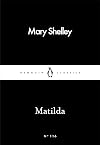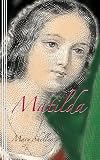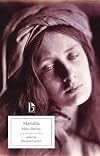
Mathilda
by Mary Shelley
On This Page
Description
Mathilda is narrated from the title character's death bed. She recounts her relationship with her father, who had an incestuous love for her, and his suicide by drowning. Her relationship with a gifted young poet was unable to prevent her emotional withdrawal after her father's death, or the lonely fact of her own dying.Shelley wrote Mathilda in an attempt to deal with the loss of her two infant children.
.
Tags
Recommendations






Member Reviews
I was promised a scandalous book about incest, and I instead got a Romantic treatise on suicide. So, this is absolutely going on every grad school syllabus on any Romantic era seminar.
"I was a creature cursed and set apart by nature", 18 December 2016
This review is from: Mary Shelley - Mathilda (Paperback)
Although the dark and turbid mindset of the heroine of this tale gives us an impression of the author's own feelings at this time (her son had recently died), as a work of literature I found this terribly over-the-top and melodramatic.
Matilda's mother dies shortly after her birth, and her distraught father goes abroad. For the next sixteen years the girl grows up in the care of a cold-natured aunt until finally, to her joy, her father returns.
(spoiler alert) After a few deliriously happy months in his company, he suddenly and inexplicably changes, becoming harsh and abrupt. When Matilda demands he tell her why, he show more at last reveals that he is in love with her. And here the whole thing just became ridiculous to me. Both parties decide they must never again meet; her father goes on to commit suicide. Matilda goes off to live in a cottage on a moor, where she adopts a nun's dress and talks interminably about her longing for death, unable to go back into society as "like another Cain, I had a mark set on my forehead to show mankind that there was a barrier between me and them." (Why? She did nothing wrong.)
As a description of profound, illogical depression, it has some merit, but I have to say that I found Matilda an unpleasantly self-obsessed tragedy queen. show less
This review is from: Mary Shelley - Mathilda (Paperback)
Although the dark and turbid mindset of the heroine of this tale gives us an impression of the author's own feelings at this time (her son had recently died), as a work of literature I found this terribly over-the-top and melodramatic.
Matilda's mother dies shortly after her birth, and her distraught father goes abroad. For the next sixteen years the girl grows up in the care of a cold-natured aunt until finally, to her joy, her father returns.
(spoiler alert) After a few deliriously happy months in his company, he suddenly and inexplicably changes, becoming harsh and abrupt. When Matilda demands he tell her why, he show more at last reveals that he is in love with her. And here the whole thing just became ridiculous to me. Both parties decide they must never again meet; her father goes on to commit suicide. Matilda goes off to live in a cottage on a moor, where she adopts a nun's dress and talks interminably about her longing for death, unable to go back into society as "like another Cain, I had a mark set on my forehead to show mankind that there was a barrier between me and them." (Why? She did nothing wrong.)
As a description of profound, illogical depression, it has some merit, but I have to say that I found Matilda an unpleasantly self-obsessed tragedy queen. show less
This short novel was Mary Shelley's second book after Frankenstein, but due to its controversial themes, it was not published until 140 years later in 1959. It is a semi-autobiographical portrayal, with the roles of Shelley, her father William Godwin and her husband Percy Shelley taken by Mathilda, her unnamed father and her poet companion, Woodville. The controversy lies mainly in the theme of the incestuous love ("unlawful and monstrous passion") her father feels for Mathilda, which, not surprisingly, given that there is no suggestion of any real such impropriety, led to William Godwin refusing to return the manuscript to Mary for publication. Linked to this theme, the main thrust of the novel is Mathilda's despair and wish for death show more because of guilt at supposedly having provoked the unnatural love on the part of her father; it is a bleak piece of writing, penned by Shelley after the death of her two young children, one year old Clare and three year old William, which led to her temporary alienation from her husband. In sum, a morbid read, arguably significant more for its literary background than its intrinsic merit as a novel. show less
This may be one of the most Romantic books I've ever read. Romantic with a big R, not a little one. It's so packed full of feelings, melodramatic dialogues, and rainy moors, you'll be convinced Lord Byron is standing directly behind you.
In Mathilda, the title character narrates from her deathbed the tragic story of her life. Having lost her mother at birth, her father leaves her in the care of a cold aunt and disappears for 16 years. He returns, only to eventually confess a shocking secret that tears both of them apart forever.
Despite how the plot summary sounds, it's actually a pretty droll story. Not once did I really feel sad for the characters. Possibly because the entire time they were trying to tell me in excruciating detail show more exactly how sad THEY were.
I did a word count, and here is how often the following words were used in the story:
* Alas -- 24
* Agony -- 11
* Sorrow -- 28
* Misery -- 26
* Grief -- 48
* Bitter -- 30
* Tears -- 50
* Despair -- 52
And last but not least, the words death (59), die (64), or dead (23) were used for a combined total of 146 times! The book is only 144 pages long. Alas!
You can read my full review here: http://virtualmargin.blogspot.com/2011/08/mathilda-34100.html show less
In Mathilda, the title character narrates from her deathbed the tragic story of her life. Having lost her mother at birth, her father leaves her in the care of a cold aunt and disappears for 16 years. He returns, only to eventually confess a shocking secret that tears both of them apart forever.
Despite how the plot summary sounds, it's actually a pretty droll story. Not once did I really feel sad for the characters. Possibly because the entire time they were trying to tell me in excruciating detail show more exactly how sad THEY were.
I did a word count, and here is how often the following words were used in the story:
* Alas -- 24
* Agony -- 11
* Sorrow -- 28
* Misery -- 26
* Grief -- 48
* Bitter -- 30
* Tears -- 50
* Despair -- 52
And last but not least, the words death (59), die (64), or dead (23) were used for a combined total of 146 times! The book is only 144 pages long. Alas!
You can read my full review here: http://virtualmargin.blogspot.com/2011/08/mathilda-34100.html show less
Wonderfully lurid and disturbing gothic(ish) tale. But there's one point where the narrator says, "my story is basically over, and I'm not sure why I'm still writing," and I have to agree. The climax comes early, and the rest doesn't really measure up.
Mathilda, de opvolger van Mary Shelleys eerste boek Frankenstein, gaat over een jonge vrouw die haar moeder verloor toen ze geboren werd. De vrouw raakt onder de indruk van een knappe dichter, maar tegelijkertijd wordt de relatie met haar diepbedroefde vader ernstig verstoord door de dood van de moeder: de vader begint zijn dochter aan te zien voor zijn verloren vrouw. Een bezield, sterk autobiografisch verhaal over een vrouw die op een dappere zoektocht gaat naar liefde, verzoening en verlossing. (Goodreads.com)
Shelf Notes Review
Dear Reader,
Did I tell you how much I ADORE Melville House for coming up with a Novella subscription service? Each month, I get two small but colorful volumes dropped at my door! Just the right size, and I get to read some classic lit mixed in with all the other books I happen to be reading. Genius! Want to be included in the fun? Check it out here! The Art of the Novella. So yes, now that I have that out the way... I can tell you ALL about how this first Novella didn't quite strike my fancy, unfortunately.
Oh Mathilda, this one seemed promising but it became apparent early on that this was going to be very long-winded (even for a novella). Don't get me wrong, it was written beautifully (I mean it is Mary Shelley!) To show more be frank, the book started off pretty interesting but after the part with her father panned out and we met her poet beau, I found it downright dull. I can barely understand the idea behind her father lusting after her (super creepy). I mean yes, the father wasn't in her life growing up and I'm sure she looked quite a bit like her Mother when they finally met... but REALLY? To make matters worse, he made her life miserable because of his own guilt. The guy was a terrible human being, so why should I care that he met his fate tragically? I don't. It made me so angry that Mathilda succumbs to depression after he passes, she has the chance at a normal life but she is stuck under the shadow of her dastardly father.
It wasn't a waste to read this though, the book is quite unique and has a very interesting background story. Apparently, Shelley and her Father shared a different kind of relationship themselves (cough, gag). When Mary wrote this novel, her father (who was sent the Novella to be published) never allowed her to do so, saying that the themes were "disgusting and detestable". This Novella wasn't published until 1959, but was written 1819. The story behind the book is fascinating and definitely gives the book a little more depth. I can't wait to check out my next Novella, and I encourage you to join me in this endeavor.
Happy Reading,
AmberBug show less
Dear Reader,
Did I tell you how much I ADORE Melville House for coming up with a Novella subscription service? Each month, I get two small but colorful volumes dropped at my door! Just the right size, and I get to read some classic lit mixed in with all the other books I happen to be reading. Genius! Want to be included in the fun? Check it out here! The Art of the Novella. So yes, now that I have that out the way... I can tell you ALL about how this first Novella didn't quite strike my fancy, unfortunately.
Oh Mathilda, this one seemed promising but it became apparent early on that this was going to be very long-winded (even for a novella). Don't get me wrong, it was written beautifully (I mean it is Mary Shelley!) To show more be frank, the book started off pretty interesting but after the part with her father panned out and we met her poet beau, I found it downright dull. I can barely understand the idea behind her father lusting after her (super creepy). I mean yes, the father wasn't in her life growing up and I'm sure she looked quite a bit like her Mother when they finally met... but REALLY? To make matters worse, he made her life miserable because of his own guilt. The guy was a terrible human being, so why should I care that he met his fate tragically? I don't. It made me so angry that Mathilda succumbs to depression after he passes, she has the chance at a normal life but she is stuck under the shadow of her dastardly father.
It wasn't a waste to read this though, the book is quite unique and has a very interesting background story. Apparently, Shelley and her Father shared a different kind of relationship themselves (cough, gag). When Mary wrote this novel, her father (who was sent the Novella to be published) never allowed her to do so, saying that the themes were "disgusting and detestable". This Novella wasn't published until 1959, but was written 1819. The story behind the book is fascinating and definitely gives the book a little more depth. I can't wait to check out my next Novella, and I encourage you to join me in this endeavor.
Happy Reading,
AmberBug show less
Members
- Recently Added By
Lists

19th Century
190 works; 16 members

Authors from England
147 works; 4 members

Books Read in 2022
5,168 works; 114 members
Author Information

438+ Works 73,537 Members
Mary Wollstonecraft Shelley was born in England on August 30, 1797. Her parents were two celebrated liberal thinkers, William Godwin, a social philosopher, and Mary Wollstonecraft, a women's rights advocate. Eleven days after Mary's birth, her mother died of puerperal fever. Four motherless years later, Godwin married Mary Jane Clairmont, bringing show more her and her two children into the same household with Mary and her half-sister, Fanny. Mary's idolization of her father, his detached and rational treatment of their bond, and her step-mother's preference for her own children created a tense and awkward home. Mary's education and free-thinking were encouraged, so it should not surprise us today that at the age of sixteen she ran off with the brilliant, nineteen-year old and unhappily married Percy Bysshe Shelley. Shelley became her ideal, but their life together was a difficult one. Traumas plagued them: Shelley's wife and Mary's half-sister both committed suicide; Mary and Shelley wed shortly after he was widowed but social disapproval forced them from England; three of their children died in infancy or childhood; and while Shelley was an aristocrat and a genius, he was also moody and had little money. Mary conceived of her magnum opus, Frankenstein, or the Modern Prometheus, when she was only nineteen when Lord Byron suggested they tell ghost stories at a house party. The resulting book took over two years to write and can be seen as the brilliant creation of a powerful but tormented mind. The story of Frankenstein has endured nearly two centuries and countless variations because of its timeless exploration of the tension between our quest for knowledge and our thirst for good. Shelley drowned when Mary was only 24, leaving her with an infant and debts. She died from a brain tumor on February 1, 1851 at the age of 54. (Bowker Author Biography) show less
Some Editions
Series
Belongs to Publisher Series
Work Relationships
Is contained in
Common Knowledge
- Original publication date
- 1819
- People/Characters
- Mathilda; Father; Aunt; Woodville; Elinor
- Important places
- Yorkshire, England, UK; Scotland, UK; London, England, UK
- First words
- It is only four o'clock; but it is winter and the sun has already set: there are no clouds in the clear, frosty sky to reflect its slant beams, but the air itself is tinged with a slight roseate colour which is again reflecte... (show all)d on the snow that covers the ground.
- Last words
- (Click to show. Warning: May contain spoilers.)There is my hope and my expectation; your's are in this world; may they be fulfilled.
Classifications
Statistics
- Members
- 456
- Popularity
- 66,991
- Reviews
- 13
- Rating
- (3.07)
- Languages
- 10 — Catalan, Danish, Dutch, English, French, German, Italian, Spanish, Swedish, Turkish
- Media
- Paper, Audiobook, Ebook
- ISBNs
- 76
- ASINs
- 31