On This Page
Description
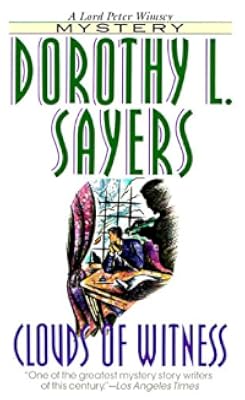
Lord Peter Wimsey is shocked by the news that his own brother has been arrested for murder: "First-rate" (Chicago Sun-Times).After three months in Corsica, Lord Peter Wimsey has begun to forget that the gray, dangerous moors of England ever existed. But traveling through Paris, he receives a shock that jolts him back to reality. He sees it in the headlines splashed across every English paper—his brother Gerald has been arrested for murder.
The trouble began at the family estate in show more Yorkshire, where Gerald was hunting with the man soon to be his brother-in-law, Captain Denis Cathcart. One night, Gerald confronts Cathcart with allegations about his unsavory past, leading the captain to call off the wedding. Just a few hours later, Cathcart is dead, with Gerald presumed to be the only person who could have fired the fatal shot. The clock is ticking, and only England's premier sleuth can get to the bottom of this murky mystery.
Clouds of Witness is the 2nd book in the Lord Peter Wimsey Mysteries, but you may enjoy the series by reading the books in any order.
This ebook features an illustrated biography of Dorothy L. Sayers including rare images from the Marion E. Wade Center at Wheaton College.. show less
Tags
Recommendations
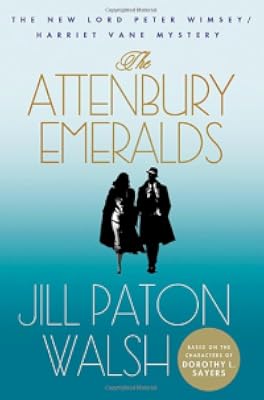
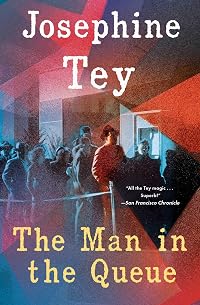

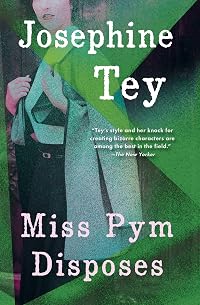
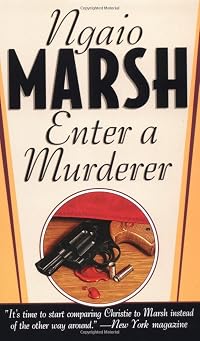
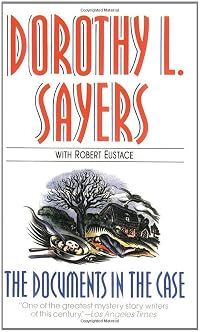
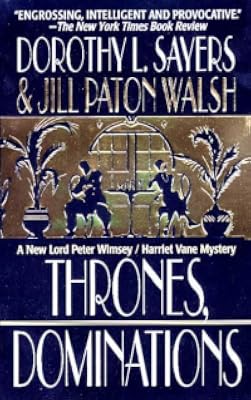
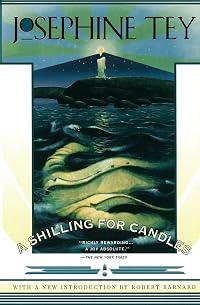

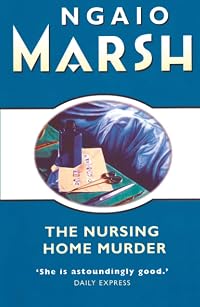


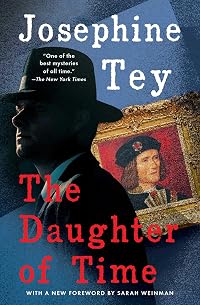
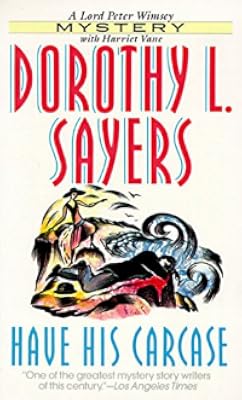
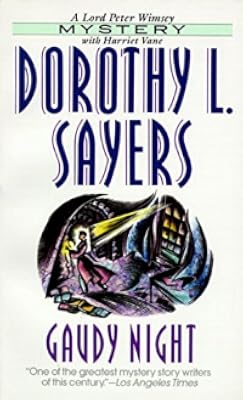
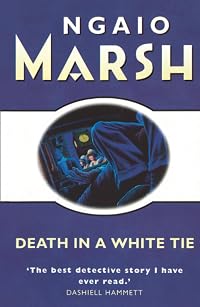










Member Recommendations
Member Reviews
I thought this book was fantastic, it pulled me in right away and kept me glued. Unfortunately the author felt the need at the end of the book to recap, step by step, the circumstances surrounding the crime. On the audiobook this lasted a full 25 minutes! It's as if the author was so concerned that readers grasp the full extent and intricacies of the plot that she couldn't just trust us to remember what had happened, but instead had to beat us over the head with a monologue summary. It absolutely left a bad last impression of an otherwise great book. Docking 2 full stars out of supreme irritation.
I found Clouds Of Witness to be a very mixed bag. It has a chaotic feel to it as if the energy of the eccentric and well-drawn characters keeps pressing against the confines of the exposition of the slightly over-complicated plot.
Some parts of it sparkle. I love the way Wimsey uses words as both a shield and a sword. When he first appears, he finds the shooting party at breakfast, knows that they've been speaking about him and unleashes a torrent of knowing commentary, an effortless domination of the room, all achieved with a breezy we're all good chaps here tone that it's hard to take offence at but which can't be mistaken for affability.
I also love the way his mother talks when she's sharing her thoughts. You can see her mind show more working as she pursues her thoughts in a rush of words that tumble like a pack of hounds chasing a fox and which she keeps trying to discipline through half-remembered quotations and verbal footnotes. It ought to sound as if she's babbling but instead, it displays a sharp, well-educated mind forming patterns from the available data.
The characters, even those whose role in the plot is minor, thrum with life. Their voices sound true on the ear. Their foibles, habits and manners are captured with actuely observed without being commented on. I loved the adroit concise, incisive and amusing descriptions of the reasons why the members of the shooting party are angry and unhappy at breakfast on the Sunday morning after the inquest. It made me smile and it helped me see each of them more clearly.
The plot was fairly sound. Everything worked and it delivered a few surprises along the way but it lost a little credibility by depending on so many people deciding independently to do covert and uncharacteristic things in the early hours of a particular morning.
Some of the plot exposition was clumsy, by modern standards. The way the inquest was reported using transcripts enhanced with notes from the police rather than from the point of view of one of the people present shows how conventions in novels have changed over the past ninety-seven years. The KC's closing argument in the trial in the House Of Lords went on so long that I suspect some of their Lordships may have dozed through parts of it.
The action scenes, which included shots fired, death-defying flights and perilous encounters on the moors felt a little frantic, like something from a comic book.
Another sign of how expectations around novels have changed since 1926 is the way French is used in the text. Most of the short sentences in French are not translated and a long letter, that is key to the plot, is included in its entirety before the translation is g8iven. It seems that Dorothy L Sayers assumed that her readers would be able to read French with ease.
Reading Clouds Of Witness after having read later novels like Strong Poison (1930), The Nine Tailors (1934) and Gaudy Night (1935), I was aware of how brightly Dorothy Sayers' raw talent shone through and how much she had honed her skills over the next decade. show less
Some parts of it sparkle. I love the way Wimsey uses words as both a shield and a sword. When he first appears, he finds the shooting party at breakfast, knows that they've been speaking about him and unleashes a torrent of knowing commentary, an effortless domination of the room, all achieved with a breezy we're all good chaps here tone that it's hard to take offence at but which can't be mistaken for affability.
I also love the way his mother talks when she's sharing her thoughts. You can see her mind show more working as she pursues her thoughts in a rush of words that tumble like a pack of hounds chasing a fox and which she keeps trying to discipline through half-remembered quotations and verbal footnotes. It ought to sound as if she's babbling but instead, it displays a sharp, well-educated mind forming patterns from the available data.
The characters, even those whose role in the plot is minor, thrum with life. Their voices sound true on the ear. Their foibles, habits and manners are captured with actuely observed without being commented on. I loved the adroit concise, incisive and amusing descriptions of the reasons why the members of the shooting party are angry and unhappy at breakfast on the Sunday morning after the inquest. It made me smile and it helped me see each of them more clearly.
The plot was fairly sound. Everything worked and it delivered a few surprises along the way but it lost a little credibility by depending on so many people deciding independently to do covert and uncharacteristic things in the early hours of a particular morning.
Some of the plot exposition was clumsy, by modern standards. The way the inquest was reported using transcripts enhanced with notes from the police rather than from the point of view of one of the people present shows how conventions in novels have changed over the past ninety-seven years. The KC's closing argument in the trial in the House Of Lords went on so long that I suspect some of their Lordships may have dozed through parts of it.
The action scenes, which included shots fired, death-defying flights and perilous encounters on the moors felt a little frantic, like something from a comic book.
Another sign of how expectations around novels have changed since 1926 is the way French is used in the text. Most of the short sentences in French are not translated and a long letter, that is key to the plot, is included in its entirety before the translation is g8iven. It seems that Dorothy L Sayers assumed that her readers would be able to read French with ease.
Reading Clouds Of Witness after having read later novels like Strong Poison (1930), The Nine Tailors (1934) and Gaudy Night (1935), I was aware of how brightly Dorothy Sayers' raw talent shone through and how much she had honed her skills over the next decade. show less
A vacationing Lord Peter Wimsey races to join his family at Riddlesdale Lodge in Yorkshire as soon as he learns of a family crisis. Wimsey’s elder brother, Gerald, the Duke of Denver, stands accused of the murder of their sister Mary’s fiance. Both Gerald and Mary appear to be hiding something. Wimsey’s friend, Detective-Inspector Charles Parker, is on the case and he looks forward to Wimsey’s assistance. With the aid of Wimsey’s man, Bunter, Parker and Wimsey race against the looming trial deadline to uncover the truth of what happened on that fateful night.
The best parts of the book are in Wimsey’s voice, which sparkles with wit. However, the book loses momentum in long information dumps. I look forward to seeing more of show more Wimsey’s mother, the dowager duchess. If Sayers were writing today instead of nearly 100 years ago, the dowager duchess might have been the detective instead of her son. show less
The best parts of the book are in Wimsey’s voice, which sparkles with wit. However, the book loses momentum in long information dumps. I look forward to seeing more of show more Wimsey’s mother, the dowager duchess. If Sayers were writing today instead of nearly 100 years ago, the dowager duchess might have been the detective instead of her son. show less
An intricate and lovely mystery. Solid plot with lots of twists and turns. Lord Peter Wimsley is on a mission to exonerate his brother the Duke accused of murdering the fiancee of his younger sister. The period, early 20's is very well described without being heavy and awkward. The characters we've met in the previous book, Parker, the Duchess, Peter we come to care a lot about. A little less of Bunter in this one but we do meet Lady Mary and learn a little about Lord Peter's past. I loved it. I kept rationing my chapters because I didn't want it to end and have one less book to read.
When the Duke of Denver is arrested for murdering his sister's fiancé, Lord Peter rushes home to do a bit of detecting. Apart from the delightful humour, one of the most appealing elements of Sayers' mystery novels is that she always incorporated commentary of social conditions and happenings of the day. In this story, Wimsey takes a flight across the Atlantic to secure a witness statement to clear his brother, a trip that sounds almost innocuous until it is remembered that this was in 1920. In the open plane, pilot and passenger were soaked in a rainstorm on the return journey! The Duke's dramatic trial in the House of Lords was an excellent display of the pomp and pageantry associated with that institution. Favourite characters here show more are police Chief Inspector Parker who overcomes his timidity in a Paris shop to buy lingerie for his sister; Wimsey naturally; and Bunter at the top of the list. As always, Sayers is eloquent and entertaining. show less
It was an unexpected pleasure to discover that there was a Wimsey novel I hadn't read yet - rather like finding the last bottle of the '47 lurking dust-covered at the back of the cellar. The book - the second full-length Wimsey novel - isn't up to the standard of some of the later ones, but it does have quite a lot to entertain and interest the reader. The Yorkshire setting is nicely observed, with dialect characters who are portrayed as individuals and manage to avoid becoming stereotypes. The scene where Wimsey goes astray on the moors on a foggy night is pure melodrama (Wilkie Collins at his most wuthering), but Sayers defuses the tension with neat irony by tying it into the song "On Ilkley Moor baht'at"
What is most interesting about show more the book, seen as part of the Wimsey "canon", is the way it establishes the relationships between Lord Peter, his brother the Duke, his sister Lady Mary, their mother the Dowager, and Chief Inspector Parker. The Duke is accused of murdering Mary's fiancé: we know, of course, that Wimsey will be able to get him off the hook (any other outcome would pretty much rule out any further Lord Peter novels), but it's an interesting challenge for him, not least because the Duke refuses to explain where he was on the night in question, while Mary's evidence at the inquest conflicts with the other witnesses. show less
What is most interesting about show more the book, seen as part of the Wimsey "canon", is the way it establishes the relationships between Lord Peter, his brother the Duke, his sister Lady Mary, their mother the Dowager, and Chief Inspector Parker. The Duke is accused of murdering Mary's fiancé: we know, of course, that Wimsey will be able to get him off the hook (any other outcome would pretty much rule out any further Lord Peter novels), but it's an interesting challenge for him, not least because the Duke refuses to explain where he was on the night in question, while Mary's evidence at the inquest conflicts with the other witnesses. show less
Sayers brings real comedy, history, and her Oxford training in languages to her inevitable detective stories. Dickensian names: Lord Peter Wimsey, lawyer Sir Impey Biggs (a handsome, big imp), opposing attorney general Lord Wigmore (in full wig). Mr Murbles, the senior lawyer, says " ‘Brilliant man, Sir Impey. He is defending Truth.’ Lord Peter, ‘Astonishin’ position for a lawyer, what?’ Mr Murbles acknowledged the pleasantry…’”(164).
First heard this book aloud decades ago, by my wife, so I had not grasped all the wit, though I knew the plot was multiple, at least three affairs with three different couples all converging to one crime, of which the detective’s older brother, the Duke of Denver, stands accused. The Duke show more reserves his alibi which would compromise a married woman—perfect gentlemanly act which increases the difficulties of his defenders, including his detective brother (whose interests the Duke disapproves—incunabula and crime rather than football).
Sayers gives us an intricate plot, with its culmination a long letter in French written by the victim the day of his murder. Lord Peter Wimsey has to go to the US by steamship to find it, and when he does, he flies back in a 1920’s plane, flimsy, the famous pilot’s jacket covered in rain. Flying through ravaging storm and fog, Wimsey’s arrival in doubt, his butler Bunter resolves to set a fire in his bedroom, hopeful.
From our yearly visits to England, but perhaps more from watching TV mysteries like Midsommer and Father Brown, we have personal experience of much in this novel. Further, I have a coat that my British-resident friend asked if a Burberry. No, a wax-coated LL Bean, but… We “musn’t rest upon our oars” takes me back to college freshman crew on the Connecticut River (169). Also, my wife and I have had one cup of hot chocolate, with a jigger of brandy, every evening for over a decade. Our preferred brandy is Portuguese, not the priceless 1800 Napoleon served in Lord Peter’s house near Piccadilly.
Many characters here are witty, including butler Bunter’s mother, who says, “facts are like cows. You look them in the face hard enough, they generally run away”(79). Lord Peter later informs his butler, “Well-bred English people never have imagination, Bunter.” “Certainly not, my lord. I meant nothing disparaging.”(175)
Scotland Yard, headed by a Scot, and a crossword solution in Scottish, never spelled out for me. Broad Yorkshire dialect as well, as in the Yorkshire “national” anthem, “On Ilkley Moor Bat’ at,” quoted in, “Then doocks will coom an’ ate pop worms/ On Ilkla Moor…” (196).
Be prepared for many un-American, British words: “widdershins” “gaiters”, and words like “loofah” which I had to search, evidently an organic sponge grown from a gourd—even in California.
The real title should be “Cloud of Witnesses,” which appears late in the novel (258), but Sayers must have preferred the sound of both -s endings.
Sayers considered her Divina Commedia translation to be her best work, in Dante's prosody,
hendecasyllabic terza rima. show less
First heard this book aloud decades ago, by my wife, so I had not grasped all the wit, though I knew the plot was multiple, at least three affairs with three different couples all converging to one crime, of which the detective’s older brother, the Duke of Denver, stands accused. The Duke show more reserves his alibi which would compromise a married woman—perfect gentlemanly act which increases the difficulties of his defenders, including his detective brother (whose interests the Duke disapproves—incunabula and crime rather than football).
Sayers gives us an intricate plot, with its culmination a long letter in French written by the victim the day of his murder. Lord Peter Wimsey has to go to the US by steamship to find it, and when he does, he flies back in a 1920’s plane, flimsy, the famous pilot’s jacket covered in rain. Flying through ravaging storm and fog, Wimsey’s arrival in doubt, his butler Bunter resolves to set a fire in his bedroom, hopeful.
From our yearly visits to England, but perhaps more from watching TV mysteries like Midsommer and Father Brown, we have personal experience of much in this novel. Further, I have a coat that my British-resident friend asked if a Burberry. No, a wax-coated LL Bean, but… We “musn’t rest upon our oars” takes me back to college freshman crew on the Connecticut River (169). Also, my wife and I have had one cup of hot chocolate, with a jigger of brandy, every evening for over a decade. Our preferred brandy is Portuguese, not the priceless 1800 Napoleon served in Lord Peter’s house near Piccadilly.
Many characters here are witty, including butler Bunter’s mother, who says, “facts are like cows. You look them in the face hard enough, they generally run away”(79). Lord Peter later informs his butler, “Well-bred English people never have imagination, Bunter.” “Certainly not, my lord. I meant nothing disparaging.”(175)
Scotland Yard, headed by a Scot, and a crossword solution in Scottish, never spelled out for me. Broad Yorkshire dialect as well, as in the Yorkshire “national” anthem, “On Ilkley Moor Bat’ at,” quoted in, “Then doocks will coom an’ ate pop worms/ On Ilkla Moor…” (196).
Be prepared for many un-American, British words: “widdershins” “gaiters”, and words like “loofah” which I had to search, evidently an organic sponge grown from a gourd—even in California.
The real title should be “Cloud of Witnesses,” which appears late in the novel (258), but Sayers must have preferred the sound of both -s endings.
Sayers considered her Divina Commedia translation to be her best work, in Dante's prosody,
hendecasyllabic terza rima. show less
Members
- Recently Added By
Lists

Best of British Literature
226 works; 41 members

Read the book and saw the movie
1,170 works; 195 members

...read all, pay nowt (Books set in Yorkshire)
86 works; 14 members

Survey of Mysteries and Crime Fiction
96 works; 17 members

Top 100 Mystery Novels of All Time
98 works; 9 members

British Mystery
469 works; 14 members

Books I've Read More Than Once
602 works; 49 members

Survey of Classic Crime
39 works; 7 members

Books Set in Great Britain
191 works; 13 members
Murder Mysteries
57 works; 11 members

Books About Murder
313 works; 7 members
Detective Stories
343 works; 5 members

Books mentioned in Julian Symons’ Bloody Murder
438 works; 6 members

Favorite Books from the 1920s
33 works; 3 members

Books Read in 2021
5,361 works; 114 members

Books That Changed Our Perspective
423 works; 168 members

Books Read in 2011
684 works; 19 members

20th Century Literature
1,161 works; 55 members

Elevenses
316 works; 88 members
Love Triangles in Literature
108 works; 15 members

2015 UpROOTed
28 works; 1 member

One Book, Many Authors
441 works; 40 members

Books Read in 2014
2,343 works; 86 members

In and About the 1920s
181 works; 31 members

Books Read in 2025
4,091 works; 97 members
Author Information

278+ Works 70,839 Members
Dorothy Sayers's impressive reputation as a contemporary master of the classic detective story is eclipsed only by Agatha Christie's. Sayers was born in Oxford and attended Somerville College, where she received a B.A. in 1915 and an M.A. in 1920. During that period, Sayers worked as an instructor of modern languages at Hull High School for Girls show more in Yorkshire and as a reader for a publisher in Oxford. Her early literary work was in poetry; she published several volumes and served as an editor for the journal Oxford Poetry from 1917 to 1919. Sayers also worked as a copywriter for a major advertising firm in London. She was president of the Modern Language Association from 1939 to 1945 and of the Detection Club in the 1950s. Around 1920 Sayers developed the idea for her detective hero Lord Peter Wimsey, and she soon published her first mystery, Whose Body? (1923), in which Lord Peter is introduced. For the next dozen or so years, Sayers wrote prolifically about Wimsey, creating in the process what many critics of the genre consider to be the finest detective novels in the English language. Perhaps her most famous Wimsey mystery was The Nine Tailors (1934). Although Sayers essentially followed the classic form in her detective fiction---a formula in which the plot assumes a greater importance than do the characters---Sayers maintained that a detective hero's greatness depended on how effectively the character was portrayed. All but one of Sayers's mysteries feature Lord Peter Wimsey. By the late 1930s, Sayers had apparently tired of writing detective fiction. She stated in 1947 that she would write no more mysteries, that she wrote detective fiction only when she was young and in need of money. Thus saying, Sayers turned her attention to her early loves, medieval and religious literature, spending her remaining years lecturing on and translating Dante (see Vol. 2). (Bowker Author Biography) show less
Some Editions
Awards and Honors
Notable Lists
Series

Belongs to Publisher Series
Scherz-classic-Krimi (581)
Four Square Books (761)
Zephyr Books (24)
Pocket Books (85)
Colecção Vampiro (112)
Den svarte serie (93)
Scherz Krimi (1728)
Perennial Library (P835)
Il giallo Mondadori (2748)
Work Relationships
Is contained in
Lord Peter Takes the Case (Clouds of Witness / Unnatural Death / The Five Red Herrings / The Unpleasantness at the Bellona Club) by Dorothy L. Sayers
Clouds of Witness / Murder Must Advertise / Strong Poison / Unnatural Death / Busman's Honeymoon by Dorothy L. Sayers
Clouds of Witness - The Unpleasantness at the Bellona Club - Strong Poison - Hangman's Holiday - Murder Must Advertise by Dorothy L. Sayers
The Lord Peter Wimsey Collection: Books 1-5: Whose Body?; Clouds of Witness; Unnatural Death; Lord Peter Views the Body; The Unpleasantness at the Bellona Club by Dorothy L. Sayers
Clouds of Witness | Lord Peter Views the Body | The Five Red Herrings | Have His Carcase | The Nine Tailors by Dorothy L. Sayers
Common Knowledge
- Canonical title
- Clouds of Witness
- Original title
- Clouds of Witness
- Alternate titles*
- Lord Peters schwerster Fall
- Original publication date
- 1926
- People/Characters
- Peter Death Bredon Wimsey (Lord Peter Wimsey); Freddy Arbuthnot; Mervyn Bunter; Impey Biggs; Charles Parker (Inspector); Cathcart (show all 14); Goyles; Mr. Grimethorpe; Mrs. Grimethorpe; Colonel Marchbanks; Gerald Christian Wimsey (Duke of Denver); Honoria Lucasta Delagardie (Dowager Duchess of Denver); Mary Wimsey; Helen Wimsey (Duchess of Denver)
- Important places
- Riddlesdale Lodge, England, UK; 110A Piccadilly, London, England, UK
- Important events*
- Zwischenkriegszeit
- Related movies
- Clouds of Witness (1972 | IMDb)
- First words
- Lord Peter Wimsey stretched himself luxuriously between the sheets provided by the Hotel Meurice.
[Afterword] The year 1920 is the generally accepted dawn of the Golden Age of detective fiction. - Quotations
- The inimitable stories of Tong-king never have an real ending, and this one, being in his most elevated style, has even less end than most of them. But the whole narrative permeated with the odour of joss-sticks and honourabl... (show all)e high-mindedness, and the two characters are both of noble birth. -- The Wallet of Kai-lung
"Here's his fountain-pen. Very handsome - Onoto with complete gold casing. Dear me! Entirely empty.... I don't see any pencil about." - Last words
- (Click to show. Warning: May contain spoilers.)"Mr. Parker an' all," said Inspector Sugg, adding devoutly, "Thank Gawd there weren't no witnesses."
(Click to show. Warning: May contain spoilers.)[Afterword] Although her career as a detective novelist spanned a mere fourteen years--from 'Whose Body' (1923) to 'Busman's Honeymoon' (1937)--she continued until her premature death to contribute to the promotion and acceptance of the literary form with which her name is forever linked. - Original language
- English
- Canonical DDC/MDS
- 823.912
- Canonical LCC
- PR6037.A95
- Disambiguation notice
- Please distinguish between this mystery novel, Clouds Of Witness by Dorothy L. Sayers (1926), and the similarly-titled anthology of essays, Cloud Of Witnesses edited by Jim Wallis and Joyce Hollyday (1991; rev'd... (show all) 2005). Thank you.
*Some information comes from Common Knowledge in other languages. Click "Edit" for more information.
Classifications
Statistics
- Members
- 4,048
- Popularity
- 3,842
- Reviews
- 113
- Rating
- (3.79)
- Languages
- 18 — Czech, Danish, Dutch, English, Finnish, French, German, Italian, Japanese, Norwegian (Bokmål), Norwegian, Polish, Russian, Spanish, Swedish, Turkish, Portuguese (Brazil), Chinese, simplified
- Media
- Paper, Audiobook, Ebook
- ISBNs
- 132
- UPCs
- 4
- ASINs
- 72