

Ruth Dudley Edwards
Author of Corridors of Death
About the Author
Ruth Dudley Edwards (born 24 May 1944, in Dublin, Ireland) is an Irish historian, a crime novelist, a journalist and a broadcaster, in both Ireland and in the United Kingdom. Edwards was born and brought up in Dublin and educated at University College Dublin, Girton College, Cambridge and Wolfson show more College, Cambridge. Her nonfiction books include An Atlas of Irish History, James Connolly, Victor Gollancz: A Biography (winner of the James Tait Black Memorial Prize), The Pursuit of Reason: The Economist 1843-1993, and The Faithful Tribe: An Intimate Portrait of the Loyal Institutions. Also a crime fiction writer, her novels include: Corridors of Death, The Saint Valentine's Day Murders, The English School of Murder, and Clubbed to Death. (Bowker Author Biography) show less
Series
Works by Ruth Dudley Edwards
The Seven: The Lives and Legacies of the Founding Fathers of the Irish Republic (2016) 55 copies, 10 reviews
Associated Works
Down These Green Streets: Irish Crime Writing in the 21st Century (2011) — Contributor — 26 copies, 1 review
Tagged
Common Knowledge
- Birthdate
- 1944-05-24
- Gender
- female
- Education
- University College Dublin
Girton College, Cambridge
Wolfson College, Cambridge - Occupations
- historian
biographer
crime novelist - Relationships
- Edwards, Owen Dudley (brother)
Edwards, Robert Dudley (father) - Nationality
- Ireland
- Birthplace
- Dublin, County Dublin, Ireland
- Places of residence
- Dublin, County Dublin, Ireland
England, UK - Associated Place (for map)
- Ireland
Members
Reviews
The Seven: The Lives and Legacies of the Founding Fathers of the Irish Republic by Ruth Dudley Edwards
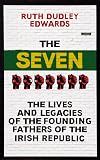
I have a sad feeling that this book is going to sink without a trace in the middle of the Atlantic.
To explain: There are presumably two primary audiences for this book, one in Ireland and one in America. And the Americans are going to find it hard to understand, and the Irish aren't going to like it because it conflicts with the Official Patriotic History of Ireland.
Which probably needs more explanation. In fact, it needs the background that author Edwards doesn't provide in her book; rather show more than put it at the beginning, she tries to weave it into the narrative, and often it comes too late for readers to understand what is going on.
Ireland, of course, suffered many years of English colonialism, neglect, and religious persecution. But by the early twentieth century, the Protestant church had been disestablished in Ireland, tenants had much greater rights, and the British were even moving toward giving the Irish their own parliament and direction over internal affairs ("Home Rule"). Had things gone as planned, Ireland would have become a largely internally autonomous state with strong trade ties with Britain and a common foreign policy -- a win-win situation, since it would have produced freedom for the Irish and a better economy for both nations. Most Irish were reasonably content with this situation, looking forward to a more secure future.
But there were always hotheads. Ireland hardly has a patent on them, but because it had a bad history, it was easier to turn people who would otherwise have occupied wildlife refuges, or or just driven their cars too fast, into nationalist rebels. Ireland had quite a collection of these.
And then World War I came. The British parliament, with a war to fight, suspended the liberalization of Irish laws -- and recruited the more patriotic Irishmen to go fight in the trenches, leaving the country with an excess of hotheads. A handful of these people -- led by "The Seven" who are the subject of this book -- wrote a manifesto and planned a rebellion -- the "Easter Rising" of 1916 (which took place just a hundred years before this book was released). The rebels didn't expect it to work, and it didn't, but they thought it would lay the groundwork for future independence, and it did. They occupied the Dublin Post Office and a few other places, and fought. If someone did something like this today, they would probably be called terrorists. The Rising was quickly put down. Most of the Irish disliked it; their city had been damaged, and the rebels were disdained, condemned, even spat upon by the majority of the Irish.
Until British justice took a hand. The World War was still raging; they thought they didn't have time to let the wheels of justice spin properly. (Where have we heard that before? Or, rather, where have we heard it since?) They had most of the rebels in custody -- and started trying them with military tribunals and shooting them. And, suddenly, because true justice had not been done, the pariahs who had upset civil society in Ireland became martyrs -- and the Irish independence movement, which had been failing under the burden of the fact that nationalism was a really stupid idea, came back to life in full force.
And so, the rebellion became even hotter. Ireland fell into the Black and Tan War, and when Britain made peace, it was peace via partition, with Northern Ireland remaining British. Ireland went into Civil War, and it took its economy the better part of a century to recover. And when World War II came, their visceral hatred of the British kept them out of the war -- in effect, allies of Nazi Germany; had Ireland been one of the Allies, the Battle of the Atlantic would have been easier to win, and the war might have been shorter, and perhaps slightly fewer Jews and Gypsies and "undesirables" would have been killed in the Holocaust.
That's the bad side of Irish nationalism, and it's the background of this book. And Edwards, as a "revisionist" Irish historian, tries to tell it warts and all.
There are times when she lays it on a little thick. Pearse et all weren't evil, or even stupid, as much as set on a course which they thought right; as nationalist movements all over the world show, they have lots of allies. But the real problem, it seems to me, is that the book assumes that its readers will know the history that I outlined above. In Ireland, of course, everyone will -- but they will have been taught the version in which The Seven were the leading lights of a movement that was All For The Good and which all Irish supported implicitly. Neither of which is true, but it will be hard for them to read this book. And Americans, or others who don't know Irish history, will be confused.
This is, I think, an important and useful book, although it might have been better were it a little shorter. But it really needs to explain more at the beginning. Ultimately, I fear this book will suffer the fate of most volumes of Irish history: Since most people (including me!) come to it with a very strong bias, it is hard to tell the whole story. Maybe, in another century or two, someone will manage it. In the interim, here is a good and useful contribution to the not-so-patriotic side of the debate -- but one where you will probably need to read another book first before you can really understand this one. show less
To explain: There are presumably two primary audiences for this book, one in Ireland and one in America. And the Americans are going to find it hard to understand, and the Irish aren't going to like it because it conflicts with the Official Patriotic History of Ireland.
Which probably needs more explanation. In fact, it needs the background that author Edwards doesn't provide in her book; rather show more than put it at the beginning, she tries to weave it into the narrative, and often it comes too late for readers to understand what is going on.
Ireland, of course, suffered many years of English colonialism, neglect, and religious persecution. But by the early twentieth century, the Protestant church had been disestablished in Ireland, tenants had much greater rights, and the British were even moving toward giving the Irish their own parliament and direction over internal affairs ("Home Rule"). Had things gone as planned, Ireland would have become a largely internally autonomous state with strong trade ties with Britain and a common foreign policy -- a win-win situation, since it would have produced freedom for the Irish and a better economy for both nations. Most Irish were reasonably content with this situation, looking forward to a more secure future.
But there were always hotheads. Ireland hardly has a patent on them, but because it had a bad history, it was easier to turn people who would otherwise have occupied wildlife refuges, or or just driven their cars too fast, into nationalist rebels. Ireland had quite a collection of these.
And then World War I came. The British parliament, with a war to fight, suspended the liberalization of Irish laws -- and recruited the more patriotic Irishmen to go fight in the trenches, leaving the country with an excess of hotheads. A handful of these people -- led by "The Seven" who are the subject of this book -- wrote a manifesto and planned a rebellion -- the "Easter Rising" of 1916 (which took place just a hundred years before this book was released). The rebels didn't expect it to work, and it didn't, but they thought it would lay the groundwork for future independence, and it did. They occupied the Dublin Post Office and a few other places, and fought. If someone did something like this today, they would probably be called terrorists. The Rising was quickly put down. Most of the Irish disliked it; their city had been damaged, and the rebels were disdained, condemned, even spat upon by the majority of the Irish.
Until British justice took a hand. The World War was still raging; they thought they didn't have time to let the wheels of justice spin properly. (Where have we heard that before? Or, rather, where have we heard it since?) They had most of the rebels in custody -- and started trying them with military tribunals and shooting them. And, suddenly, because true justice had not been done, the pariahs who had upset civil society in Ireland became martyrs -- and the Irish independence movement, which had been failing under the burden of the fact that nationalism was a really stupid idea, came back to life in full force.
And so, the rebellion became even hotter. Ireland fell into the Black and Tan War, and when Britain made peace, it was peace via partition, with Northern Ireland remaining British. Ireland went into Civil War, and it took its economy the better part of a century to recover. And when World War II came, their visceral hatred of the British kept them out of the war -- in effect, allies of Nazi Germany; had Ireland been one of the Allies, the Battle of the Atlantic would have been easier to win, and the war might have been shorter, and perhaps slightly fewer Jews and Gypsies and "undesirables" would have been killed in the Holocaust.
That's the bad side of Irish nationalism, and it's the background of this book. And Edwards, as a "revisionist" Irish historian, tries to tell it warts and all.
There are times when she lays it on a little thick. Pearse et all weren't evil, or even stupid, as much as set on a course which they thought right; as nationalist movements all over the world show, they have lots of allies. But the real problem, it seems to me, is that the book assumes that its readers will know the history that I outlined above. In Ireland, of course, everyone will -- but they will have been taught the version in which The Seven were the leading lights of a movement that was All For The Good and which all Irish supported implicitly. Neither of which is true, but it will be hard for them to read this book. And Americans, or others who don't know Irish history, will be confused.
This is, I think, an important and useful book, although it might have been better were it a little shorter. But it really needs to explain more at the beginning. Ultimately, I fear this book will suffer the fate of most volumes of Irish history: Since most people (including me!) come to it with a very strong bias, it is hard to tell the whole story. Maybe, in another century or two, someone will manage it. In the interim, here is a good and useful contribution to the not-so-patriotic side of the debate -- but one where you will probably need to read another book first before you can really understand this one. show less
 This review was written for LibraryThing Early Reviewers.
https://fromtheheartofeurope.eu/an-atlas-of-irish-history-by-ruth-dudley-edwards...
This book dates from half a century ago, when the world was a different place and Irish history was a different discipline. It’s a breezy summary of the main points of Irish history to date, concentrating on the medieval and early modern periods, and the maps, even though they would have been a bit old-fashioned even in 1973, illustrate the narrative.
But there are some odd omissions. After independence, show more Northern Ireland largely disappears from the narrative. (It gets seven pages in the second last chapter, and the Troubles get one line.) From my political perspective, it would have been interesting to see more mapping of election results across the whole period. The chapter on social change completely misses the elephant in the room, the role of the Catholic church in society.
There is a much newer edition, published in 2005 with contributions from Bridget Hourican, where I believe that these issues have all been addressed. I see reviewers complaining, however, that Bromage’s maps were retained despite not really being with the Zeitgeist; as I said, they look old-fashioned for 1973, let alone 2005 (or 2024). show less
This book dates from half a century ago, when the world was a different place and Irish history was a different discipline. It’s a breezy summary of the main points of Irish history to date, concentrating on the medieval and early modern periods, and the maps, even though they would have been a bit old-fashioned even in 1973, illustrate the narrative.
But there are some odd omissions. After independence, show more Northern Ireland largely disappears from the narrative. (It gets seven pages in the second last chapter, and the Troubles get one line.) From my political perspective, it would have been interesting to see more mapping of election results across the whole period. The chapter on social change completely misses the elephant in the room, the role of the Catholic church in society.
There is a much newer edition, published in 2005 with contributions from Bridget Hourican, where I believe that these issues have all been addressed. I see reviewers complaining, however, that Bromage’s maps were retained despite not really being with the Zeitgeist; as I said, they look old-fashioned for 1973, let alone 2005 (or 2024). show less

After Irish independence in 1922, the men executed following the Easter Rising of 1916 became secular saints in Ireland. In this book, [a:Ruth Dudley Edwards|63805|Ruth Dudley Edwards|https://d.gr-assets.com/authors/1285742000p2/63805.jpg] takes one of the most revered of these saints, Patrick Pearse, and returns him to the world of mortal men and woman. She examines Pearse as a living, breathing man, with great weaknesses and flaws as well as great strengths and talents. For this she was, show more and has been, vilified by those who wish their saints to remain antiseptic.
While I would consider myself to be on the opposite to Pearse, thanks to Dudley Edwards excellent, humanising biography, I do feel I understand him a bit better. show less
While I would consider myself to be on the opposite to Pearse, thanks to Dudley Edwards excellent, humanising biography, I do feel I understand him a bit better. show less
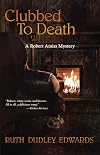
I love Robert Amiss stories, especially when the Baroness Trout isn't overpowering, or even present. This very funny tale of murder at one those fabled British men's clubs will make even the most staid reader laugh aloud. The characters are endearing and actually show a bit of development. Most highly recommended.
Lists
Awards


You May Also Like


Associated Authors
Statistics
- Works
- 28
- Also by
- 11
- Members
- 1,543
- Popularity
- #16,693
- Rating
- 3.7
- Reviews
- 37
- ISBNs
- 174
- Favorited
- 5
