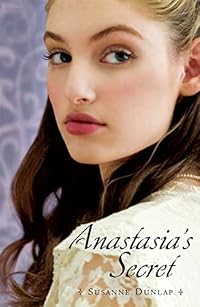
Anastasia's Secret
by Susanne Dunlap 
On This Page
Description
For Anastasia Romanov, life as the privileged daughter of Russia's last tsar is about to be torn apart by the bloodshed of revolution. Ousted from the imperial palace when the Bolsheviks seize control of the government, Anastasia and her family are exiled to Siberia. But even while the rebels debate the familys future and the threat to their lives grows more menacing, romance blooms between Anastasia and Sasha, a sympathetic young guard she has known since childhood. But will the strength of show more their love be enough to save Anastasia from a violent death? Inspired by the mysteries that have long surrounded the last days of the Romanov family, Susanne Dunlap's new novel is a haunting vision of the life-and love story-of Russia's last princess.. show less
Tags
Recommendations



























Member Reviews
Was prepared not to like this book due to it's lame cover but was pleasantly surprised. This is the ficticious story of a romance between the famed Anastasia Romanov and a guard from the ages of 12 to 17 when she was executed. The book only works I believe, because the writer builds on the "did she or didn't she survive the execution?" myth that has persisted for years. The suspense in the book builds with the reader's knowledge of what actually happened versus the character's belief in what will happen. I am glad that Dunlap stuck to the facts as they stood and used many actual letters and accounts to construct the events as she imagined them happening. I also thought her list of characters at the start was invaluable, as many of the show more characters have official titles but also lots of shortened titles and nicknames for each other and after reading it, I only had to refer to it twice to work out who was who when they were all struck down with measles. This is an older reader's book due to the sexual awakening (which is handled very gently) that happens as Anastasia gets older, so I would only recommend it to students above 15 who enjoy romance and a bit of history. show less
The Short and Sweet of It
The story of Anastasia Romanova has become that of legend, but in this creative historical fiction, Anastasia's life is made real. She becomes not only the romantic figure of myth, but a real teenager.
A Bit of a Ramble
Young adult, romantic historical fiction is not exactly a genre with which I am familiar. My YAL tends to be of the fantasy variety with supernatural elements, paranormal beings, or futuristic settings. After reading this book, however, I may have to incorporate more of the historical bent.
While the story of the doomed Russian family is familiar, I will admit that I am nowhere near an expert on the Romanovs. Still they persist in our culture as a truly romantic ideal: nobility brought down by the show more Bolsheviks, a family executed. Then there are the diamonds of course - the image of children with diamonds hidden under their clothes, causing the bullets to bounce off and bayonets to be used. It is horrifying, tragic, and appealing to the far-removed state-of-mind (not so appealing if you think about it too hard).
The myth that has surrounded the family gives it an other worldly air, but reading Dunlap's novel brought home reality rather than myth. While sticking to the truth of their situation, she still managed to normalize the characters, allowing readers a glimpse into a royal family which comprises real people with flaws, secrets, pets, toys, inside jokes, hopes, and dreams. Anastasia is not a stately, composed, elegant Grand Duchess; she is a girl who wants to spend time with her family, to throw snowballs, to fall in love.
Despite the seriousness of the situation, Dunlap's book remains a light, easy read. While the sociopolitical and historical facts are interspersed within the story, the focus remains on Anastasia, her love for Sasha, and the day-to-day of her family's imprisonment. For some, this may be a drawback, but for me, it is a plus. If I want to read an in-depth, serious accounting of the time, I will read nonfiction, not a young adult novel.
My only problem with the book was the ending. The story ends before the story ends if you know what I mean. While leaving things off where they did lent a bittersweet air, the facts of the case are known, and as such, I would have preferred to see it through. For me it was like ending a story taking place on the Titanic just when the iceberg was spotted.
Ultimately however, this is a quick read that was perfect for my second snow day. I probably should have been reading Ulysses, or one of the many other readalong books I have this month, but I wanted something fast and light, and Anastasia's Secret worked out perfectly for that. show less
The story of Anastasia Romanova has become that of legend, but in this creative historical fiction, Anastasia's life is made real. She becomes not only the romantic figure of myth, but a real teenager.
A Bit of a Ramble
Young adult, romantic historical fiction is not exactly a genre with which I am familiar. My YAL tends to be of the fantasy variety with supernatural elements, paranormal beings, or futuristic settings. After reading this book, however, I may have to incorporate more of the historical bent.
While the story of the doomed Russian family is familiar, I will admit that I am nowhere near an expert on the Romanovs. Still they persist in our culture as a truly romantic ideal: nobility brought down by the show more Bolsheviks, a family executed. Then there are the diamonds of course - the image of children with diamonds hidden under their clothes, causing the bullets to bounce off and bayonets to be used. It is horrifying, tragic, and appealing to the far-removed state-of-mind (not so appealing if you think about it too hard).
The myth that has surrounded the family gives it an other worldly air, but reading Dunlap's novel brought home reality rather than myth. While sticking to the truth of their situation, she still managed to normalize the characters, allowing readers a glimpse into a royal family which comprises real people with flaws, secrets, pets, toys, inside jokes, hopes, and dreams. Anastasia is not a stately, composed, elegant Grand Duchess; she is a girl who wants to spend time with her family, to throw snowballs, to fall in love.
Despite the seriousness of the situation, Dunlap's book remains a light, easy read. While the sociopolitical and historical facts are interspersed within the story, the focus remains on Anastasia, her love for Sasha, and the day-to-day of her family's imprisonment. For some, this may be a drawback, but for me, it is a plus. If I want to read an in-depth, serious accounting of the time, I will read nonfiction, not a young adult novel.
My only problem with the book was the ending. The story ends before the story ends if you know what I mean. While leaving things off where they did lent a bittersweet air, the facts of the case are known, and as such, I would have preferred to see it through. For me it was like ending a story taking place on the Titanic just when the iceberg was spotted.
Ultimately however, this is a quick read that was perfect for my second snow day. I probably should have been reading Ulysses, or one of the many other readalong books I have this month, but I wanted something fast and light, and Anastasia's Secret worked out perfectly for that. show less
Reviewed by John Jacobson, aka "R.J. Jacobs" for TeensReadToo.com
Anastasia Romanov may be royalty, but that doesn't mean she doesn't have problems. Her brother, Alexei, is dealing with the life-threatening disease of hemophilia, which has no known cure. Her older sisters are dealing with the likes of men and society, while she's stuck in a time-warp of 'little girl' proportions. Tsar Nicholas the Second, her father, is worrying about a revolution going on in Russia, all the while watching his wife become entranced by the workings of 'holy man' Grigory Rusputin. Behind the scenes, a friendship with a soldier named Sasha also threatens to shatter the fragile piece of the family....
And then war is imminent. Battle lines are drawn, and the show more people of Russia are ready to take up arms. Sasha and Anastasia's relationship, which is barely able to be kept, is laced with feelings of something more. Grigory's influence on Alexandra and her son, Alexei, is growing tighter, and the governing of the country is becoming harder and harder to maintain. How is a girl supposed to grow up knowing the harshness of war, when she only knows what goes on in her own little world of royalty?
The characters that make up the pages of a historical novel are the hardest part to work out. History shows us a factual face, personal accounts give us a general personality, and rarely, we have diaries or journals that show the true mind of the figure. Anastasia had the first two down, and thus she's been pictured as a tom-boy with a lot of spunk and a mindset unlike the rest of her family. I always loved her general personality, and thus I'm really picky about how people depict her. Dunlap gives her a fresh face, keeping her rambunctious attitude and coupling it with the thought processes of a teenage girl on the brink of adulthood when she just isn't ready for it. The depth showed great apt for characterization. Anastasia constantly worries about things that we all can relate to, such as her relationship with Sasha, and things that we can never imagine, like the Bolshevik uprising in Russia. Her family is also depicted stunningly, with great personalities that are flexible yet true to what history tells us. Sasha didn't appear much, which disheartened me. His whole relationship with Anastasia was pretty thread-bare compared to the rest of the story. It was marketed as being more of a love story, so I felt cheated in that respect. The various servants and such also got confusing, but they were interchangeable, and more for historical accuracy than for characterization.
Plot and historical accuracy are also important. Being an Anastasia fan-boy, I naturally had an above-basic knowledge of what went on with the Romanovs, and I was immensely pleased to see a ton of historical fact and care used in the novel. Basic facts were there (i.e. the Romanov's various pets, the political cartoons about Rusputin and the Romanov women), but she got everything down to the time of events(though Dunlap admitted to lightly moving some around to fit the character's needs, which was understood). The plot moved fast for me, and the interest in what would happen with Sasha and with Anastasia's handling of the war kept me going strong, though I could see how a reader less history-minded would get bored at some intervals.
Rating a historical novel is really hard, but as a fan of the time period, character, and history of events, I can't help but love this book. Dunlap did everything right in her research, and it comes out as a beautiful tapestry dedicated to a teenage girl often placed as a little kid. I'll admit I never really realized the impact of Anastasia's real age at the time of the events - and Dunlap gave me a lot to think about with that. Even her ending note provided a great website to go to about the Romanovs, as well as some insight as to how the novel got started. The relationship with Sasha and some lack of interest in day-to-day events will dissuade readers who don't normally read the genre, but the writing is great, Anastasia is fresher than ever, and Dunlap just does too much right for me to not tell others to consider reading this book. show less
Anastasia Romanov may be royalty, but that doesn't mean she doesn't have problems. Her brother, Alexei, is dealing with the life-threatening disease of hemophilia, which has no known cure. Her older sisters are dealing with the likes of men and society, while she's stuck in a time-warp of 'little girl' proportions. Tsar Nicholas the Second, her father, is worrying about a revolution going on in Russia, all the while watching his wife become entranced by the workings of 'holy man' Grigory Rusputin. Behind the scenes, a friendship with a soldier named Sasha also threatens to shatter the fragile piece of the family....
And then war is imminent. Battle lines are drawn, and the show more people of Russia are ready to take up arms. Sasha and Anastasia's relationship, which is barely able to be kept, is laced with feelings of something more. Grigory's influence on Alexandra and her son, Alexei, is growing tighter, and the governing of the country is becoming harder and harder to maintain. How is a girl supposed to grow up knowing the harshness of war, when she only knows what goes on in her own little world of royalty?
The characters that make up the pages of a historical novel are the hardest part to work out. History shows us a factual face, personal accounts give us a general personality, and rarely, we have diaries or journals that show the true mind of the figure. Anastasia had the first two down, and thus she's been pictured as a tom-boy with a lot of spunk and a mindset unlike the rest of her family. I always loved her general personality, and thus I'm really picky about how people depict her. Dunlap gives her a fresh face, keeping her rambunctious attitude and coupling it with the thought processes of a teenage girl on the brink of adulthood when she just isn't ready for it. The depth showed great apt for characterization. Anastasia constantly worries about things that we all can relate to, such as her relationship with Sasha, and things that we can never imagine, like the Bolshevik uprising in Russia. Her family is also depicted stunningly, with great personalities that are flexible yet true to what history tells us. Sasha didn't appear much, which disheartened me. His whole relationship with Anastasia was pretty thread-bare compared to the rest of the story. It was marketed as being more of a love story, so I felt cheated in that respect. The various servants and such also got confusing, but they were interchangeable, and more for historical accuracy than for characterization.
Plot and historical accuracy are also important. Being an Anastasia fan-boy, I naturally had an above-basic knowledge of what went on with the Romanovs, and I was immensely pleased to see a ton of historical fact and care used in the novel. Basic facts were there (i.e. the Romanov's various pets, the political cartoons about Rusputin and the Romanov women), but she got everything down to the time of events(though Dunlap admitted to lightly moving some around to fit the character's needs, which was understood). The plot moved fast for me, and the interest in what would happen with Sasha and with Anastasia's handling of the war kept me going strong, though I could see how a reader less history-minded would get bored at some intervals.
Rating a historical novel is really hard, but as a fan of the time period, character, and history of events, I can't help but love this book. Dunlap did everything right in her research, and it comes out as a beautiful tapestry dedicated to a teenage girl often placed as a little kid. I'll admit I never really realized the impact of Anastasia's real age at the time of the events - and Dunlap gave me a lot to think about with that. Even her ending note provided a great website to go to about the Romanovs, as well as some insight as to how the novel got started. The relationship with Sasha and some lack of interest in day-to-day events will dissuade readers who don't normally read the genre, but the writing is great, Anastasia is fresher than ever, and Dunlap just does too much right for me to not tell others to consider reading this book. show less
As the youngest daughter of the last Tsar of Russia, Anastasia had a very sheltered and isolated childhood. So when at twelve years old she meets Sasha, a young soldier, in the garden of her palace, she is intrigued - he is very different than anyone she is permitted to be friends with. But soon he must leave to fight in World War I. Anastasia is later reunited with him while helping to care for the wounded soldiers, and now that she is fourteen, hopes he will see her as a young woman, and not a child.
But everything in Anastasia’s world is about to change forever. In the aftermath of a costly war, the people of Russia are increasingly angry with their ruler. She must grow into a young woman as everything around her falls apart. After show more a revolt by the people, Anastasia and her family lose their wealth and status, and are eventually exiled to Siberia. In these dark days, Anastasia’s growing love for Sasha still brings her hope and joy. But there is little hope for their future together.
Anastasia’s Secret is a romantic and tragic story of what might have been, and brings Anastasia to life as a regular teenager with hopes and dreams, experiencing all the emotions of a teenage girl, although she grew up in a time very different than our own. It was hard to read the book at times knowing what the outcome would be and I so wished it could have ended differently. For readers who love historical fiction or who are fascinated by the Romanovs, I highly recommend this book, but be forewarned, you may need tissues at the end. show less
But everything in Anastasia’s world is about to change forever. In the aftermath of a costly war, the people of Russia are increasingly angry with their ruler. She must grow into a young woman as everything around her falls apart. After show more a revolt by the people, Anastasia and her family lose their wealth and status, and are eventually exiled to Siberia. In these dark days, Anastasia’s growing love for Sasha still brings her hope and joy. But there is little hope for their future together.
Anastasia’s Secret is a romantic and tragic story of what might have been, and brings Anastasia to life as a regular teenager with hopes and dreams, experiencing all the emotions of a teenage girl, although she grew up in a time very different than our own. It was hard to read the book at times knowing what the outcome would be and I so wished it could have ended differently. For readers who love historical fiction or who are fascinated by the Romanovs, I highly recommend this book, but be forewarned, you may need tissues at the end. show less
Maybe I’m revealing a weakness in my high school’s curriculum, but I don’t remember studying anything about Russia other than knowing that it was Russia, then became the USSR, then that dissolved after the fall of communism. That fact bothered me as I was reading about Anastasia and her family, because I felt like I should know what was going on and the significance of certain people and events, but I didn’t at all. There were several times I had to stop and look up who someone was or what the characters were talking about, because it was kind of assumed that the reader would know. At least that’s how it felt to me. While I realize the story itself is fiction, I didn’t like not knowing how important (or unimportant) the show more supporting characters were in actual history. But perhaps I dozed off during that part of history class and most people know this stuff.
Although this is billed as a historical romance, and the idea of a secret romance is appealing to so many, that wasn’t the strongest part of the story for me. Yes, there was a romance, but it didn’t seem like the focus of the book. It was more about how Anastasia and her family spent their days during the turbulent time the story covers. There were many times when Anastasia’s feelings for Sasha bordered on annoying, like a schoolgirl chasing an older sibling’s friend who only pays attention to her because he isn’t a cruel person. (She first met Sasha when she was twelve and he was already in the army, though he lied about his age to get in, so there is a difference in their ages, though not disturbingly so.) There were times I had a hard time understanding why she’d actually cling to the hope of something happening with Sasha. However, Anastasia’s voice is outstandingly believable as that of a sheltered teenager, and as I got further and further into the book, I realized that part of Sasha’s appeal to her, the thing that made him stand out for so long, was the fact that he’s “normal”. How many non-privileged boys would she have met who not only spoke to her, but seemed to genuinely care about her? Probably not a lot. The fact that Sasha showed her affection whenever he showed up in her life again would definitely linger with her long after they separated.
While the story itself provided me with the taste of Russian life and history I was hoping for , it was a slow read for me (possibly because I had to keep looking up tidbits of Russian history in order to keep up). Anastasia and Sasha’s secret romance was slow to develop, and because their interactions were spread out over many years, it seemed like a secondary plot. I enjoyed this glimpse into the Romanov’s exile, but I definitely don’t think it’s a book that someone wanting a sweeping, epic romance will be satisfied with. show less
Although this is billed as a historical romance, and the idea of a secret romance is appealing to so many, that wasn’t the strongest part of the story for me. Yes, there was a romance, but it didn’t seem like the focus of the book. It was more about how Anastasia and her family spent their days during the turbulent time the story covers. There were many times when Anastasia’s feelings for Sasha bordered on annoying, like a schoolgirl chasing an older sibling’s friend who only pays attention to her because he isn’t a cruel person. (She first met Sasha when she was twelve and he was already in the army, though he lied about his age to get in, so there is a difference in their ages, though not disturbingly so.) There were times I had a hard time understanding why she’d actually cling to the hope of something happening with Sasha. However, Anastasia’s voice is outstandingly believable as that of a sheltered teenager, and as I got further and further into the book, I realized that part of Sasha’s appeal to her, the thing that made him stand out for so long, was the fact that he’s “normal”. How many non-privileged boys would she have met who not only spoke to her, but seemed to genuinely care about her? Probably not a lot. The fact that Sasha showed her affection whenever he showed up in her life again would definitely linger with her long after they separated.
While the story itself provided me with the taste of Russian life and history I was hoping for , it was a slow read for me (possibly because I had to keep looking up tidbits of Russian history in order to keep up). Anastasia and Sasha’s secret romance was slow to develop, and because their interactions were spread out over many years, it seemed like a secondary plot. I enjoyed this glimpse into the Romanov’s exile, but I definitely don’t think it’s a book that someone wanting a sweeping, epic romance will be satisfied with. show less
This is a seriously boring book. It was difficult for me to stick with and finish, but I did it. (Patting myself on back here.)
Anastasia Romanova was a young Russian princess whose royal family was overthrown and held captive during World War One. Apparently Russians got sick and tired of going hungry and living poorly while their royal "betters" lived the high life with servants and numerous homes to choose from and many meals a day. At the end of their captivity, the entire Romanov family was taken to a basement and murdered. There has always been possibility and speculation that one or two of them survived... Fascainating stuff, right? Well...
The problem with this novel (and I rarely say this) is the first person POV. It is told from show more Anastasia's point of view and with her hardly ever leaving their current home and being sent from the room everytime the conversations get interesting, all the juicy stuff is third hand instead of experienced first hand and falls flat. Russia was obviously a very happening and exciting place during all this revolution and anger but readers never get a look at anything going on outside of Anastasia's very sheltered world. The book ends up being about a make believe romance Anastasia has with a guard while she moves one prison to another.
Also, tho I realize this is a young adult novel, I feel twelve years and up can handle a bit of death. I mean, look at the video games they play nowdays. So why is the massacre just mentioned in the epilogue? The book ends with the royal family moving again and only a brief telling in the epilogue of one of the most fascinating mass murders in history.
Didn't work for me. show less
Anastasia Romanova was a young Russian princess whose royal family was overthrown and held captive during World War One. Apparently Russians got sick and tired of going hungry and living poorly while their royal "betters" lived the high life with servants and numerous homes to choose from and many meals a day. At the end of their captivity, the entire Romanov family was taken to a basement and murdered. There has always been possibility and speculation that one or two of them survived... Fascainating stuff, right? Well...
The problem with this novel (and I rarely say this) is the first person POV. It is told from show more Anastasia's point of view and with her hardly ever leaving their current home and being sent from the room everytime the conversations get interesting, all the juicy stuff is third hand instead of experienced first hand and falls flat. Russia was obviously a very happening and exciting place during all this revolution and anger but readers never get a look at anything going on outside of Anastasia's very sheltered world. The book ends up being about a make believe romance Anastasia has with a guard while she moves one prison to another.
Also, tho I realize this is a young adult novel, I feel twelve years and up can handle a bit of death. I mean, look at the video games they play nowdays. So why is the massacre just mentioned in the epilogue? The book ends with the royal family moving again and only a brief telling in the epilogue of one of the most fascinating mass murders in history.
Didn't work for me. show less
This novel tells a fictional tale about the real Anastasia Romanov, and a potential love affair before her death. This was a fairly engaging book that I rapidly read, and for the most part enjoyed. The author used details to create a world full of imperial splendor and revolutionary fervor. The romance was sweet rather than heavy handed, and provided a bit of bittersweet bit of closure to a dark period in history.
Members
- Recently Added By
Author Information

18+ Works 1,030 Members
Susanne Dunlap is the Director of Development for the Connecticut Opera.
Susanne Dunlap is a LibraryThing Author, an author who lists their personal library on LibraryThing.
Common Knowledge
- Original publication date
- 2010
- People/Characters
- Anastasia Nikolayevna Grand Duchess of Russia; Sasha; Nicholas II, Emperor of Russia; Alexandra Feodorovna, Empress of Russia
- Important places
- Alexander Palace, Russia; Tsarskoye Selo, Russia; Ekaterinburg, Russia
- Important events
- Russian Revolution; World War I
- Dedication
- To my mother,
who never lived to see me an author,
and to my father,
who reads my books for both of them - First words
- We are surrounded by guards.
- Last words
- (Click to show. Warning: May contain spoilers.)I will dream of him every night for as long as I live.
Classifications
Statistics
- Members
- 180
- Popularity
- 181,322
- Reviews
- 13
- Rating
- (3.30)
- Languages
- English, French
- Media
- Paper, Ebook
- ISBNs
- 5
- ASINs
- 3