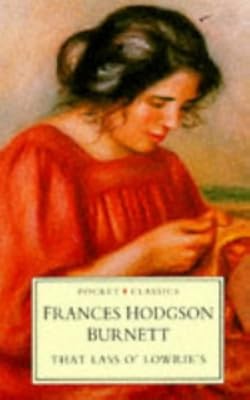
That Lass o' Lowrie's
by Frances Hodgson Burnett
On This Page
Description
This fascinating historical novel from The Secret Garden author Frances Hodgson Burnett explores the lives of an often-overlooked group: female miners in nineteenth-century England. Joan Lowrie, the main focus of the novel, is a strong-willed lass who has struggled with a life of poverty and now works punishing hours in a Lancashire mine. Is there any hope for her to rise above her trying circumstances and find true happiness?.
Tags
Recommendations




















Member Recommendations

by susanbooks
Member Reviews
Right now I'm in a seminar that's reading the fiction of Elizabeth Gaskell and Frances Hodgson Burnett. Not Burnett's children's literature, but her mostly-forgotten and never-reprinted adult fiction. Doing this obviously makes it completely impossible to not draw comparisons between the two writers. And so far, these comparisons are always to Burnett's disadvantage.
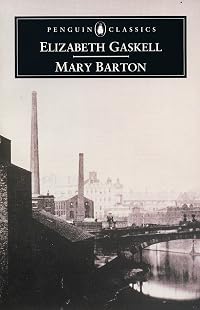
The problem is that, quite simply, Gaskell's ability to render character is leaps and bounds above Burnett's. This can be mostly clearly seen by comparing Gaskell's attempts to depict the Lancashire poor in her first novel, Mary Barton, to Burnett's attempts to do the same in her first novel, That Lass o' Lowrie's. The poor characters in Mary Barton are, well, show more characters. They're people with problems and conditions that have shaped them in certain ways, understandable even when those ways are negatives, but they're not eternal victims; they act to help one another or themselves or no one at all, depending. Of all the characters in Lass, only one is poor, and that character falls into the typical Victorian trap of being recognized by every other character as not of her own class. Joan Lowrie, the lass of the title, is virtuous, religious, and selfless, whereas every other poor character in the novel is irrational, dirty, and faceless (with two exceptions).
One of those exceptions is Joan's father, and once again I draw comparison to Mary Barton. Both novels' title characters attempt to murder (or do murder) an upper-class character connected with the town's industry. Mary's father does this because he's seen so many of his fellow laborers' lives ruined by suffering, negotiations with the mill-owners have broken down, and he can't take it all anymore. Joan's father, on the other hand, does this because... well... he's poor and drunk, and that's what poor people do, you know? Can't trust a poor person, unless their nature is that of someone from the upper classes.
The bizarre part of all this is that Elizabeth Gaskell was comfortably middle class (at least) her whole life, whereas Frances Hodgson Burnett spent much of her childhood in poverty. To read That Lass o' Lowrie's, though, you'd think that poor people were something Burnett had only encountered by reading Oliver Twist. show less
The problem is that, quite simply, Gaskell's ability to render character is leaps and bounds above Burnett's. This can be mostly clearly seen by comparing Gaskell's attempts to depict the Lancashire poor in her first novel, Mary Barton, to Burnett's attempts to do the same in her first novel, That Lass o' Lowrie's. The poor characters in Mary Barton are, well, show more characters. They're people with problems and conditions that have shaped them in certain ways, understandable even when those ways are negatives, but they're not eternal victims; they act to help one another or themselves or no one at all, depending. Of all the characters in Lass, only one is poor, and that character falls into the typical Victorian trap of being recognized by every other character as not of her own class. Joan Lowrie, the lass of the title, is virtuous, religious, and selfless, whereas every other poor character in the novel is irrational, dirty, and faceless (with two exceptions).
One of those exceptions is Joan's father, and once again I draw comparison to Mary Barton. Both novels' title characters attempt to murder (or do murder) an upper-class character connected with the town's industry. Mary's father does this because he's seen so many of his fellow laborers' lives ruined by suffering, negotiations with the mill-owners have broken down, and he can't take it all anymore. Joan's father, on the other hand, does this because... well... he's poor and drunk, and that's what poor people do, you know? Can't trust a poor person, unless their nature is that of someone from the upper classes.
The bizarre part of all this is that Elizabeth Gaskell was comfortably middle class (at least) her whole life, whereas Frances Hodgson Burnett spent much of her childhood in poverty. To read That Lass o' Lowrie's, though, you'd think that poor people were something Burnett had only encountered by reading Oliver Twist. show less
I've had to switch from the audio book to the gutenberg text because the Lancashire accent, though lovely, is almost completely unintelligible to me. Perhaps phonetically parsing it out will work!
This got pushed aside by a few other books and then I finally got back into it and began to wonder if my Gutenberg copy was incomplete. There were odd gaps and bits and pieces of the plot never quite seemed to connect. Reading both Trollope and von Armin before getting back to Burnett showed up some of her weaknesses. This was clearly in more of the melodrama category. Worth finishing up but I'll stay away from Burnett for a little bit now.
This got pushed aside by a few other books and then I finally got back into it and began to wonder if my Gutenberg copy was incomplete. There were odd gaps and bits and pieces of the plot never quite seemed to connect. Reading both Trollope and von Armin before getting back to Burnett showed up some of her weaknesses. This was clearly in more of the melodrama category. Worth finishing up but I'll stay away from Burnett for a little bit now.
France Hodgson's Burnett's first novel, the tale of a variety of characters, rich and poor, in the bleak mining village of Riggan.
Ratings
Members
- Recently Added By
Lists

things to read next
23 works; 1 member
Author Information

357+ Works 76,799 Members
Frances Hodgson Burnett wrote for children and adults, publishing both plays and novels. She was born in Manchester, England, on November 24, 1849. Her father, who owned a furniture store, died when she was only four years old. Her mother struggled to keep the family business running while trying to raise five children. Finally, because of the show more failing Manchester economy, the family sold the store and immigrated to the United States. In 1865 they settled just outside of Knoxville, Tennessee. Hoping to offset her family's continuing financial troubles, Burnett began to submit her stories to women's magazines. She was immediately successful. In the late 1860s her stories were published in nearly every popular American magazine. Burnett helped to support her family with income from the sale of her stories, even saving enough to finance a trip back to England, where she stayed for over a year. In 1879, Burnett published her first stories for children; two of her most popular are A Little Princess and The Secret Garden. In contrast to an extremely successful career, Burnett's personal life held many challenges. Her son Lionel was diagnosed with tuberculosis at age 15, from which he never recovered. His death inspired several stories about dead or dying children. Burnett lived her later years on Long Island, New York. She died in 1924. (Bowker Author Biography) show less
Awards and Honors
Common Knowledge
- Canonical title
- That Lass o' Lowrie's
- Original publication date
- 1877
Classifications
Statistics
- Members
- 94
- Popularity
- 341,930
- Reviews
- 3
- Rating
- (3.71)
- Languages
- English
- Media
- Paper, Ebook
- ISBNs
- 17
- ASINs
- 14