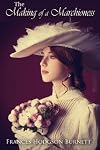
The Making of a Marchioness
by Frances Hodgson Burnett
On This Page
Description
General Books publication date: 2009 Original publication date: 1901 Original Publisher: F. A. Stokes Subjects: Fiction / General Fiction / Classics Fiction / Literary History / General Notes: This is an OCR reprint. There may be typos or missing text. There are no illustrations or an index. When you buy the General Books edition of this book you get free trial access to Million-Books.com where you can select from more than a million books for free. You can also preview the book there.Tags
Recommendations






















Member Reviews
Emily Fox-Seton is a 30-something spinster in Edwardian London, well-bred and impossibly good-natured but penniless. She ekes out a living as a kind of genteel fixer for upper-class women, who pay her a pittance or in cast-off clothes. Emily unexpectedly gets an invitation to a week-long country house party, and given the genre and the book title, I don't think it's a spoiler to say that by the end of it she's had her Cinderella glow-up. Frances Hodgson Burnett's writing is wildly sentimental and predictable, of course, but there are just enough veiled comments about the characters and how society treats women as disposable to stop this from being unbearably saccharine.
I did find it dryly amusing that one female character was desperate show more to get married because if she didn't, a dire fate awaited her: having to go live in Ireland. Gasp!
(I read an edition containing only the first book, The Making of a Marchioness, and not its sequel, The Methods of Lady Walderhurst. Judging by other reviews, that was probably a good choice; the sequel takes a turn into racist melodrama.) show less
I did find it dryly amusing that one female character was desperate show more to get married because if she didn't, a dire fate awaited her: having to go live in Ireland. Gasp!
(I read an edition containing only the first book, The Making of a Marchioness, and not its sequel, The Methods of Lady Walderhurst. Judging by other reviews, that was probably a good choice; the sequel takes a turn into racist melodrama.) show less
Serialized in the British Cornhill Magazine in 1901, Frances Hodgson Burnett's The Making of a Marchioness, together with its sequel, The Methods of Lady Walderhurst, were published together as Emily Fox-Seton (the name of the heroine) that same year, and seem to have been linked this way ever since. My edition of the novel, found on the shelves of my public library, is part of The Doughty Library - a Stein and Day series intended to reprint Victorian and Edwardian novels that had undeservedly fallen out of print - and despite the introduction of Marghanita Laski, who claims that the sequel is not included here, it appears to contain both stories. I double-checked the free ebook available from manybooks.net, in order to verify this. I show more find this confusion rather odd, but just in case anyone else is looking at this edition, yes, it does contain both.
In any case, I enjoyed reading this one quite a bit, although I have to say I liked the earlier story - in which impoverished gentlewoman Emily Fox-Seton, invited by one of her wealthy patron-employers to a house-party, ends up becoming the most unexpected matrimonial object of the Marquis of Walderhurst - far better than the sequel, in which the new Marchioness' life is threatened by the unscrupulous heir to her husband's title and estates. The whole thing is rampantly sentimental, with an unbelievably saintly heroine, melodramatic villains, and a final death-bed realization. It is also, unfortunately, unconsciously racist, despite the author's reference to Uncle Tom's Cabin (meant to indicate the heroine's broad-minded views), in its depiction of Ameerah, the Osborns' Indian servant. That said, The Making of a Marchioness is an excellent period piece, and is best enjoyed as such. It has significant flaws, and will not be for everyone, but those who enjoy this particular kind of Edwardian fiction, with one foot still in the Victorian world, will enjoy it immensely. show less
In any case, I enjoyed reading this one quite a bit, although I have to say I liked the earlier story - in which impoverished gentlewoman Emily Fox-Seton, invited by one of her wealthy patron-employers to a house-party, ends up becoming the most unexpected matrimonial object of the Marquis of Walderhurst - far better than the sequel, in which the new Marchioness' life is threatened by the unscrupulous heir to her husband's title and estates. The whole thing is rampantly sentimental, with an unbelievably saintly heroine, melodramatic villains, and a final death-bed realization. It is also, unfortunately, unconsciously racist, despite the author's reference to Uncle Tom's Cabin (meant to indicate the heroine's broad-minded views), in its depiction of Ameerah, the Osborns' Indian servant. That said, The Making of a Marchioness is an excellent period piece, and is best enjoyed as such. It has significant flaws, and will not be for everyone, but those who enjoy this particular kind of Edwardian fiction, with one foot still in the Victorian world, will enjoy it immensely. show less
I've finally obtained a vintage copy of The Making of a Marchioness to go with my vintage copy of its sequel, The Methods of Lady Walderhurst. It is a lovely little book, although I note (with amusement), that the lady on the cover is NOT Miss Emily Fox-Seton, the heroine. The publisher chose to use the illustration of the beautiful Lady Agatha Slade instead. What an insult to Miss Emily. The frontispiece shows that she's attractive, if not a beauty.
Frederick A. Stokes Company published the book in September of 1901. Because Queen Victoria died on January 22, 1901, it was already Edwardian England when the book came out, but it was probably still Victorian England when the book was written.
Miss Emily Fox-Seton is a familiar character show more for those of us who read historical romances. Her blood is blue, but she's a poor relation whose rich relatives, such as Lady Malfry, are unwilling to help her out. Luckily, this very nice young woman was a paid companion to old Mrs. Maytham, who left her a few hundred pounds and helped her get inexpensive lodgings in London, as well as giving her good advice. Emily makes her living running errands for rich and middle class women. Her home is a bed-sitting-room in a boarding house. Her landlady, Mrs. Cupp, and the landlady's daughter, Jane, are very fond of her and take good care of her. Emily is 34 years old, which makes her older than the usual heroine of a romance, but she's still young enough to produce that all-important heir (and even the spare).
One of Emily's patrons is wealthy Lady Maria Bayne of South Audley Street. Lady Maria is very intelligent, has a witty tongue sharp enough to cut steel. She's also selfish and somewhat lazy. Emily is dependable and efficient. Lady Maria decides it would be sensible to invite Emily to her fancy country estate to organize Mallowe Court's summer parties and annual village fete, not to mention taking care of all those tedious details that beset a hostess.
How is a marchioness to be made? In this case, it's Lady Maria's cousin Lord James, the Marquis of Walderhurst. He's a 54-year-old widower whose only child died as a baby. As we will learn in the sequel, his current heir is a despicable fellow, so it behooves Lord Walderhurst to get married again and father another heir. Lord Walderhurst is neither handsome nor dashing. If he were plain Mr. Walderhurst with only a middle class income, it's not likely that anyone would take notice of him. Because he's titled and rich, he's a matrimonial prize.
Lady Maria has three prospective candidates among her summer guests. One is the beautiful Lady Agatha Slade (who has to catch a husband this season or be stuck in Castle Clare in Ireland because her parents have five other daughters to get respectably married. They can't afford to give Agatha more than one London season. Even now the tradesmen are being so mean as to expect to be paid -- shocking, I know.) Lady Agatha had high hopes of Sir Bruce Norman, but he went off to India without proposing. A second is pretty Miss Cora Brooke, a rich American girl there with her mother, who isn't as bad as Mrs. Bennett from Austen's Pride and Prejudice, but she does say things to make her daughter cringe. The third is clever Mrs. Ralph, the writer, who tends to talk too much. Of the three, Emily makes friends with Lady Agatha and hopes she'll win.
The village fete is deftly handled by Emily. The villagers know that she's a true lady, through and through, and they think she's much better than the other high-born ladies they've ever met. Emily is so very nice, humble, and takes genuine pleasure in being helpful. There's none of that treating commoners as sub-human with Emily! Emily is pretty much on her feet all day.
Lady Maria is holding a dinner party the evening after the day of the fete. One of the guests will be Old General Barnes, who is a noted gourmand. It would absolutely ruin Lady Maria's reputation as a hostess if she were to serve him a dinner without a fish course. If this seems ridiculous to the everyday gentle reader, back in 1671 chef François Vatel of France actually killed himself because he thought he would not be able to serve seafood for a banquet in honor of King Louis XIV. (The tardy fish arrived after he'd killed himself.) Luckily, Lady Maria will not be expected to follow Vatel's example.
All of the other guests have gone out to visit a ruined castle, so poor Emily and her aching feet will have to walk four miles to the fishmonger at Maundell village and back. She's also received a letter from the Cupps that is very bad news for her. It's not as if Emily knows that Lady Maria has made up her mind to hire her permanently.
NOTES:
Chapter 1:
a. At the time this book was first published (1901), a woman who had a baby 'out of wedlock' (while unmarried), was no longer respectable. A woman of the servant class would not be able to get any job other than as a prostitute.
b. Emily received only 20 pounds a year as interest after she invested her legacy. Her rent was 10 shillings a week. 20 shillings equaled a pound, so her rent was 26 pounds a year. Of course she had to work.
c. Strawberry leaves are a symbol for the higher ranked English aristocracy. In descending order that would be dukes, marquises (or marquesses), and earls.
Chapter 3:
a. 'Debrett' is short for Debrett's Peerage and Baronetage, a guide to British aristocrats with titles. 'Burke' is short for Burke's Peerage, another guide.
b. 'Mrs. Sharman Crawford' is a hybrid pink rose.
c. 'Unspeakable' just means that something is hard to put into words. These days the word tends to be used only in its negative sense, but it can be positive as well.
Chapter 5: Look here for the origin of the Walderhurst heirloom betrothal ring.
If you're prepared to overlook such a prosaic hero, this is a fun little book to read. It's set later than Georgette Heyer's Regency Romances, but we get still those details of what must be contrived if a woman of modest or considerably less than modest means is to be respectably married. There are plenty of rude but funny remarks to chuckle over. The actual proposal is hardly the stuff of ballads, but as the lady is thrilled to receive it, that's what counts.
Modern editions of The Making of a Marchioness usually include its sequel as if it were merely part two, but this review is for the first book alone, which has only six chapters. show less
Frederick A. Stokes Company published the book in September of 1901. Because Queen Victoria died on January 22, 1901, it was already Edwardian England when the book came out, but it was probably still Victorian England when the book was written.
Miss Emily Fox-Seton is a familiar character show more for those of us who read historical romances. Her blood is blue, but she's a poor relation whose rich relatives, such as Lady Malfry, are unwilling to help her out. Luckily, this very nice young woman was a paid companion to old Mrs. Maytham, who left her a few hundred pounds and helped her get inexpensive lodgings in London, as well as giving her good advice. Emily makes her living running errands for rich and middle class women. Her home is a bed-sitting-room in a boarding house. Her landlady, Mrs. Cupp, and the landlady's daughter, Jane, are very fond of her and take good care of her. Emily is 34 years old, which makes her older than the usual heroine of a romance, but she's still young enough to produce that all-important heir (and even the spare).
One of Emily's patrons is wealthy Lady Maria Bayne of South Audley Street. Lady Maria is very intelligent, has a witty tongue sharp enough to cut steel. She's also selfish and somewhat lazy. Emily is dependable and efficient. Lady Maria decides it would be sensible to invite Emily to her fancy country estate to organize Mallowe Court's summer parties and annual village fete, not to mention taking care of all those tedious details that beset a hostess.
How is a marchioness to be made? In this case, it's Lady Maria's cousin Lord James, the Marquis of Walderhurst. He's a 54-year-old widower whose only child died as a baby. As we will learn in the sequel, his current heir is a despicable fellow, so it behooves Lord Walderhurst to get married again and father another heir. Lord Walderhurst is neither handsome nor dashing. If he were plain Mr. Walderhurst with only a middle class income, it's not likely that anyone would take notice of him. Because he's titled and rich, he's a matrimonial prize.
Lady Maria has three prospective candidates among her summer guests. One is the beautiful Lady Agatha Slade (who has to catch a husband this season or be stuck in Castle Clare in Ireland because her parents have five other daughters to get respectably married. They can't afford to give Agatha more than one London season. Even now the tradesmen are being so mean as to expect to be paid -- shocking, I know.) Lady Agatha had high hopes of Sir Bruce Norman, but he went off to India without proposing. A second is pretty Miss Cora Brooke, a rich American girl there with her mother, who isn't as bad as Mrs. Bennett from Austen's Pride and Prejudice, but she does say things to make her daughter cringe. The third is clever Mrs. Ralph, the writer, who tends to talk too much. Of the three, Emily makes friends with Lady Agatha and hopes she'll win.
The village fete is deftly handled by Emily. The villagers know that she's a true lady, through and through, and they think she's much better than the other high-born ladies they've ever met. Emily is so very nice, humble, and takes genuine pleasure in being helpful. There's none of that treating commoners as sub-human with Emily! Emily is pretty much on her feet all day.
Lady Maria is holding a dinner party the evening after the day of the fete. One of the guests will be Old General Barnes, who is a noted gourmand. It would absolutely ruin Lady Maria's reputation as a hostess if she were to serve him a dinner without a fish course. If this seems ridiculous to the everyday gentle reader, back in 1671 chef François Vatel of France actually killed himself because he thought he would not be able to serve seafood for a banquet in honor of King Louis XIV. (The tardy fish arrived after he'd killed himself.) Luckily, Lady Maria will not be expected to follow Vatel's example.
All of the other guests have gone out to visit a ruined castle, so poor Emily and her aching feet will have to walk four miles to the fishmonger at Maundell village and back. She's also received a letter from the Cupps that is very bad news for her. It's not as if Emily knows that Lady Maria has made up her mind to hire her permanently.
NOTES:
Chapter 1:
a. At the time this book was first published (1901), a woman who had a baby 'out of wedlock' (while unmarried), was no longer respectable. A woman of the servant class would not be able to get any job other than as a prostitute.
b. Emily received only 20 pounds a year as interest after she invested her legacy. Her rent was 10 shillings a week. 20 shillings equaled a pound, so her rent was 26 pounds a year. Of course she had to work.
c. Strawberry leaves are a symbol for the higher ranked English aristocracy. In descending order that would be dukes, marquises (or marquesses), and earls.
Chapter 3:
a. 'Debrett' is short for Debrett's Peerage and Baronetage, a guide to British aristocrats with titles. 'Burke' is short for Burke's Peerage, another guide.
b. 'Mrs. Sharman Crawford' is a hybrid pink rose.
c. 'Unspeakable' just means that something is hard to put into words. These days the word tends to be used only in its negative sense, but it can be positive as well.
Chapter 5: Look here for the origin of the Walderhurst heirloom betrothal ring.
If you're prepared to overlook such a prosaic hero, this is a fun little book to read. It's set later than Georgette Heyer's Regency Romances, but we get still those details of what must be contrived if a woman of modest or considerably less than modest means is to be respectably married. There are plenty of rude but funny remarks to chuckle over. The actual proposal is hardly the stuff of ballads, but as the lady is thrilled to receive it, that's what counts.
Modern editions of The Making of a Marchioness usually include its sequel as if it were merely part two, but this review is for the first book alone, which has only six chapters. show less
Where I got the book: purchased on Kindle. ***SPOILER WARNING.***
Frances Hodgson Burnett is of course better known for her children’s books, particularly The Secret Garden, Little Lord Fauntleroy and A Little Princess. I never thought of her as a writer for adults until a writer friend mentioned a blog post about her on Facebook (I can’t find the post, sorry) which talked about The Making of a Marchioness and sketched out the premise. I was immediately intrigued by the notion of a less-than-glamorous, older, impoverished heroine, so I grabbed this $0.99 (at the time of writing) edition on Kindle. All hail to Kindle for providing an easy way to get hold of old, out-of-print literature! This is quite a decent edition, except that they show more evidently OCR’d it from a print book which had illustrations and have left the reference to the illustrations in the text. This annoys me because now I want to see the illustrations. Which led to a We Wants It moment that resulted in a completely impulsive ebay purchase for my collection. I don’t know if I’ve told you guys that I collect early 20th century editions, which are more often than not of 19th century books, although nowadays I generally wait till I’m in England because I have favorite bookstores there.
Anyway, I’m finding FHB increasingly fascinating since she had an American and an English side to her, led a colorful life, was a celebrity in her day, and was a consummate businesswoman who knew how to turn her talents as a popular writer into a comfortable fortune. In many ways she’s a typical Victorian: she has a taste for the melodramatic and the sentimental, gets positively New Agey at times with touches of mysticism and spiritualism, and has a moralistic way of dividing her characters into good and rewarding them, and bad and giving them the Fate They Deserve.
Melodrama, sentimentality, mysticism and moral certainty are all present in The Making of a Marchioness, and how I loved them, except for the mysticism because I have never liked the Mysteries of the East strand in Victorian literature. [Side note: The Making of a Marchioness was published in 1901, which is bang on the end of the Victorian era and the beginning of the Edwardian, and was a late work of FHB’s but before A Little Princess and The Secret Garden.] I will have to read a biography of FHB to find out why she was so fascinated by India, because both The Secret Garden and A Little Princess have an Indian connection.
As a novel, The Making of a Marchioness has its flaws. It can be best described as a love story and thriller combo, or as a love story interrupted by a thriller plot. The two halves of the story don’t sit entirely well together—it’s as if FHB wrote the love story, but found it was too short and then wrote the thriller subplot without really bothering to link the two. So I’m going to treat the two stories separately.
The love story revolves around Emily Fox-Seton, an impoverished thirtysomething of good family who has been left, through no fault of her own, in that perilous financial position that was apparently quite familiar to Victorian ladies—parents dead and no MAN to keep her in proper ladylike style. If you were born into the upper social classes, you married or you starved, or ended your days in the workhouse which amounted to the same thing—you couldn’t possibly work in a shop or factory or become a maid for your living because it just wasn’t done. Emily is seriously worried about the prospect of ending her days starving or in the workhouse, but for the time being is able to eke out an existence by acting as a sort of assistant to a variety of ladies who’ve had better luck in the marriage stakes and need someone to run around hiring servants, finding shopping bargains and basically doing all the things a lady of quality would rather not be bothered with. The level of acidity that FHB directs at the snobbish women who get Emily to hunt for cheap stockings is very telling—FHB did not begin life rich, and undoubtedly suffered from English snobs until she was successful enough to be accepted.
By a tremendous stroke of luck, one of the ladies invites Emily to her summer house party in the country, which of course would have been expected to go on for weeks. Emily, being all things good—grateful, humble, appreciative, never jealous of other people’s good fortune—is delighted to be in the country during the summer, and has no problem with watching the younger, richer, and better-dressed ladies do their best to capture a MAN before they get too old/run out of money. The ladies are particularly keen on capturing the affections of the Marquis of Walderhurst, an older widower with pots of money and good breeding, and one of them seems to be getting very close to the prize. Emily does nothing but be her good self, encouraging the front-runner and just being generally a large, fresh-faced, lovely, well-behaved woman.
Can you guess what happens next? That scene’s adorable, and of course by this time the reader knows she should be cheering Emily along every step of the way.
FHB doesn’t stop at the Happily Ever After, but brings the reader along as Emily adjusts to being a Marchioness and wins her very English husband’s affection (rather than love—he marries her more because that will stop all the other women pursuing him, and because he likes her and finds her interesting). The Marquis goes off to India, and with the aid of the thriller subplot stays there, unknowing that Emily is in an Interesting Condition (it’s hilarious how FHB skips around all direct references to pregnancy). He comes back to find her at death’s door, realizes he loves her truly and . . . . Oh, read the book. It gets very sentimental at that point.
The subplot involves the Marquis’s cousin, who is the heir-presumptive in the event the Marquis dies without issue—which means, of course, that it’s in his best interest to ensure that Emily doesn’t breed. Aided by his wicked-because-Anglo-Indian-but-redeemable wife and a mystical Indian servant, he tries hard to throw a few spanners in the works, not shying away from attempts at Murder Most Foul, and comes to a Bad End at the hands of . . . . again, read the story. Both he and his wife start out good-looking but their looks disintegrate because the author is punishing them for being naughty characters, while Emily becomes increasingly beautiful. Moral certainty has its rules.
I totally recommend this book, mostly because along with the Victorian saccharine FHB injects some wonderfully pointed barbs into her text (she made me laugh on several occasions, particularly in the earlier part of the book—the house party—which was superb). She does the Victorian morality with a sort of dry half-mockery that points forward to the early 20th century, when female writers started to see a woman’s role in life very differently. We’re led to accept that Emily’s Happily Ever After has to proceed from captivating a MAN and his fortune, but there’s a clear line of questioning why such a development should be necessary to her happiness. FHB was evidently happy to work within the system (well, sort of; as I said, her life was colorful), but she didn’t like it. She lived to see the First World War and all the changes it brought about for society in general and women in particular, dying in 1922 when the struggle to give women equal rights and economic possibilities in both of her home countries was well advanced but far from finished. show less
Frances Hodgson Burnett is of course better known for her children’s books, particularly The Secret Garden, Little Lord Fauntleroy and A Little Princess. I never thought of her as a writer for adults until a writer friend mentioned a blog post about her on Facebook (I can’t find the post, sorry) which talked about The Making of a Marchioness and sketched out the premise. I was immediately intrigued by the notion of a less-than-glamorous, older, impoverished heroine, so I grabbed this $0.99 (at the time of writing) edition on Kindle. All hail to Kindle for providing an easy way to get hold of old, out-of-print literature! This is quite a decent edition, except that they show more evidently OCR’d it from a print book which had illustrations and have left the reference to the illustrations in the text. This annoys me because now I want to see the illustrations. Which led to a We Wants It moment that resulted in a completely impulsive ebay purchase for my collection. I don’t know if I’ve told you guys that I collect early 20th century editions, which are more often than not of 19th century books, although nowadays I generally wait till I’m in England because I have favorite bookstores there.
Anyway, I’m finding FHB increasingly fascinating since she had an American and an English side to her, led a colorful life, was a celebrity in her day, and was a consummate businesswoman who knew how to turn her talents as a popular writer into a comfortable fortune. In many ways she’s a typical Victorian: she has a taste for the melodramatic and the sentimental, gets positively New Agey at times with touches of mysticism and spiritualism, and has a moralistic way of dividing her characters into good and rewarding them, and bad and giving them the Fate They Deserve.
Melodrama, sentimentality, mysticism and moral certainty are all present in The Making of a Marchioness, and how I loved them, except for the mysticism because I have never liked the Mysteries of the East strand in Victorian literature. [Side note: The Making of a Marchioness was published in 1901, which is bang on the end of the Victorian era and the beginning of the Edwardian, and was a late work of FHB’s but before A Little Princess and The Secret Garden.] I will have to read a biography of FHB to find out why she was so fascinated by India, because both The Secret Garden and A Little Princess have an Indian connection.
As a novel, The Making of a Marchioness has its flaws. It can be best described as a love story and thriller combo, or as a love story interrupted by a thriller plot. The two halves of the story don’t sit entirely well together—it’s as if FHB wrote the love story, but found it was too short and then wrote the thriller subplot without really bothering to link the two. So I’m going to treat the two stories separately.
The love story revolves around Emily Fox-Seton, an impoverished thirtysomething of good family who has been left, through no fault of her own, in that perilous financial position that was apparently quite familiar to Victorian ladies—parents dead and no MAN to keep her in proper ladylike style. If you were born into the upper social classes, you married or you starved, or ended your days in the workhouse which amounted to the same thing—you couldn’t possibly work in a shop or factory or become a maid for your living because it just wasn’t done. Emily is seriously worried about the prospect of ending her days starving or in the workhouse, but for the time being is able to eke out an existence by acting as a sort of assistant to a variety of ladies who’ve had better luck in the marriage stakes and need someone to run around hiring servants, finding shopping bargains and basically doing all the things a lady of quality would rather not be bothered with. The level of acidity that FHB directs at the snobbish women who get Emily to hunt for cheap stockings is very telling—FHB did not begin life rich, and undoubtedly suffered from English snobs until she was successful enough to be accepted.
By a tremendous stroke of luck, one of the ladies invites Emily to her summer house party in the country, which of course would have been expected to go on for weeks. Emily, being all things good—grateful, humble, appreciative, never jealous of other people’s good fortune—is delighted to be in the country during the summer, and has no problem with watching the younger, richer, and better-dressed ladies do their best to capture a MAN before they get too old/run out of money. The ladies are particularly keen on capturing the affections of the Marquis of Walderhurst, an older widower with pots of money and good breeding, and one of them seems to be getting very close to the prize. Emily does nothing but be her good self, encouraging the front-runner and just being generally a large, fresh-faced, lovely, well-behaved woman.
Can you guess what happens next? That scene’s adorable, and of course by this time the reader knows she should be cheering Emily along every step of the way.
FHB doesn’t stop at the Happily Ever After, but brings the reader along as Emily adjusts to being a Marchioness and wins her very English husband’s affection (rather than love—he marries her more because that will stop all the other women pursuing him, and because he likes her and finds her interesting). The Marquis goes off to India, and with the aid of the thriller subplot stays there, unknowing that Emily is in an Interesting Condition (it’s hilarious how FHB skips around all direct references to pregnancy). He comes back to find her at death’s door, realizes he loves her truly and . . . . Oh, read the book. It gets very sentimental at that point.
The subplot involves the Marquis’s cousin, who is the heir-presumptive in the event the Marquis dies without issue—which means, of course, that it’s in his best interest to ensure that Emily doesn’t breed. Aided by his wicked-because-Anglo-Indian-but-redeemable wife and a mystical Indian servant, he tries hard to throw a few spanners in the works, not shying away from attempts at Murder Most Foul, and comes to a Bad End at the hands of . . . . again, read the story. Both he and his wife start out good-looking but their looks disintegrate because the author is punishing them for being naughty characters, while Emily becomes increasingly beautiful. Moral certainty has its rules.
I totally recommend this book, mostly because along with the Victorian saccharine FHB injects some wonderfully pointed barbs into her text (she made me laugh on several occasions, particularly in the earlier part of the book—the house party—which was superb). She does the Victorian morality with a sort of dry half-mockery that points forward to the early 20th century, when female writers started to see a woman’s role in life very differently. We’re led to accept that Emily’s Happily Ever After has to proceed from captivating a MAN and his fortune, but there’s a clear line of questioning why such a development should be necessary to her happiness. FHB was evidently happy to work within the system (well, sort of; as I said, her life was colorful), but she didn’t like it. She lived to see the First World War and all the changes it brought about for society in general and women in particular, dying in 1922 when the struggle to give women equal rights and economic possibilities in both of her home countries was well advanced but far from finished. show less
I loved [A Little Princess] when I was young. I reread my mother's old paperback copy so many times that the pages fell out and she had to buy me a new one with a secured binding (I didn't read it more than once... I just taped the pages back in the old copy). I didn't know the author had published books for adults as well.
Our heroine, Emily Fox-Seton, caught me unaware. I expected a protagonist more like Sara Crewe, or Mary from [The Secret Garden]. I expected her to be clever, well-read, maybe even pretty. What I liked about Emily is that she was none of the above.
Our intrepid heroine is a sensible, humble, self-effacing spinster (I think she was about thirty-six, thirty-seven) who has no expectations of life. She's a lady, but born show more into a family without money who died while she was young. Instead of acting like a "normal" lady of her class (spending beyond her means, actively seeking out men to marry, doing only "ladylike" work), Emily acts as sort of a Victorian personal assistant. She runs errands, acts as a companion, tracks down sale merchandise for her clients, and makes sure to pay her rent on time so as not to inconvenience her landlady. She's very good, very earnest, and very willing to go the extra mile solely because she can, and she's delighted when the ladies she assists (planning their parties and generally making their lives easier) give her gifts like theater tickets or a decent swath of velvet.
Emily ends up planning parties one summer for Lady Maria, whose cousin, a marquis, is searching for a wife. She never considers herself a candidate, picking instead a favorite of the suitors to attempt to promote to the Marquis should she speak with him. Of course he chooses her, though not for predictable reasons. The Marquis admires Emily's pragmatism and thinks that she would make his household run smoothly and his life easier, and as a man in his fifties, he doesn't see the point in chasing after a teenager, spending far too much effort trying to keep her happy and under control. He must marry if he wants a chance at an heir he doesn't loathe, so he might as well marry her.
I thought the story would end with the wedding, but the two were married less than halfway in. That's when the real story begins, as the Marchionesse moves in with her husband, charms his household, and adopts under her wing the Indian wife of her husband's loathed heir. I was startled to see a mildly insightful depiction of anyone of a different race from a Victorian white woman. However, her upper class protagonists are excessively (vocally) delicate about race, not wanting to come across as offensive or suspicious, while the Indian natives regard them with disdain, wondering what makes rich white ladies so entitled and irritating. There's still a certain degree of stereotyping, but for a novel written at the height of Orientalism, Burnett played it fairly well.
All in all, much more substance than anticipated, and I love a Cinderella being selected not for her pretty face or wit, but for her practicality and kindness. show less
Our heroine, Emily Fox-Seton, caught me unaware. I expected a protagonist more like Sara Crewe, or Mary from [The Secret Garden]. I expected her to be clever, well-read, maybe even pretty. What I liked about Emily is that she was none of the above.
Our intrepid heroine is a sensible, humble, self-effacing spinster (I think she was about thirty-six, thirty-seven) who has no expectations of life. She's a lady, but born show more into a family without money who died while she was young. Instead of acting like a "normal" lady of her class (spending beyond her means, actively seeking out men to marry, doing only "ladylike" work), Emily acts as sort of a Victorian personal assistant. She runs errands, acts as a companion, tracks down sale merchandise for her clients, and makes sure to pay her rent on time so as not to inconvenience her landlady. She's very good, very earnest, and very willing to go the extra mile solely because she can, and she's delighted when the ladies she assists (planning their parties and generally making their lives easier) give her gifts like theater tickets or a decent swath of velvet.
Emily ends up planning parties one summer for Lady Maria, whose cousin, a marquis, is searching for a wife. She never considers herself a candidate, picking instead a favorite of the suitors to attempt to promote to the Marquis should she speak with him. Of course he chooses her, though not for predictable reasons. The Marquis admires Emily's pragmatism and thinks that she would make his household run smoothly and his life easier, and as a man in his fifties, he doesn't see the point in chasing after a teenager, spending far too much effort trying to keep her happy and under control. He must marry if he wants a chance at an heir he doesn't loathe, so he might as well marry her.
I thought the story would end with the wedding, but the two were married less than halfway in. That's when the real story begins, as the Marchionesse moves in with her husband, charms his household, and adopts under her wing the Indian wife of her husband's loathed heir. I was startled to see a mildly insightful depiction of anyone of a different race from a Victorian white woman. However, her upper class protagonists are excessively (vocally) delicate about race, not wanting to come across as offensive or suspicious, while the Indian natives regard them with disdain, wondering what makes rich white ladies so entitled and irritating. There's still a certain degree of stereotyping, but for a novel written at the height of Orientalism, Burnett played it fairly well.
All in all, much more substance than anticipated, and I love a Cinderella being selected not for her pretty face or wit, but for her practicality and kindness. show less
I have read Burnett's Secret Garden before and thought this book was going to be sweet fluff. However, I was pleasantly surprised as the book progressed. It's definitely a story of good vs. evil and the power of positivity. Loved this book! A veiled criticism of Victorian society. I listened to this on audio and the narrator was superb. 8 hours 10 mins (252 pages). It's only 99 cents on Kindle currently!
Emily Fox-Seton is a poor but exceedingly goodnatured young gentlewoman. Her nature is too trusting to realize the selfish motives behind the kindnesses she receives from those more fortunate than her. She reminds me of an adult Sara Crewe, at least as portrayed by Shirley Temple in the movie adaptation of A Little Princess. (I haven't read the book.) The hero won't leave many readers jealous of Emily's good fortune. Readers don't have a chance to develop any romantic illusions about him when they're constantly reminded that he is self-centered and unimaginative. What I think about him isn't really important, as long as Emily is happy. I was disappointed by the story's abrupt ending. It seemed unfinished. Imagine my delight when I show more discovered that Emily's story continues in The Methods of Lady Walderhurst. Of course, I had to start it immediately to find out how Emily's story plays out! show less
Members
- Recently Added By
Author Information

358+ Works 77,301 Members
Frances Hodgson Burnett wrote for children and adults, publishing both plays and novels. She was born in Manchester, England, on November 24, 1849. Her father, who owned a furniture store, died when she was only four years old. Her mother struggled to keep the family business running while trying to raise five children. Finally, because of the show more failing Manchester economy, the family sold the store and immigrated to the United States. In 1865 they settled just outside of Knoxville, Tennessee. Hoping to offset her family's continuing financial troubles, Burnett began to submit her stories to women's magazines. She was immediately successful. In the late 1860s her stories were published in nearly every popular American magazine. Burnett helped to support her family with income from the sale of her stories, even saving enough to finance a trip back to England, where she stayed for over a year. In 1879, Burnett published her first stories for children; two of her most popular are A Little Princess and The Secret Garden. In contrast to an extremely successful career, Burnett's personal life held many challenges. Her son Lionel was diagnosed with tuberculosis at age 15, from which he never recovered. His death inspired several stories about dead or dying children. Burnett lived her later years on Long Island, New York. She died in 1924. (Bowker Author Biography) show less
Some Editions
Work Relationships
Is contained in
Has the adaptation
Common Knowledge
- Canonical title
- The Making of a Marchioness
- Original title
- The Making of a Marchioness
- Alternate titles
- Emily Fox-Seton
- Original publication date
- 1901; 1901-09 (Stokes edition) (Stokes edition)
- People/Characters
- Emily Fox-Seton (well bred, but little money); Lady Agatha Slade (Lady Maria's beautiful guest); Alec Osborn (only in omnibus editions); Lord James Walderhurst (Marquis of Walderhurst | Lady Maria's cousin); Mrs. Cupp (Emily's landlady); Jane Cupp (Mrs. Cupp's daughter) (show all 15); Lady Maria Bayne (Emily's elderly, clever patron); Mrs. Brooke (Lady Maria's rich Cincinnati guest); Cora Brooke (Mrs. Brooke's pretty daughter); Mrs. Ralph (Lady Maria's writer guest); Buggle the nearest fishmonger; Lady Maria's cook; Batch the Maundell fishmonger; Black (Lord Walderhurst's groom); Lady Agatha Slade's borzoi dog
- Important places
- London, England, UK; Mrs. Cupp's boarding house, Mortimer Street, London, England; Mallowe Court England (Lady Maria Bayne's country house); Maundell, England (fictional village 4 miles across the moor from Mallowe Court)
- Related movies
- The Making of a Lady (2012 | IMDb)
- First words
- When Miss Fox-Seton descended from the two-penny 'bus as it drew up, she gathered her trim tailor-made skirt about her with neatness and decorum, being well used to getting in and out of two-penny 'buses and to making her way... (show all) across muddy London streets.
- Quotations
- She had not lived in a world where marriage was a thing of romance, and, for that matter, neither had Agatha. It was nice if a girl liked the man who married her, but if he was a well-behaved, agreeable person, of good means,... (show all) it was natural that she would end by liking him sufficiently, and to be provided for comfortably or luxuriously for life, and not left upon one's own hands, or one's parents', was a thing to be thankful for in any case. [chapter 3]
[Describing Lady Maria Bayne]
'...Lady Maria being incased in a perfect, frank armour of good-humored selfishness, which would have been capable of burning dulness at the stake.' [Chapter 1. The spelling of 'encased... (show all),' 'armor,' and 'dullness' are as given in the book, from back when the USA still used British spelling.] - Last words
- (Click to show. Warning: May contain spoilers.)'Well, James,' she said, 'you have certainly much more sense than most men of your rank and age.' [Those are the last words of the original edition of The Making of a Marchioness]
(Click to show. Warning: May contain spoilers.)And while Lady Walderhurst sat gazing at her with a paling face she began quietly to eat the little buttered scone. [Those are the last words of The Methods of Lady Walderhurst, the sequel to The Making of a Marchioness, but some editions of 'Making' include 'Methods' as 'part two' without indicating that it's a separate book.] - Disambiguation notice
- The Persephone edition entitled The Making of a Marchioness (ISBN 9781903155141, 1903155142 and 1906462127) contains both The Making of a Marchioness and its sequel, The Methods of Lady Walderhurst and should not be co... (show all)mbined with either single work. | The same is true of the 1967 Stein and Day edition of The Making of a Marchioness (Library of Congress Catalog Card No. 66-24805). The Stein and Day edition is also Doughty Library No 4.
Classifications
- Genres
- Fiction and Literature, General Fiction
- DDC/MDS
- 813.4 — Literature & rhetoric American literature in English American fiction in English Later 19th Century 1861-1900
- LCC
- PZ3 .B934 — Language and Literature Fiction and juvenile belles lettres Fiction and juvenile belles lettres Fiction in English
- BISAC
Statistics
- Members
- 216
- Popularity
- 152,001
- Reviews
- 19
- Rating
- (3.43)
- Languages
- English, German, Polish, Spanish
- Media
- Paper, Audiobook, Ebook
- ISBNs
- 11
- ASINs
- 11