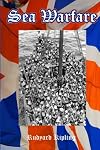
Sea Warfare
by Rudyard Kipling 
76 Members (2.75)
On This Page
Description
These pieces were written as journalism, in response to a request by the Admiralty, as the British public realised that World War I certainly was not going to be 'over by Christmas', and wanted to know what the Navy, the 'silent service', on which so much money had been spent in the decade before the war, was doing. The end of the 'Great War' against Napoleonic France had left Great Britain undoubted mistress of the oceans, and the Royal Navy was the largest in the world. This situation show more remained unchanged until 1914, but the rising power of a unified Germany, not merely economic but in imperial ambitions, had created a perceived threat from the mid-1890s onwards. show lessTags
Recommendations



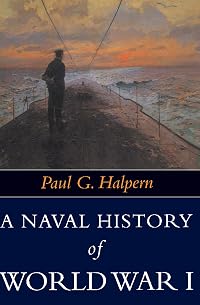


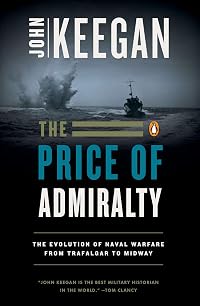

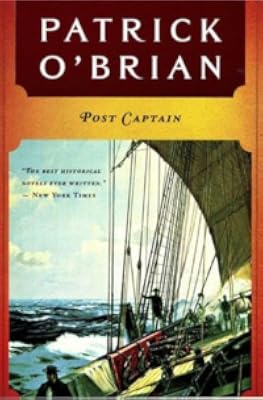


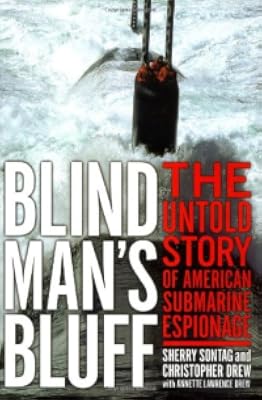











Member Reviews
Members
- Recently Added By
Lists

First published in 1916
68 works; 4 members
Author Information

2,472+ Works 91,365 Members
Kipling, who as a novelist dramatized the ambivalence of the British colonial experience, was born of English parents in Bombay and as a child knew Hindustani better than English. He spent an unhappy period of exile from his parents (and the Indian heat) with a harsh aunt in England, followed by the public schooling that inspired his "Stalky" show more stories. He returned to India at 18 to work on the staff of the Lahore Civil and Military Gazette and rapidly became a prolific writer. His mildly satirical work won him a reputation in England, and he returned there in 1889. Shortly after, his first novel, The Light That Failed (1890) was published, but it was not altogether successful. In the early 1890s, Kipling met and married Caroline Balestier and moved with her to her family's estate in Brattleboro, Vermont. While there he wrote Many Inventions (1893), The Jungle Book (1894-95), and Captains Courageous (1897). He became dissatisfied with life in America, however, and moved back to England, returning to America only when his daughter died of pneumonia. Kipling never again returned to the United States, despite his great popularity there. Short stories form the greater portion of Kipling's work and are of several distinct types. Some of his best are stories of the supernatural, the eerie and unearthly, such as "The Phantom Rickshaw," "The Brushwood Boy," and "They." His tales of gruesome horror include "The Mark of the Beast" and "The Return of Imray." "William the Conqueror" and "The Head of the District" are among his political tales of English rule in India. The "Soldiers Three" group deals with Kipling's three musketeers: an Irishman, a Cockney, and a Yorkshireman. The Anglo-Indian Tales, of social life in Simla, make up the larger part of his first four books. Kipling wrote equally well for children and adults. His best-known children's books are Just So Stories (1902), The Jungle Books (1894-95), and Kim (1901). His short stories, although their understanding of the Indian is often moving, became minor hymns to the glory of Queen Victoria's empire and the civil servants and soldiers who staffed her outposts. Kim, an Irish boy in India who becomes the companion of a Tibetan lama, at length joins the British Secret Service, without, says Wilson, any sense of the betrayal of his friend this actually meant. Nevertheless, Kipling has left a vivid panorama of the India of his day. In 1907, Kipling became England's first Nobel Prize winner in literature and the only nineteenth-century English poet to win the Prize. He won not only on the basis of his short stories, which more closely mirror the ambiguities of the declining Edwardian world than has commonly been recognized, but also on the basis of his tremendous ability as a popular poet. His reputation was first made with Barrack Room Ballads (1892), and in "Recessional" he captured a side of Queen Victoria's final jubilee that no one else dared to address. (Bowker Author Biography) show less
Rudyard Kipling has a Legacy Library. Legacy libraries are the personal libraries of famous readers, entered by LibraryThing members from the Legacy Libraries group.
Series
Belongs to Publisher Series
Work Relationships
Common Knowledge
- Canonical title
- Sea Warfare
- Original publication date
- 1916
- People/Characters
- Royal Navy
- Important places
- North Sea
- Important events
- World War I (1914 | 1918); Battle of Jutland (1916-05-31 | 1916-06-01)
- Epigraph
- IN Lowestoft a boat was laid,
Mark well what I do say!
And she was built for the herring trade,
But she has gone a-rovin', a-rovin', a-rovin',
The lord knows where!
They gave her government coal to burn,... (show all)
And a Q.F. gun at bow and stern,
And sent her out a-rovin', etc.
Her skipper was mate of a bucko ship
Which always killed one man per trip,
So he is used to rovin', etc.
Her mate was skipper of a chapel in Wales,
And so he fights in topper and tails--
Religi-ous tho' rovin', etc.
Her engineer is fifty-eight,'
So he's prepared to meet his fate,
Which ain't unlikely rovin', etc.
Her leading-stoker's seventeen,
So he don't know what the Judgments mean,
Unless he cops 'em rovin', etc.
Her cook was chef in the Lost Dogs' Home,
Mark well what I do say!
And I'm sorry for Fritz when they all come
A-rovin', a-rovin', a-roarin' and a-rovin', Round the North Sea rovin',
The Lord knows where!
The Lowestoft Boat
Rudyard Kipling
First published in Daily Telegraph, November 1915, revised 1919. - First words
- The Navy is very old and very wise.
- Last words
- (Click to show. Warning: May contain spoilers.)We have been compassed about so long and so blindingly by wonders and miracles; so overwhelmed by revelations of the spirit of men in the basest and most high; that we have neither the time to keep tally of these furious days, nor mind to discern upon which hour of them our world's fate hung.
Classifications
Statistics
- Members
- 76
- Popularity
- 416,799
- Rating
- (2.75)
- Languages
- English
- Media
- Paper, Ebook
- ISBNs
- 29
- ASINs
- 4