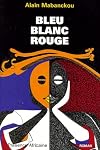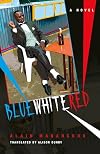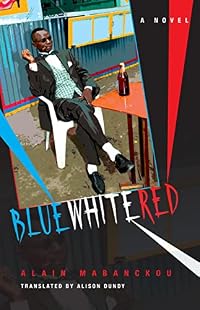
Blue White Red
by Alain Mabanckou
On This Page
Description
This tale of wild adventure reveals the dashed hopes of Africans living between worlds. When Moki returns to his village from France wearing designer clothes and affecting all the manners of a Frenchman, Massala-Massala, who lives the life of a humble peanut farmer after giving up his studies, begins to dream of following in Moki's footsteps. Together, the two take wing for Paris, where Massala-Massala finds himself a part of an underworld of out-of-work undocumented immigrants. After a show more botched attempt to sell metro passes purchased with a stolen checkbook, he winds up in jail and is deported. This is a novel of postcolonial Africa, where young people born into poverty dream of making it big in the cities of their former colonial masters. show lessTags
Recommendations



















Member Reviews
Alain Mabanckou's debut novel is narrated by Massala-Massala, a young Congolese man who is a neighbor of Moki, a slightly older man who is revered by the villagers where his parents and brothers live in luxury. Moki is a Parisian, one of the few Congolese who has emigrated to Paris and found success there. He is welcomed like royalty when he makes his annual return to his home during the dry season, as he represents the hopes and dreams of his people. He dresses in the latest Parisian fashions, hands out gifts to extended family members and friends, speaks proper French French instead of speaking in French, quotes de Maupassant, Saint-Exupéry and Baudelaire freely, causes local girls to swoon openly in his presence, and holds court at show more his father's home and in local bars, as he talks about the French capital, his opulent life, and what it takes to succeed there: "Paris is a big boy. Not for little kids." In the Congo, Parisians like Moki are revered, whereas Peasants, those emigrants who live in towns outside of Paris as they pursue higher education, don't dress like dandies, and associate with Congolese villagers as equals instead of as lesser beings, are viewed with disdain.
Massala-Massala decides to emigrate to Paris, and with the help of his father, his uncle and Moki, he manages to get a visa and passport, and travels by air to Paris with his idol. However, instead of the wealth and easy living that Moki has promised, he quickly discovers the truth about the sordid lives of African immigrants in France, most of whom live there illegally and in poverty, as they face the constant threat of police harassment and deportation back to their homelands. His legal visa soon expires, and he is forced to participate in the underground economy that provides him with enough money for food and lodging, but little else.
Blue White Red, named after the tricolored French flag and the winner of the 1999 Grand prix littéraire d'Afrique noire for the best novel published in France and written by a sub-Saharan Francophone author, is an apt and biting commentary about the sordid lives of African immigrants in France and their countrymen who are caught up in the hype about the greener grass that they believe awaits them in Europe. Although it isn't as well developed as his later novels it is still a very good effort, and a valuable addition to Francophone literature. show less
Massala-Massala decides to emigrate to Paris, and with the help of his father, his uncle and Moki, he manages to get a visa and passport, and travels by air to Paris with his idol. However, instead of the wealth and easy living that Moki has promised, he quickly discovers the truth about the sordid lives of African immigrants in France, most of whom live there illegally and in poverty, as they face the constant threat of police harassment and deportation back to their homelands. His legal visa soon expires, and he is forced to participate in the underground economy that provides him with enough money for food and lodging, but little else.
Blue White Red, named after the tricolored French flag and the winner of the 1999 Grand prix littéraire d'Afrique noire for the best novel published in France and written by a sub-Saharan Francophone author, is an apt and biting commentary about the sordid lives of African immigrants in France and their countrymen who are caught up in the hype about the greener grass that they believe awaits them in Europe. Although it isn't as well developed as his later novels it is still a very good effort, and a valuable addition to Francophone literature. show less
About the “African dandy” in Paris. “Under these circumstances, one will understand that silence, observation, and sometimes contempt lived inside me. I thought that things would go in my favor, suturing the gaping wounds here and there of my disillusionment. I saw the distance sinking between my dirty past and the illusory cocoon of a future. “ (6)
We were allowed to dream. It didn’t cost anything. No exit visa was necessary, no passport, no airline ticket. Think about it. Close your eyes. Sleep. Snore. And there we were, every night...” (20)
Very good. Short, tight tale of a young man chewed up and spit back out by the dream of being an African dandy in Paris.
We were allowed to dream. It didn’t cost anything. No exit visa was necessary, no passport, no airline ticket. Think about it. Close your eyes. Sleep. Snore. And there we were, every night...” (20)
Very good. Short, tight tale of a young man chewed up and spit back out by the dream of being an African dandy in Paris.
This is the third book by Mabanckou I've read, but the first he wrote. (It was only translated into English this year.) In it, he takes a look at the lives of Africans who go to live in Paris and the varieties of experiences they have there. It is both a satire of the "Parisians," as they are called, and the prestige which they and their families acquire when they return for visits to their home county (in this case, Congo), and a look at the harsh reality that most undocumented immigrants find when they arrive in the capital of their former colonizer.
The tale starts out with the narrator declaring "I'll manage to get myself out of this" on finding himself imprisoned in a dark cell outside Paris. The scene then shifts back to his show more village in Congo, where the villagers are all entranced by Moki, a local young man who has done very well for himself in Paris, showering his parents and extended family with expensive gifts including a newly built house complete with water and electricity and two cars that they can use for a taxi service. On his yearly visits home, Moki stresses that speaking French is different from speaking "in French," and he is quite the local dandy, wearing expensive designer clothes and stressing how stylish he is. The narrator, Massala-Massala, is eager to try his luck in Paris too, and Moki arranges for him to get a passport and a tourist visa. This section of the book is quite satirical and very funny in places.
In the second part of the book, Massala-Massala is in Paris, but it is nothing like what he has imagined. He is living with a dozen or more other immigrants in what is apparently a single room on the top floor (no elevator) of an eight-story building (which may have been condemned), lit only by a skylight. Gradually, he meets some of the movers and shakers of the immigrant community, who clearly are making their living illegally and, once he has been provided with new false documentation (since tourist visas expire), Moki introduces him to one of the most important movers and shakers who will in turn introduce Massala-Massala, now known as Marcel Bonaventure because that's the name on his papers, into the world of the black market. In this section, Mabanckou paints a picture of African immigrant life in Paris and Massala-Massala meditates on how he has not lived up to his father's guidance.
I enjoyed this book, and I felt it presented a damning look at postcolonial attraction to the culture and life of the former colonizer but, having read later works by Mabanckou, I think he's become an even more interesting writer as he's written more.
As a side note, I was interested that Mabanckou's epigraph for one of the sections was a quote from a poem by [Abdellatif Laâbi, some of whose work I've also recently read. show less
The tale starts out with the narrator declaring "I'll manage to get myself out of this" on finding himself imprisoned in a dark cell outside Paris. The scene then shifts back to his show more village in Congo, where the villagers are all entranced by Moki, a local young man who has done very well for himself in Paris, showering his parents and extended family with expensive gifts including a newly built house complete with water and electricity and two cars that they can use for a taxi service. On his yearly visits home, Moki stresses that speaking French is different from speaking "in French," and he is quite the local dandy, wearing expensive designer clothes and stressing how stylish he is. The narrator, Massala-Massala, is eager to try his luck in Paris too, and Moki arranges for him to get a passport and a tourist visa. This section of the book is quite satirical and very funny in places.
In the second part of the book, Massala-Massala is in Paris, but it is nothing like what he has imagined. He is living with a dozen or more other immigrants in what is apparently a single room on the top floor (no elevator) of an eight-story building (which may have been condemned), lit only by a skylight. Gradually, he meets some of the movers and shakers of the immigrant community, who clearly are making their living illegally and, once he has been provided with new false documentation (since tourist visas expire), Moki introduces him to one of the most important movers and shakers who will in turn introduce Massala-Massala, now known as Marcel Bonaventure because that's the name on his papers, into the world of the black market. In this section, Mabanckou paints a picture of African immigrant life in Paris and Massala-Massala meditates on how he has not lived up to his father's guidance.
I enjoyed this book, and I felt it presented a damning look at postcolonial attraction to the culture and life of the former colonizer but, having read later works by Mabanckou, I think he's become an even more interesting writer as he's written more.
As a side note, I was interested that Mabanckou's epigraph for one of the sections was a quote from a poem by [Abdellatif Laâbi, some of whose work I've also recently read. show less
A poetic translation of a young man missteps in Paris, THE big city from a village in the Congo. The longest time is spent on the building of the myth of Paris and "The Parisians", those stylish young men who have by their own stories, conquered Paris and can bring home the goods to their family. The backward view has informed us of the dangerous lie into which the narrator inevitably draws us.
Ratings
Members
- Recently Added By
Lists

Best African Books
126 works; 46 members
Author Information

Alain Mabanckou was born in Congo-Brazzavile in 1966. He is the author of Broken Glass (Soft Skull 2010), Memoirs of a Porcupine (Soft Skull 2006) and African Psycho (Soft Skull 2007) among others. He currently divides his time between Paris and California, where he teaches French Literature at UCLA. Sara Meli Ansari is a translator and design show more historian. She holds an undergraduate degree in French studies from the University of Michigan and a Masters degree in the history of culture and design from the Bard Graduate Center. She live with her husband in New York City. show less
Some Editions
Awards and Honors
Awards
Series
Belongs to Publisher Series
Common Knowledge
- Canonical title
- Blue White Red
Classifications
- Genres
- Fiction and Literature, General Fiction
- DDC/MDS
- 843.914 — Literature & rhetoric French & related literatures French fiction 1900- 20th Century 1945-1999
- LCC
- PQ3989.2 .M217 .B5513 — Language and Literature French, Italian, Spanish and Portuguese literatures French literature Provincial, local, colonial, etc.
- BISAC
Statistics
- Members
- 50
- Popularity
- 600,391
- Reviews
- 4
- Rating
- (4.00)
- Languages
- English, French
- Media
- Paper, Ebook
- ISBNs
- 5
- ASINs
- 1