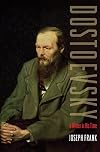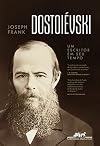
Dostoevsky: A Writer in His Time
by Joseph Frank
On This Page
Description
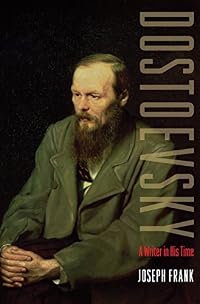
Joseph Frank's award-winning, five-volume Dostoevsky is widely recognized as the best biography of the writer in any language--and one of the greatest literary biographies of the past half-century. Now Frank's monumental, 2500-page work has been skillfully abridged and condensed in this single, highly readable volume with a new preface by the author. Carefully preserving the original work's acclaimed narrative style and combination of biography, intellectual history, and literary criticism, show more Dostoevsky: A Writer in His Time illuminates the writer's works--from his first novel Poor Folk to Crime and Punishment and The Brothers Karamazov--by setting them in their personal, historical, and above all ideological context. More than a biography in the usual sense, this is a cultural history of nineteenth-century Russia, providing both a rich picture of the world in which Dostoevsky lived and a major reinterpretation of his life and work. show lessTags
Recommendations





Member Reviews
How could this be anything other than extraordinary?
This is perhaps one of the best biographies ever. Illuminating on so many levels. I learned so much, even about novels that I have read multiple times - such is the depth of both the biographer's knowledge, as well as Dostoevsky's nuanced and astonishing works. Frank also explores the culture and political background of Russia, providing much needed context. I could go on for paragraphs.
Emphatically recommended for all.
This is perhaps one of the best biographies ever. Illuminating on so many levels. I learned so much, even about novels that I have read multiple times - such is the depth of both the biographer's knowledge, as well as Dostoevsky's nuanced and astonishing works. Frank also explores the culture and political background of Russia, providing much needed context. I could go on for paragraphs.
Emphatically recommended for all.
This is an almost perfect book: Frank combines fascinating history, insightful biography and above average literary criticism perfectly. I'm literally speechless; the only book I can think of to put beside this is MacDiarmid's 'Christianity: the first three thousand years,' which is similarly clear, stimulating, beautifully written and finely structured.
Aside from giving us a model for literary biographies, Frank also manages (possibly without knowing it) to write a perfect guidebook for writing novels: combine a deep fascination with your own time, an interest in human psychology, deep moral convictions, and a concern for the Big Ideas of human life in general. Then work your butt off. I'd like to think someone out there has managed show more to do that without being quite the twat that Dostoevsky became (yes- Russia (and by 'Russia' he of course means 'Orthodox peasants') will save the world). But I have no evidence of that as yet. If you like Dostoevsky's novels at all, this is well worth the effort.
Fun things that Dostoevsky said:
"You feel that one must have perpetual spiritual resistance and negation so as not to surrender, not to submit to the impression, not to bow before the fact and deify Baal, that is, not to accept the existing as one's own ideal." (376)
"The people are always the people.... but here you no longer see a people, but the systematic, submissive and induced lack of consciousness." (378)
"It is necessary to assume as author someone omniscient and faultless, who holds up to the view of all one of hte members of hte new generation." (480)
"'it is not worth doing good int eh world, for it is said, it will be destroyed.' There's something foolhardy and dishonest in this idea. Most of all, it's a very convenient idea for ordinary behavior: since everything is doomed, why exert oneself, why love to do good? Live for your paunch." (843) show less
Aside from giving us a model for literary biographies, Frank also manages (possibly without knowing it) to write a perfect guidebook for writing novels: combine a deep fascination with your own time, an interest in human psychology, deep moral convictions, and a concern for the Big Ideas of human life in general. Then work your butt off. I'd like to think someone out there has managed show more to do that without being quite the twat that Dostoevsky became (yes- Russia (and by 'Russia' he of course means 'Orthodox peasants') will save the world). But I have no evidence of that as yet. If you like Dostoevsky's novels at all, this is well worth the effort.
Fun things that Dostoevsky said:
"You feel that one must have perpetual spiritual resistance and negation so as not to surrender, not to submit to the impression, not to bow before the fact and deify Baal, that is, not to accept the existing as one's own ideal." (376)
"The people are always the people.... but here you no longer see a people, but the systematic, submissive and induced lack of consciousness." (378)
"It is necessary to assume as author someone omniscient and faultless, who holds up to the view of all one of hte members of hte new generation." (480)
"'it is not worth doing good int eh world, for it is said, it will be destroyed.' There's something foolhardy and dishonest in this idea. Most of all, it's a very convenient idea for ordinary behavior: since everything is doomed, why exert oneself, why love to do good? Live for your paunch." (843) show less
All definitive biography of undoubtedly one of the greatest novelist to ever put pen to paper, the shining lodestar that marks the 19th century Russian literature as of the most important epochs in world history.
His love for family and additive gambling, his epilepsy and violent literary disputes, his Siberian imprisonment and being a tutor to a czar, his reactionary youth circle to an adult nationalist, his miserly worldly existence and other worldly pride, paint him as much of a character as he writes his characters.
We see a flicker of the Prince and Stavrogin in the same man , a bit of Alyosha and some Sonya, Rodya and the underground man in this chronic gambler leading a double life in a village among the poor folks.
His love for family and additive gambling, his epilepsy and violent literary disputes, his Siberian imprisonment and being a tutor to a czar, his reactionary youth circle to an adult nationalist, his miserly worldly existence and other worldly pride, paint him as much of a character as he writes his characters.
We see a flicker of the Prince and Stavrogin in the same man , a bit of Alyosha and some Sonya, Rodya and the underground man in this chronic gambler leading a double life in a village among the poor folks.
This appears very well-researched and is extensively footnoted. Not for most general readers, but add a fifth star if you are very much interested in Dostoevsky or mid-nineteenth century Russia.
The book is described as condensed and abridged (from five volumes). The 950 pages are somewhat densely written, so that I would suspect: condensed and compressed.
The three big things I took from this:
(1) Dostoevsky was thrown in prison for four years as a result of his innocent association with a group of Russian intellectuals at the time of the European revolutions of 1848, which had put the tsar on edge. Only through his humbling experience with his peasant inmates did he come to understand the sentiments of the peasantry and so to realize show more that most of the ideals of those intellectuals were founded on unsound premises.
(2) His major works were in reaction to various intellectual currents of his time and place; for example atheism, socialism, determinism, nihilism, anarchism, and utilitarianism. His characters variously exemplified those ideals carried to their logical and dreadful extremes.
(3) He believed that the best hope for the future of Russia lay not in further westernization or revolution but rather in active faith in the Russian Orthodox church and loyalty to a tsar interested in the welfare of the Russian people. show less
The book is described as condensed and abridged (from five volumes). The 950 pages are somewhat densely written, so that I would suspect: condensed and compressed.
The three big things I took from this:
(1) Dostoevsky was thrown in prison for four years as a result of his innocent association with a group of Russian intellectuals at the time of the European revolutions of 1848, which had put the tsar on edge. Only through his humbling experience with his peasant inmates did he come to understand the sentiments of the peasantry and so to realize show more that most of the ideals of those intellectuals were founded on unsound premises.
(2) His major works were in reaction to various intellectual currents of his time and place; for example atheism, socialism, determinism, nihilism, anarchism, and utilitarianism. His characters variously exemplified those ideals carried to their logical and dreadful extremes.
(3) He believed that the best hope for the future of Russia lay not in further westernization or revolution but rather in active faith in the Russian Orthodox church and loyalty to a tsar interested in the welfare of the Russian people. show less
Ratings
Members
- Recently Added By
Published Reviews
ThingScore 100
"In 1976 there appeared "Dostoevsky: The Seeds of Revolt, 1821-1849," followed by four further volumes of critical biography, culminating in 2002 with "Dostoevsky: The Mantle of the Prophet, 1871-1881. All five installments of this work—invariably and rightly described as magisterial—have now been reduced to a single massive volume. Editor Mary Petrusewicz cut the full text by roughly show more two-thirds, and the result was then read and approved by Mr. Frank, now 91 and a distinguished professor emeritus of Slavic and comparative literature at both Stanford and Princeton. "Dostoevsky: A Writer in His Time" thus immediately becomes the essential one-volume commentary on the intellectual dynamics and artistry of this great novelist's impassioned, idea-driven fiction. To understand Dostoevsky's often savage satire or nightmarish visions or just the conversations among the Karamazov brothers, one needs to grasp not only the text but also the ideological context. To both of these there is no better guide than Joseph Frank." show less
added by rsvp
Lists

In Our Time books
4,934 works; 2 members
Author Information

Joseph Frank is the author of an award-winning multivolume biography of Dostoevsky. (Bowker Author Biography) Joseph Frank, was born Joseph Nathaniel Glassman on the Lower East Side of Manhattan on October 6, 1918. He never earned a bachelor's degree, but attended classes at New York University and briefly studied at the University of Wisconsin. show more In 1942, he took an editorial job in Washington at the Bureau of National Affairs, a publisher of informational journals on legislation, policy and like subjects. Throughout the 1940s, he published essays and criticism in literary journals. Spatial Form in Modern Literature, which was a discussion of experimental treatments of space and time by Eliot, Joyce, Proust, Pound and others was published in The Sewanee Review in 1945 and propelled him to prominence as a theoretician. He went to Paris on a Fulbright scholarship in 1950. In 1952, he was accepted by the Committee on Social Thought at the University of Chicago, where he eventually received a Ph.D. He taught at numerous universities including the University of Minnesota, Rutgers University, Princeton University, and Stanford University. His five-volume life of Fyodor Dostoevsky is frequently cited among the greatest of 20th-century literary biographies. In 2009, he published a one-volume synopsis of the entire opus entitled Dostoevsky: A Writer in His Time. He died from pulmonary failure on February 27, 2013 at the age of 94. (Bowker Author Biography) show less
All Editions
Some Editions
Common Knowledge
- Canonical title*
- Dostoïevski. Un écrivain dans son temps
- Original title
- Dostoevsky : a writer in his time
- Original publication date
- 1976-2002 (1e édition originale américaine étendue en 5 volumes, Princeton university Press) (1e édition originale américaine étendue en 5 volumes, Princeton university Press); 2010 (1e édition synthétisée en 1 volume, Princeton University Press) (1e édition synthétisée en 1 volume, Princeton University Press); 2019-02-21 (1e traduction et édition française, Editions des Syrtes) (1e traduction et édition française, Editions des Syrtes)
- People/Characters
- Fyodor Dostoevsky
- Epigraph*
- Le Prophète
L’esprit tout languissant de soif,
je me traînais dans un désert obscur,
quand au carrefour de mes voies
j’eus la vision d’un Séraphin.
De doigts légers comme le rêve,<... (show all)br>il toucha chacun de mes yeux :
mes yeux s’ouvrirent, clairvoyants
comme ceux de l’aigle effrayé.
Puis il effleura mes oreilles
qui retentirent de clameurs
et j’entendis le ciel frémir,
j’entendis le haut vol des anges,
la fuite sous les eaux des monstres de la mer
et la germination des sarments dans la plaine.
Puis de sa main il pesa sur ma bouche,
en arracha ma langue pécheresse,
langue vaine, langue perverse,
et de sa dextre ensanglantée
dans ma bouche paralysée
glissa le dard de l’astucieux serpent.
Puis, m’ouvrant le sein de son glaive,
il empoigna mon cœur tout palpitant
et plaça un charbon ardent
au creux de ma poitrine ouverte.
Mon corps gisait, mort, au désert
lorsque la voix de Dieu me lança son appel :
« Prophète, lève-toi, sache voir et entendre
et, tout rempli de mon vouloir,
parcours les terres et les mers,
brûlant les cœurs au feu de ma parole. »
Poème d’Alexandre Pouchkine (1826) - Dedication*
- /
- First words*
- Préface
Dostoïevski, un écrivain dans son temps
Ce livre est une version abrégée des cinq volumes que j’ai consacrés à la biographie de Dostoïevski. [...]
Première partie
Les ferments de la réolte
(1821-1849)
Chapitre 1
Prélude
La fin du règne d’Alexandre Ier est une page sombre et agitée de l’histoire de la Russie. [.... (show all)..] - Original language*
- Anglais (Etats-Unis) (Etats-Unis)
*Some information comes from Common Knowledge in other languages. Click "Edit" for more information.
Classifications
- Genres
- Literature Studies and Criticism, Biography & Memoir
- DDC/MDS
- 891.73 — Literature & rhetoric Asian Literature East Indo-European and Celtic literatures Russian and East Slavic languages Russian fiction
- LCC
- PG3328 .F75 — Language and Literature Slavic languages and literatures. Baltic languages. Albanian language Slavic. Baltic. Albanian Russian literature Individual authors and works 1800-1870 Dostoyevsky
- BISAC
Statistics
- Members
- 398
- Popularity
- 77,481
- Reviews
- 5
- Rating
- (4.61)
- Languages
- 5 — English, French, Portuguese (Portugal), Spanish, Turkish
- Media
- Paper, Ebook
- ISBNs
- 8
- ASINs
- 2