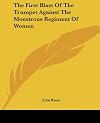
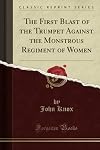
The First Blast of the Trumpet Against the Monstrous Regiment of Women
by John Knox
73 Members (2.50)
On This Page
Description
A Scottish preacher's tirade, written in 1558, brought about by the idea that various female rulers were resisting the ReformationTags
Recommendations




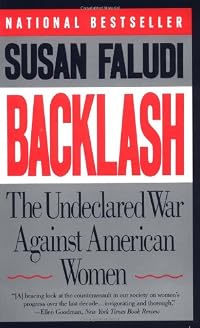
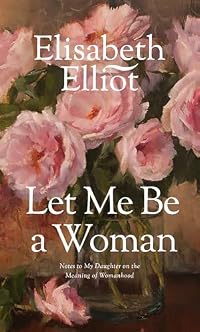


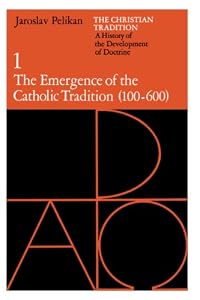
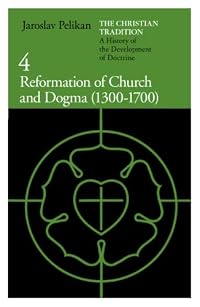







Member Recommendations

Member Reviews
Members
- Recently Added By
Lists

Books in the Bibliography of Humans: A Monstrous History by Surekha Davies
346 works; 1 member
Author Information

60+ Works 1,076 Members
Scottish theologian and leader of the Reformation in Scotland, John Knox was born near Haddington in Lothian. After attending university, probably at St. Andrews, Knox returned to Haddington, where he entered the Catholic priesthood in about 1540. He also became tutor to the sons of several influential families with political ties to Protestant show more reformers. Knox's sympathies for Reformation doctrines soon were revealed by his support of George Wishart, a Scottish Reformer who was put to death for heresy in 1546. During the years of political and religious turmoil in Scotland, Knox was captured by French forces in 1547 and held prisoner until 1549. From this experience, he emerged as the voice of the Scottish Reformation, convinced of his calling to defeat the Catholic church, which he now termed "the synagogue of Satan." After his release from prison, he worked with the Protestant regency ruling for Edward IV in England and helped shape The Book of Common Prayer. When the Catholic Mary Tudor came to the English throne in 1553, Knox left England and eventually moved to Geneva, where his strong Presbyterian beliefs were finally forged from the teachings of John Calvin. In Calvin's "Bible Commonwealth" at Geneva, Knox had found the ideals of the true Protestant church. His mission became one of wiping out the vestiges of Catholicism in Scotland by leading the true church to enforce its strict religious beliefs and rules of conduct on individuals. To achieve this, Knox reasserted Calvin's conviction of the people's right to overthrow any ruler who attempts to enforce the supremacy of false doctrine (Catholicism) on their subjects. In 1559 Knox returned to Scotland, where he led a group of Protestant nobles intent on ending the power of the Roman Catholic church and overthrowing Mary Stuart. He was now recognized as the leader of the Reform movement. Even before this, however, he had begun to encourage the organization of reformed congregations that assumed the authority to choose their own ministers and elders. Backed by the Scottish Parliament, which outlawed the celebration of Mass, he framed the Confession of Faith and summoned the first General Assembly of the Reformed Church. The articles of the Presbyterian faith that were established were modeled on Calvin's views on theology and church governance. The arrival of Mary Queen of Scots in 1561 touched off years of conflict in Scotland that ended only with her forced abdication in 1567. During this period, Knox defied Mary's authority, denounced her private masses as a disguised attempt to restore outlawed Catholic worship, and tirelessly championed the doctrines of the Reformed church. By the time of Knox's death in 1572, Catholicism in Scotland had been vanquished. Knox's Reformed church now prevailed, resting firmly on the Calvinistic doctrine of predestination and the elect of God. And its severe strictures of right conduct and morality were permanently joined to the ascendant role of the congregation in church government. (Bowker Author Biography) show less
Common Knowledge
- Original publication date
- 1558
Classifications
- Genres
- Religion & Spirituality, Nonfiction, History, General Nonfiction
- DDC/MDS
- 285.241 — Religion Christian denominations Presbyterian churches, Reformed churches centered in America, Congregational churches, Puritanism Presbyterian church in Great Britain Europe
- LCC
- BX9421 .K56 — Philosophy, Psychology and Religion Christian Denominations Christian Denominations Protestantism Other Protestant denominations Reformed or Calvinistic Churches
- BISAC
Statistics
- Members
- 73
- Popularity
- 429,891
- Rating
- (2.50)
- Languages
- English
- Media
- Paper, Ebook
- ISBNs
- 11
- ASINs
- 4