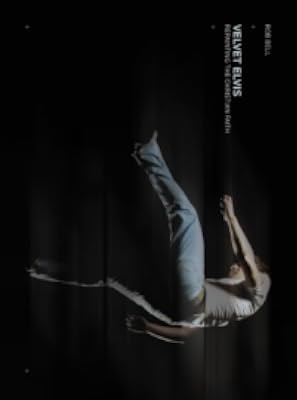
Velvet Elvis: Repainting the Christian Faith
by Rob Bell
On This Page
Description
In Velvet Elvis, Rob Bell frees us to consider God beyond the picture someone else painted for us in order to find an authentic understanding of the Christian faith. God doesn't have boundaries, and faith doesn't have to be limited to what someone else has told us. God is alive. Faith is alive. Velvet Elvis helps us find our faith. And even if it doesn't, it encourages us to keep looking. Faith doesn't end with this book. But it just might begin....
Tags
Recommendations

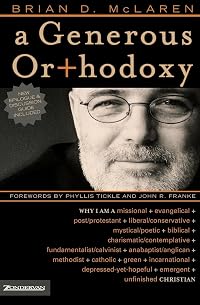

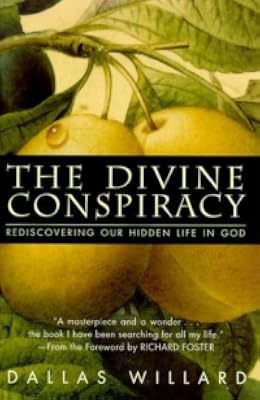
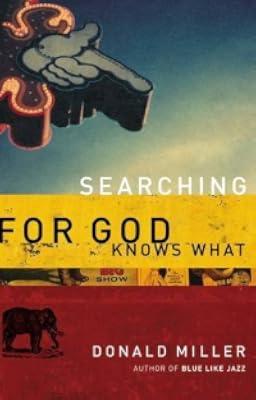
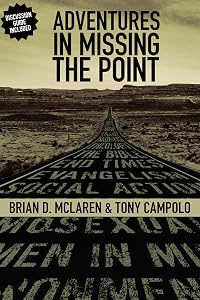







Member Recommendations

Member Reviews
Rob Bell can be frustrating. His book Velvet Elvis is loaded with word games, logical fallacies, exegetical fallacies, and a lack of continuity. He would probably brush off such criticism as the disturbed cry of another discouraged modernist, but he would be wrong. I realize that a formal book review should begin with a presentation of the author’s themes and then proceed to a measured critique. However, it will be much easier to get right to the point.
Bell begins with a discussion of truth. He emphasizes the need for flexibility in our language about God since God is too great for language. Here, he engages in a common postmodern error, the idea that a lack of exhaustive knowledge precludes the chance of any knowledge. Since we show more can’t know God completely, we must be wary in making any assertion, in constructing “brick walls” in Bell’s language. However, God Himself had enough confidence in language to make some very absolute statements. Though I do not profess to understand the depth of the statement that “God is light,” I am confident that I now know something real about God, something without “springs.” Bell too shares this belief if he seriously considered it. The act of writing a book is an affirmation of the solidarity of meaning. He wrote with the expectation that his words would be understood in one way and not another. All I assert is that he should have the same respect for the authors of the Bible.
As the book proceeds, we see that we are called to join the disciples in creating new interpretations of the way of Jesus, in testing and changing the springs of doctrine. Ironically, Bell supports this call by horribly exegeting Matthew 18:18. The disciples were not given liberty to reinterpret Scripture. The obvious context of the passage is confronting an erring brother. The loosing and binding has to do with discipline, not hermeneutics.
Bell continues his discussion of hermeneutics by emphasizing the living nature of Scripture in the sense that narratives have a secondary, spiritual meaning that we can create as we see fit. I would suggest that this is a return to the allegorical style of Origen so many years ago and the rabbis before that. It was wrong then, and it is wrong now. The goal of good hermeneutics is the author’s intended meaning. Undoubtedly, the reader carries with him other ideas brought forth from his own experience that shape his approach to the text. It is these presuppositions that limit communication. A good reader does not abandon his presuppositions; this is not even possible. Rather, he conscientiously acknowledges them and tries to understand the author on the author’s terms. To abandon this effort is to surrender to anarchy in language. All hope is then lost.
The remainder of the book is devoted to the practices that should result from the beliefs that were presented. Here, Bell is on much firmer ground. Specifically, he provides some thought provoking discussion concerning a Christian’s role in poverty and creation.
Velvet Elvis is not the groundbreaking work that many want it to be. It is, however, a foundational book for the Emerging Church. It is a profitable read in the sense that it provides insight as to what the future will hold. The Gospel is as out of place in postmodernism as it was in modernism. There will be more confusion and more failure. I guess there really is nothing new under the sun. show less
Bell begins with a discussion of truth. He emphasizes the need for flexibility in our language about God since God is too great for language. Here, he engages in a common postmodern error, the idea that a lack of exhaustive knowledge precludes the chance of any knowledge. Since we show more can’t know God completely, we must be wary in making any assertion, in constructing “brick walls” in Bell’s language. However, God Himself had enough confidence in language to make some very absolute statements. Though I do not profess to understand the depth of the statement that “God is light,” I am confident that I now know something real about God, something without “springs.” Bell too shares this belief if he seriously considered it. The act of writing a book is an affirmation of the solidarity of meaning. He wrote with the expectation that his words would be understood in one way and not another. All I assert is that he should have the same respect for the authors of the Bible.
As the book proceeds, we see that we are called to join the disciples in creating new interpretations of the way of Jesus, in testing and changing the springs of doctrine. Ironically, Bell supports this call by horribly exegeting Matthew 18:18. The disciples were not given liberty to reinterpret Scripture. The obvious context of the passage is confronting an erring brother. The loosing and binding has to do with discipline, not hermeneutics.
Bell continues his discussion of hermeneutics by emphasizing the living nature of Scripture in the sense that narratives have a secondary, spiritual meaning that we can create as we see fit. I would suggest that this is a return to the allegorical style of Origen so many years ago and the rabbis before that. It was wrong then, and it is wrong now. The goal of good hermeneutics is the author’s intended meaning. Undoubtedly, the reader carries with him other ideas brought forth from his own experience that shape his approach to the text. It is these presuppositions that limit communication. A good reader does not abandon his presuppositions; this is not even possible. Rather, he conscientiously acknowledges them and tries to understand the author on the author’s terms. To abandon this effort is to surrender to anarchy in language. All hope is then lost.
The remainder of the book is devoted to the practices that should result from the beliefs that were presented. Here, Bell is on much firmer ground. Specifically, he provides some thought provoking discussion concerning a Christian’s role in poverty and creation.
Velvet Elvis is not the groundbreaking work that many want it to be. It is, however, a foundational book for the Emerging Church. It is a profitable read in the sense that it provides insight as to what the future will hold. The Gospel is as out of place in postmodernism as it was in modernism. There will be more confusion and more failure. I guess there really is nothing new under the sun. show less
I wasn't sure what to expect from this, having been rather mixed in my reactions to Rob Bell's other books. But I found it very appealing, right from the start. The concept of God being concerned with all goodness and truth is one that I've been hearing and reading in many places recently, along with the importance of testing everything, going back to Scripture and (most importantly) our relationship with God.
There's an excellent chapter explaining some of the basics of Jewish thought, such as the meaning of a 'yoke', the method whereby rabbis took disciples, and what was meant by 'binding and loosing' in the first century. Jesus was, after all, thoroughly Jewish, as were his biographers; yet it's quite rare to hear a sermon letting us show more know that even the best-read Orthodox Jewish rabbis believed that the Scriptures needed constant re-evaluation and interpretation.
The rest of the book encourages us to look for God where we are, to understand that the church is a community intended to bless those outside it, not a holy huddle to meet on Sundays. It describes eternal life in terms of where we are now, as a continuum, and how Jesus talked about a new earth rather than an abstract heaven.
I don't know that I agreed with every word, but that's okay: as the author said, we should test everything, including the words he writes. We're all on different paths, with our unique temperaments and gifts, and the Holy Spirit gives us different insights. If something doesn't apply, or I think his interpretation is wrong, that's fine. While unity of heart is important, there's nothing in the Bible to say that we should all agree on every fine point of doctrine or Scriptural interpretation.
Helpful, inspiring and thought-provoking. Definitely recommended. show less
There's an excellent chapter explaining some of the basics of Jewish thought, such as the meaning of a 'yoke', the method whereby rabbis took disciples, and what was meant by 'binding and loosing' in the first century. Jesus was, after all, thoroughly Jewish, as were his biographers; yet it's quite rare to hear a sermon letting us show more know that even the best-read Orthodox Jewish rabbis believed that the Scriptures needed constant re-evaluation and interpretation.
The rest of the book encourages us to look for God where we are, to understand that the church is a community intended to bless those outside it, not a holy huddle to meet on Sundays. It describes eternal life in terms of where we are now, as a continuum, and how Jesus talked about a new earth rather than an abstract heaven.
I don't know that I agreed with every word, but that's okay: as the author said, we should test everything, including the words he writes. We're all on different paths, with our unique temperaments and gifts, and the Holy Spirit gives us different insights. If something doesn't apply, or I think his interpretation is wrong, that's fine. While unity of heart is important, there's nothing in the Bible to say that we should all agree on every fine point of doctrine or Scriptural interpretation.
Helpful, inspiring and thought-provoking. Definitely recommended. show less
What do you when your faith is falling apart?
I can't help but feel that the the many who condemn Rob Bell for his "dangerous theology" haven't walked to the edge of their faith. (That is probably an over-generalization.) In Velvet Elvis Rob Bell is not offering apologetics, rather he's trying to reframe the conversation - or "repainting the Christian faith." He offers 7 movements for how to go forward, and he's writing to those who are dis-satisfied (or who just can't go forward) with the status quo.
The second reason for this type of book goes beyond personal struggle and points to the dramatic global changes occurring in thought and ethics, particularly in the West. Leonard Sweet argues "The Dick-and Jane world of my '50's childhood show more is over, washed away by a tsunami of change....While the world is rethinking its entire cultural formation, it is time to find new ways of being the church that are true to our postmodern context. It is time for a Postmodern Reformation." Many believe that in order to reach the post-modern world, we need a new kind of Christianity. And despite the myriad of questions such an argument brings, not to mention whether or not it's the right question to be asking about church, it seems to me that Rob Bell is offering a lay-person's response. The Christian faith is changing - throw out the old velvet Elvis and start fresh with a new painting.
As always, his stories are fun, his arguments are (mostly) compelling, and he is authentic and genuine and full-of-zest and joy. You can nit-pick if you want, but there's plenty of wisdom to glean from Bell if you're open to it.
For the theology nerds… Many associate Bell with being a “liberal,” which is partly true – some of what he’s doing is merely re-branding a liberal interpretation of scripture and faith (which started back in 1799 with Friedrich Schleiermacher). However, it’s an unfair (or perhaps an inaccurate) label because Bell also incorporates pre-modern and post-conservative interpretations. But that’s getting into the weeds.
My biggest gripe with the book are the chapter titles. He calls them movements, but each chapter is just one stinkin’ word. And when you try to google a summary of said movements, all I could get were a whole bunch of people upset with Rob Bell for being an evangelical, who converted into a “liberal.” So I listened to it (quickly) by audiobook, and couldn’t tell you the movements if I had to. He could have done much better at communicating straightforwardly.
That being said, it was quite good. (And short!)
Recommended as an introduction for those struggling to stay going to church. Or for those feeling like they can’t keep their faith but want to. Or perhaps as an introduction to Jesus. Definitely a great introduction to Rob Bell, more than his others. show less
I can't help but feel that the the many who condemn Rob Bell for his "dangerous theology" haven't walked to the edge of their faith. (That is probably an over-generalization.) In Velvet Elvis Rob Bell is not offering apologetics, rather he's trying to reframe the conversation - or "repainting the Christian faith." He offers 7 movements for how to go forward, and he's writing to those who are dis-satisfied (or who just can't go forward) with the status quo.
The second reason for this type of book goes beyond personal struggle and points to the dramatic global changes occurring in thought and ethics, particularly in the West. Leonard Sweet argues "The Dick-and Jane world of my '50's childhood show more is over, washed away by a tsunami of change....While the world is rethinking its entire cultural formation, it is time to find new ways of being the church that are true to our postmodern context. It is time for a Postmodern Reformation." Many believe that in order to reach the post-modern world, we need a new kind of Christianity. And despite the myriad of questions such an argument brings, not to mention whether or not it's the right question to be asking about church, it seems to me that Rob Bell is offering a lay-person's response. The Christian faith is changing - throw out the old velvet Elvis and start fresh with a new painting.
As always, his stories are fun, his arguments are (mostly) compelling, and he is authentic and genuine and full-of-zest and joy. You can nit-pick if you want, but there's plenty of wisdom to glean from Bell if you're open to it.
For the theology nerds… Many associate Bell with being a “liberal,” which is partly true – some of what he’s doing is merely re-branding a liberal interpretation of scripture and faith (which started back in 1799 with Friedrich Schleiermacher). However, it’s an unfair (or perhaps an inaccurate) label because Bell also incorporates pre-modern and post-conservative interpretations. But that’s getting into the weeds.
My biggest gripe with the book are the chapter titles. He calls them movements, but each chapter is just one stinkin’ word. And when you try to google a summary of said movements, all I could get were a whole bunch of people upset with Rob Bell for being an evangelical, who converted into a “liberal.” So I listened to it (quickly) by audiobook, and couldn’t tell you the movements if I had to. He could have done much better at communicating straightforwardly.
That being said, it was quite good. (And short!)
Recommended as an introduction for those struggling to stay going to church. Or for those feeling like they can’t keep their faith but want to. Or perhaps as an introduction to Jesus. Definitely a great introduction to Rob Bell, more than his others. show less
This is a book not for the faint of heart or for those who take comfort in rigidity.
Bell definitely walks a fine line; sometimes it seems he crosses over it. Nevertheless, even where one does not agree with him, he certainly provides things about which to think.
The image of the trampoline vs. the brick wall was interesting and has some value in practice. Many of his discussions are spot on; with others, you can see how he will become a lightning-rod for controversy, and how he will get to "Love Wins" and the firestorm that creates.
I can appreciate the idea that each successive generation is trying to wrestle with the faith and its practice; whether one can truly speak of "progress" in this endeavor might be another story. Bell seems to show more be simultaneously steeped in tradition while remaining culturally a late 20th/early 21st century American. He has an affinity for rabbinic exegesis; if some of these points are to be accepted as fact, they do provide interesting illumination to certain Biblical concepts.
A challenging book to be sure, and one that you will not always agree with. But it's worth consideration.
Kindle edition: very well done; the covers of the chapters do not render the best, and there's the occasional punctuation blip, but quite good in general. show less
Bell definitely walks a fine line; sometimes it seems he crosses over it. Nevertheless, even where one does not agree with him, he certainly provides things about which to think.
The image of the trampoline vs. the brick wall was interesting and has some value in practice. Many of his discussions are spot on; with others, you can see how he will become a lightning-rod for controversy, and how he will get to "Love Wins" and the firestorm that creates.
I can appreciate the idea that each successive generation is trying to wrestle with the faith and its practice; whether one can truly speak of "progress" in this endeavor might be another story. Bell seems to show more be simultaneously steeped in tradition while remaining culturally a late 20th/early 21st century American. He has an affinity for rabbinic exegesis; if some of these points are to be accepted as fact, they do provide interesting illumination to certain Biblical concepts.
A challenging book to be sure, and one that you will not always agree with. But it's worth consideration.
Kindle edition: very well done; the covers of the chapters do not render the best, and there's the occasional punctuation blip, but quite good in general. show less
Velvet Elvis is one of my favorite books. I am a huge fan of Rob Bell and the way he can communicate faith through painting a picture with words. He's extremely bright and knows Biblical history very well. One great thing is he has a way of showing God with more than the Bible. If people don't believe in the Bible there is no point in using it to try and sway. He uses all of God's creation to tell a wonderful story.
This book is provocative and well-written (and likeable for those reasons). You can't help but enjoy Bell with his edgy, self-consciously authentic, loose-cannon style. He raises some good questions about lots of things and makes you think outside the box, which is always good for me.
But he's also a bit careless. Some of his questions leave you with big questions about what he really thinks about some pretty important core doctrines. He's also unfair - in using analogies that misrepresent what a lot of good, solid theologians of a more traditional ilk really say or think. (If you've read it, the brick wall vs. trampoline analogy is a case in point.)
Finally, he sends confusing signals. It boggles my mind that he gives an unqualified show more recommendation of books by John Piper on one hand and makes positve, unqualified references to J. Dominic Crossan, on the other. That just seems careless to me. I can't imagine giving an unqualififed recommendation of something written by a member of the Jesus Seminar. show less
But he's also a bit careless. Some of his questions leave you with big questions about what he really thinks about some pretty important core doctrines. He's also unfair - in using analogies that misrepresent what a lot of good, solid theologians of a more traditional ilk really say or think. (If you've read it, the brick wall vs. trampoline analogy is a case in point.)
Finally, he sends confusing signals. It boggles my mind that he gives an unqualified show more recommendation of books by John Piper on one hand and makes positve, unqualified references to J. Dominic Crossan, on the other. That just seems careless to me. I can't imagine giving an unqualififed recommendation of something written by a member of the Jesus Seminar. show less
This book captures the heart and essence of the postmodern/emergent Christian church. Stepping away from doctrine, the focus becomes experiencing God through the world He has created instead of seeking Him through rules and religion. Rob Bell is an excellent writer, using parables of his own to create memorable points (such as the titular Velvet Elvis painting which demonstrates the need to "repaint" the Christian faith). Critics of Bell will likely hate this book but they are equally likely to oppose the postmodern movement as a whole, however, there is much truth to be found among the controversy if they are willing to look at it with an open mind. I would rate this as a must read for anyone in ministry with younger generations of show more Christ followers (high school, college, etc.) as that is probably the audience most easily reached with Bell's style and views. show less
Members
- Recently Added By
Lists

Recommend the 20 best books you've read in the last five years
2,168 works; 606 members
Author Information

78 Works 11,422 Members
Robert Holmes "Rob" Bell Jr. was born on August 23, 1970. Bell grew up in a traditional Christian environment. He attended Wheaton College. While at Wheaton, he roomed with Ian Eskelin of All Star United. With friends Dave Houk, Brian Erickson, Steve Huber and Chris Fall, he formed the indie rock band, "ton bundle". Bell received his bachelor's show more degree in 1992 from Wheaton and taught water skiing in the summers at Wheaton College's Honey Rock Camp. During this time, Bell offered to teach a Christian message to the camp counselors after no pastor could be found. He taught a message about "rest". He said that God led him to teaching at this moment. Bell moved to Pasadena, California to pursue this calling for teaching and received a M.Div. from Fuller Theological Seminary. According to Bell, he never received good grades in preaching class because he always tried innovative ways to communicate his ideas. During his time at Fuller he was a youth intern at Lake Avenue Church. He did, however, occasionally attend Christian Assembly in Eagle Rock, California, which led to him and his wife asking questions in the direction of how a new style of church would appear. Bell and his wife moved from California to Grand Rapids to be close to family and on invitation to study under pastor Ed Dobson. He handled many of the preaching duties for the Saturday Night service at Calvary Church. Bell announced that he would be branching out on his own to start a new kind of community and he would call it "Mars Hill" after the Greek site where the apostle Paul told a group, "For as I walked around and looked carefully at your objects of worship, I even found an altar with this inscription: TO AN UNKNOWN GOD. Now what you worship as something unknown I am going to proclaim to you." In February 1999, Bell founded Mars Hill Bible Church, with the church originally meeting in a school gym in Wyoming, Michigan. As of 2005, an estimated 11,000 people attend the two "gatherings" on Sundays at 9 and 11 AM.[7] As of March 2011, Sunday attendance numbers between 8,000 and 10,000.[8] His teachings at Mars Hill inspired the popular "Love Wins" bumper sticker, and the congregation freely distributes these stickers after services. (Bowker Author Biography) show less
Awards and Honors
Common Knowledge
- Original publication date
- 2005
- Important places
- Mars Hill Bible Church, Grand Rapids, Michigan, USA; Grand Rapids, Michigan, USA; Grandville, Michigan, USA
- First words
- Several years ago my parents and in-laws gave our boys a trampoline.
Classifications
- Genres
- Religion & Spirituality, Nonfiction, General Nonfiction
- DDC/MDS
- 261 — Religion Christian organization, social work & worship Social theology and interreligious relations and attitudes
- LCC
- BR115 .C8 .B395 — Philosophy, Psychology and Religion Christianity Christianity Christianity in relation to special subjects
- BISAC
Statistics
- Members
- 3,242
- Popularity
- 5,293
- Reviews
- 58
- Rating
- (3.90)
- Languages
- 5 — English, German, Norwegian, Spanish, Swedish
- Media
- Paper, Audiobook, Ebook
- ISBNs
- 25
- UPCs
- 6
- ASINs
- 13