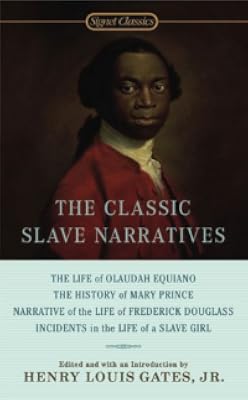
The Classic Slave Narratives
by Henry Louis Jr Gates (Editor), Frederick Douglass, Olaudah Equiano, Harriet Jacobs, Mary Prince
On This Page
Description
Before the end of the civil war, over one hundred former slaves had written moving stories of their captivity and by 1944, when George Washington Carver published his autobiography, over six thousand ex-slaves had written what are called slave narratives. No group of slaves anywhere, in any other era, has left such prolific testimony to the horror of bondage and servitude.Tags
Recommendations




Member Reviews
Frederick Douglass's account is searing. The plantation owners create a system of unremitting torture and terror. Slaves are whipped for no reason, forced to work every moment of the day, and are always hungry for lack of food. Douglass rebels, and, impossibly, survives.
Powerful slave narratives, recalling the abuse and mistreatment of slavery. If a reader can get past the repitious form of the narrative, there are poignant stories to be told. Recent revelations regarding the authenticity of the stories though, especially "Narrative of a Slave Girl" casts some doubt on the work.
Will shatter some preconceptions and prejudices
Before the end of the civil war, over one hundred former slaves had written moving stories of their captivity and by 1944, when George washington Carver published his autobiography, over six thousand ex-slaves ahd written what caalled slave narratives. No group of slaves anywhere, in any other ear, has left such prolific testimony to the horror of bondage and servitude.
Members
- Recently Added By
Lists

Best African American Literature
53 works; 9 members

United States Slave Narratives
28 works; 1 member
Author Information

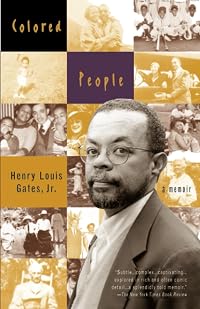
Henry Louis Gates, Jr. was born on September 16, 1950, in Keyser, West Virginia. He received a degree in history from Yale University in 1973 and a Ph.D. from Clare College, which is part of the University of Cambridge in 1979. He is a leading scholar of African-American literature, history, and culture. He began working on the Black Periodical show more Literature Project, which uncovered lost literary works published in 1800s. He rediscovered what is believed to be the first novel published by an African-American in the United States. He republished the 1859 work by Harriet E. Wilson, entitled Our Nig, in 1983. He has written numerous books including Colored People: A Memoir, A Chronology of African-American History, The Future of the Race, Black Literature and Literary Theory, and The Signifying Monkey: Towards a Theory of Afro-American Literary Criticism. In 1991, he became the head of the African-American studies department at Harvard University. He is now the director of the W.E.B. Du Bois Institute for African and African-American Research at the university. He wrote and produced several documentaries including Wonders of the African World, America Beyond the Color Line, and African American Lives. He has also hosted PBS programs such as Wonders of the African World, Black in Latin America, and Finding Your Roots. (Bowker Author Biography) show less

201+ Works 18,509 Members
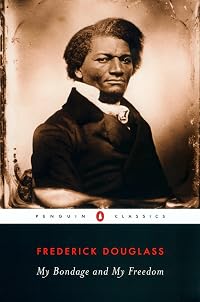
Born a slave in Maryland in about 1817, Frederick Douglass never became accommodated to being held in bondage. He secretly learned to read, although slaves were prohibited from doing so. He fought back against a cruel slave-breaker and finally escaped to New Bedford, Massachusetts, in 1838 at about the age of 21. Despite the danger of being sent show more back to his owner if discovered, Douglass became an agent and eloquent orator for the Massachusetts Antislavery Society. He lectured extensively in both England and the United States. As an ex-slave, his words had tremendous impact on his listeners. In 1845 Douglass wrote his autobiography, Narrative of the Life of Frederick Douglass, which increased his fame. Concerned that he might be sent back to slavery, he went to Europe. He spent two years in England and Ireland speaking to antislavery groups. Douglass returned to the United States a free man and settled in Rochester, New York, where he founded a weekly newspaper, The North Star, in 1847. In the newspaper he wrote articles supporting the antislavery cause and the cause of human rights. He once wrote, "The lesson which [the American people] must learn, or neglect to do so at their own peril, is that Equal Manhood means Equal Rights, and further, that the American people must stand for each and all for each without respect to color or race." During the Civil War, Douglass worked for the Underground Railroad, the secret route of escape for slaves. He also helped recruit African-Americans soldiers for the Union army. After the war, he continued to write and to speak out against injustice. In addition to advocating education for freed slaves, he served in several government posts, including United States representative to Haiti. In 1855, a longer version of his autobiography appeared, and in 1895, the year of Douglass's death, a completed version was published. A best-seller in its own time, it has since become available in numerous editions and languages. (Bowker Author Biography) show less

Frederick Douglass has a Legacy Library. Legacy libraries are the personal libraries of famous readers, entered by LibraryThing members from the Legacy Libraries group.

29+ Works 4,524 Members
One of the most remarkable figures in the history of African literature is Olaudah Equiano, who is also known as Gustavus Vassa. He was born into an Igbo community that he called Essaka, or most probably Isieke, in what is now the Ihiala local government area of the Anambra State of Nigeria. Captured and sold into slavery at the age of 12, he was show more taken to the West Indies. There he was resold to a British naval officer who helped him acquire an education and some nautical experience. When Equiano was beginning to consider himself a free man, he was unexpectedly sold again to a Philadelphia trader, for whom he undertook business trips to the West Indies. These trips enabled Equiano to make enough money to buy his freedom. As a free man, Equiano continued his vocation as a sailor and traveled extensively in Europe, Africa, and the Americas. He eventually joined the abolitionist movement in Great Britain, where he settled down as a respectable African European, married an English woman, and had two children. Equiano moved in high social circles, wrote and spoke frequently in various public media on abolition issues, and petitioned the British Parliament on the evils of slavery. But by far his most important contribution to the abolition movement was his autobiography, The Interesting Narrative of the Life of Olaudah Equiano or Gustavus Vassa, the African, Written by Himself, which was first published in London in 1789. Not only was The Interesting Narrative an eloquent diatribe against the evils of slavery; its early chapters presented a thoroughly idyllic picture of the culture, social life, and geographical environment of his Igbo home, which he describes as "a charming, fruitful vale." In the autobiography, Equiano refutes the detractions of African peoples in European and oriental literatures, religious dogmas, and philosophical and ethnographic writings. He emerges as the first spokesperson of pan-African nationalism, black consciousness, negritude, and a whole range of other contemporary African and African American intellectual movements. The Narrative is a mixture of factual ethnographic and historical details, debatable assertions, and outright fallacies; it is as mystifying as it is revealing. So powerful is its eighteenth-century rhetorical style that, despite the assertion in its title that it was "written by himself," few of his white contemporaries were convinced that such elegant prose and humane sentiments could be written by an African. (Bowker Author Biography) show less

1+ Work 1,207 Members
7+ Works 1,767 Members
All Editions
Work Relationships
Contains
Common Knowledge
- Canonical title
- The Classic Slave Narratives
- Original publication date
- 1789: "The Life of Olaudah Equiano"; 1831: "The History of Mary Prince"; 1845: "Narrative of the Life of Frederick Douglass"; 1861: "Incidents in the Life of a Slave Girl"
- People/Characters
- Olaudah Equiano; Gustavus Vassa; Mary Prince; Frederick Douglass; Harriet Jacobs
- Important places
- USA; Bermuda
- First words
- One of the most curious aspects of the African person's enslavement in the New World is that he and she wrote about the severe conditions of their bondage within what with understatement came to be called "the peculiar... (show all) institution." [Introduction]
Permit me, with the greatest deference and respect, to lay at your feet the following genuine narrative; the chief design of which is to excite in your august assemblies a sense of compassion for the miseries which the Slave-... (show all)Trade has entailed on my unfortunate countrymen. [The Interesting Narrative of the Life of Olaudah Equiano] - Last words
- (Click to show. Warning: May contain spoilers.)Yet the retrospection is not altogether without solace, for with those gloomy recollections come tender memories of my good old grandmother, like light, fleecy clouds floating over a dark and troubled sea. [Incidents in the Life of a Slave Girl]
- Original language
- English
- Disambiguation notice
- This omnibus, which was edited by Henry Louis Gates, junior, contains 4 classic slave narratives:
- The interesting narrative of the life of Olaudiah Equiano, or, Gustavus Vassa, the African (1789)
- ... (show all)The history of Mary Prince, a West Indian slave
- Narrative of the life of Frederick Douglass, an American slave (1845) by Frederick Douglass
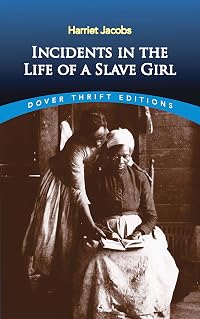
- Incidents in the life of a slave girl
Please do not combine this with SLAVE NARRATIVES, also edited by Henry Louis Gates, junior, which does not contain THE HISTORY OF MARY PRINCE but contains 7 other narratives instead.
Classifications
- Genres
- History, Nonfiction, General Nonfiction, Biography & Memoir
- DDC/MDS
- 973.0496073022 — History & geography History of North America United States United States Ethnic And National Groups Other Groups African Americans African Americans
- LCC
- E444 .C63 — History of the United States United States Revolution to the Civil War, 1775/1783-1861 Slavery in the United States. Antislavery
- BISAC
Statistics
- Members
- 1,223
- Popularity
- 20,265
- Reviews
- 8
- Rating
- (3.99)
- Languages
- English
- Media
- Paper, Ebook
- ISBNs
- 8
- ASINs
- 12