On This Page
Description
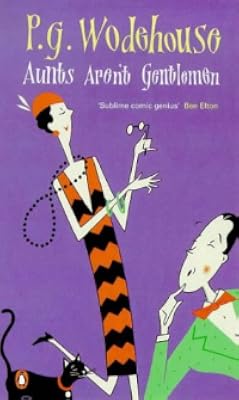
On doctor's orders, Bertie Wooster retires to sample the bucolic delights of Maiden Eggesford. But his idyll is rudely shattered by Aunt Dahlia who wants him to nobble a racehorse. Similar blots on Bertie's horizon come in the shape of Major Plank, the African explorer; Vanessa Cook, proud beauty and 'molder of men'; and Orlo Porter, who seems to have nothing else to do but think of sundering Bertie's head from his body.Tags
Recommendations















Member Reviews
When the sudden appearance of some pink spots on his chest drives Bertie to a doctor, one E. Jimpson Murgatroyd, that worthy’s stern warnings then drive this typical young-man-about-town to the fresh air, healthy food, and restful retirement of country living. But Bertie’s readers know that such idyllic countryside tranquility is never to be his portion, and so it proves. For in the quiet of Maiden Eggesford, such evils as horse-racing, romantic entanglements, jealous lovers, angry aunts, plausible poachers, and an over-friendly cat all conspire to wreak havoc with Bertie’s peace of mind and render E. Jimpson Murgatroyd’s dictums vain.
The title refers to Bertie’s Aunt Dahlia, who has a tremendously large bet on the upcoming show more horse-race and who will stick at nothing – not even cat-napping – to make sure her horse wins. In Aunt Dahlia’s view, it’s an accepted business maneuver to seek to incapacitate the competition via any means possible. It is precisely this attitude which leads her nephew to the sad conclusion that the problem with aunts is that they are not gentlemen. Indeed they are not!
Though this is a fun romp in P. G. Wodehouse’s inimitable style, it isn’t the best or most memorable of the Jeeves and Wooster stories. Jeeves plays a less active role in this tale, only saving Bertie from bodily dismemberment on one occasion, and visiting an aunt who turns out to be the real owner of the disputed cat. The romantic imbroglio is sorted with rather less than the usual contortion, with Bertie slipping out of his unwilling engagement when the beautiful Madeline elopes with the Communist Orlo Porter. Of course Wodehouse always reuses his plots and formulas, and experienced readers can spot the coming disaster chapters ahead, but somehow this one just seemed less inventive than others in the series.
But having said that, I certainly cackled aloud in one or two places (one of which was Bertie’s ruminations on the best local poacher being one Billy Graham; poaching being, in Bertie’s mind, “the sort of activity Mr Graham would rather have frowned on, being in his particular line of business”). Though not my favorite, Aunts Aren’t Gentlemen is still vintage Wodehouse and thoroughly enjoyable. show less
The title refers to Bertie’s Aunt Dahlia, who has a tremendously large bet on the upcoming show more horse-race and who will stick at nothing – not even cat-napping – to make sure her horse wins. In Aunt Dahlia’s view, it’s an accepted business maneuver to seek to incapacitate the competition via any means possible. It is precisely this attitude which leads her nephew to the sad conclusion that the problem with aunts is that they are not gentlemen. Indeed they are not!
Though this is a fun romp in P. G. Wodehouse’s inimitable style, it isn’t the best or most memorable of the Jeeves and Wooster stories. Jeeves plays a less active role in this tale, only saving Bertie from bodily dismemberment on one occasion, and visiting an aunt who turns out to be the real owner of the disputed cat. The romantic imbroglio is sorted with rather less than the usual contortion, with Bertie slipping out of his unwilling engagement when the beautiful Madeline elopes with the Communist Orlo Porter. Of course Wodehouse always reuses his plots and formulas, and experienced readers can spot the coming disaster chapters ahead, but somehow this one just seemed less inventive than others in the series.
But having said that, I certainly cackled aloud in one or two places (one of which was Bertie’s ruminations on the best local poacher being one Billy Graham; poaching being, in Bertie’s mind, “the sort of activity Mr Graham would rather have frowned on, being in his particular line of business”). Though not my favorite, Aunts Aren’t Gentlemen is still vintage Wodehouse and thoroughly enjoyable. show less
Bertie Wooster's life is beset with the usual challenges in “Aunts Aren't Gentlemen” (1974): an aunt, of course; young lovers with obstacles on their path to matrimony, and gruff older men, who usually provide those obstacles. But this time there's a newcomer to the plot, a cat.
Published when P.G. Wodehouse was in his 90s, just a year or so before his death, “Aunts Aren't Gentlemen” is more reflective of the time in which it was written than most Jeeves and Wooster novels. There's a reference to Billy Graham, for example, even if the Billy Graham of the novel is a poacher, and there's a passage about leftists throwing bottles at police officers that reads like it could have been written yesterday. But demonstrations, sometimes show more turning violent, were also commonplace in the early 1970s.
When Bertie finds his body covered with spots, his doctor suggests rest in the country, and his Aunt Dahlia offers him a village cottage that seems ideal, especially because Jeeves happens to have an aunt living in the same village. This aunt takes Jeeves away for most of the story, leaving Bertie on his own, which always means trouble.
Bertie's aunt has a ulterior motive for her invitation to her nephew. She wants him to hide a stolen cat. The cat pacifies a certain horse about to race against another horse on which Aunt Dahlia has placed a great deal of money. Bertie, showing a stronger sense of ethics than usual in these tales, objects and hires Billy Graham to stealthily return the cat. The cat, however, likes Bertie and keeps coming back.
Meanwhile Vanessa, the daughter of the man with the horse and the cat, happens to be the bottle thrower. She is also a young beauty who once rejected Bertie's marriage proposal, to his great relief after he came to his senses. Now, after a fight with her boyfriend, she tells Bertie she will marry him after all, and she begins immediately to start reforming him, reminding him of why it was such a great relief when she previously turned him down. So Bertie is stuck with both a cat and a fiancee he doesn't want. Where is Jeeves when he needs him?
Wodehouse may have been a very old man when he wrote this novel, but it shows no sign of a decline in his ability. In fact, this is better than the earliest Jeeves and Wooster stories. It's pure delight from beginning to end. show less
Published when P.G. Wodehouse was in his 90s, just a year or so before his death, “Aunts Aren't Gentlemen” is more reflective of the time in which it was written than most Jeeves and Wooster novels. There's a reference to Billy Graham, for example, even if the Billy Graham of the novel is a poacher, and there's a passage about leftists throwing bottles at police officers that reads like it could have been written yesterday. But demonstrations, sometimes show more turning violent, were also commonplace in the early 1970s.
When Bertie finds his body covered with spots, his doctor suggests rest in the country, and his Aunt Dahlia offers him a village cottage that seems ideal, especially because Jeeves happens to have an aunt living in the same village. This aunt takes Jeeves away for most of the story, leaving Bertie on his own, which always means trouble.
Bertie's aunt has a ulterior motive for her invitation to her nephew. She wants him to hide a stolen cat. The cat pacifies a certain horse about to race against another horse on which Aunt Dahlia has placed a great deal of money. Bertie, showing a stronger sense of ethics than usual in these tales, objects and hires Billy Graham to stealthily return the cat. The cat, however, likes Bertie and keeps coming back.
Meanwhile Vanessa, the daughter of the man with the horse and the cat, happens to be the bottle thrower. She is also a young beauty who once rejected Bertie's marriage proposal, to his great relief after he came to his senses. Now, after a fight with her boyfriend, she tells Bertie she will marry him after all, and she begins immediately to start reforming him, reminding him of why it was such a great relief when she previously turned him down. So Bertie is stuck with both a cat and a fiancee he doesn't want. Where is Jeeves when he needs him?
Wodehouse may have been a very old man when he wrote this novel, but it shows no sign of a decline in his ability. In fact, this is better than the earliest Jeeves and Wooster stories. It's pure delight from beginning to end. show less
I had, until re-reading, entirely forgot the most shocking part of this story: Jeeves doesn't appear to do anything at all to solve the problems. In fact, Bertie comes up with more than one solution! Appalling, really. (Unless, of course, Jeeves works in his mysterious ways wonders to perform entirely off-screen, as he usually does, and simply never admits to it. This seems more likely, to be honest, but one can't discount the possibility that Bertie is, slowly but surely, learning something.)
This book was surprisingly enjoyable, despite the premise seemingly being fairly bland.
It was my first P.G Wodehouse book and I'm definitely intrigued by his other books after reading this one. His writing is very clever and witty, and I enjoyed Bertie as a character, who seems to get himself dragged in every which way by everyone and he kind of just accepts it and deals with it, which is quite comical in itself.
I loved how something seemingly irrelevant would happen, but shortly afterwards, it would crop up and cause an even bigger problem.
I enjoyed how the story flowed and fitted in together nicely. It's clear it had been cleverly planned out. It didn't spend any time on description, it just got straight to the story and dialogue and show more I appreciated that. It left the characters and the village entirely to my imagination.
My only gripe with the book is the shortening of words to just their first letters, seemingly at random. This ruined the flow of reading for me and there were times I had no idea what the shortened word was referring to. I'm not sure if this is just Wodehouses' usual writing style or if it's simply part of the main character, but I found it pointless and irritating.
Otherwise, it's a great quick read and as others have said, you don't need to have read the other books to enjoy this one. I'm glad I picked up this book! show less
It was my first P.G Wodehouse book and I'm definitely intrigued by his other books after reading this one. His writing is very clever and witty, and I enjoyed Bertie as a character, who seems to get himself dragged in every which way by everyone and he kind of just accepts it and deals with it, which is quite comical in itself.
I loved how something seemingly irrelevant would happen, but shortly afterwards, it would crop up and cause an even bigger problem.
I enjoyed how the story flowed and fitted in together nicely. It's clear it had been cleverly planned out. It didn't spend any time on description, it just got straight to the story and dialogue and show more I appreciated that. It left the characters and the village entirely to my imagination.
My only gripe with the book is the shortening of words to just their first letters, seemingly at random. This ruined the flow of reading for me and there were times I had no idea what the shortened word was referring to. I'm not sure if this is just Wodehouses' usual writing style or if it's simply part of the main character, but I found it pointless and irritating.
Otherwise, it's a great quick read and as others have said, you don't need to have read the other books to enjoy this one. I'm glad I picked up this book! show less
When Bertie Wooster discovers pink spots on his chest, he consults a physician who recommends a sojourn in the country, where he can breathe fresh air and indulge in exercise. Fortunately one of Bertie’s many aunts is staying in just such a place, so Bertie takes housing nearby, only to find himself embroiled in a plot to steal a neighbourhood cat so that his aunt can win a horse-racing bet; it is, of course, up to Jeeves to set things right once again…. One either knows the Jeeves oeuvre or one does not; this was published in 1974, the last novel before Wodehouse’s death (in the UK, it was published as Aunts Aren’t Gentlemen, the final thought in the book), something that I found rather jarring because there are occasional show more references to the climate of that time whereas Jeeves and Wooster are, really, forever ensconced in the 1920s. As a result, the casual attitudes of racism and sexism, acceptable in the 1920s but certainly not in the 1970s, can be a bit shocking; on the other hand, while a slight novel this book *does* contain a good amount of humour and bumbling, the very reasons one loves the series in the first place! show less
There is nothing like Wodehouse, there really ain't.
Let it be said that Aunts Aren't Gentlemen is not a shining gem in the Jeeves canon. It was written in the author's nineties, and was the final novel he completed, after an output of well over 100 books. The plotting is a lot simpler, some of the recurring jokes wear a bit thin, and there's a sense that reader and writer alike were skating along on mutual bonhomie.
Having said that, even an average Wodehouse is hysterical, and this still hits the spot page after page. It's a little comedy of errors that satisfies mostly with the endless wit of Bertie and Aunt Dahlia, and a general sense of antediluvian silliness. It's a fun read but something is missing. Newcomers to Jeeves and show more Wooster might find this rather bland. Start in the early years, and let this be a kind of delicate after-dinner mint once you've enjoyed the banquet. show less
Let it be said that Aunts Aren't Gentlemen is not a shining gem in the Jeeves canon. It was written in the author's nineties, and was the final novel he completed, after an output of well over 100 books. The plotting is a lot simpler, some of the recurring jokes wear a bit thin, and there's a sense that reader and writer alike were skating along on mutual bonhomie.
Having said that, even an average Wodehouse is hysterical, and this still hits the spot page after page. It's a little comedy of errors that satisfies mostly with the endless wit of Bertie and Aunt Dahlia, and a general sense of antediluvian silliness. It's a fun read but something is missing. Newcomers to Jeeves and show more Wooster might find this rather bland. Start in the early years, and let this be a kind of delicate after-dinner mint once you've enjoyed the banquet. show less
Ha olvastam egyáltalán Wodehouse-regényt, az csak hamvas gyíktojás koromban lehetett, mert nem emlékszem rá. De most jó volt kézbe venni, és elrötyörészni Bertie és Jeeves marhaságain. A történet nyilván nem a komplexitásából építkezik – azért van benne egyebek mellett macska, lóverseny, határozott nőszemély és egy félelmetes lovaglópálca –, aminek következtében azt hiszem, öt év múlva már ismét az újdonság erejével hatna, ha megint nekiülnék (ez megmagyarázza azt is, hogy ha olvastam valaha, miért felejtettem el ivarérett lábatlan gyík koromra), de hát ezt is a javára kell írnom. Mert így pazar kikapcsolódás lehet akár másodszorra is.
Mivel magvas filozófiai kérdések show more nincsenek benne, ezért volt módom közben elmélkedni a Wodehouse-t és Rejtőt elválasztó/összekötő jellegzetességeken. Mindketten amolyan gyógyító jellegű írók, akiket receptre kéne felírni, ám W. kifejezetten az angol nemzetkarakterológiára játszik rá központi párosával. Itt van egyrészt a Spinozá-t olvasgató, Kiplinget és Shakespeare-t idézgető Jeeves, aki a hiperhűvös komornyik non plus ultrája, némi Sherlock Holmes-beütéssel. És ne feledjük az üdítően nyakatekert elbeszélőt, Bertram Wooster-t se, aki az Etonban végzett szerencsétlen, de elbűvölően butuska úrifiú megtestesítője – nyilván az sem véletlen, hogy W. igen gyakran halakat tartalmazó hasonlatokkal utal rá. (Vö.: „ütődött lepényhal”) Legfőbb humorforrása az, amikor ők túl angolosan viselkednek, vagy épp ellenkezőleg: olyan szituációba keverednek, ami legkevésbé sem illik a modoros brit viszonyok közé. Mindenesetre akár így, akár úgy a dolgok „angolsága” központi motívum. Rejtő ezzel szemben kozmopolita író – imádnivaló semmirekellői nemcsak hogy nem magyarok, de többnyire annyira nemzetköziek, amennyire az csak lehetséges, és úgy ugrálnak Monte Carlo és Fekete-Afrika, a sivatag és egy batáviai kikötői kocsma között, mintha egyáltalán nem lenne hazájuk. Ilyen értelemben talán különös, hogy mi itt értjük Wodehouse-t, de hogy ott értik-e Rejtőt… azt mondjuk nem tudom. Mindenesetre szerencsére nem kell igazságot hirdetni kettejük között – lehet egyszerre is szeretni őket. show less
Mivel magvas filozófiai kérdések show more nincsenek benne, ezért volt módom közben elmélkedni a Wodehouse-t és Rejtőt elválasztó/összekötő jellegzetességeken. Mindketten amolyan gyógyító jellegű írók, akiket receptre kéne felírni, ám W. kifejezetten az angol nemzetkarakterológiára játszik rá központi párosával. Itt van egyrészt a Spinozá-t olvasgató, Kiplinget és Shakespeare-t idézgető Jeeves, aki a hiperhűvös komornyik non plus ultrája, némi Sherlock Holmes-beütéssel. És ne feledjük az üdítően nyakatekert elbeszélőt, Bertram Wooster-t se, aki az Etonban végzett szerencsétlen, de elbűvölően butuska úrifiú megtestesítője – nyilván az sem véletlen, hogy W. igen gyakran halakat tartalmazó hasonlatokkal utal rá. (Vö.: „ütődött lepényhal”) Legfőbb humorforrása az, amikor ők túl angolosan viselkednek, vagy épp ellenkezőleg: olyan szituációba keverednek, ami legkevésbé sem illik a modoros brit viszonyok közé. Mindenesetre akár így, akár úgy a dolgok „angolsága” központi motívum. Rejtő ezzel szemben kozmopolita író – imádnivaló semmirekellői nemcsak hogy nem magyarok, de többnyire annyira nemzetköziek, amennyire az csak lehetséges, és úgy ugrálnak Monte Carlo és Fekete-Afrika, a sivatag és egy batáviai kikötői kocsma között, mintha egyáltalán nem lenne hazájuk. Ilyen értelemben talán különös, hogy mi itt értjük Wodehouse-t, de hogy ott értik-e Rejtőt… azt mondjuk nem tudom. Mindenesetre szerencsére nem kell igazságot hirdetni kettejük között – lehet egyszerre is szeretni őket. show less
Members
- Recently Added By
Lists

Books With the Most Memorable Titles
478 works; 158 members

Books With Family Relationships in the Title
44 works; 4 members
Author Information

P. G. Wodehouse was born in Guildford, United Kingdom on October 15, 1881. After completing school, he spent two years as a banker at the Hong Kong and Shanghai Bank in London and then took a job as a sports reporter and columnist for the Globe newspaper. His first novel, The Pothunters, was published in 1902. He wrote over 100 novels and short show more story collections during his lifetime including A Perfect Uncle, Love Among the Chickens, The Swoop, P. Smith in the City, Meet Mr. Milliner, Doctor Sally, Quick Service, The Old Reliable, Uneasy Money, A Damsel in Distress, Jill the Reckless, The Adventures of Sally, A Pelican at Blandings, The Girl in Blue, and Aunts Aren't Gentlemen. His most famous characters, Bertie Wooster and his manservant, Jeeves, appeared in books such as Much Obliged, Jeeves. He also wrote lyrics for musical comedies and worked as screenwriter in Hollywood in the 1930s. In 1939, he bought a villa in Le Touquet on the coast of France. He remained there when World War II started in 1939. The following year, the Germans appropriated the villa, confiscated property, and arrested him. He was detained in various German camps for almost one year before being released in 1941. He went to Berlin and spoke of his experience in five radio talks to be broadcast to America and England. The talks themselves were completely innocuous, but he was charged with treason in England. He was cleared, but settled permanently in the United States. He became a citizen in 1955. He was made a Knight Commander of the Order of the British Empire in 1975. He died from a heart attack after a long illness on February 14, 1975 at the age of 93. (Bowker Author Biography) show less
Some Editions
Series

Belongs to Publisher Series
Work Relationships
Is contained in
Common Knowledge
- Canonical title
- Aunts Aren't Gentlemen
- Original title
- Aunts Aren't Gentlemen
- Alternate titles
- The Cat-nappers
- Original publication date
- 1974-10
- People/Characters
- Bertram Wilberforce Wooster; Reginald Jeeves; Tuppy Glossop; Dahlia Travers; Major Plank; Vanessa Cook (show all 10); Orlo Porter; Mr. Cook; Herbert Graham; E. Jimpson Murgatroyd
- Important places
- Maiden Eggesford, Somerset, England, UK
- First words
- My attention was drawn to the spots on my chest when I was in my bath, singing, if I remember rightly, the Toreador song from the opera Carmen.
- Last words
- (Click to show. Warning: May contain spoilers.)'They are not gentlemen,' I said gravely.
- Blurbers
- Elton, Ben
- Original language
- English
- Disambiguation notice
- UK title 'Aunts Aren't Gentlemen', US title 'The Cat-nappers'
Classifications
Statistics
- Members
- 1,740
- Popularity
- 12,709
- Reviews
- 42
- Rating
- (4.05)
- Languages
- 9 — Dutch, English, Finnish, French, German, Hungarian, Italian, Norwegian (Bokmål), Swedish
- Media
- Paper, Audiobook, Ebook
- ISBNs
- 45
- UPCs
- 1
- ASINs
- 33