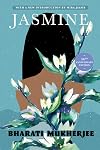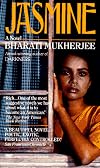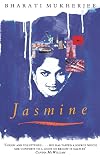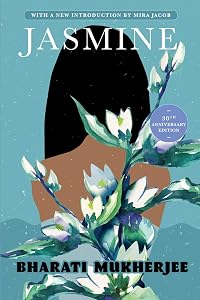
Jasmine
by Bharati Mukherjee
On This Page
Description
When Jasmine is suddenly widowed at seventeen, she seems fated to a life of quiet isolation in the small Indian village where she was born. But the force of Jasmine's desires propels her explosively into a larger, more dangerous, and ultimately more life-giving world. In just a few years, Jasmine becomes Jane Ripplemeyer, happily pregnant by a middle-aged Iowa banker and the adoptive mother of a Vietnamese refugee. Jasmine's metamorphosis, with its shocking upheavals and its slow show more evolutionary steps, illuminates the making of an American mind; but even more powerfully, her story depicts the shifting contours of an America being transformed by her and others like her -- our new neighbors, friends, and lovers. In Jasmine, Bharati Mukherjee has created a heroine as exotic and unexpected as the many worlds in which she lives. "Rich...one of the most suggestive novels we have about what it is to become an American." -- The New York Times Book Review show lessTags
Recommendations





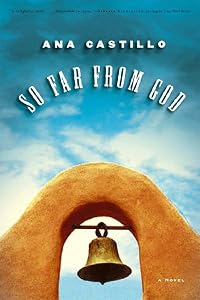

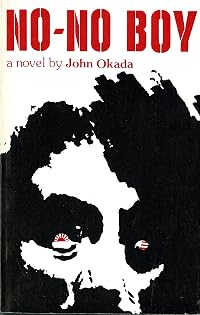
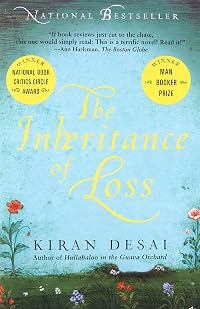
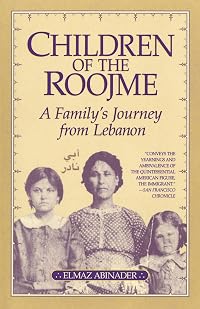

Member Recommendations


billmcn Anthology containing the original "Jasmine" short story
Member Reviews
“We murder who we were so we can rebirth ourselves in the image of our dreams.” (29)
This is, for me, the most powerful sentence in Bharati Mukherjee’s Jasmine. In this one sentence it summarises the story of the novel by embodying the nature of transcontinental lives and living.
The main protagonist in Mukherjee’s novel has a name for every person she has ever been: she is the village girl Jyoti; Jasmine to her first husband; Jane; Jase; Jazz; Kali; Widow; Wife; and Day Mommy. These names represent not only her fluid identity, but how she the people around her perceive her identity and in some cases her culture. The only name that Jyoti ever really gives herself is Sage: a foreseer of truth and fate. The beginning of the book show more opens with her meeting a sooth sayer who foretells Jyoti’s future. He claims that it is fate that will guide her life, although Jyoti is not convinced and from this point she is sent off in a whirl-wind of adventure and experience that leaves her both fulfilled and drained.
Jyoti’s identity is never really defined by her alone. Her names are given to her by the different men in her lives and she seems to accept these names, going along with the flow. It is hard to say if Jyoti really comes to finding her own identity or not though, and I felt that this was a difficult question for me to answer with certainty.
Jyoti moves to the U.S.A. and finds herself to be brown and othered. She feels the pressures of meeting Western expectations and whilst she is treated with respect and love from a lot of the white people in her community, there is is somehow still a feeling of not quite belonging.
“Educated people are interested in differences; they assume that I am different from them but exempt from being one of “them,” the knife-wielding undocumenteds hiding in basements webbing furniture.”
Here we can already see that racism does not always function and work the same in each country and that there isn’t one single group of “other”. One can conclude that Mukjerjee is probably talking about Hispanic immigrants here. The issue of racism and othering is further complicated by the sheer size of the USA, where there are instances of minority groups feel safer in certain states or regions than others.
If you’re interested in learning about the issues that face Indian immigrants in the U.S.A. then this is a great book to start to expand your knowledge about race, immigration, and non-Western religions. I am a firm believer that books can have the ability to change people, and to change people for the better. This is a book that will change you. show less
This is, for me, the most powerful sentence in Bharati Mukherjee’s Jasmine. In this one sentence it summarises the story of the novel by embodying the nature of transcontinental lives and living.
The main protagonist in Mukherjee’s novel has a name for every person she has ever been: she is the village girl Jyoti; Jasmine to her first husband; Jane; Jase; Jazz; Kali; Widow; Wife; and Day Mommy. These names represent not only her fluid identity, but how she the people around her perceive her identity and in some cases her culture. The only name that Jyoti ever really gives herself is Sage: a foreseer of truth and fate. The beginning of the book show more opens with her meeting a sooth sayer who foretells Jyoti’s future. He claims that it is fate that will guide her life, although Jyoti is not convinced and from this point she is sent off in a whirl-wind of adventure and experience that leaves her both fulfilled and drained.
Jyoti’s identity is never really defined by her alone. Her names are given to her by the different men in her lives and she seems to accept these names, going along with the flow. It is hard to say if Jyoti really comes to finding her own identity or not though, and I felt that this was a difficult question for me to answer with certainty.
Jyoti moves to the U.S.A. and finds herself to be brown and othered. She feels the pressures of meeting Western expectations and whilst she is treated with respect and love from a lot of the white people in her community, there is is somehow still a feeling of not quite belonging.
“Educated people are interested in differences; they assume that I am different from them but exempt from being one of “them,” the knife-wielding undocumenteds hiding in basements webbing furniture.”
Here we can already see that racism does not always function and work the same in each country and that there isn’t one single group of “other”. One can conclude that Mukjerjee is probably talking about Hispanic immigrants here. The issue of racism and othering is further complicated by the sheer size of the USA, where there are instances of minority groups feel safer in certain states or regions than others.
If you’re interested in learning about the issues that face Indian immigrants in the U.S.A. then this is a great book to start to expand your knowledge about race, immigration, and non-Western religions. I am a firm believer that books can have the ability to change people, and to change people for the better. This is a book that will change you. show less
I'm halfway through and still don't know who Jyoti/Jasmine/Jane is. This might be intentional -- the author seems to be making some sort of point about immigrants, especially female ones, having to mold themselves to the desires of their American hosts -- but it doesn't make for an engaging book.
What's more, it is exactly the sort of depressing story about hopeless lives that is the reason I don't read adult fiction. In this book, women are at best symbols, at worst transactions -- never people. I have no doubt that this is true for a lot of women in the world. But I have learned that it does me no good to read novels that make me want to give up on humanity. If I'm going to read a made-up story, it may as well inspire rather than show more depress me, right? Depressing things aren't by definition more true. I'm giving up on this one. show less
What's more, it is exactly the sort of depressing story about hopeless lives that is the reason I don't read adult fiction. In this book, women are at best symbols, at worst transactions -- never people. I have no doubt that this is true for a lot of women in the world. But I have learned that it does me no good to read novels that make me want to give up on humanity. If I'm going to read a made-up story, it may as well inspire rather than show more depress me, right? Depressing things aren't by definition more true. I'm giving up on this one. show less
This novel of trifurcation follows a young woman from a tiny Punjabi village to Florida, Manhattan, and a farm in Baden, Iowa. When her husband Prakash is murdered by a terrorist's bomb in a sari shop, seventeen year old widow Jyoti manages to gather enough false documents and funds to become contraband on a cargo ship out of Amsterdam. Landing penniless in the Florida Keys, she kills the rapist ship captain and is rescued by a kind stranger who helps Jyoti to chop off her hair to pay for a green card. In Manhattan, she morphs into Jasmine, au pair to a Columbia professor, a book editor, and their young daughter. When Jasmine thinks she sees the terrorist from her hometown selling hot dogs in a city park, she leaves the family and flees show more across country. In Iowa, Jasmine becomes Jane to her boss, a middle aged married bank manager who falls in love and divorces his wife to marry her. And this is a mere outline of all the events in her story. Jyoti/Jasmine/Jane is a dreamy survivor and I reveled in the lyrical, sometimes difficult to follow, non-linear passages and in the dramatic conclusion.
Quotes: "An astrologer cupped his ears, his satellite dish to the stars, and foretold my widowhood and exile." show less
Quotes: "An astrologer cupped his ears, his satellite dish to the stars, and foretold my widowhood and exile." show less
HAd it not been for the Stanford Book Salon, I probably would not have picked this book up to read, despite my interest in Indian culture. Until the reading list came out, it had flown completely under my reading radar. The group was asked to keep in mind the question, "To what extent is Jasmine, or anyone for that matter, in control of his/her destiny?" while reading the book. Having been involved in one too many destiny versus free will discussions in my lifetime, I conveniently let that slip from my mind, slipping instead into the world of Jasmine.
Born in that strife torn part of India, where the trauma of the Partition remains a wound today, Jyoti's (who is given the name of Jasmine by her husband) story starts "Lifetimes ago, under show more a banyan tree in the village of Hasnapur, an asrologer cupped his ears--his satellite dish to the stars--and foretold my widowhood and exile. " The language of this story swept me away. I could so easily visualize her sisters, "slow, happy girls with butter-smooth arms or hear the humor and love in Taylor's voice, talking to his young daughter, later on in New York.
The novel follows young Jyoti through a decade of her life, from 14 to 24. In each phase of her life, she is given a new name by different men who are pivotal in her world at that point: Jasmine, Jase, Jane, Mom. When the astrologer proved correct, and she is widowed at age 17 in an act of political violence, her exile, as an illegal immigrant to the United States is not far behind. Her entrance to that country is heralded by a horrifically brutal act, but she survives, able to compartmentalize her life as easily as she is to slip into another name. How she gets from a rural village in Punjab to Baden, Elsa County, Iowa is a journey of more than miles. The poetic language and soft humor woven in the telling are what kept me reading, uncertain until the very last page the next trajectory of this young woman's life. show less
Born in that strife torn part of India, where the trauma of the Partition remains a wound today, Jyoti's (who is given the name of Jasmine by her husband) story starts "Lifetimes ago, under show more a banyan tree in the village of Hasnapur, an asrologer cupped his ears--his satellite dish to the stars--and foretold my widowhood and exile. " The language of this story swept me away. I could so easily visualize her sisters, "slow, happy girls with butter-smooth arms or hear the humor and love in Taylor's voice, talking to his young daughter, later on in New York.
The novel follows young Jyoti through a decade of her life, from 14 to 24. In each phase of her life, she is given a new name by different men who are pivotal in her world at that point: Jasmine, Jase, Jane, Mom. When the astrologer proved correct, and she is widowed at age 17 in an act of political violence, her exile, as an illegal immigrant to the United States is not far behind. Her entrance to that country is heralded by a horrifically brutal act, but she survives, able to compartmentalize her life as easily as she is to slip into another name. How she gets from a rural village in Punjab to Baden, Elsa County, Iowa is a journey of more than miles. The poetic language and soft humor woven in the telling are what kept me reading, uncertain until the very last page the next trajectory of this young woman's life. show less
Bharati Mukherjee's 1988 short story "Jasmine" is a gem. It tells the story of Indian woman from Trinidad who enters the U.S. illegally and ends up working in the household of a liberal academic family in Ann Arbor. Mukherjee employs a light touch in her portrayal of the differences between the savvy Jasmine and her well-intentioned but naive employers. The story steers clear of sentimentality while still making you acutely aware of the precariousness of an illegal immigrant's life and the yawning gulf of power between the rich and poor parts of the world.
The novel Jasmine is an expansion of that short story. Here, Jasmine is from an impoverished family in India proper, and we get a tour of subcontinental politics, Sikh separatism, and show more the mechanics of immigrant smuggling before she even makes it to the States. Though Jasmine ultimately lands in a liberal academic household, along the way she moves to Iowa, gets married, and becomes embroiled in a subplot reminiscent of the save-the-farm movies that enjoyed a brief popularity in the late 1980s. (For long stretches of the book you keep expecting Sally Field to show up.) This structural shagginess is the story's growing pains. Whether it's worth it depends on how compelling you find the themes "Jasmine" has been expanded to address.
Given a bigger canvas, Mukherjee takes on bigger ideas. The novel depicts not just the differences between the first and third worlds, but also their interconnectedness. Most interestingly, Mukherjee undermines the notion that immigrants flee pre-modern homelands in search of modern sanctuaries. In her novel, both are equally modern: the former is just modernity of a rougher sort. At one point during her sojourn in Iowa, Jasmine and her adopted Vietnamese son Du (things get awfully shaggy) fix a VCR together. In Mukherjee's world, the west is no longer the locus of technology: there's nothing more natural than for fellow third-worlders to bond over a soldering gun.
Themes like this make the novel Jasmine compelling on an intellectual level, and I'd be surprised if it's not a darling of undergraduate seminars. (Where the engagingly hard-to-classify Mukherjee is no doubt pigeonholed as a "woman writer of color.") Still, there's a grace missing from the novel. Though the shagginess of the plot may be forgivable, the neatness of the prose strikes a false note. In going from short story to novel, Mukherjee shifted from the third to the first person, and she can't quite pull off the change in perspective. Jasmine is supposed to be a fiercely intelligent but largely uneducated woman, but her voice in the novel has a sanguine, middle-class ring to it. It's oddly at ease, and too indulgently comprehending of the little absurdities of the liberal academic lifestyle. The short story's Jasmine sounded like a woman from Trinidad; the novel's Jasmine sounds like Bharati Mukherjee.
As a meditation on what it means to be an immigrant and what it means to be an American, the novel Jasmine is a worthwhile read. To see art trump ideas, however, check out the anthology The Short Story and Its Writer and see the seed from which it grew. show less
The novel Jasmine is an expansion of that short story. Here, Jasmine is from an impoverished family in India proper, and we get a tour of subcontinental politics, Sikh separatism, and show more the mechanics of immigrant smuggling before she even makes it to the States. Though Jasmine ultimately lands in a liberal academic household, along the way she moves to Iowa, gets married, and becomes embroiled in a subplot reminiscent of the save-the-farm movies that enjoyed a brief popularity in the late 1980s. (For long stretches of the book you keep expecting Sally Field to show up.) This structural shagginess is the story's growing pains. Whether it's worth it depends on how compelling you find the themes "Jasmine" has been expanded to address.
Given a bigger canvas, Mukherjee takes on bigger ideas. The novel depicts not just the differences between the first and third worlds, but also their interconnectedness. Most interestingly, Mukherjee undermines the notion that immigrants flee pre-modern homelands in search of modern sanctuaries. In her novel, both are equally modern: the former is just modernity of a rougher sort. At one point during her sojourn in Iowa, Jasmine and her adopted Vietnamese son Du (things get awfully shaggy) fix a VCR together. In Mukherjee's world, the west is no longer the locus of technology: there's nothing more natural than for fellow third-worlders to bond over a soldering gun.
Themes like this make the novel Jasmine compelling on an intellectual level, and I'd be surprised if it's not a darling of undergraduate seminars. (Where the engagingly hard-to-classify Mukherjee is no doubt pigeonholed as a "woman writer of color.") Still, there's a grace missing from the novel. Though the shagginess of the plot may be forgivable, the neatness of the prose strikes a false note. In going from short story to novel, Mukherjee shifted from the third to the first person, and she can't quite pull off the change in perspective. Jasmine is supposed to be a fiercely intelligent but largely uneducated woman, but her voice in the novel has a sanguine, middle-class ring to it. It's oddly at ease, and too indulgently comprehending of the little absurdities of the liberal academic lifestyle. The short story's Jasmine sounded like a woman from Trinidad; the novel's Jasmine sounds like Bharati Mukherjee.
As a meditation on what it means to be an immigrant and what it means to be an American, the novel Jasmine is a worthwhile read. To see art trump ideas, however, check out the anthology The Short Story and Its Writer and see the seed from which it grew. show less
This is a novel that I had placed in my discard pile, but retrieved to re-read after a friend told me she had really liked it. Almost all the way through I was happy to be reading this book again & thinking that I would keep it after all. Acutely post-colonial (as we called such novels 15 years ago) in its point of view, it seems very up to date in its insider understanding of the often bizarrely complex interior and exterior lives of many immigrants, particularly illegal ones from poor countries (an immigrant arriving today from India might be a very different kind of person, with very different life story & motivation, however). I particularly liked Jasmine's thinking about and interaction with Du, her Iowa "husband" Bud's adopted show more Vietnamese teen age son. The chapter in Barbara Ehrenreich's Nickle and Dimed in which she lives & works with illegal immigrants working as hotel maids in Florida came to mind, as Jyoti Vigh aka Jasmine aka Jase aka Jane Ripplemayer arrives in the U.S. by way of Florida, after a squalid boat voyage, rape by the boat's captain in a seedy motel & the murder (by knife) of said rapist. She is rescued by a Quaker woman who helps her on her way to New York City for a couple of years of a dream life working as a "Day Mummy" for Taylor (a physicist & professor at Columbia), Wylie & their precocious & perfect adopted daughter Duff. After Wylie leaves Taylor, Jasmine continues to live with Taylor & Duff until one day she sees her Indian husband's (her first love & lover Prakash) murderer in Central Park & decides to flee to Iowa (where Duff was born). It's here that we find her as the novel opens & where we leave her as she is about to take off for California (newly retrieved by Taylor & Duff). In the meantime she has become the pregnant wife(in all senses other than the legal one) of a small town (Baden, Elsa County) banker, Bud Ripplemayer, during the Farm Crisis of the 1980s. [I am wondering, of course, whether Mukherjee once attended the Iowa Writers Workshop] For the past 2 years, Bud has been paralyzed from the waist down after a desperate farmer shot him in the back before blowing his own brains out.
I had a love/ hate response to this book. I really liked it & then finally resented its narrative seduction (drive to conclusion). I wasn't satisfied with the ending. Taylor & Duff arrive. Jasmine is in love & leaves Bud (right after Du has also left for CA). She has told us that Bud was a great guy. Now, he's a cripple (politically incorrect word but useful here) & 30 years older than she is & would be a dead end for Jasmine. What about the baby she's carrying? There's not even a mention of the right or wrongness of taking that baby away with her (it's not yet born). I don't buy the Taylor fantasy. He does little for me. Bud is a better person. Which is not to say that Iowa & Bud make sense for Jasmine, but that she perhaps lets herself off the hook a bit too easily, just as she did when she first became involved with Bud (Karin, Bud's ex-wife asked her then why she never thought to ask Bud if he was married. Jasmine treats this question as irrelevant, since it was Bud who fell in love with her & not her who pursued him. But the question seems quite relevant to me. It's as if Jasmine's own story (poverty, lack of education, murdered husband, rape, murder) allows her (or the author) to rationalize some dubiously ethical decision-making. show less
I had a love/ hate response to this book. I really liked it & then finally resented its narrative seduction (drive to conclusion). I wasn't satisfied with the ending. Taylor & Duff arrive. Jasmine is in love & leaves Bud (right after Du has also left for CA). She has told us that Bud was a great guy. Now, he's a cripple (politically incorrect word but useful here) & 30 years older than she is & would be a dead end for Jasmine. What about the baby she's carrying? There's not even a mention of the right or wrongness of taking that baby away with her (it's not yet born). I don't buy the Taylor fantasy. He does little for me. Bud is a better person. Which is not to say that Iowa & Bud make sense for Jasmine, but that she perhaps lets herself off the hook a bit too easily, just as she did when she first became involved with Bud (Karin, Bud's ex-wife asked her then why she never thought to ask Bud if he was married. Jasmine treats this question as irrelevant, since it was Bud who fell in love with her & not her who pursued him. But the question seems quite relevant to me. It's as if Jasmine's own story (poverty, lack of education, murdered husband, rape, murder) allows her (or the author) to rationalize some dubiously ethical decision-making. show less
Jasmine is only seventeen when her husband dies, rather than live out a life of isolation in an rural Indian village called Hasnpur, she decides to move to America.
At the time she is retelling her life story she is a twenty-four-year-old pregnant widow, living in Iowa with her crippled lover, Bud Ripplemeyer.
Jasmine’s tale of her journey from India to New York to Iowa is that of an exotic heroine who braves dangerous situations but still carries on.
At the time she is retelling her life story she is a twenty-four-year-old pregnant widow, living in Iowa with her crippled lover, Bud Ripplemeyer.
Jasmine’s tale of her journey from India to New York to Iowa is that of an exotic heroine who braves dangerous situations but still carries on.
Members
- Recently Added By
Published Reviews
ThingScore 75
Though ''Jasmine'' attests to an eye for meticulous observation and an ear for contemporary American slang, it becomes clear that Ms. Mukherjee is less interested in giving us a realistic depiction of one woman's peripatetic life than in creating a fable, a kind of impressionistic prose-poem, about being an exile, a refugee, a spiritual vagabond in the world today; and in this, she has show more eloquently succeeded. show less
added by jlelliott
''Jasmine'' stands as one of the most suggestive novels we have about what it is to become an American.
added by jlelliott
Lists

500 Great Books by Women
507 works; 60 members

Indian Diaspora
42 works; 2 members

Dim Sum Lunch Reading
43 works; 2 members

AP Lit
363 works; 6 members
Author Information

18+ Works 3,173 Members
Bharati Mukherjee was born in Calcutta, India on July 27, 1940. She received a bachelor's degree in English from the University of Calcutta in 1959 and a master's degree from the University of Baroda in 1961. After sending six stories to the University of Iowa, she was accepted into the Iowa Writers' Workshop. She received an M.F.A. in 1963 and a show more doctorate in comparative literature in 1969 from the University of Iowa. She married fellow student Clark Blaise, a Canadian author, in 1963. They moved to Montreal in 1966, where she taught English at McGill University. They moved back to the United States in 1980. After teaching creative writing at Columbia University, New York University, and Queens College, she taught postcolonial and world literature at the University of California, Berkeley. She wrote numerous books during her lifetime including The Tiger's Daughter, Wife, Darkness, Jasmine, The Holder of the World, Desirable Daughters, The Tree Bride, and Miss New India. In 1988, The Middleman and Other Stories won the National Book Critics Circle Award for fiction. She died from complications of rheumatoid arthritis and takotsubo cardiomyopathy, a stress-induced heart condition, on January 28, 2017 at the age of 76. (Bowker Author Biography) show less
Some Editions
Awards and Honors
Series
Belongs to Publisher Series
Gallimard, Folio (2748)
Work Relationships
Has as a student's study guide
Common Knowledge
- Original title
- Jasmine
- Original publication date
- 1989
- People/Characters
- Jyoti (Jase, Jane, Jasmine)
- Important places
- India; Iowa, USA; USA; Florida, USA
- Epigraph
- The new geometry mirrors a universe that is rough, not rounded, scabrous, not smooth. It is a geometry of the pitted, pocked, and broken up, the twisted tangled, and intertwined.
James Gleick, Chaos - Dedication
- For Jim Harris, ardent Hawkeye
- First words
- Lifetimes ago, under a banyan tree in the village of Hasnapur, an astrologer cupped his ears -- his satellite dish to the stars -- and foretold my widowhood and exile.
- Last words
- (Click to show. Warning: May contain spoilers.)I am out of the door and in the potholed and rutted driveway, scrambling ahead of Taylor, greedy with wants and reckless from hope.
Classifications
Statistics
- Members
- 877
- Popularity
- 30,972
- Reviews
- 18
- Rating
- (3.38)
- Languages
- 9 — Danish, Dutch, English, French, German, Norwegian (Bokmål), Polish, Spanish, Swedish
- Media
- Paper, Audiobook, Ebook
- ISBNs
- 24
- UPCs
- 1
- ASINs
- 3