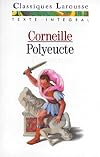
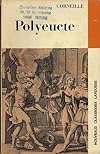
Polyeucte
by Pierre Corneille
On This Page
Description
This seventeenth-century drama in five acts was inspired by the tale of Saint Polyeuctus (rendered as 'Polyeucte' in French), a Roman convert to the faith who was martyred in 259 A.D. However, although an imaginatively retold version of the story of St. Polyeuctus comprises some of the plot of the play, Polyeucte also relates metaphorically to the religious debates of the seventeenth century. A must-read for fans of classic drama..
Tags
Recommendations



























Member Reviews
"Corneille's Polyeucte, which Peguy considered the most important work in French literature, describes in detail the encounter of Christianity and culture as envigased by him and also by me." (Balthasar, Test Everything, p12: http://www.librarything.com/catalog.php?work=1065667&book=5087595)
Sans Félix, point de tragédie. Gouverneur romain, il est à la source de tous les malheurs et des mal-heurs de tous : il oblige d'abord sa fille Pauline, follement éprise de Sévère, à épouser Polyeucte ; puis, mécontent de ce gendre qu'il s'est donné, il le fait emprisonner et condamner à mort.
Polyeucte, tout à sa nouvelle foi chrétienne, appelle de ses voeux le martyre. Pauline pousse l'obéissance filiale jusqu'à aimer aussi ce mari qui lui a été imposé. Sévère fait contre mauvaise fortune bon soldat. Le seul à se plaindre... eh bien, c'est Félix, qui, voyant ses intérêts déjoués, s'écrie :
' Que je suis malheureux ! '
Polyeucte, tout à sa nouvelle foi chrétienne, appelle de ses voeux le martyre. Pauline pousse l'obéissance filiale jusqu'à aimer aussi ce mari qui lui a été imposé. Sévère fait contre mauvaise fortune bon soldat. Le seul à se plaindre... eh bien, c'est Félix, qui, voyant ses intérêts déjoués, s'écrie :
' Que je suis malheureux ! '
Aug 15, 2010French
Sans Félix, point de tragédie. Gouverneur romain, il est à la source de tous les malheurs et des mal-heurs de tous : il oblige d'abord sa fille Pauline, follement éprise de Sévère, à épouser Polyeucte ; puis, mécontent de ce gendre qu'il s'est donné, il le fait emprisonner et condamner à mort.
Polyeucte, tout à sa nouvelle foi chrétienne, appelle de ses voeux le martyre. Pauline pousse l'obéissance filiale jusqu'à aimer aussi ce mari qui lui a été imposé. Sévère fait contre mauvaise fortune bon soldat. Le seul à se plaindre... eh bien, c'est Félix, qui, voyant ses intérêts déjoués, s'écrie :
' Que je suis malheureux ! '
Polyeucte, tout à sa nouvelle foi chrétienne, appelle de ses voeux le martyre. Pauline pousse l'obéissance filiale jusqu'à aimer aussi ce mari qui lui a été imposé. Sévère fait contre mauvaise fortune bon soldat. Le seul à se plaindre... eh bien, c'est Félix, qui, voyant ses intérêts déjoués, s'écrie :
' Que je suis malheureux ! '
Aug 15, 2010French
testo in lingua originale francese
Jul 4, 2018Italian
éloge du christianisme, raison d'état et christianisme
Mar 23, 2014French
Ratings
Members
- Recently Added By
Lists

Harold Bloom - The Western Canon: B. The Aristocratic Age
231 works; 13 members

Greatest Books, allegedly
484 works; 9 members
Author Information

282+ Works 4,001 Members
Corneille is a part of the greatest period of French drama. His artistic model and theory of the drama were to be followed by successive generations of dramatists, including Racine. His plays deal with noble characters in closely defined situations of high moral intensity. After modest success as a writer of complex, baroque comedies, Corneille show more achieved fame with Le Cid (1636--37), adapted from Guillen de Castro's three-day comedy Las Moceddes del Cid. It vividly represents the dominant theme of his tragedies: the inner struggle between duty and passion. Corneille went on to dominate the French theater of his day with plays that reflect the changing relationships between the aristocracy and the new absolutist state. Some of Corneille's other major tragedies include Horace (1640), Cinna (1640), and Polyeuctus (1643). In his shaping of language and form to his dramatic purposes, Corneille had a great effect on the development of French literature; more specifically, it can be said that he gave form and aim to French neoclassicism. (Bowker Author Biography) show less
Some Editions
Series
Belongs to Publisher Series
Work Relationships
Is contained in
Common Knowledge
- Canonical title
- Polyeucte
- Original title
- Polyeucte
- Original publication date
- 1642
- Important places*
- Mélitène
- Quotations*
- Et le désir s'accroît quand l'effet se recule
- Original language*
- Français
*Some information comes from Common Knowledge in other languages. Click "Edit" for more information.
Classifications
Statistics
- Members
- 215
- Popularity
- 151,498
- Reviews
- 6
- Rating
- (3.44)
- Languages
- 6 — Dutch, English, French, German, Italian, Slovenian
- Media
- Paper, Audiobook, Ebook
- ISBNs
- 27
- ASINs
- 20