On This Page
Description
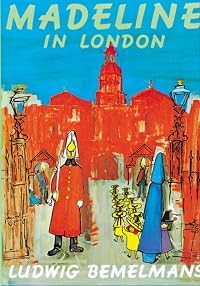
When the Ambassador moves to London, the twelve little girls go to visit his son, Madeline has an adventure on a horse, and the horse returns to Paris with the girls.Tags
Recommendations









Member Recommendations

Member Reviews
Madeline and her classmates, together with their teacher Miss Clavel, leave their vine-covered Parisian boarding school and journey to London, where they meet up once again with Pepito, the Spanish Ambassador's son who was first introduced in Madeline and the Bad Hat. Hoping to cheer him up, they have come to celebrate Pepito's birthday, pooling their money in order to buy him a horse. When this new equine companion takes off with Pepito and Madeline astride, Miss Clavell and the girls set out to find them, and all enjoy a tour of London. But can the horse, who subsequently eats most of the garden, be kept? If Madeline & Co. have anything to say about it, he can!
Originally published in 1961, this fourth Madeline book from show more Austrian-American children's author and artist Ludwig Bemelmans was not an improvement on its predecessors, which I found moderately interesting, but not particularly appealing. I continue to be mostly indifferent, both to Bemelmans' artwork - I don't hate it, but I can't say I enjoy it either - and to his stories, which, despite some promising themes - the girls' adopt a dog in Madeline's Rescue!; Pepito becomes a vegetarian, in Madeline and the Bad Hat! - never seem to deliver. I also continue to find the text itself in these books rather clunky and awkward. So many people love this character and her adventures, that I can't help but wonder whether one's age when first encountering her is the deciding factor... perhaps I just missed my window of opportunity? show less
Originally published in 1961, this fourth Madeline book from show more Austrian-American children's author and artist Ludwig Bemelmans was not an improvement on its predecessors, which I found moderately interesting, but not particularly appealing. I continue to be mostly indifferent, both to Bemelmans' artwork - I don't hate it, but I can't say I enjoy it either - and to his stories, which, despite some promising themes - the girls' adopt a dog in Madeline's Rescue!; Pepito becomes a vegetarian, in Madeline and the Bad Hat! - never seem to deliver. I also continue to find the text itself in these books rather clunky and awkward. So many people love this character and her adventures, that I can't help but wonder whether one's age when first encountering her is the deciding factor... perhaps I just missed my window of opportunity? show less
Madeline and her friends are despondent that their friend, Pepito, has to travel to London when his father is reassigned. Not long after he is gone, though, the ambassador invites the whole school to come visit his family in London. His Pepito is eating little and thinning to nothing, all because he misses his friends. Miss Clavel wastes no time in ushering the girls unto a plane and over the channel, where they spend a lovely vacation time in the ambassador's house. They realize they forgot to bring Pepito a gift, however, and remember the boy said he always wanted a horse. Though buying a new horse is far too expensive, they find a place that gives away horses that are retired from duty.
Pepito is delighted with his gift, and he and show more Madeline hop on first. Of course, right at that moment a trumpet blares its call and the horse gallops off in fear. Miss Clavel and the other girls spend a portion of the book searching for their lost charges, giving the author a chance to illustrate famous scenes from London, in place of the expected Paris settings from other books. They eventually find the trio standing guard at the horse's previous place of employment. The adventure is still not over! That night, the poor hungry horse who was not fed, devours all the plants in the ambassador's garden. His wife is gracious in forgiveness, but declares the horse can't possibly stay. This prompts Miss Clavel to bring the horse back to France with them, where the horse becomes installed in the school house along with the girls.
Of the four Madeline books we recently received, this is my least favorite. The story was not very interesting, and not at all credible. Miss Clavel can just bring a horse into the boarding school, when a dog was out of the question? No one bothered to feed the poor animal after its crazy race through London? What's to stop Pepito from getting sick all over again once the girls leave? The plot is riddled with inconsistencies and unanswered questions, and the adventure feels like a contrived situation solely meant to get the girls in London. As much as I like the quirky humor that pops up in the Madeline series, the whole premise of riding a horse through London was less quirky and more absurd. Also, the writing was lackluster. The forced rhyme necessary to sustain couplets can be done well, and it can be artificial and awful. While earlier books occasionally slipped into the bad territory, they generally maintained a good whimsical flow. The language in this story is certainly contorted to fit the rhyme scheme. Redeeming qualities are few, but prevent me from completely disliking the book. The opening sequence is cute and clever, and affection for the characters from earlier stories remains attached to them in this outing, as well. The illustrations continue to be distinct and attractive. Nonetheless, I will likely choose other books from the Madeline series to read to my daughters. show less
Pepito is delighted with his gift, and he and show more Madeline hop on first. Of course, right at that moment a trumpet blares its call and the horse gallops off in fear. Miss Clavel and the other girls spend a portion of the book searching for their lost charges, giving the author a chance to illustrate famous scenes from London, in place of the expected Paris settings from other books. They eventually find the trio standing guard at the horse's previous place of employment. The adventure is still not over! That night, the poor hungry horse who was not fed, devours all the plants in the ambassador's garden. His wife is gracious in forgiveness, but declares the horse can't possibly stay. This prompts Miss Clavel to bring the horse back to France with them, where the horse becomes installed in the school house along with the girls.
Of the four Madeline books we recently received, this is my least favorite. The story was not very interesting, and not at all credible. Miss Clavel can just bring a horse into the boarding school, when a dog was out of the question? No one bothered to feed the poor animal after its crazy race through London? What's to stop Pepito from getting sick all over again once the girls leave? The plot is riddled with inconsistencies and unanswered questions, and the adventure feels like a contrived situation solely meant to get the girls in London. As much as I like the quirky humor that pops up in the Madeline series, the whole premise of riding a horse through London was less quirky and more absurd. Also, the writing was lackluster. The forced rhyme necessary to sustain couplets can be done well, and it can be artificial and awful. While earlier books occasionally slipped into the bad territory, they generally maintained a good whimsical flow. The language in this story is certainly contorted to fit the rhyme scheme. Redeeming qualities are few, but prevent me from completely disliking the book. The opening sequence is cute and clever, and affection for the characters from earlier stories remains attached to them in this outing, as well. The illustrations continue to be distinct and attractive. Nonetheless, I will likely choose other books from the Madeline series to read to my daughters. show less
I loved the story “Madeline in London” for two main reasons. First of all, the lines rhyme, which give the story a song-like quality, and make it very fun to read along. For example, the line “The people below are stout and loyal, and those on the balcony mostly Royal” is a simple description of the scene, but sounds so playful due to the rhyming. Secondly, I really liked how every other page has yellow and grey illustrations, while the others are in full color. The drawings sometimes take up the entire page, and at other times a page features several small pictures. I’m not sure why this is, but it is nice to have a variety and some patterns within the story. The central theme of this story is comparing different countries show more and traditions: those of France with those of England. It is also about friendship, between Madeline and Pepito as well as with all of the girls and the horse they bring home to live with them in Paris. show less
Madeline in London by Ludwig Bemelmans
Madeline takes her fearlessness to London to follow up to the classic Madeline story. Like the original, the text is a rhyming masterpiece and I love that the story includes real London sights in it's illustrations, such as Buckingham Palace, Westiminster Alley, The Tower Bridge, and Trafaglar sqaure. Do be forwarned that there's little reference to making glue out of dead horses after a horse in the story is believed to be dead. Not to worry though the horses is not dead after all and the glue reference should sail right over the kids heads. After reading this to my pre-K class, I brought a globe ball with me and found where Paris and London were. Later in the day I noticed a few kids were playing show more airplane with my globe and they always ended up in London. A single book can really open doors for a kids imagination in a multicultural world we live in.
This is a Multicultural show less
Madeline takes her fearlessness to London to follow up to the classic Madeline story. Like the original, the text is a rhyming masterpiece and I love that the story includes real London sights in it's illustrations, such as Buckingham Palace, Westiminster Alley, The Tower Bridge, and Trafaglar sqaure. Do be forwarned that there's little reference to making glue out of dead horses after a horse in the story is believed to be dead. Not to worry though the horses is not dead after all and the glue reference should sail right over the kids heads. After reading this to my pre-K class, I brought a globe ball with me and found where Paris and London were. Later in the day I noticed a few kids were playing show more airplane with my globe and they always ended up in London. A single book can really open doors for a kids imagination in a multicultural world we live in.
This is a Multicultural show less
This is another excellent book in the Madeline series. The twelve little girls in two straight lines and Miss Clavel travel to London to visit Pepito, the Spanish ambassador's son, because he is feeling lonely since his family moved from Paris. I like this book because there are more illustrations with color in them, as opposed to some of Bemelmans' earlier Madeline books where most of the illustrations are yellow, black, and white. I think it adds more character to the story, and makes the British landmarks he drew much more interesting. I continue to enjoy the poetry aspect of his books, which add a great rhythm to the story. The part of the book that I found that this is best demonstrated is after they all return home: "Visiting is show more fun and gay-- / Let's celebrate a lovely day. / Everyone had been well fed, / Everyone was in his bed." The big idea of this story is never pass up on a chance to explore new things, which is demonstrated through Madeline and Pepito joining the parade on his new horse and Miss Clavel and the other eleven girls wandering through London looking for them, though they spend a lot of their time sightseeing. show less
Madeline is Singsong. It is what makes Madeline Madeline. This was quite possibly the cutest of all Madeline books. At the beginning, the "twelve little girls" monologue is covered on just one page that shows the girls taking turns reading each sentence/page to the reader. Madeline lovers will laugh and laugh at the adventures they get into this time. Bonus, Pepito is featured and an animal is rescued!
Madeline in London is a fun adventure where Madeline and the girls visit their dear friend Pepito while he and his family are away in London on business. While they are there, Madeline and Pepito of course manage to get themselves into trouble involving a horse that gets spooked. Although parts of the story are unrealistic, it is still enjoyable and imaginative. The playful nature of it would bring a smile to any child's face.
Members
- Recently Added By
Lists

A Child's Book Tour of London
51 works; 7 members

Books About Girls
219 works; 17 members

Written and Illustrated By
805 works; 1 member
Author Information

96+ Works 31,105 Members
Ludwig Bemelmans, April 27, 1898 - October 1, 1962 Ludwig Bemelmans was born on April 27, 1898 in Meran, then Austria. At the age of eight, his parents divorced and he moved with his mother to Regensburg, Germany. He was enrolled into various public and private schools and failed out of most of them. At the age of twelve, unsure of what else to do show more with him, Bemelmans was apprenticed to an uncle in the hotel business and proceeded to go through many jobs, being repeatedly dismissed. After supposedly shooting and almost killing a waiter, his family gave him the ultimatum of reform school or emigration to the United States. He arrived in America in 1914 with reference letters from his uncle to various hotel managers in New York. Bemelmans obtained a job as a waiter in the Ritz-Carlton, but left that job to join the Army in 1917. In the Army, he worked with German speaking recruits and as a military hospital guard. In 1918, Bemelmans became a naturalized citizen, returning to hotel and restaurant work a year later, eventually opening his own restaurant. In the 1934, at the suggestion of one of his friends, Bemelmans began to write, producing his first children's book, "Hansi." He was best known though, for his series of books about the little french girl, "Madeline," which is still a childhood favorite. "Madeline's Rescue," the second book in the series, won the Caldecott Medal in 1953. His first book for adults was entitled, "My War with the United States" and was a diary of his experiences in the service during World War I. In fact, Bemelmans usually wrote his books based on his life experiences, such as "Life Class" and "Hotel Splendide," about his life as a restaurateur, his travels to Ecuador and Italy appeared in "The Donkey Inside" and "Italian Holiday," and his brief stint as a screenwriter in Hollywood was the basis for "Dirty Eddie." Bemelmans wrote about a book or two a year and was a contributor to Town and Country and Horizon, as well as a cover illustrator for The New Yorker. In his later years, Bemelmans enjoyed some small fame from painting, with some of his work appearing in various galleries. Ludwig Bemelmans died of pancreatic cancer in New York on October 1, 1962. (Bowker Author Biography) show less
Series

Work Relationships
Common Knowledge
- Canonical title
- Madeline in London
- Original title
- Madeline in London
- Original publication date
- 1961-10-06
- People/Characters
- Madeline Fogg; Miss Clavel; Pepito
- Important places
- Paris, France; France; London, England, UK; England, UK
- Original language
- English
Classifications
Statistics
- Members
- 2,581
- Popularity
- 7,381
- Reviews
- 26
- Rating
- (3.90)
- Languages
- Chinese, English
- Media
- Paper, Audiobook, Ebook
- ISBNs
- 37
- UPCs
- 2
- ASINs
- 14