
The Doors of Perception
by Aldous Huxley 
On This Page
Description
Aldous Huxley, one of the most daring intellectuals of our time, collects in this book two articles about hallucinogenic drugs and their influence on various artistic manifestations, from painting to literature. Through the documentation available in the 1950s and the testimony of doctors and scientists who had experimented with drugs, Huxley recounted the history of peyotl, its social consideration in old American cultures, and recounted his own experiences with hallucinogens. A fundamental show more work in the debate on drugs. show lessTags
Recommendations































Member Recommendations
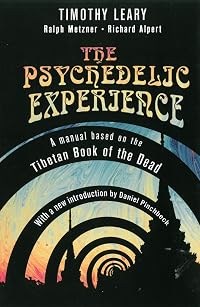
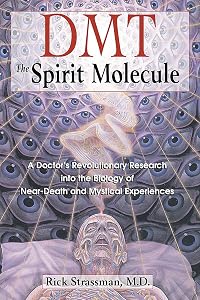
chmod007 While Huxley’s experiences with mescaline were mostly blissful, the substance revealed in his French contemporary Michaux a much darker mindscape. Read together, The Doors of Perception and Miserable miracle give the reader perspective on the tremendous transformative power of mescaline.
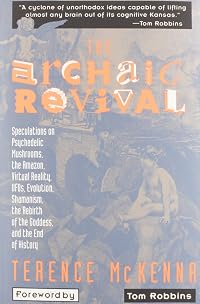
kaityjames Huxley views art as a pale imitation of objects as they ARE; Sartre finds existence disgusting and obscene, and art as a beautiful form above and beyond reality. Definitely compatible if you can dig Sartre's dark, existential language.
Member Reviews
Nën ndikimin e meskalinës, aftësia e tij për të kujtuar dhe "gjykuar drejt" zbehet pak, syri rimerr diç nga pafajësia perceptuese e fëmijërisë, interesi për hapësirën bie, ndërsa interesi për kohën shkon drejt zeros. Kauzat për të cilat do të ishte i gatshëm të vuante, në kushte normale, tani i duken jo interesante. Huxley tregon se gjatë këtij eksperimenti percepton përjetësinë në një lule, pafundësinë në katër këmbë karrigeje dhe absoluten në palosjen e një palë pantallonash fanellatë. Meskalina e kishte çliruar nga bota e vet, e kohës, e gjykimeve morale dhe vlerësimeve utilitare, e fjalëve të mbivlerësuara dhe pikëpamjeve të dyzuara. Gjatë kësaj kohe Huxley çohet të vizitojë depon show more farmaceutike më të madhe në botë dhe gjendet përballë pikturave, librave, veprave muzikore më të famshme për të cilat ai shpreh kritikat, admirimin dhe vizionin e tij. Kjo është dëshira për t'u arratisur nga vetvetja dhe nga mjedisi përreth që i çon njerëzit qetësisht drejt përdorimit të narkotikëve bimorë apo haluçinogjenëve. Në fund të librit autori kthehet përmes derës së perceptimit. Por ai nuk është më i njëjti njeri. show less
A classic psychedelic text that I have wanted to read ever since learning it is where "The Doors" came up with their name.
It can be fairly dry, and academic at times, but throughout are some incredible moments of insight and philosophy. A few moments diverge to talk far too long about art, or religion. Just when you start to tune out, Huxley will drop a bomb on you (like one of the following quotes as example, to bring you back and make you think.
Here were some of my favorites that I had to read multiple times to appreciate.
"My actual experience had been, was still, of an indefinite duration or alternatively of a perpetual present made up of one continually changing apocalypse."
"When we feel ourselves to be sole heirs of the universe, show more when "the sea flows in our veins...and the stars are our jewels," when all things are perceived as infinite and holy, what motive can we have for covetousness or self-assertion, for the pursuit of power or the drearier forms of pleasure?”
""The schizophrenic is like a man permanently under the influence of mescalin, and therefore unable to shut off the experience of a reality which he is not holy enough to live with, which he cannot explain away because it is the most stubborn of primary facts, and which, because it never permits him to look at the world with merely human eyes, scares him into interpreting its unremitting strangeness, its burning intensity of significance, as the manifestations of human or even cosmic malevolence"
"But the man who comes back through the Door in the Wall will never be quite the same as the man who went out. He will be wiser but less cocksure, happier but less self-satisfied, humbler in acknowledging his ignorance yet better equipped to understand the relationship of words to things, of systematic reasoning to the unfathomable Mystery which it tries, forever vainly, to comprehend." show less
It can be fairly dry, and academic at times, but throughout are some incredible moments of insight and philosophy. A few moments diverge to talk far too long about art, or religion. Just when you start to tune out, Huxley will drop a bomb on you (like one of the following quotes as example, to bring you back and make you think.
Here were some of my favorites that I had to read multiple times to appreciate.
"My actual experience had been, was still, of an indefinite duration or alternatively of a perpetual present made up of one continually changing apocalypse."
"When we feel ourselves to be sole heirs of the universe, show more when "the sea flows in our veins...and the stars are our jewels," when all things are perceived as infinite and holy, what motive can we have for covetousness or self-assertion, for the pursuit of power or the drearier forms of pleasure?”
""The schizophrenic is like a man permanently under the influence of mescalin, and therefore unable to shut off the experience of a reality which he is not holy enough to live with, which he cannot explain away because it is the most stubborn of primary facts, and which, because it never permits him to look at the world with merely human eyes, scares him into interpreting its unremitting strangeness, its burning intensity of significance, as the manifestations of human or even cosmic malevolence"
"But the man who comes back through the Door in the Wall will never be quite the same as the man who went out. He will be wiser but less cocksure, happier but less self-satisfied, humbler in acknowledging his ignorance yet better equipped to understand the relationship of words to things, of systematic reasoning to the unfathomable Mystery which it tries, forever vainly, to comprehend." show less
“The effective object of worship is the bottle and the sole religious experience is that state of uninhibited and belligerent euphoria which follows the ingestion of the third cocktail.”
To put it bluntly, The Doors of Perception is a first-hand account of Brave New World author Aldous Huxley's documented experience of tripping balls on mescaline. I've always found it telling how high schools (at least in the eighties and nineties when I attended) would eagerly lead students through an anti-drug perspective of Brave New world without bothering to mention Huxley's later experimentation and promotion of hallucinogenics as positive tool towards psychological and philosophical growth.
The Doors of Perception is probably one of the most show more scholarly and grounded first-hand accounts of a hallucinogenic journey you'll ever read, as Huxley takes periodic breaks to expound upon drugs (not all, mind you) as a tool to aid in understanding the perceptions of those suffering from metal illnesses and seeing how the "genius" sees the world, as well as the religious connotations in and human necessity towards chemically aided transcendence.
Huxley would later experiment with LSD and continue to support the clinical and societal benefits of hallucinogenics, and would receive injections of LSD on his deathbed at his request. This book is an a must read for anyone interested in the scholarly pursuit of better living through chemistry, or the history of the modern approach and examination of such drugs. show less
To put it bluntly, The Doors of Perception is a first-hand account of Brave New World author Aldous Huxley's documented experience of tripping balls on mescaline. I've always found it telling how high schools (at least in the eighties and nineties when I attended) would eagerly lead students through an anti-drug perspective of Brave New world without bothering to mention Huxley's later experimentation and promotion of hallucinogenics as positive tool towards psychological and philosophical growth.
The Doors of Perception is probably one of the most show more scholarly and grounded first-hand accounts of a hallucinogenic journey you'll ever read, as Huxley takes periodic breaks to expound upon drugs (not all, mind you) as a tool to aid in understanding the perceptions of those suffering from metal illnesses and seeing how the "genius" sees the world, as well as the religious connotations in and human necessity towards chemically aided transcendence.
Huxley would later experiment with LSD and continue to support the clinical and societal benefits of hallucinogenics, and would receive injections of LSD on his deathbed at his request. This book is an a must read for anyone interested in the scholarly pursuit of better living through chemistry, or the history of the modern approach and examination of such drugs. show less
Absolutely profound. The most intellectual and yet simultaneously immanent account of altered perception I've ever read. The first piece of gonzo journalism. He captures the way empathy and love are the means through which we conduct our doomed quest to assuage the inescapable solitude of life. The revival of Bergson that forms the backbone of this piece insists on an understanding of the mind that, if accepted, is transformative, bursting with the potential for new ways of life, and disturbing. I find his meditations on art reassuring; perhaps my philistine disinclination towards art and preference for the art of being itself is not so philistine after all.
Una obra maestra. Un libro valiente y revelador, de una lucidez perturbadora, no apto para menores de treinta (es broma, no hay que ser siempre tan graves, tan). La importancia del ensayo consiste en describir y alcanzar un estado que Huxley llama de "Inteligencia Libre" (una pésima traducción, pésima, dado que en el original es "Mind at Large", algo así como "Mente en Extensión", lo cual es consistente con todos los argumentos que en lo posterior desarrolla), un estado en el que la conciencia pierde la noción de i) sí mismo; ii) el tiempo; iii) los juicios morales y iv) cualquier concepción heredera del raciocinio utilitarista (el archiconocido y sobrevalorado análisis costo-beneficio); y que por tanto implica una pertenencia show more con el todo, la unicidad en el infinito. Es claro en señalar que algunos hombres conviven en este estado de forma permanente, ante lo cual o se es un orate o un genio, claro y simple. Pero apunta a la búsqueda de una llave que permita abrir la "Puerta del Muro", esa barrera que franquea la comprensión con lo que nos parece caótico, una llave que nos permita entrar y salir del "Mind at Large" sanos y a salvos, una llave que se alcanza mediante una profunda meditación, el ejercicio de una actividad artística o a través de un estimulante químico, que en este caso será por medio de la mescalina. Evidente es también que una mente racional evitará, rechazará o negará la existencia de una experiencia transfigurativa, debido a que la construcción de su modelo de análisis le impide este acceso, so demanda de la supervivencia de su propia conciencia, de su propio ego, pero la historia nos ha revelado no solo barbaridades y progresos, sino también una continua progresión en cuanto a nuestra propia concepción del universo. Ya lo dije, un libro brillante, que nos llevará a nuestros propios límites de la conciencia. show less
This is the account, in a form that seems to blend both an essay and a journal entry, of Aldous Huxley’s experience on mescaline.
Although I have never taken mescaline, I have had many spiritual experiences of higher consciousness, and of what he describes as the “Mind at Large”, and I have to say that this was a wonderful account of “suchness”, of “being”, of “awareness”, of spiritual reality, enlightenment, of “naked existence”. It was reassuring, and empowering, inspiring and vivid. What he was able to describe, and with such accuracy, was profound.
✦ “Embraced, the lovers desperately try to fuse their insulated ecstasies into a single self-transcendence; in vain. By its very nature every embodied spirit is show more doomed to suffer and enjoy in solitude. Sensations, feelings, insights, fancies-all these are private and, except through symbols and at second hand, incommunicable. We can pool information about experiences, but never the experiences themselves.”
✦ “However expressive, symbols can never be the things they stand for.”
✦ “He could never, poor fellow, have seen a bunch of flowers, shining with their own inner light and all but quivering under the pressure of the significance with which they were charged; could never have perceived that what rose and iris and carnation so intensely signified was nothing more, and nothing less, than what they were-a transience that was yet eternal life, a perpetual perishing that was at the same time pure Being, a bundle of minute, unique particulars in which, by some unspeakable and yet self-evident paradox, was to be seen the divine source of all existence.”
✦ “We can never dispense with language and the other symbol systems; for it is by means of them, and only by their means, that we have raised ourselves above the brutes, to the level of human beings. But we can easily become victims as well as the beneficiaries of these systems. We must learn how to handle words effectively; but at the same time we must preserve and, if necessary, intensify our ability to look at the world directly and not through the half opaque medium of concepts, which distorts every given fact into the all too familiar likeness of some generic label or explanatory abstraction.”
✦ “When we feel ourselves to be sole heirs of the universe, when ‘the sea flows in our veins…and the stars are our jewels,’ when all things are perceived as infinite and holy, what motive can we have for covetousness or self-assertion, for the pursuit of power or the drearier forms of pleasure?”
✦ “But the man who comes back through the Door in the Wall will never be quite the same as the man who went out. He will be wiser but less cocksure, happier but less self-satisfied, humbler in acknowledging his ignorance yet better equipped to understand the relationship of words to things, of systematic reasoning to the unfathomable Mystery which it tries, forever vainly, to comprehend.”
✦ “‘A gratuitous grace,’not necessary to salvation but potentially helpful and to be accepted thankfully, if made available. To be shaken out of the ruts of ordinary perception, to be shown for a few timeless hours the outer and inner world, not as they appear to an animal obsessed with survival or to a human being obsessed with words and notions, but as they are apprehended, directly and unconditionally, by Mind at Large-this is an experience of inestimable value.”
I will be reading this book again. show less
Although I have never taken mescaline, I have had many spiritual experiences of higher consciousness, and of what he describes as the “Mind at Large”, and I have to say that this was a wonderful account of “suchness”, of “being”, of “awareness”, of spiritual reality, enlightenment, of “naked existence”. It was reassuring, and empowering, inspiring and vivid. What he was able to describe, and with such accuracy, was profound.
✦ “Embraced, the lovers desperately try to fuse their insulated ecstasies into a single self-transcendence; in vain. By its very nature every embodied spirit is show more doomed to suffer and enjoy in solitude. Sensations, feelings, insights, fancies-all these are private and, except through symbols and at second hand, incommunicable. We can pool information about experiences, but never the experiences themselves.”
✦ “However expressive, symbols can never be the things they stand for.”
✦ “He could never, poor fellow, have seen a bunch of flowers, shining with their own inner light and all but quivering under the pressure of the significance with which they were charged; could never have perceived that what rose and iris and carnation so intensely signified was nothing more, and nothing less, than what they were-a transience that was yet eternal life, a perpetual perishing that was at the same time pure Being, a bundle of minute, unique particulars in which, by some unspeakable and yet self-evident paradox, was to be seen the divine source of all existence.”
✦ “We can never dispense with language and the other symbol systems; for it is by means of them, and only by their means, that we have raised ourselves above the brutes, to the level of human beings. But we can easily become victims as well as the beneficiaries of these systems. We must learn how to handle words effectively; but at the same time we must preserve and, if necessary, intensify our ability to look at the world directly and not through the half opaque medium of concepts, which distorts every given fact into the all too familiar likeness of some generic label or explanatory abstraction.”
✦ “When we feel ourselves to be sole heirs of the universe, when ‘the sea flows in our veins…and the stars are our jewels,’ when all things are perceived as infinite and holy, what motive can we have for covetousness or self-assertion, for the pursuit of power or the drearier forms of pleasure?”
✦ “But the man who comes back through the Door in the Wall will never be quite the same as the man who went out. He will be wiser but less cocksure, happier but less self-satisfied, humbler in acknowledging his ignorance yet better equipped to understand the relationship of words to things, of systematic reasoning to the unfathomable Mystery which it tries, forever vainly, to comprehend.”
✦ “‘A gratuitous grace,’not necessary to salvation but potentially helpful and to be accepted thankfully, if made available. To be shaken out of the ruts of ordinary perception, to be shown for a few timeless hours the outer and inner world, not as they appear to an animal obsessed with survival or to a human being obsessed with words and notions, but as they are apprehended, directly and unconditionally, by Mind at Large-this is an experience of inestimable value.”
I will be reading this book again. show less
Sometimes a writer has to revisit the classics, and here we find that "gonzo journalism"—gutsy first-person accounts wherein the author is part of the story—didn't originate with Hunter S. Thompson or Tom Wolfe. Aldous Huxley took some mescaline & wrote about it some 10 or 12 years earlier than those others. The book he came up with is part bemused essay & part mystical treatise—"suchness" is everywhere to be found while under the influence. This is a good example of essay writing, journal keeping & the value of controversy—always—in one's work.
Members
- Recently Added By
Lists

Blue Pyramid 1,276 Best Books of All Time
1,248 works; 32 members

substances
14 works; 1 member

essays
6 works; 1 member

psychology
12 works; 1 member
Author Information

288+ Works 105,176 Members
Aldous Huxley was born on July 26, 1894, in Surrey, England, into a distinguished scientific and literary family; his grandfather was the noted scientist and writer, T.H. Huxley. Following an eye illness at age 16 that resulted in near-blindness, Huxley abandoned hope of a career in medicine and turned instead to literature, attending Oxford show more University and graduating with honors. While at Oxford, he published two volumes of poetry. Crome Yellow, his first novel, was published in 1927 followed by Antic Hay, Those Barren Leaves, and Point Counter Point. His most famous novel, Brave New World, published in 1932, is a science fiction classic about a futuristic society controlled by technology. In all, Huxley produced 47 works during his long career, In 1947, Huxley moved with his family to southern California. During the 1950s, he experimented with mescaline and LSD. Doors of Perception and Heaven and Hell, both works of nonfiction, were based on his experiences while taking mescaline under supervision. In 1959, Aldous Huxley received the Award of Merit for the Novel from the American Academy of Arts and Letters. He died on November 22, 1963. (Bowker Author Biography) show less
Aldous Huxley has a Legacy Library. Legacy libraries are the personal libraries of famous readers, entered by LibraryThing members from the Legacy Libraries group.
Some Editions
Awards and Honors
Notable Lists
Series
Belongs to Publisher Series
Heibonsha Library (115)
Work Relationships
Is contained in
Has the adaptation
Has as a student's study guide
Common Knowledge
- Canonical title
- The Doors of Perception
- Original title
- The Doors of Perception
- Original publication date
- 1954
- People/Characters
- Aldous Huxley; Johannes Vermeer; William Blake; Aquinas, Thomas, 1225-1274
- Epigraph
- If the doors of perception were cleansed, everything will appear to mas as it is, infinite.
--William Blake - Dedication
- For M
- First words
- It was in 1886 that the German pharmacologist, Louis Lewin, published the first systematic study of the cactus, to which his own name subsequently given.
- Quotations
- We live together, we act on, and react to, one another; but always and in all circumstances we are by ourselves. The martyrs go hand in hand into the arena; they are crucified alone. Embraced, the lovers desperately try to fu... (show all)se their insulated ecstacies into a single self-transcendence; in vain. By its very nature every embodied spirit is doomed to suffer and enjoy in solitude.
To see ourselves as others see us is a most salutary gift. Hardly less important is the capacity to see others as they see themselves. - Last words
- (Click to show. Warning: May contain spoilers.)He will be wiser but less cocksure, happier but less satisfied, humbler in acknowledging his ignorance yet better equipped to understand the relationship of words to things, of systematic reasoning to the unfathomable Mystery which it tries, forever vainly, to comprehend.
- Blurbers
- Rhine, J. B.; Jackson, J. H.
- Disambiguation notice
- Contains ONLY "The Doors of Perception". Please don't combine with editions also containing "Heaven and Hell".
Classifications
Statistics
- Members
- 1,312
- Popularity
- 18,488
- Reviews
- 18
- Rating
- (3.70)
- Languages
- 13 — Czech, Danish, Dutch, English, French, German, Hungarian, Italian, Japanese, Norwegian (Bokmål), Portuguese, Spanish, Swedish
- Media
- Paper, Audiobook, Ebook
- ISBNs
- 30
- ASINs
- 25