

The Peter Principle
by Laurence J. Peter, Raymond Hull
On This Page
Description
The classic #1 New York Times bestseller that answers the age-old question. Why is incompetence so maddeningly rampant and so vexingly triumphant? The Peter Principle, the eponymous law Dr. Laurence J. Peter coined, explains that everyone in a hierarchy-from the office intern to the CEO, from the low-level civil servant to a nation's president-will inevitably rise to his or her level of incompetence. Dr. Peter explains why incompetence is at the root of everything we endeavor to do-why show more schools bestow ignorance, why governments condone anarchy, why courts dispense injustice, why prosperity causes unhappiness, and why utopian plans never generate utopias. With the wit of Mark Twain, the psychological acuity of Sigmund Freud, and the theoretical impact of Isaac Newton, Dr. Laurence J. Peter and Raymond Hull's The Peter Principle brilliantly explains how incompetence and its accompanying symptoms, syndromes, and remedies define the world and the work we do in it. show lessTags
Recommendations


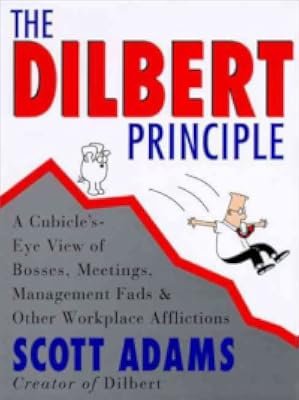

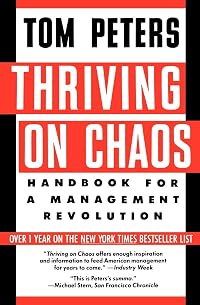














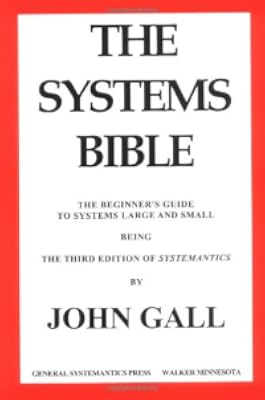

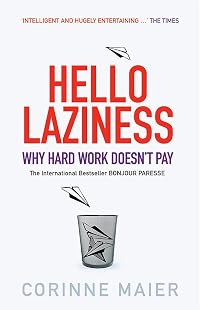















Member Recommendations


Member Reviews
For those who have searched for a simple explanation of Murphy's law beyond a generalized pessimism, this is your book. It describes how organizations fail by describing how organizational structure serves to magnify the individual failures of the people within it. Simply put, the Peter Principle is thus: each person rises to the level of his/her incompetence in any organization, and then, unable to move up, spends the rest of a career failing to perform and making the rest of us suffer. I had heard of this principle before reading this book, but had not realized it to be more than a comedian's punch line. In fact, however, there's a frightening amount of wisdom to be found in this book.
Just ponder for a moment your own place of employ. show more Think of all the meetings and the futile attempts at correcting mind-numbing insults to productivity and common sense. Now hear Peter's explanation: "In time, every post tends to be occupied by an employee who is incompetent to carry out its duties...Work is accomplished by those employees who have not yet reached their level of incompetence." Generally people make a good-faith effort to perform their jobs well, but the nature of bureaucracy takes its toll eventually. Peter's book explains how the system doesn't work and classifies the various forms of the problem. He helpfully provides ways to manipulate faulty systems and use the Pull of Patrons to rise to your own desired level. He also gives ways to evade succombing to final placement yourself through creative incompetence that masks a genuine productivity and thus avoids unwelcome promotion. By coining numerous deadpan terms, Peter actually communicates genuine organizational problems in a non-threatening way. Whether you are in business, government, education, or any other bureaucratic slog, you can at last see the reason for your frustrations, even if humor alone is often your only solace. There are, of course, some elements of the book that have not been updated. The phonophilia has morphed to gadgetophilia, and tabulatory gigantism to iphone polyappism, but some features such as compulsory alternation, are timeless.
Go read this book, before you are faced with that most sad sign of Final Placement, utter irrelevance. show less
Just ponder for a moment your own place of employ. show more Think of all the meetings and the futile attempts at correcting mind-numbing insults to productivity and common sense. Now hear Peter's explanation: "In time, every post tends to be occupied by an employee who is incompetent to carry out its duties...Work is accomplished by those employees who have not yet reached their level of incompetence." Generally people make a good-faith effort to perform their jobs well, but the nature of bureaucracy takes its toll eventually. Peter's book explains how the system doesn't work and classifies the various forms of the problem. He helpfully provides ways to manipulate faulty systems and use the Pull of Patrons to rise to your own desired level. He also gives ways to evade succombing to final placement yourself through creative incompetence that masks a genuine productivity and thus avoids unwelcome promotion. By coining numerous deadpan terms, Peter actually communicates genuine organizational problems in a non-threatening way. Whether you are in business, government, education, or any other bureaucratic slog, you can at last see the reason for your frustrations, even if humor alone is often your only solace. There are, of course, some elements of the book that have not been updated. The phonophilia has morphed to gadgetophilia, and tabulatory gigantism to iphone polyappism, but some features such as compulsory alternation, are timeless.
Go read this book, before you are faced with that most sad sign of Final Placement, utter irrelevance. show less
44 years after its publication, The Peter Principle still seems to apply to modern life, which is either a sign of how right Peter and Hull were back then, how little we (as a species) have learned from them, how powerless we really are before The Principle or a morbid mixture of all the above.
All things considered, it's well written, short, concise and useful, which makes it a must-read for every competent human being (and maybe some smart incompetent ones)
All things considered, it's well written, short, concise and useful, which makes it a must-read for every competent human being (and maybe some smart incompetent ones)
Laurence Peter describes the incompetent world, particular that of the common workplace, in very astute and definitive terms. We already know the world is full of idiots who somehow got to an admirable level of success and “achievement,” however Peter breaks down this thought into a polished and elaborate theory/principle. There isn’t much offered in how to change the Peter Principle, which leaves the reader with a bleak outlook of his or her workplace future. Highly pessimistic, this book is definitely funny and sadly very true.
An entertaining, though dated (sexist, racist, homophobic) business/management guide, presented as humor but in its central premise, that we are promoted to the level of our incompetence, spot on.
Why is the human race foundering in a morass of occupational, academic, and administrative inefficiency? Approach the gallows with humor -- and die at your highest level of incompetence.
A humourous exposition of why organizations are full of incompetent people: "In a hierarchy, every employee tends to rise to his level of incompetence." Many anecdotal examples of organizational disasters. A cynical view of managers who impede the work of their subordinates, and organizations which defeat their own ends. Thought-provoking, and amusing if you are a lowly employee. Discouraging if you are a manager!
Probably true, This little eye-opener explains a good deal about some of the people who I have encountered in my life. Sad, isn't it...oh yes! The principle involved is "Executives seem to be promoted to one step past their overall level of skill/expertise."
Members
- Recently Added By
Lists

Publisher's Weekly NON-Fiction list - 1912 - 1975
486 works; 4 members
Author Information

27+ Works 2,796 Members

13+ Works 2,007 Members
Some Editions
Awards and Honors
Distinctions
Notable Lists
Series
Belongs to Publisher Series
Tribuna de P & J. (24)
Loomingu Raamatukogu 1972 (29-31)
Common Knowledge
- Canonical title*
- Het Peterprincipe
- Original title
- The Peter Principle : Why Things Always Go Wrong
- Alternate titles*
- Het Peterprincipe : waarom alles altijd verkeerd gaat
- Original publication date
- 1969
- Dedication
- This book is dedicated to all those who, working, playing, loving, living and dying at their Level of Incompetence, provided the data for the founding and development for the salutary science of Hierarchiology.
- First words
- (Introduction by Raymond Hull): As an author and a journalist, I have had exceptional opportunities to study the workings of civilized society.
When I was a boy I was taught that the men upstairs knew what they were doing. - Quotations
- Papyrophobia: The papyrophobe cannot tolerate papers or books on his desk or, in extreme cases, anywhere in his office. Probably every such piece of paper is a reminder to him of the work that he is not able to do: no wonder ... (show all)he hates the sight of it! But he makes a virtue of his phobia and, by 'keeping a clean desk', as he calls it, hopes to create the impression that he dispatches all his business with incredible promptitude.
Papyromania: Papyromania, the exact opposite of papyrophobia, causes the employee to clutter his desk with pieces of never-used papers and books. Consciously or unconsciously, he thus tries to mask his incompetence by giving ... (show all)the impression that he has TOO MUCH TO DO – more than any human being could accomplish. - Last words
- (Click to show. Warning: May contain spoilers.)When he does I am qualified and ready for the post, having proven myself capable in my present endeavours.
- Original language*
- Engels
*Some information comes from Common Knowledge in other languages. Click "Edit" for more information.
Classifications
- Genres
- Business, Nonfiction, Sociology, General Nonfiction
- DDC/MDS
- 658.002 — Applied science & technology Management & public relations General management Miscellany
- LCC
- PN6231 .M2 .P4 — Language and Literature Literature (General) Literature (General) Collections of general literature Wit and humor
- BISAC
Statistics
- Members
- 1,637
- Popularity
- 13,708
- Reviews
- 30
- Rating
- (3.64)
- Languages
- 14 — Danish, Dutch, English, Estonian, Finnish, French, German, Hebrew, Italian, Japanese, Polish, Portuguese, Spanish, Swedish
- Media
- Paper, Ebook
- ISBNs
- 60
- ASINs
- 46