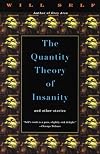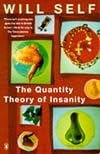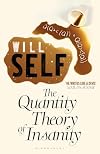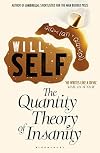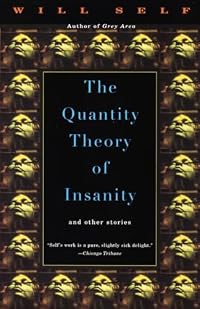
The Quantity Theory of Insanity
by Will Self
On This Page
Description
What if there is only a limited amount of sanity in the world and the real reason people go mad is because somebody has to? What if a mysterious tribe in the Amazon rainforest turn out to be the most boring people on earth? What if the afterlife is nothing more than a London suburb, where the dead get new flats, new jobs, and their own telephone directory? These are the sort of truths that emerge in this collection of stories by one of England's most gifted writers. In The Quantity Theory of show more Insanity, Will Self tips over the banal surfaces of everyday existence to uncover the hideous, the hilarious, and the bizarre. Psychiatry, anthropology, theology-and literature-will never be the same. show lessTags
Recommendations


















Member Recommendations
Member Reviews
The Quantity Theory of Insanity is Will Self's first book, and although I had previously read Cock and Bull before I picked up this text, I felt as though I was starting over with his oeuvre. Reading Self from the start, in sequence, is not a bad strategy - after all, his fiction is littered with intratextual references, recurring characters, and little in-jokes that build from one book to the next.
Self is a polarizing writer whose reputation usually precedes him. He tends to be either loved or hated as a consequence, which is unfortunate, because authors should not be judged solely on the emotional reactions they provoke. You see, Self is clever and witty and erudite in a way that only the English seem to be able to pull off. show more Personally, I was captivated by the stories in The Quantity Theory of Insanity. Self is not merely showing off here: his satire has real teeth, and is grounded in a fierce intellect that attempts to be revolutionary even as it acknowledges such precursors as Kafka and Chekhov.
My experience of reading the first story in here, "The North London Book of the Dead," is a perfect example of the unsettling yet amusing nature of Self's texts. What appears at first to be a tragic tale of how a man loses his mother to cancer gradually transforms itself into minor pathos. The dead don't go away altogether, the narrator discovers, they merely move to a different part of London. I was, by turns, confused and then amused as I realized the true purpose of the metaphor that Self was creating.
This biting caricature of the dullness of English life is replicated in other stories, such as "Understanding the Ur-Bororo." The story follows the career of Janner, an aspiring anthropologist who dedicates his career to studying this obscure tribe, the Ur-Bororo, winning a special grant dedicated to this specific purpose. What Janner discovers, however, is that the romance surrounding the tribe derives purely from their obscurity. In reality, they are the most boring people in the world, whose culture shows a remarkable indifference to sex and whose conversations consist of bland observations about the weather. Janner marries one of the tribe and, in a brilliant satirical twist, brings her back to England, where she fits right in.
The stories in The Quantity Theory of Insanity thus typically explore one of two themes: the unexciting, self-limiting way in which humanity tends to live life, as exemplified by the two stories mentioned already as well as the book's closer, "Waiting," and Self's exploration of madness, rationality, and power. It is in this book, for instance, that we first meet Self's most important recurring character, the experimental psychiatrist Dr. Zack Busner, together with his notorious mentor Alkan (a not-too-subtle but utterly enjoyable caricature of Jacques Lacan). This latter theme is by far the most profound and interesting, and I particularly liked "Ward 9″ (an inversion of Chekhov's "Ward 6″) and the title story, which engages in a brilliant deconstruction of psychology's attempts to legitimize itself through "objective" testing, a message that few will appreciate and even fewer will understand.
On the whole, I loved The Quantity Theory of Insanity with only a couple of reservations. The first is that I didn't like the story "Mono-Cellular," a testament to the occasional tendency of English fiction writers to overreach their abilities (I'm looking at you, A.S. Byatt). The second is that this book at times felt strangely dated, in the same way that reading literary and critical theory from the same period feels dated. I get a similar feeling when I read Self's other books, too, as if he is still trying to push the boundaries of 1980s postmodernism without realizing that the rest of the world has moved on. Nonetheless, it's wickedly clever stuff, for all its strange anachronisms, and I highly recommend it if you are in the mood for something intelligent and anarchic. show less
Self is a polarizing writer whose reputation usually precedes him. He tends to be either loved or hated as a consequence, which is unfortunate, because authors should not be judged solely on the emotional reactions they provoke. You see, Self is clever and witty and erudite in a way that only the English seem to be able to pull off. show more Personally, I was captivated by the stories in The Quantity Theory of Insanity. Self is not merely showing off here: his satire has real teeth, and is grounded in a fierce intellect that attempts to be revolutionary even as it acknowledges such precursors as Kafka and Chekhov.
My experience of reading the first story in here, "The North London Book of the Dead," is a perfect example of the unsettling yet amusing nature of Self's texts. What appears at first to be a tragic tale of how a man loses his mother to cancer gradually transforms itself into minor pathos. The dead don't go away altogether, the narrator discovers, they merely move to a different part of London. I was, by turns, confused and then amused as I realized the true purpose of the metaphor that Self was creating.
This biting caricature of the dullness of English life is replicated in other stories, such as "Understanding the Ur-Bororo." The story follows the career of Janner, an aspiring anthropologist who dedicates his career to studying this obscure tribe, the Ur-Bororo, winning a special grant dedicated to this specific purpose. What Janner discovers, however, is that the romance surrounding the tribe derives purely from their obscurity. In reality, they are the most boring people in the world, whose culture shows a remarkable indifference to sex and whose conversations consist of bland observations about the weather. Janner marries one of the tribe and, in a brilliant satirical twist, brings her back to England, where she fits right in.
The stories in The Quantity Theory of Insanity thus typically explore one of two themes: the unexciting, self-limiting way in which humanity tends to live life, as exemplified by the two stories mentioned already as well as the book's closer, "Waiting," and Self's exploration of madness, rationality, and power. It is in this book, for instance, that we first meet Self's most important recurring character, the experimental psychiatrist Dr. Zack Busner, together with his notorious mentor Alkan (a not-too-subtle but utterly enjoyable caricature of Jacques Lacan). This latter theme is by far the most profound and interesting, and I particularly liked "Ward 9″ (an inversion of Chekhov's "Ward 6″) and the title story, which engages in a brilliant deconstruction of psychology's attempts to legitimize itself through "objective" testing, a message that few will appreciate and even fewer will understand.
On the whole, I loved The Quantity Theory of Insanity with only a couple of reservations. The first is that I didn't like the story "Mono-Cellular," a testament to the occasional tendency of English fiction writers to overreach their abilities (I'm looking at you, A.S. Byatt). The second is that this book at times felt strangely dated, in the same way that reading literary and critical theory from the same period feels dated. I get a similar feeling when I read Self's other books, too, as if he is still trying to push the boundaries of 1980s postmodernism without realizing that the rest of the world has moved on. Nonetheless, it's wickedly clever stuff, for all its strange anachronisms, and I highly recommend it if you are in the mood for something intelligent and anarchic. show less
Probably would have enjoyed this more when it came out, but I don't thin kit has aged very well. Comes across now as pretty self-indulgent, and over-weighting some relatively light philosophy and satire. I did enjoy some bits but ultimately it was a slog.
Self knows a lot of big, old, underrated and little-used words and seems intent on using them. This collection of six short stories invites you to sample Self's rare intellect, but does so like an invitation to the gallery at the back of an auditorium for a lecture you've heard a lot about but soon realise have little hope of understanding.
Like the narrator of 'Waiting', you start well, rapt even by the wordplay, wit and intelligence, but soon Self has lost you, the rest of the book an "increasingly involved, turgid and difficult" display. Like Stein's lecture, "the sheer weight of detail eroded my attention... I began to tune out."
The copy of the book I own has a big fat stain on the back cover, a thick brown ring of coffee-tainted show more water. I concur that the book probably makes for a better coaster than an insight into anything Self might have to offer. Beyond the first two tales you might consider putting it to stain avoidance duties and consider yourself done with the business of reading.
If I had the option to give this 1-and-a-half stars, I'd do it. I didn't hate it, but I didn't exactly like it either. I wouldn't recommend it, unless I wanted to put someone off reading Self for life. On the other hand, if I ever read any other books by him and find they raise the bar, I might suggest reading this to really put his brilliance into perspective. 'He can sink this low, yet rise to such incredible heights... Do you see?" show less
Like the narrator of 'Waiting', you start well, rapt even by the wordplay, wit and intelligence, but soon Self has lost you, the rest of the book an "increasingly involved, turgid and difficult" display. Like Stein's lecture, "the sheer weight of detail eroded my attention... I began to tune out."
The copy of the book I own has a big fat stain on the back cover, a thick brown ring of coffee-tainted show more water. I concur that the book probably makes for a better coaster than an insight into anything Self might have to offer. Beyond the first two tales you might consider putting it to stain avoidance duties and consider yourself done with the business of reading.
If I had the option to give this 1-and-a-half stars, I'd do it. I didn't hate it, but I didn't exactly like it either. I wouldn't recommend it, unless I wanted to put someone off reading Self for life. On the other hand, if I ever read any other books by him and find they raise the bar, I might suggest reading this to really put his brilliance into perspective. 'He can sink this low, yet rise to such incredible heights... Do you see?" show less
6 racconti, il più riuscito dà anche il titolo al libro in originale: la teoria quantitativa dell'infermità mentale, tradotto insensatamente Cordiali saluti da un mondo insano. Ipotesi rivoluzionaria: in una data società in un dato momento esiste solo una quota fissa di sanità mentale disponibile.
Passaggi di umorismo folgorante: ricercatori che scrivevano relazioni su la ricerca del personale per l'industria della ricerca del personale, sulla redazione di riviste interne per Le società di comunicazione.
Molti riferimenti comprensibili solo a chi è nato e cresciuto a Oxford.
Capire gli Ur-bororo sbeffeggia l'idealizzazione degli uomini primitivi con la scoperta di una tribù in amazzonia dai costumi assolutamente insulsi e noiosi.
Passaggi di umorismo folgorante: ricercatori che scrivevano relazioni su la ricerca del personale per l'industria della ricerca del personale, sulla redazione di riviste interne per Le società di comunicazione.
Molti riferimenti comprensibili solo a chi è nato e cresciuto a Oxford.
Capire gli Ur-bororo sbeffeggia l'idealizzazione degli uomini primitivi con la scoperta di una tribù in amazzonia dai costumi assolutamente insulsi e noiosi.
This is a collection of six short stories set mainly in Britain, in more or less contemporary times, and united by the theme of insanity. They range from the very good ("The Quantity Theory of Insanity", "Understanding the Ur-Bororo", "Ward 9"), the fairly good ("Waiting"), the mediocre ("The North London Book of the Dead"), to the truly awful ("Monocellular").
Ward 9, a reference to Chekhov's Ward 6, follows a somewhat similar plot, but in a modern hospital. For those who have read Chekhov's work, the ending might not come as such a surprise, and for those who haven't the turn of events will be unexpected. Also somewhat like Chekhov's short stories, there is a theme of the medical / academic world here, with three of these stories show more likely to be appreciated especially by those to whom this world is familiar.
This was my first time reading Will Self, and I was quite impressed by some of these stories, they had me reading with intent interest, not only for the plots, but for the abstract ideas behind them. Though I was disappointed with 2 of the stories, if he has written whole novels as good as the good short stories then I would be glad to read a lot more from this author. show less
Ward 9, a reference to Chekhov's Ward 6, follows a somewhat similar plot, but in a modern hospital. For those who have read Chekhov's work, the ending might not come as such a surprise, and for those who haven't the turn of events will be unexpected. Also somewhat like Chekhov's short stories, there is a theme of the medical / academic world here, with three of these stories show more likely to be appreciated especially by those to whom this world is familiar.
This was my first time reading Will Self, and I was quite impressed by some of these stories, they had me reading with intent interest, not only for the plots, but for the abstract ideas behind them. Though I was disappointed with 2 of the stories, if he has written whole novels as good as the good short stories then I would be glad to read a lot more from this author. show less
This is a collection of short stories, loosely connected together, exploring ideas of mental health and psychotherapy with diversions into anthropology.
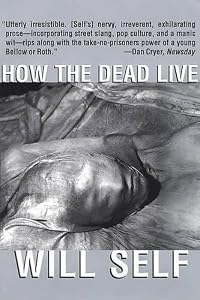
The exceptions to the main theme are the stories, 'The North London Book of the Dead', which I'm guessing Self later expanded into the novel 'How the Dead Live', and the deeply bizarre 'Mono-Cellular'.
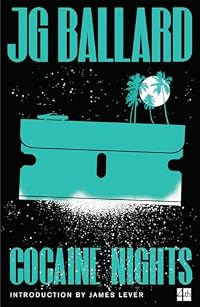
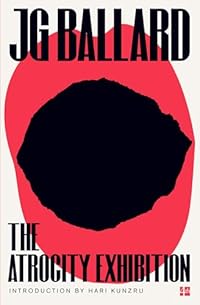
In places, reminiscent of J.G.Ballard's books, Self is at home describing the plastic tea-stirrer, fluorescent strip lighting & vinyl flooring of the institutional environment and London's urban landscape. His work is dark and fantastic, despite being based in such apparently ordinary settings.
I normally like Will Self's writing, so I was surprised to find this book heavier-going than I show more was expecting, but there were many memorable moments, and it ended on a high with the pre-millennial 'Waiting'.
Also I can't finish this review without mentioning the 'Ur-Bororo', an unremittingly boring Amazonian tribe that their neighbours have long since given up trying to engage in tribal warfare, whose word for 'now' literally translates as 'waste of time'. Masters of small talk. show less
The exceptions to the main theme are the stories, 'The North London Book of the Dead', which I'm guessing Self later expanded into the novel 'How the Dead Live', and the deeply bizarre 'Mono-Cellular'.
In places, reminiscent of J.G.Ballard's books, Self is at home describing the plastic tea-stirrer, fluorescent strip lighting & vinyl flooring of the institutional environment and London's urban landscape. His work is dark and fantastic, despite being based in such apparently ordinary settings.
I normally like Will Self's writing, so I was surprised to find this book heavier-going than I show more was expecting, but there were many memorable moments, and it ended on a high with the pre-millennial 'Waiting'.
Also I can't finish this review without mentioning the 'Ur-Bororo', an unremittingly boring Amazonian tribe that their neighbours have long since given up trying to engage in tribal warfare, whose word for 'now' literally translates as 'waste of time'. Masters of small talk. show less
Love the way Will Self engages with and creates his stories. Very interesting ideas and exploration of said ideas.
Members
- Recently Added By
Lists

Books With the Most Memorable Titles
478 works; 158 members
Author Information

66+ Works 10,293 Members
William Woodard "Will" Self was born on September 26, 1961. He is a British author, journalist and political commentator. He wrote ten novels, five collections of short fiction, three novellas and five collections of non-fiction writing. His novel Umbrella was shortlisted for the Man Booker Prize. His subject matter often includes mental illness, show more illegal drugs and psychiatry. Self is a regular contributor to publications including Playboy, The Guardian, Harpers, The New York Times and the London Review of Books. He also writes a column for New Statesman, and over the years he has been a columnist for The Observer, The Times and the Evening Standard. His columns for Building Design on the built environment, and for the Independent Magazine on the psychology of place brought him to prominence as a thinker concerned with the politics of urbanism. Will Self will deliver the closing address at the 2015 Melbourne Writers Festival (MWF) 2015. (Bowker Author Biography) show less
Some Editions
Awards and Honors
Series
Belongs to Publisher Series
Common Knowledge
- Alternate titles
- The quantity theory of insanity : together with five supporting propositions
- Original publication date
- 1991; 1995 (American Edition) (American Edition)
- Important places
- Crouch End, London, England, UK
- Epigraph
- However far you may travel in this world, you will still occupy the same volume of space.
Traditional Ur-Bororo saying - Dedication
- For K.S.A.S who knows the stranger truth behind these fictions
- First words
- I suppose that the form my bereavement took after my mother died was fairly conventional.
- Last words
- (Click to show. Warning: May contain spoilers.)'Yeah she was here Jim, but I think she got fed up with waiting.'
- Blurbers
- Rendell, Ruth; Amis, Martin; Shrapnel, Norman; Lessing, Doris; Bainbridge, Beryl; Shone, Tom (show all 8); Hornby, Nick; Mango, R P
Classifications
Statistics
- Members
- 898
- Popularity
- 29,815
- Reviews
- 10
- Rating
- (3.58)
- Languages
- 5 — English, Estonian, French, German, Italian
- Media
- Paper, Audiobook, Ebook
- ISBNs
- 19
- ASINs
- 8