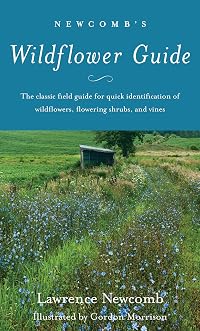
Newcomb's Wildflower Guide
by Lawrence Newcomb
On This Page
Description
On t.p.: An ingenious new key system for quick, positive field identification of the wildflowers, flowering shrubs and vines of Northeastern and North-central North America.Tags
Recommendations



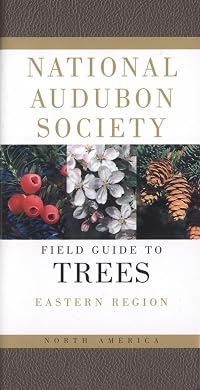

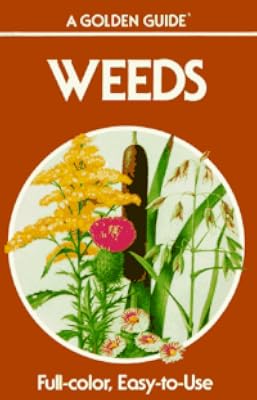
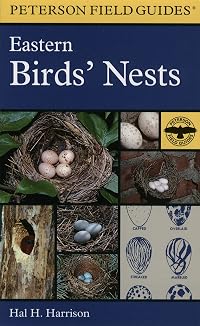
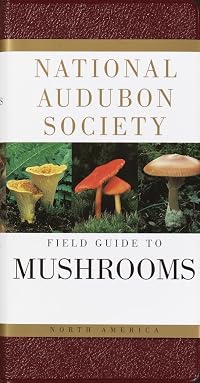
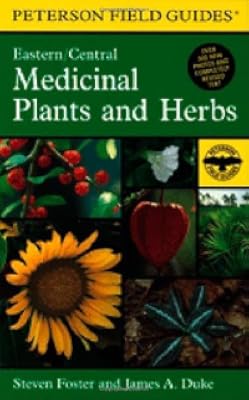
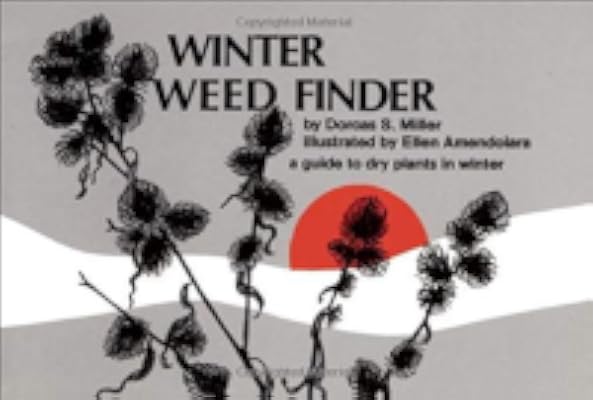

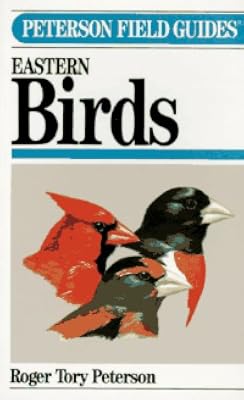






Member Recommendations

Sandydog1 Peterson's simple color coded guide is the perfect complement to Newcomb's better, but more complicated dichotomous key.

Gray's Manual of Botany A Handbook of the Flowering Plants and Ferns of the Central and Northeastern United States and Adjacent Canada by Merritt Lyndon Fernald
Sandydog1 The Grand-daddy. If you've graduated from a Peterson's Guide to Newcomb's, you might as well see what the big boys have been using as a botanical reference, for almost a century.
Member Reviews
When I picked up Newcomb's Wildflower Guide from the library, I didn't have a clue how to identify flowers using a book, and I was afraid I would be in over my head. I shouldn't have been worried: Newcomb's wildflower categorization is easy to pick up on, using readily understood visual cues like the number of petals on a flower, flower color, and leaf type. I was able to identify almost every flower I was trying to name, and I'm as amateur as it gets.
Using this guide is infinitely faster and less frustrating than trying to figure out flower names online, and the illustrations are very well-done and helpful. I do wish more illustrations had been in color, but the black-and-white drawings are still effective.
Using this guide is infinitely faster and less frustrating than trying to figure out flower names online, and the illustrations are very well-done and helpful. I do wish more illustrations had been in color, but the black-and-white drawings are still effective.
Excellent field guide to pack or take along on a multi-day camping trip or just a walk through the local woods. Trying to look up a photo in other field guides to match what's in front of you has never worked for me. Newcomb's guide is easy to use and it's been correct everytime I have used it.
This would be the one wildflower guide that I recommenend to beginners. The system he uses is easier than most and geared toward the amateur field botanist.
One of the best laid out field books or guidebooks you will ever see. Too bad I don't care that much and have one for a college field trip that was concurrent with a much more interesting Geology of Northern Michigan class. Still worth having just in case I ever care to decipher a specific violet out in the woods. Assuming I have it with me at the time, which is unlikely.
I held off buying this because it covers the northeast US and I'm in the desert. However, it's a great book for learning classification and identification of plants.
For weeds, flowers & shrubs, this is one of the best ways to find out what the plant is. It works best if you know what the flower looks like - that's the starting point. If you don't, you often can still figure it out, but it takes longer, requires more lookups. There are some color prints, but mostly it is B&W sketches that are quite good. Descriptions are short but to the point.
I have used this in Maryland & Kentucky. It does contain a lot of invasives & transplants, but isn't completely comprehensive, of course. I use it only to identify the plant's common & Latin name. Other resources are needed to double check & get more in depth information. It's really just for identification.
I have used this in Maryland & Kentucky. It does contain a lot of invasives & transplants, but isn't completely comprehensive, of course. I use it only to identify the plant's common & Latin name. Other resources are needed to double check & get more in depth information. It's really just for identification.
Difficult to use without an understanding of flower construction and the flower is in hand. not for beginners. Howerver the book includes shrubs and vines and is worth having for this alone.
Members
- Recently Added By
Author Information
4 Works 773 Members
Some Editions
Common Knowledge
- Original publication date
- 1977
- Important places
- North America
Classifications
- Genres
- Reference, Science & Nature, Nonfiction, General Nonfiction, Home & Garden
- DDC/MDS
- 582.13 — Natural sciences & mathematics Plants (Botany) Plants noted for specific vegetative characteristics and flowers Herbaceous and woody plants, plants noted for their flowers Flowering plants
- LCC
- QK118 .N42 — Science Botany Botany General
- BISAC
Statistics
- Members
- 752
- Popularity
- 37,570
- Reviews
- 11
- Rating
- (4.41)
- Languages
- English
- Media
- Paper
- ISBNs
- 2
- ASINs
- 7