
A Field Guide to Wildflowers of Northeastern and North-central North America
by Roger Tory Peterson, Margaret McKenny
On This Page
Description
Text and pictures explain how to identify wildflowers, a visual approach arranged by color, form, and detail.Tags
Recommendations



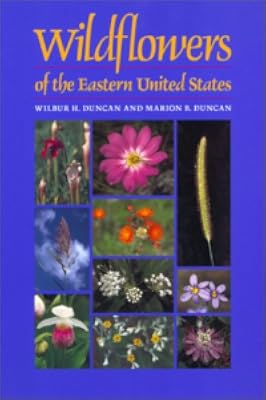
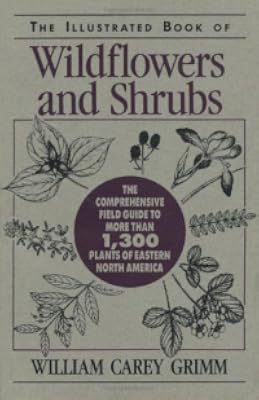
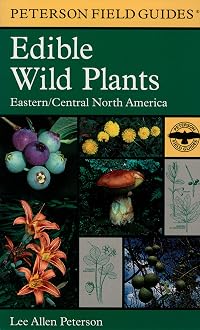


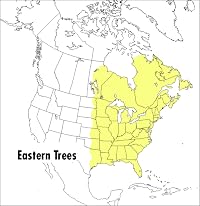









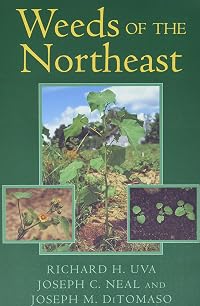
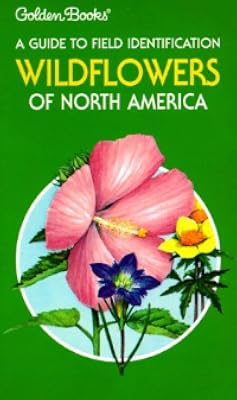


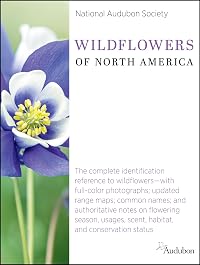

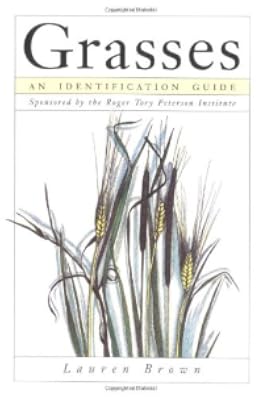
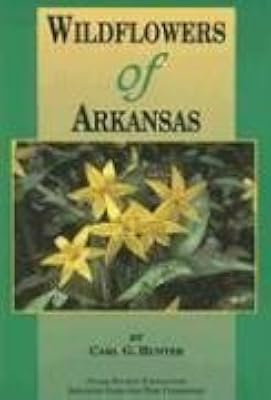


Member Recommendations
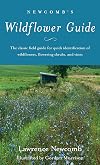
Sandydog1 Much more detailed and based on dichotomous keys, not color groupings.
Member Reviews
This was a Christmas gift to me from an uncle who found it last year, mint-quality, in a remaindered bookstore, whence it had apparently come from sitting in a warehouse somewhere for forty-three years. I understand the newer editions are somewhat different. My edition, however, is organized a lot like the Audubon one, by color and then shape of flower. However, it has the text on the same pages as the pictures, which means less text, and no taxonomic section, (which are bad) but does mean you don't have to stand out in the rain trying to cross-reference tissue-thin pages. Rather than photos, it has mostly black-and-white drawings with occasional color plates; this makes it a lot less pretty than the Audubon guides, but I actually find show more it more useful. The drawings let it emphasize all the important things about the plant, and make it all absolutely clear, in a way that photographs just can't. (I believe the newer Peterson's have switched to photos, which is a shame, but probably sells better.) While I haven't had it long enough to use it in the field much, it does seem to have more different plants in it than the Audubon, too, and more of the less-showy ones. However, the way the drawings are organized, with six to ten B&W line drawings on a page, some ovelapping, makes it difficult to thumb through. I think this will be mostly used at home, as a way of cross-checking with other books. show less
A good guide, but if you are serious and only need one field guide, own Newcomb's.
All the flowers you're most likely to encounter in the eastern and north-central US, westward to the Dakotas and southward to North Carolina and Arkansas, as well as the adjacent parts of Canada. Flowers arranged by color and plant characteristics. Includes 1,293 species in 84 families, all described and illustrated. An excellent and very useful field guide, although I would have liked more colored illustrations.
the best I've found.
Ratings
Members
- Recently Added By
Author Information

182+ Works 15,999 Members
Roger Tory Peterson, one of the world's greatest naturalists, received every major award for ornithology, natural science, and conservation, as well as numerous honorary degrees, medals, and citations, including the Presidential Medal of Freedom. The Peterson Identification System has been called the greatest invention since binoculars.
12+ Works 1,670 Members
Some Editions
Series
Belongs to Publisher Series
Work Relationships
Has as a study
Common Knowledge
- Canonical title
- A Field Guide to Wildflowers of Northeastern and North-central North America
- Original title
- Northeastern Wildflowers
- Original publication date
- 1968
- Important places
- North America
- First words
- Introduction: Twenty years ago Margaret McKenny and I first discussed this book.
- Last words
- (Click to show. Warning: May contain spoilers.)Very fragrant; odor of violets. 2-4 in. Pine woods. W. Virginia, Maryland south.
Classifications
- Genres
- Reference, Science & Nature, Nonfiction, Home & Garden, General Nonfiction
- DDC/MDS
- 582.13 — Natural sciences & mathematics Plants (Botany) Plants noted for specific vegetative characteristics and flowers Herbaceous and woody plants, plants noted for their flowers Flowering plants
- LCC
- QK118 .P5 — Science Botany Botany General
- BISAC
Statistics
- Members
- 1,387
- Popularity
- 17,083
- Reviews
- 5
- Rating
- (3.91)
- Languages
- English, German
- Media
- Paper
- ISBNs
- 4
- UPCs
- 2
- ASINs
- 21
