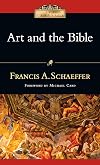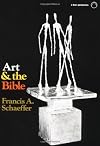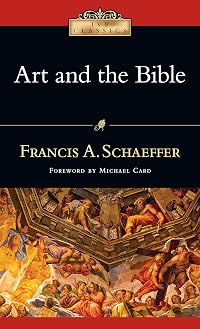
Art and the Bible (IVP Classics)
by Francis A. Schaeffer
On This Page
Description
The lordship of Christ should include an interest in the arts,' writes Francis Schaeffer. 'A Christian should use these arts to the glory of God, not just as tracts, mind you, but as things of beauty to the praise of God.' Many Christians, wary of creating graven images, have steered clear of artistic creativity. But the Bible offers a robust affirmation of the arts. The human impulse to create reflects our being created in the image of a creator God. Art and the Bible has been a show more foundational work for generations of Christians in the arts. In this book's classic essays, Francis Schaeffer first examines the scriptural record of the use of various art forms, and then establishes a Christian perspective on art. With clarity and vigor, Schaeffer explains why 'the Christian is the one whose imagination should fly beyond the stars.'. show lessTags
Recommendations






















Member Recommendations

Member Reviews
If you're used to only reading Schaeffer for his apologetics, you are missing out on one of his biggest contributions to Christendom - the encouragement for Christians to make Jesus Christ Lord of all - that also includes in the culture and the arts.
During Schaeffer's day, he was the one answering any question thrown at Christianity. He was going to the youth and college students (and they were coming to him). He was an adopter of indie documentaries like "How Should We Then Live?" He would have fit right at home in the online video space. And this book is a prime example of Schaeffer writing succinctly and proficiently.
After stating his premise that Christians are to be great artists for the glory of God, Schaeffer splits the book into show more two parts to make his case. The first part is a look back into the Scriptures to show all the ways art has played a part in the carrying out of God's plan of salvation. It's easy to say that he stays here a bit too long but to not draw on the examples he gives would do a disservice of the purpose of his whole book and premises. Schaeffer points to God being a Creator and us being His image bearers, we can engage in non-idol making art. Art that is not just paintings but architecture, jewlrey, painting, etc. are given. A stellar point of how even the Song of Solomon points Christians to being good romantics and engaging in good sex should not be undersold. All points are reflections back to the main Souce of our Creator.
The second part of the book is what most of us are use to today - the call to action. Schaeffer has grounded his call in Scripture and so the motivation in how should we now live becomes one of inspiration and details. Schaeffer doesn't only talk about being good artists but also being good intakers of art. Things like technical abilities should be displayed and those same abilities should be appreciated for it. Of course, Schaeffer has to talk about the worldview being reflected in the art. Amazing points all around for this for those who read Schaeffer for his presuppositional apologetics. Other points worth highlighting is that not all good, Christian art has to be "religious" art. The art can still be Christian art without putting a baby Jesus in it or footprints in the sand. An interesting cultural aspect that Schaeffer discusses is one of how one's culture and society should be seen in the art. The music or the sculpture from Japan is going to be recognized as such because the style and technical aspect that makes the music or sculpture from the UK different. Schaeffer makes some interesting points that are being discussed and debated today.
One aspect that I would have liked to have read more on was Schaeffer's take on objective beauty. Beauty is discussed here but I feel like Schaeffer would be able to express a positive case for objective beauty in about six pages (an inflation rate of 120 pages by today's authors).
This is a book to pick up and discuss with others. Jesus Christ is Lord of all - even the arts. Christians should have no excuses for making bad art. Final Grade - A- show less
During Schaeffer's day, he was the one answering any question thrown at Christianity. He was going to the youth and college students (and they were coming to him). He was an adopter of indie documentaries like "How Should We Then Live?" He would have fit right at home in the online video space. And this book is a prime example of Schaeffer writing succinctly and proficiently.
After stating his premise that Christians are to be great artists for the glory of God, Schaeffer splits the book into show more two parts to make his case. The first part is a look back into the Scriptures to show all the ways art has played a part in the carrying out of God's plan of salvation. It's easy to say that he stays here a bit too long but to not draw on the examples he gives would do a disservice of the purpose of his whole book and premises. Schaeffer points to God being a Creator and us being His image bearers, we can engage in non-idol making art. Art that is not just paintings but architecture, jewlrey, painting, etc. are given. A stellar point of how even the Song of Solomon points Christians to being good romantics and engaging in good sex should not be undersold. All points are reflections back to the main Souce of our Creator.
The second part of the book is what most of us are use to today - the call to action. Schaeffer has grounded his call in Scripture and so the motivation in how should we now live becomes one of inspiration and details. Schaeffer doesn't only talk about being good artists but also being good intakers of art. Things like technical abilities should be displayed and those same abilities should be appreciated for it. Of course, Schaeffer has to talk about the worldview being reflected in the art. Amazing points all around for this for those who read Schaeffer for his presuppositional apologetics. Other points worth highlighting is that not all good, Christian art has to be "religious" art. The art can still be Christian art without putting a baby Jesus in it or footprints in the sand. An interesting cultural aspect that Schaeffer discusses is one of how one's culture and society should be seen in the art. The music or the sculpture from Japan is going to be recognized as such because the style and technical aspect that makes the music or sculpture from the UK different. Schaeffer makes some interesting points that are being discussed and debated today.
One aspect that I would have liked to have read more on was Schaeffer's take on objective beauty. Beauty is discussed here but I feel like Schaeffer would be able to express a positive case for objective beauty in about six pages (an inflation rate of 120 pages by today's authors).
This is a book to pick up and discuss with others. Jesus Christ is Lord of all - even the arts. Christians should have no excuses for making bad art. Final Grade - A- show less
Art in the Bible - 4.5/5
Some Perspectives on Art - 3.5/5
A small and very short book made up of two essays. The first is no less impactful for its brevity and Schaeffer makes a very strong case for art and the artist within the Christian sphere (essentially debunking the extreme line of thinking that stems from "Thou shalt not make unto thee any graven image"). This portion is very readable, very clearly laid out, and draws from the well of scripture for conclusions.
The second essay deals with a number of facets of art and how a Christian should view it, appreciate it, and outwork their own artistry appropriately. This is less of a bible study and more of a brief but detailed presentation of Schaeffer's view on the arts in the context show more of the Christian walk. In that sense, the first essay can be seen as the biblical foundation upon which the second essay is built. Schaeffer goes into a commendable amount of detail in a small number of pages, but aspects are perhaps over-simplified on occasion. I'm not sure if I'm on board with everything he puts forth, but very broadly speaking you can boil it down to: "...whether you eat or drink or whatever you do, do it all for the glory of God." (1 Cor. 10:31) show less
Some Perspectives on Art - 3.5/5
A small and very short book made up of two essays. The first is no less impactful for its brevity and Schaeffer makes a very strong case for art and the artist within the Christian sphere (essentially debunking the extreme line of thinking that stems from "Thou shalt not make unto thee any graven image"). This portion is very readable, very clearly laid out, and draws from the well of scripture for conclusions.
The second essay deals with a number of facets of art and how a Christian should view it, appreciate it, and outwork their own artistry appropriately. This is less of a bible study and more of a brief but detailed presentation of Schaeffer's view on the arts in the context show more of the Christian walk. In that sense, the first essay can be seen as the biblical foundation upon which the second essay is built. Schaeffer goes into a commendable amount of detail in a small number of pages, but aspects are perhaps over-simplified on occasion. I'm not sure if I'm on board with everything he puts forth, but very broadly speaking you can boil it down to: "...whether you eat or drink or whatever you do, do it all for the glory of God." (1 Cor. 10:31) show less
In this short volume (94 pages) Schaeffer takes you on a journey through both the old and new testaments to show you that God really does like art and that the cases if which art is destroyed are due to people worshipping the art.
When humans are being creative they’re doing something that God does, God is the creator of all things and can create out of nothing, Schaeffer argues, but man still creates, he just uses existing things and tweaks them.
Schaeffer also takes us through the idea of representing your worldview in your art and tells us that everybody does it, whether they’re conscious of it or not. Art has a message and that message will stem from how that person views the world.
I think I got more of out this particular show more volume after my second reading, so I encourage and recommend that you read this book more than once. show less
When humans are being creative they’re doing something that God does, God is the creator of all things and can create out of nothing, Schaeffer argues, but man still creates, he just uses existing things and tweaks them.
Schaeffer also takes us through the idea of representing your worldview in your art and tells us that everybody does it, whether they’re conscious of it or not. Art has a message and that message will stem from how that person views the world.
I think I got more of out this particular show more volume after my second reading, so I encourage and recommend that you read this book more than once. show less
Short and sweet and to the point, but very good. Schaeffer's vision was on-target, by and large, though he got a little hung up at times on conveying propositional truth through art. Thus, his rejection of art-as-tract is right, but as a cultural project his vision failed at least in part because it wasn't truly coherent in his own writing here. Still, this should be on the required reading shelf for any would-be Christian artist.
Should Christians focus only on religious art? The art of poetry can be found in the Bible, particularly in the book of Psalms. But what about the more visual and tangible arts; for instance, sculpture. This 63 page booklet discusses the art of graven images, the temple, the tabernacle. There are discussions on standards of judgement, changing styles, modern art forms and the Christian message and world view. So much to consider in this tiny book, Art and the Bible by Francis A. Schaeffer.
2.5 stars. An exploration of the role of art in the Christian life. Some interesting thoughts. I got a little stuck on the parts where I am supposed to be judging others' worldview. Schaeffer seems to have too strict of rules as far as what kind of art people "should" be producing when he talks about how artist shouldn't try to make art that isn't consistent with the time and place in which they live. This was a bit too "high-brow" to use as a listening companion for housecleaning!
Much modern art, like a Giacometti sculpture, portrays man in alienation, loneliness, despair. Was art always like this? Must it always focus on the lost-ness of man? Dr. Francis A. Schaeffer, a theologian with a deep interest in the arts, shows how the Bible records the use of various art forms in the Old Testament times. Then, turning to the contemporary scene, he suggests eleven perspectives within which a Christian view of art can take shape. For the Christian the arts can be a source of joy, a symbol of the creativity that marks the mannishness of man, man himself being made in the image of God the creator.
Members
- Recently Added By
Lists

Sonlight Books
1,487 works; 25 members
Author Information

178+ Works 29,686 Members
Francis A. Schaeffer authored more than twenty books on theology, philosophy, art, and culture, selling millions worldwide. He and his wife, Edith, founded L'Abri Fellowship (international study and discipleship centers). Schaeffer passed away in 1984, but his influence and legacy continue to this day.
Series
Belongs to Publisher Series
Work Relationships
Common Knowledge
- Canonical title*
- Kunst und die Bibel: Zwei Essays
- Original title
- Art and the Bible: Two Essays
*Some information comes from Common Knowledge in other languages. Click "Edit" for more information.
Classifications
Statistics
- Members
- 944
- Popularity
- 28,329
- Reviews
- 13
- Rating
- (4.09)
- Languages
- English, German, Spanish
- Media
- Paper, Audiobook, Ebook
- ISBNs
- 9
- ASINs
- 7