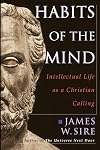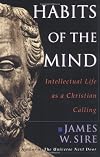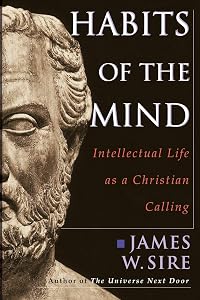
Habits of the Mind: Intellectual Life as a Christian Calling
by James W. Sire
On This Page
Description
What is an intellectual? How can you learn to think well? What does it mean to love God with your mind? Can the intellectual life be a legitimate Christian calling? Is the intellectual life your calling? James Sire brings wit and wisdom to bear on these questions and their possible answers. And he offers an unusual "insider's view" of learning how to think well for the glory of God and for the sake of his kingdom. In Habits of the Mind, Sire challenges you to avoid one of the greatest show more pitfalls of intellectual life by resisting the temptation to separate being from knowing. He shows you how to cultivate intellectual virtues and disciplines - habits of mind - that will strengthen you in pursuit of your calling. And he offers assurance that intellectual life can be a true calling for Christians: because Jesus was the smartest man who ever lived, Sire argues, you can and should accept the challenge to think as well as you are able. show lessTags
Recommendations










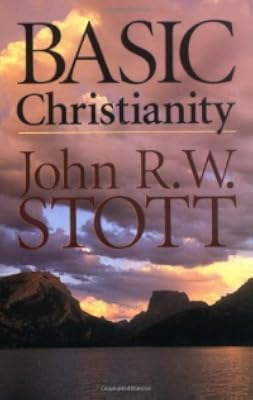
Member Recommendations
Member Reviews
I did not get very much out of this book except endnote references to other books, several of which I put in my Goodreads "interested" list. The reason comes down to my personal prejudice against the word "intellectual" and its connotations. Having developed and hardened in me over twenty-six years, it's much too strong and ingrained a prejudice for this book’s message to penetrate.
It is gratifying to me that early on, author James Sire speaks of British historian Paul Johnson and his skeptical view of intellectuals, in Johnson’s book of that title. Intellectuals happens to be the "foundational text" in the formation of my attitude; I read it twenty-six years ago. Consequently, for better or worse, I am so entrenched in my negative show more view of soi-disant intellectuals that trying to earnestly extol the virtues of being such an intellectual—the theme of this book--still leaves me very uncomfortable even if it's within the Christian worldview. Essentially, Johnson made the very word "intellectual" repellent to me: a word that is too weighted down by negative connotations of ungodly ideas from secular thinkers. That's the only relevant word I'm comfortable with--thinker. More comfortably generic.
In this book, I came across a passage noting that Christians have said "Jesus is the smartest man who ever lived." Pointing out the obvious, that Jesus is the wisest man who ever lived, would be good and true; but calling Him "smart" doesn't sound right, for forcing one to confront the superficiality of the word "smart." Have I not thought at length that "smart" doesn't always mean what most people think it means? “Smart” is often used to mean not “intelligent” but “fashionable” for all intents and purposes (e.g., "you're dressed smartly today"); and even if it’s being used to mean intelligent, still--what is "intelligence" anyway? That’s too complex to easily define. Wisdom is more easily identified and described. Jesus said wisdom is justified by her deeds (ESV); but...intelligence is? Not really.
Because of that, I don't respect the concept of the soi-disant intellectual, and would feel self-conscious (if not outright embarrassed) ascribing the word to myself or being known by the word. Why would that be necessary to a life frequent and habitual thought? Don't build a self-image (or, god forbid, a public image) upon constantly thinking. Just shut up and do it.
What makes me worry about Sire (notwithstanding that he's passed on) is this. Sire candidly admits that when young, he told his future wife that he wanted to be an intellectual [obviously meaning a public intellectual]; and the lady, with equal candor, called him a snob for that. He's admitting that as a young man, he was seemingly full of vanity. I feel uncertain whether life and God sufficiently purged him of such vanity before he wrote this book. Just because he's writing this in the first place--talking about how wonderful it is to be an intellectual, within his worldview--I worry.
I wonder whether Sire, in the years after he declared his desire to be an intellectual, ever went through what I went through back when I felt more like Sire as a young man. From early adolescence (probably even earlier) all the way to my mid-twenties, I thought I was terribly smart (yes, I would use that word) and, worse, that being smart was important. I call it "my I'm-so-smart phase." (In fact, that was why I read Paul Johnson's Intellectuals at age 20 in the first place. I came across it unexpectedly at the library, and I mistakenly thought it was a book about how great I was for being "smart"; essentially, I thought I was getting what James Sire's book here offers. I had no idea I would instead learn from Johnson that many prominent intellectuals have been horribly bad people.) Anyway, what God did to break me of it was simple. At age 24, I was in a certain 300-level American history course. The prof announced the top scores after each exam. I always made an A, but my A was never one of the top scores; and I was so upset at this that I never again felt the same overconfidence in my intellect. Better still, I ceased believing that being "smart" is particularly important.
I don't disagree with doing what Sire celebrates here--thinking. To be anti-intellectual would be absurd. I just don't care to talk about it or draw attention to it. I'd rather just do it. To dislike intellectuals is just not the same as not liking to think. It really helps to note that "think" is more significant as a verb than its noun form, "thought." show less
It is gratifying to me that early on, author James Sire speaks of British historian Paul Johnson and his skeptical view of intellectuals, in Johnson’s book of that title. Intellectuals happens to be the "foundational text" in the formation of my attitude; I read it twenty-six years ago. Consequently, for better or worse, I am so entrenched in my negative show more view of soi-disant intellectuals that trying to earnestly extol the virtues of being such an intellectual—the theme of this book--still leaves me very uncomfortable even if it's within the Christian worldview. Essentially, Johnson made the very word "intellectual" repellent to me: a word that is too weighted down by negative connotations of ungodly ideas from secular thinkers. That's the only relevant word I'm comfortable with--thinker. More comfortably generic.
In this book, I came across a passage noting that Christians have said "Jesus is the smartest man who ever lived." Pointing out the obvious, that Jesus is the wisest man who ever lived, would be good and true; but calling Him "smart" doesn't sound right, for forcing one to confront the superficiality of the word "smart." Have I not thought at length that "smart" doesn't always mean what most people think it means? “Smart” is often used to mean not “intelligent” but “fashionable” for all intents and purposes (e.g., "you're dressed smartly today"); and even if it’s being used to mean intelligent, still--what is "intelligence" anyway? That’s too complex to easily define. Wisdom is more easily identified and described. Jesus said wisdom is justified by her deeds (ESV); but...intelligence is? Not really.
Because of that, I don't respect the concept of the soi-disant intellectual, and would feel self-conscious (if not outright embarrassed) ascribing the word to myself or being known by the word. Why would that be necessary to a life frequent and habitual thought? Don't build a self-image (or, god forbid, a public image) upon constantly thinking. Just shut up and do it.
What makes me worry about Sire (notwithstanding that he's passed on) is this. Sire candidly admits that when young, he told his future wife that he wanted to be an intellectual [obviously meaning a public intellectual]; and the lady, with equal candor, called him a snob for that. He's admitting that as a young man, he was seemingly full of vanity. I feel uncertain whether life and God sufficiently purged him of such vanity before he wrote this book. Just because he's writing this in the first place--talking about how wonderful it is to be an intellectual, within his worldview--I worry.
I wonder whether Sire, in the years after he declared his desire to be an intellectual, ever went through what I went through back when I felt more like Sire as a young man. From early adolescence (probably even earlier) all the way to my mid-twenties, I thought I was terribly smart (yes, I would use that word) and, worse, that being smart was important. I call it "my I'm-so-smart phase." (In fact, that was why I read Paul Johnson's Intellectuals at age 20 in the first place. I came across it unexpectedly at the library, and I mistakenly thought it was a book about how great I was for being "smart"; essentially, I thought I was getting what James Sire's book here offers. I had no idea I would instead learn from Johnson that many prominent intellectuals have been horribly bad people.) Anyway, what God did to break me of it was simple. At age 24, I was in a certain 300-level American history course. The prof announced the top scores after each exam. I always made an A, but my A was never one of the top scores; and I was so upset at this that I never again felt the same overconfidence in my intellect. Better still, I ceased believing that being "smart" is particularly important.
I don't disagree with doing what Sire celebrates here--thinking. To be anti-intellectual would be absurd. I just don't care to talk about it or draw attention to it. I'd rather just do it. To dislike intellectuals is just not the same as not liking to think. It really helps to note that "think" is more significant as a verb than its noun form, "thought." show less
There is some useful stuff in here, and it's very personable. I wouldn't call it earth-shattering, but it's a good read in the genre.
There is some useful stuff in here, and it's very personable. I wouldn't call it earth-shattering, but it's a good read in the genre.
There is some useful stuff in here, and it's very personable. I wouldn't call it earth-shattering, but it's a good read in the genre.
Not easy reading. Has some good stuff about being a Christian and an intellectual.
Ratings
Members
- Recently Added By
Author Information

34+ Works 7,817 Members
James W. Sire (1933-2018) was a widely respected apologist, author and lecturer who served for more than thirty years as senior editor at InterVarsity Press. He is the author of over twenty books, including the seminal apologetics title The Universe Next Door, plus Apologetics Beyond Reason and Discipleship of the Mind.
Awards and Honors
Common Knowledge
- Canonical title
- Habits of the Mind: Intellectual Life as a Christian Calling
Classifications
Statistics
- Members
- 735
- Popularity
- 38,439
- Reviews
- 5
- Rating
- (3.84)
- Languages
- Dutch, English, Portuguese (Portugal)
- Media
- Paper, Audiobook, Ebook
- ISBNs
- 8
- ASINs
- 2