On This Page
Description
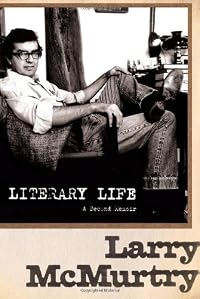
McMurtry has delighted generations with his witty and elegant prose. In "Literary Life, " the sequel to "Books, " McMurtry expounds on life on the private side: the trials and triumphs of being a writer.Tags
Recommendations
Member Reviews
Larry McMurtry continues his autobiography in the syle of Books.
I think of it as an autobiography told in bullet points. No great secrets revealed, no long discussions or introspectives. In this book a literary person drops short (usually) comments about the literary scene as he's known it. The strongest parts of the book are his comments about other writers, particularly those he thinks are good. I picked up several suggestions for new (to me) authors. I enjoyed reading it but a reader expecting a traditional autobiography will be dissapointed.
I think of it as an autobiography told in bullet points. No great secrets revealed, no long discussions or introspectives. In this book a literary person drops short (usually) comments about the literary scene as he's known it. The strongest parts of the book are his comments about other writers, particularly those he thinks are good. I picked up several suggestions for new (to me) authors. I enjoyed reading it but a reader expecting a traditional autobiography will be dissapointed.
I enjoyed McMurtry's book but I thought it contained more name-dropping than information on books. The author related many tidbits of moments during his life in which he met with various writers. He talks about the different personalities and the assorted experiences with each of them. He doesn't say much about their writing though. I didn't feel that he shared much information about his own writing, on where it was going or where it had been. The book seemed to be more of a gossipy magazine while still maintaining some dignity by referring to writers of some magnitude. Since it was a quick read I would suggest it for those who have read the first part of the memoir entitled "Books" if only for the continuity. I expected a bit more wit show more from McMurtry as his recent books are filled with comic characters and situations, which I find to be the draw for me. show less
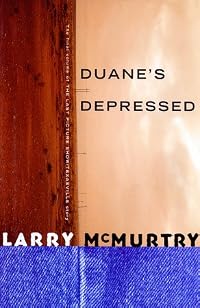
I scaanned some of the other reviews and people seem to be greatly disappointed in this because of its "unfocused" quality. I enjoyed the sort of meandering style, as if you were just sitting on the porch listening to him tell stories. I don't turn to McMurty for "focus" in any case. His books meander, and I sort of wait for them to latch onto a plot, and then I realize the meandering is the book and much more life-like in that sense. I liked hearing about his friendship with Susan Sontag (talk about an odd couple!) and his own favorite novel ("Duane's Depressed;" I liked this one a lot, too). An entertaining excursion, no literary masterpiece, perfect to listen to in the car...
Typically love to read about writer's lives -- one of my favorite genres whether memoir or fiction, but McMurtry let me down. This read like a dry goodreads account: mostly name-dropping in the literary world with a brief account of how he met them or why. Did I mention dry? Like a sentence or two at best. MIT thinking combined with lit talk. A rare book collector would probably gobble it up like popcorn though, because he treats rare books with as much euphoria as he does Kurt Vonnegut. This is a writer who really knows writers, how to class them and the books they produced. A true bibliophile that makes me pale in comparison. I did perk up when he used J.K. Rowling in one sentence. So maybe my biggest let-down was the era he focused on.
I enjoyed this second volume of McMurtry's memoirs a great deal, as I enjoyed the previous volume about bookselling. It's a short book, not to say breezy, book, with lots of stories about writers he's known (with some worthwhile mentions of little-known authors) and how he came to write many of his books. Short on the deep introspection, perhaps, you really do, though, come to feel you know McMurtry well through these books. If you've followed his fiction at al, you'll enjoy the books.
Unfocused and meandering 2nd volume of memoirs; I'd recommend BOOKS to bibliophiles but not this one for writers. Barely touches on his writing process or what works for him as a writer. Far more about what went on around his writing books (and far more about the politics of PEN than anyone outside of NYC might care about). Not bad, and I did finish, but disappointing on the whole.
Larry McMurtry claims he likes to write in series, and this is book two of his memoirs. McMurtry name drops, discusses favorite books and writers, talks about his own process and works, and gives history about his writing life. The reading is as easy and satisfying as Lonesome Dove (find out how he got the name), and his plain Texas writing style comes through. Neither self-effacing nor self-promoting, this short memoir is a must for anyone who enjoys this author.
Members
- Recently Added By
Lists

Non-Fiction Worth Reading
1,015 works; 255 members
Author Information

96+ Works 43,154 Members
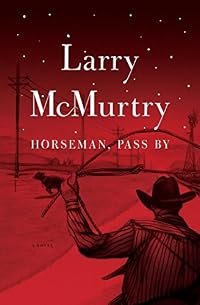
Larry McMurtry, winner of the Pulitzer Prize for Fiction, among other awards, is the author of twenty-four novels, two collections of essays, two memoirs, more than thirty screenplays, & an anthology of modern Western fiction. He lives in Archer City, Texas. (Publisher Provided) Novelist Larry McMurtry was born June 3, 1936 in Wichita Falls, show more Texas. He received a B.A. from North Texas State University in 1958, an M.A. from Rice University in 1960, and attended Stanford University. He married Josephine Ballard in 1959, divorced in 1966, and had one son, folksinger James McMurtry. Until the age of 22, McMurtry worked on his father's cattle ranch. When he was 25, he published his first novel, "Horseman, Pass By" (1961), which was turned into the Academy Award-winning movie Hud in 1962. "The Last Picture Show" (1966) was made into a screenplay with Peter Bogdanovich, and the 1971 movie was nominated for eight Oscars, including one for best screenplay adaptation. "Terms of Endearment" (1975) received little attention until the movie version won five Oscars, including Best Picture, in 1983. McMurtry's novel "Lonesome Dove" (1985) won the Pulitzer Prize in 1986 and the Spur Award and was followed by two popular TV miniseries. The other titles in the Lonesome Dove Series are "Streets of Laredo" (1993), "Dead Man's Walk" (1995), and "Comanche Moon" (1997). The other books in his Last Picture Show Trilogy are "Texasville" (1987) and "Duane's Depressed" (1999). McMurtry suffered a heart attack in 1991 and had quadruple-bypass surgery. Following that, he suffered from severe depression and it was during this time he wrote "Streets of Laredo," a dark sequel to "Lonesome Dove." His companion Diana Ossana, helping to pull him out of his depression, collaborated with him on "Pretty Boy Floyd" (1994) and "Zeke and Ned" (1997). He co-won the Best Screenplay Golden Globe and the Academy Award for Best Adapted Screenplay for Brokeback Mountain in 2006. He made The New York Times Best Seller List with his title's Custer and The Last Kind Words Saloon. McMurtry is considered one of the country's leading antiquarian book dealers. (Bowker Author Biography) show less
Series

Common Knowledge
- Original publication date
- 2009-12-08
Classifications
Statistics
- Members
- 224
- Popularity
- 144,958
- Reviews
- 9
- Rating
- (3.49)
- Languages
- English
- Media
- Paper, Audiobook, Ebook
- ISBNs
- 6
- ASINs
- 3