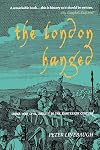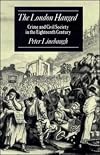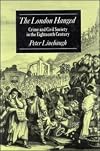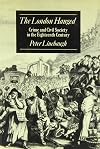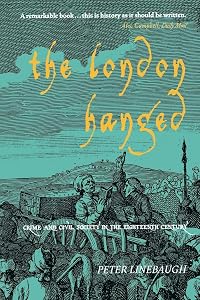
The London Hanged
by Peter Linebaugh
On This Page
Description
In a time characterized by increasing attempts of propertied classes to criminalize the customary rights of the working classes, the gallows at Tyburn became the dramatic focus of a struggle between the rich & the poor within a century of unparalleled growth in trade & commerce.Tags
Recommendations









Member Reviews
Peter Linebaugh's "The London Hanged" is an exceedingly well-done overview of the relation between proletarian crime and capital accumulation in the London boroughs of the 18th Century. Together with Marcus Rediker, Linebaugh is the primary Marxist historian of crime, political economy and civil society in this period, and his extensive research pays off - "The London Hanged" is, as the (Daily Mail!) review on the cover says, history as it should be written.
Linebaugh makes much use of the records of the hanged at Tyburn, as well as popular folk-tales about gangs, escaped convicts and trade records to build a clear picture of a London where extreme poverty and extreme violence, the latter from both the wealthy leaders of state and the show more urban poor, went together to enable the accumulation of capital. This sinister process of hangings for stealing a few shilling on one hand and corruption, slave trade and press gangs on the other hand is well described by Linebaugh in such terms as "Tyburnography" (after Tyburn where hangings were carried out) and "Thanatocracy".
The style of discussion of the subject is best described as narrative. Peter Linebaugh examines various aspects of the London life of those times in the successive chapters, blending anecdotes, statistics and jargon from those days into a powerful whole that leaves one with the impression of having been in London in those days as an investigative journalist. What additionally makes the research of this work so outstanding is the masterful way in which Linebaugh is able to use many different sorts of sources, from anonymous political pamphlets to the works of John Locke, showing the place of each in the ideology of the time and its relation to the underlying socio-economic developments. In this way he shows that historical materialism need not be a regurgitation of vague Marxist jargon, but is the most powerful tool for historical analysis of a whole society we have.
From corn manipulations to Levellers, from plantation lords to famous highwaymen, from black gang leaders to the Black Act, hogsheads and tobacco theft - this book reads as an adventure story and critique of political economy in one. The only possible downsides are the rather high degree of repetition inherent in the anecdotal nature of the work, and Linebaugh's tendency to pretentious terminology. Still, much recommended for anyone with historical interest. show less
Linebaugh makes much use of the records of the hanged at Tyburn, as well as popular folk-tales about gangs, escaped convicts and trade records to build a clear picture of a London where extreme poverty and extreme violence, the latter from both the wealthy leaders of state and the show more urban poor, went together to enable the accumulation of capital. This sinister process of hangings for stealing a few shilling on one hand and corruption, slave trade and press gangs on the other hand is well described by Linebaugh in such terms as "Tyburnography" (after Tyburn where hangings were carried out) and "Thanatocracy".
The style of discussion of the subject is best described as narrative. Peter Linebaugh examines various aspects of the London life of those times in the successive chapters, blending anecdotes, statistics and jargon from those days into a powerful whole that leaves one with the impression of having been in London in those days as an investigative journalist. What additionally makes the research of this work so outstanding is the masterful way in which Linebaugh is able to use many different sorts of sources, from anonymous political pamphlets to the works of John Locke, showing the place of each in the ideology of the time and its relation to the underlying socio-economic developments. In this way he shows that historical materialism need not be a regurgitation of vague Marxist jargon, but is the most powerful tool for historical analysis of a whole society we have.
From corn manipulations to Levellers, from plantation lords to famous highwaymen, from black gang leaders to the Black Act, hogsheads and tobacco theft - this book reads as an adventure story and critique of political economy in one. The only possible downsides are the rather high degree of repetition inherent in the anecdotal nature of the work, and Linebaugh's tendency to pretentious terminology. Still, much recommended for anyone with historical interest. show less
18th century - why was there so much hanging, the way the courts worked, individual cases including, of course, jack sheppard. I read it in one go - a long trawl, but worth it. My dad, however, is "dipping in", so either seems to be a rewarding read. Uncovers/elucidates social injustice and manipulation of the law - so what's new?!
Fascinating recording of individuals hanged in London. In most cases, there was no appeal; the sentence was pronounced and the individual was taken to Tyburn.
Just about anyone, convicted and taken out immediately and hanged.
Ratings
Members
- Recently Added By
Lists

Non-Fiction Worth Reading
1,015 works; 261 members

Review 1
30 works; 1 member
Author Information

15+ Works 1,316 Members
Peter Linebaugh is a child of empire, schooled in London; Cattaraugus, NY; Washington, DC; Bonn; and Karachi. He went to Swarthmore College during the civil rights days. He has taught at Harvard University and Attica Penitentiary, at New York University and the Federal Penitentiary in Marion, Illinois. He used to edit Zerowork and was a member of show more the Midnight Notes Collective. He coauthored Albion's Fatal Tree and The Many-Headed Hydra and is the author of The London Hanged, The Magna Carta Manifesto, Stop, Thief!, and introductions to Verso's selection of Thomas Paine's writings and PM's edition of E.R Thompson's William Morris: Romantic to Revolutionary. He lives in the region of the Great Lakes. The final essay in this new collection constituted his retirement speech from the University of Toledo in Ohio. show less
Awards and Honors
Common Knowledge
- Canonical title
- The London Hanged
- Original publication date
- 1991
- Important places
- London, England, UK
Classifications
- Genres
- History, Nonfiction, General Nonfiction, Politics and Government
- DDC/MDS
- 364.942 — Society, government, & culture Social problems and social services Crime Biography And History Europe England & Wales
- LCC
- HV8699 .G8 .L55 — Social sciences Social pathology. Social and public welfare. Criminology Social pathology. Social and public welfare. Criminal justice administration Penology. Prisons. Corrections
- BISAC
Statistics
- Members
- 291
- Popularity
- 110,592
- Reviews
- 4
- Rating
- (4.24)
- Languages
- English, Turkish
- Media
- Paper, Ebook
- ISBNs
- 8
- ASINs
- 1