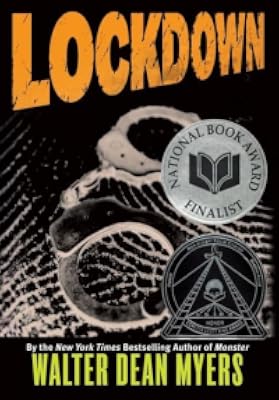
Lockdown
by Walter Dean Myers
On This Page
Description
Teenage Reese, serving time at a juvenile detention facility, gets a lesson in making it through hard times from an unlikely friend with a harrowing past.Tags
Recommendations





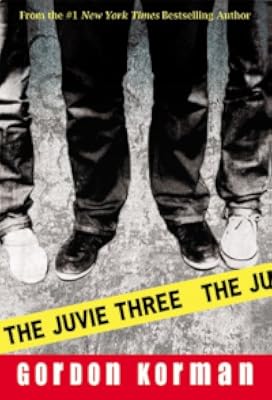
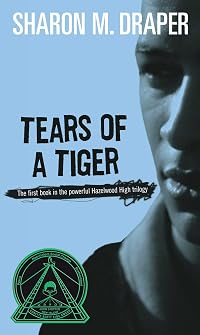


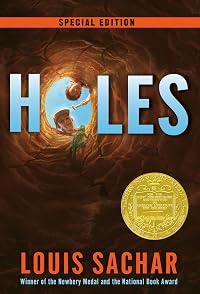

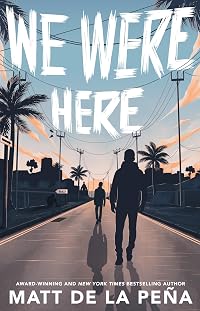















Member Recommendations
Member Reviews
Walter Dean Myers has written a new novel that will strongly appeal to teens who loved Monster. I don’t really have to say anything else, do I? You’re going to buy this book and put it in your libraries and share it with your teens. I know I can’t wait to do exactly that.Like Steve in Monster, Reese is a kid who made a mistake and is facing consequences that are much bigger than he ever anticipated. Now he’s finding out firsthand how one mistake can spiral into a lifetime of them. Reese is in a juvenile prison for stealing prescription pads from a doctor and selling them to a local drug dealer. He’s a good kid who was in a tough situation, trying to care for his younger brother and sister while also trying to keep any money he show more made out of his drug-addicted mother’s hands. And he has committed what he saw as a victimless crime – if all went well, the doctor might never even notice that the pads were missing.Reese is a pretty self-aware young man, and even considering his difficult family life he recognizes that it is ultimately his own choice that put him in his current situation. What he did not anticipate is the repercussions of ending up in a jail system that seems designed to drag inmates further down. And it’s not just the dimmed job prospects and difficulty of finishing high school after he gets out – so many decisions he must make every day do not have a good option. Should Reese ignore it when gang members brutally beat up a defenseless younger kid, or defend him? Reese cannot be passive in situations like these, and by trying to do the right thing he ends up making enemies of other prisoners while also getting himself labeled a troublemaker by guards and risking being sent to a more dangerous facility. Reese is quickly finding out the truth behind some of his dad’s words: “One time when my pops wasn’t being too stupid he said the streets were like quicksand covered with whip cream. You knew when they were slowing your ass down, but it always came as a surprise when you got sucked under” (pages 98-99).At least one person in the prison system recognizes some potential in Reese and presents him with an opportunity to keep from getting sucked under. When Reese is selected for a program that sends young, nonviolent prisoners into the workforce during the day, he makes a connection in the nursing home where he is assigned to work. Like Steve in Monster, Reese is starting to look at his life and experiences through a new lens – not through the literal lens that Steve used in his screenwriting and movie planning, but the lens of another person’s life experience. Reese and Mr. Hooft, a grumpy old man who at first pushes Reese away with racist comments and needling remarks about prison, are both surprised by the similarities they discover in their lives.And while Reese’s relationship with Mr. Hooft is illuminating, it is in his interactions with his younger sister Icy that he really shines. Even in the times that Reese is most hopeless about his own future, he is determined to protect and support his funny, precocious baby sister in achieving her goals. And we’re not talking about just any goals – we’re talking Princeton, following that up with the White House, and finally stopping war by giving everybody free food. This girl is going places – and her big brother is going to make sure of it. Reese’s life never feels hopeless as long as he sees the promise in this little girl who he loves so much.Walter Dean Myers’ ability to channel the voice of urban black teenagers is second to none, and it is this skill even more than his choice of subject matter that makes his novels appeal so strongly to urban teens. The really astonishing thing is that he doesn’t do it by using lots of slang or dialect, which would date the book quickly – it’s almost entirely in the rhythm of his writing, and it comes through both in the dialogue and in Reese’s narration. The reader can hear Reese’s voice, and it makes his story so much more immediate and compelling. And Reese’s voice and story are both worth hearing. show less
In this book we find the fictional, but all to realistic story of life for many young teenagers in Urban areas across the United States. The book takes the reader through the mind of Reese Anderson, a 15 year old boy, as he tries to survive and overcome being at a juvenile detention center. This book is excellent for talking about what it feels like when we have a loss of hope. How we control our emotions, and when we know what things to fight for and what things to let go. It creates a great opportunity to find what out what drives students to dream, as Reese's sister Icy is one who helped him to stay focused and dream.
Crabs in a bucket - that's Mr. Cintron's take on it. Any crab that tries to get out, the other crabs just clamp on and drag him back in until getting out seems like a futile prospect. For Reese, doing time in Progress, a juvenile detention center, the future doesn't seem particularly bright. In fact, if he can't learn to control his temper, Progress is only a gateway to a more serious locale upstate, and everything seems out to get him, from his fellow inmates to the patients at his work-release job. But maybe, just maybe if he can keep it together long enough....
Myers characters often offer a palatable window into an uncomfortable world most of us wouldn't want to visit, let along live in, and this book is no exception. From the show more uncomfortable group sessions run by social workers and counselors who have no real answers, to the suspicious looks and fear greeting Reese at Evergreen (itself a not particularly pleasant detention facility of a different sort), there's a definite lesson here. I was glad to see the realistic conclusion with plenty of room for thought and discussion - Reese may work his way out, but there's no guaranteed fairy tale happy ending, just like life. show less
Myers characters often offer a palatable window into an uncomfortable world most of us wouldn't want to visit, let along live in, and this book is no exception. From the show more uncomfortable group sessions run by social workers and counselors who have no real answers, to the suspicious looks and fear greeting Reese at Evergreen (itself a not particularly pleasant detention facility of a different sort), there's a definite lesson here. I was glad to see the realistic conclusion with plenty of room for thought and discussion - Reese may work his way out, but there's no guaranteed fairy tale happy ending, just like life. show less
Reese is a unique young man, that you grow to see as a troubled kid, and not as a violent criminal. His desire to change really becomes tied to his ability to change what he goes home to. If he is frustrated by his family's poverty and his failure at school, then his behavior is one that will match it; he will eventually turn to crime again to support his family and find his own value. As you read, the question definitely comes through from Myers of how we can help these kids change. What can we do, as a society, to eliminate the need these young, impoverished inner-city kids have for finding their sense of self through crime? Does our current system work, and what can we offer these young people once they get out of the juvenile show more corrections system?
I did think that Myers reached inside the system, and into this one young man's life in a very smart sort of way. We are privy to Reese's life, so that we see his pain over his family's circumstances (his brother also into criminal activity, and a younger sister that he fears for in the future), and also the stand up person that Reese would like to be as he stands up for other inmates who are too weak to protect themselves. You do really care for Reese, and want to see his success.
One thing that I really couldn't shake in the book though, was the behavior of the adults who worked in the facility. Many of the violent scenes within the facility occurred after prodding and neglect by those who were there to protect the inmates. In fact, several times these "adults" egged the students on with horrible, personal comments that were threatening, and obviously created plenty of increased stress on Reese and the other young men. To these situations, I disconnected a little. Having worked with young men who had recently been released from our state's juvenile corrections facility, I can say that I never encountered a single adult who deliberately maligned or neglected one of these students. My hope is that I'm not living and working in ideals, and that there really aren't places where the majority of the adults turn their backs on the youth they are working with. Really, I hope this is creative license, and not reality.
Now, I realize that I focused on a rather minute part of Reese's story, but I will say that it really picked away at me. For a character as eager for happiness as Reese was (and many of the other teens locked up), I wanted to see the adults supporting these changes. Overall, I think it is yet another really great book for teens, and that Walter Dean Myers leads the pack in creating novels that disillusioned teens and overachievers alike will embrace. Please note that my professional rant is an aside to a really great story that I would hand to a wide variety of my reluctant readers. I have to say that if you haven't yet read Walter Dean Myers, I would become familiar with him as soon as possible. Many of his books have entered the doors of my classroom, in the hands of my students. His work is prolific, and shows great care for today's youth and children. show less
I did think that Myers reached inside the system, and into this one young man's life in a very smart sort of way. We are privy to Reese's life, so that we see his pain over his family's circumstances (his brother also into criminal activity, and a younger sister that he fears for in the future), and also the stand up person that Reese would like to be as he stands up for other inmates who are too weak to protect themselves. You do really care for Reese, and want to see his success.
One thing that I really couldn't shake in the book though, was the behavior of the adults who worked in the facility. Many of the violent scenes within the facility occurred after prodding and neglect by those who were there to protect the inmates. In fact, several times these "adults" egged the students on with horrible, personal comments that were threatening, and obviously created plenty of increased stress on Reese and the other young men. To these situations, I disconnected a little. Having worked with young men who had recently been released from our state's juvenile corrections facility, I can say that I never encountered a single adult who deliberately maligned or neglected one of these students. My hope is that I'm not living and working in ideals, and that there really aren't places where the majority of the adults turn their backs on the youth they are working with. Really, I hope this is creative license, and not reality.
Now, I realize that I focused on a rather minute part of Reese's story, but I will say that it really picked away at me. For a character as eager for happiness as Reese was (and many of the other teens locked up), I wanted to see the adults supporting these changes. Overall, I think it is yet another really great book for teens, and that Walter Dean Myers leads the pack in creating novels that disillusioned teens and overachievers alike will embrace. Please note that my professional rant is an aside to a really great story that I would hand to a wide variety of my reluctant readers. I have to say that if you haven't yet read Walter Dean Myers, I would become familiar with him as soon as possible. Many of his books have entered the doors of my classroom, in the hands of my students. His work is prolific, and shows great care for today's youth and children. show less
Lockdown is Mr. Myers second recent look at the lives of young men behind bars in America. An alternative to Monster, Lockdown is the story of Reese, a fourteen-year-old sent to a special juvenile facility called Progress for stealing perscription pads from a doctor's office. Reese is not exactly a star inmate. He has problems with the other boys in Progress, typically because he comes to the defense of 'Toon, a smaller boy Reese befriends, who is bullied by the older, bigger inmates.
When he is not in trouble, Reese is allowed to work at a nearby senior home where he is given the job of helping Mr. Hooft, a bed-ridden old man who'd rather be anywhere other than a home waited on by a black teenager. Over time the two share their stories show more and become friends. Mr. Hooft was also in prison as a child, in his case a Japanese prison where all Europeans living in Shanghai were sent after the invasion of China during World War II.
Reese has few people in his life who are on his side. His mother is willing to sacrifice him in order to hang on to her current boyfriend The other inmates at Progress, outside of 'Toon, cannot be trusted. The gaurds are waiting for him to screw up and sure that he will. The warden believes Reese has blown every chance he gave him and does not have much faith in him as a result. Mr. Hooft and Reese's little sister Isis are the only ones who believe he can turn his life around.
Unfortunately, Reese's story is all too common in the United States today. To their credit, neither Reese nor Mr. Myers point the blame for Reese's situation at anyone other than Reese. While the deck is certainly stacked against him, Reese knows he must choose how he'll play the cards he has been dealt. Those of us who started life with a better hand would do well to remember that the family we are born into could easily have been one like Reese's. Would we be able to play our cards any better than he did? show less
When he is not in trouble, Reese is allowed to work at a nearby senior home where he is given the job of helping Mr. Hooft, a bed-ridden old man who'd rather be anywhere other than a home waited on by a black teenager. Over time the two share their stories show more and become friends. Mr. Hooft was also in prison as a child, in his case a Japanese prison where all Europeans living in Shanghai were sent after the invasion of China during World War II.
Reese has few people in his life who are on his side. His mother is willing to sacrifice him in order to hang on to her current boyfriend The other inmates at Progress, outside of 'Toon, cannot be trusted. The gaurds are waiting for him to screw up and sure that he will. The warden believes Reese has blown every chance he gave him and does not have much faith in him as a result. Mr. Hooft and Reese's little sister Isis are the only ones who believe he can turn his life around.
Unfortunately, Reese's story is all too common in the United States today. To their credit, neither Reese nor Mr. Myers point the blame for Reese's situation at anyone other than Reese. While the deck is certainly stacked against him, Reese knows he must choose how he'll play the cards he has been dealt. Those of us who started life with a better hand would do well to remember that the family we are born into could easily have been one like Reese's. Would we be able to play our cards any better than he did? show less
Reese is in a juvenile correction facility, “Progress”, for stealing blank prescription pads. Shortly before he is to be released, he is chosen to work in a nursing home as part of a pilot project reintroducing delinquents to society. Reese gets to know one of the elderly residents, Mr. Hooft, who is suspicious of black people and convinced Reese is a hardened criminal.
As if Mr. Hooft’s prejudice is not enough, Reese has to contend with unpleasant wardens and inmates at the progress center while struggling to keep his temper if he is to earn early discharge. Outside, life isn’t very promising either. Reese’s mother has a drug addiction, his sister Isis is young and vulnerable, and his brother Willis may be involved in local show more petty crime. Can Reese be a model prisoner and a good friend, son and sibling?
Meyers makes strong criticism of the effectiveness of the juvenile correction system the ulterior motives behind some parental actions and the divergent realities of different social and racial groups. His characters are believable and the story weaves some less well known historical information together with the social issues. show less
As if Mr. Hooft’s prejudice is not enough, Reese has to contend with unpleasant wardens and inmates at the progress center while struggling to keep his temper if he is to earn early discharge. Outside, life isn’t very promising either. Reese’s mother has a drug addiction, his sister Isis is young and vulnerable, and his brother Willis may be involved in local show more petty crime. Can Reese be a model prisoner and a good friend, son and sibling?
Meyers makes strong criticism of the effectiveness of the juvenile correction system the ulterior motives behind some parental actions and the divergent realities of different social and racial groups. His characters are believable and the story weaves some less well known historical information together with the social issues. show less
Reese is serving time in juvenile detention for stealing prescription pads from a pharmacist. He's there among youths of varying thuggery, from the volatile "King Kong" to childlike Toon. Reese isn't as hardened as most others but he's prepared to defend himself when necessary. You sense he walks a fine line but it would be a struggle to stay on the side of right. His work program at a nursing home introduces him to old Mr. Hooft whose stories about being imprisoned in a war camp give Reese something to think about. (BTW, I HIGHLY doubt the nurses are allowed to teach Reese how to change Mr. Hooft's bandages.) For kids in similar situations, reading Reese's story will hopefully enlighten them to finding their own right path.
Members
- Recently Added By
Author Information

150+ Works 38,234 Members
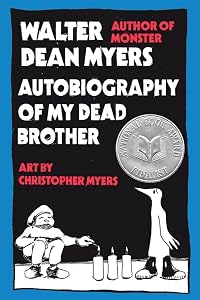
Walter Dean Myers was born on August 12, 1937 in Martinsberg, West Virginia. When he was three years old, his mother died and his father sent him to live with Herbert and Florence Dean in Harlem, New York. He began writing stories while in his teens. He dropped out of high school and enlisted in the Army at the age of 17. After completing his army show more service, he took a construction job and continued to write. He entered and won a 1969 contest sponsored by the Council on Interracial Books for Children, which led to the publication of his first book, Where Does the Day Go? During his lifetime, he wrote more than 100 fiction and nonfiction books for children and young adults. His works include Fallen Angels, Bad Boy, Darius and Twig, Scorpions, Lockdown, Sunrise Over Fallujah, Invasion, Juba!, and On a Clear Day. He also collaborated with his son Christopher, an artist, on a number of picture books for young readers including We Are America: A Tribute from the Heart and Harlem, which received a Caldecott Honor Award, as well as the teen novel Autobiography of My Dead Brother. He was the winner of the first-ever Michael L. Printz Award for Monster, the first recipient of the Coretta Scott King-Virginia Hamilton Award for Lifetime Achievement, and a recipient of the Margaret A. Edwards Award for lifetime achievement in writing for young adults. He also won the Coretta Scott King Award for African American authors five times. He died on July 1, 2014, following a brief illness, at the age of 76. (Bowker Author Biography) show less
Awards and Honors
Awards
Distinctions
Notable Lists
Common Knowledge
- First words
- "I hope you mess this up! I hope you blow it big time! You're supposed to be smart. You think you're smart, right?"
Classifications
- Genres
- Fiction and Literature, Teen, Young Adult
- DDC/MDS
- 813.54 — Literature & rhetoric American literature in English American fiction in English 1900-1999 1945-1999
- LCC
- PZ7 .M992 .L — Language and Literature Fiction and juvenile belles lettres Fiction and juvenile belles lettres Juvenile belles lettres
- BISAC
Statistics
- Members
- 468
- Popularity
- 64,940
- Reviews
- 19
- Rating
- (3.77)
- Languages
- English
- Media
- Paper, Audiobook, Ebook
- ISBNs
- 20
- ASINs
- 4