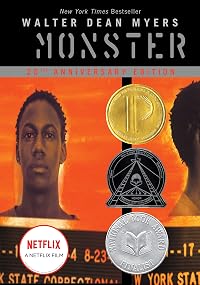
Monster
by Walter Dean Myers
On This Page
Description
While on trial as an accomplice to a murder, sixteen-year-old Steve Harmon records his experiences in prison and in the courtroom in the form of a film script as he tries to come to terms with the course his life has taken.Tags
Recommendations

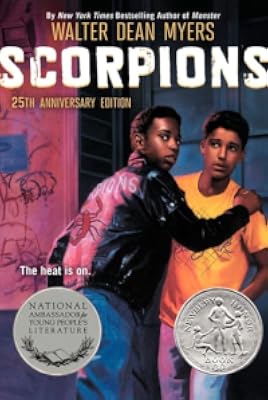
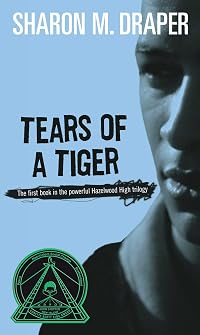
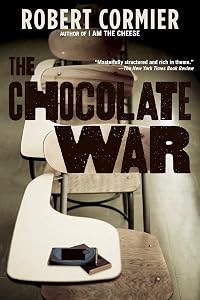
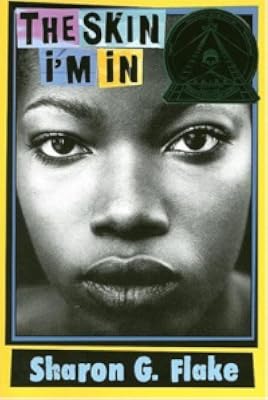
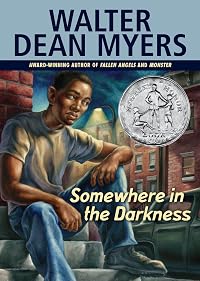
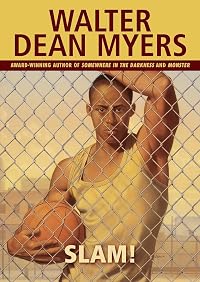
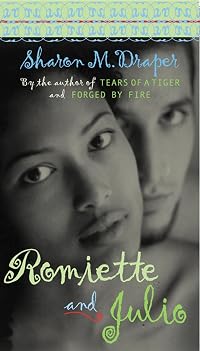
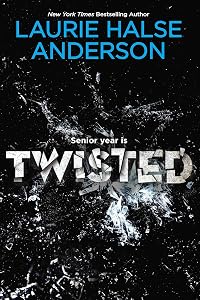
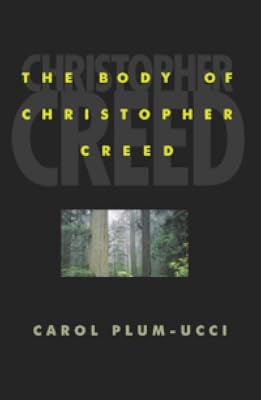
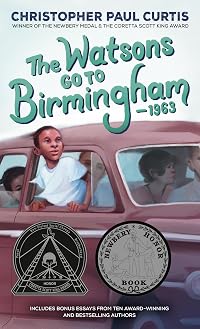
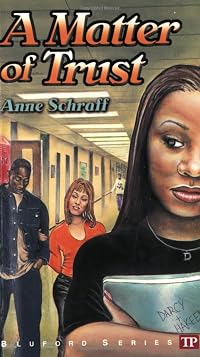
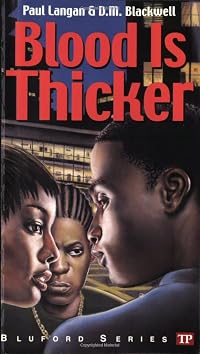
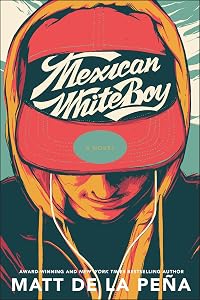
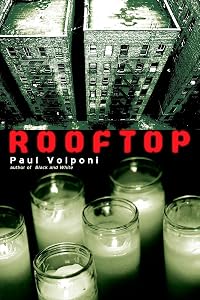
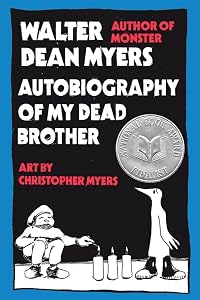

Member Recommendations
Member Reviews
So I confess, I read this book because I encountered it on a list of book someone felt young people should not read (because of the references to violence and prison rape, apparently). As I'm a little rebellious, I took note of the titles which sounded particularly dicey and requested this one from the library. After finishing this book, I must say that I completely disagree with the opinion that this book should not be read. Monster chronicles a young man accused of a crime through the creative means of a diary and screenplay he writes about his trial. Yes, there is violence and rape in this book, but even more powerful is the critique of the social system - which might have been the real reason this book ended up on a Do-Not-Read show more List. On the contrary, I found it well-worth the read. show less
Half of those jurors...believed you were guilty the moment they laid eyes on you. You're young, you're Black, and you're on trial. What else do they need to know?
At sixteen years old, Steve Harmon is on trial as an accomplice to a murder. As a high school student with an interest in filmmaking, Steve records his time in jail and in the courtroom in the form of a screenplay, titling it what the prosecutor called him: Monster by author Walter Dean Myers.
Count this as the only time I've ever read a novel written as a movie. That immediately got my attention when I picked up this YA book on an impulse.
But what I came to appreciate most about the story? It didn't turn out to be the oversimple tale it could have been. It may be easy to string show more together a bunch of clichés concerning a hot button topic, to insert them into a predictable plot, and then—BAM!—you've got a novel about a hot social "issue."
This novel isn't that. Yes, it relevantly takes a social climate into account, but it isn't merely using that to spin a drama together, nor is it just a ride or a race to figure out whodunit. Rather, this is a story of lost innocence. It's a story of reflection, of questions.
Haunting questions.
And it seems to me, the novel's value is in getting readers, especially (but not only) young adults, to reflect. To question. Perhaps to even form a habit of reflecting, of seriously thinking about what's important, before trouble demands it. show less
At sixteen years old, Steve Harmon is on trial as an accomplice to a murder. As a high school student with an interest in filmmaking, Steve records his time in jail and in the courtroom in the form of a screenplay, titling it what the prosecutor called him: Monster by author Walter Dean Myers.
Count this as the only time I've ever read a novel written as a movie. That immediately got my attention when I picked up this YA book on an impulse.
But what I came to appreciate most about the story? It didn't turn out to be the oversimple tale it could have been. It may be easy to string show more together a bunch of clichés concerning a hot button topic, to insert them into a predictable plot, and then—BAM!—you've got a novel about a hot social "issue."
This novel isn't that. Yes, it relevantly takes a social climate into account, but it isn't merely using that to spin a drama together, nor is it just a ride or a race to figure out whodunit. Rather, this is a story of lost innocence. It's a story of reflection, of questions.
Haunting questions.
And it seems to me, the novel's value is in getting readers, especially (but not only) young adults, to reflect. To question. Perhaps to even form a habit of reflecting, of seriously thinking about what's important, before trouble demands it. show less
Sixteen-year-old Steve Harmon is on trial for murder. As a way to hold it together through his terrible nights in prison and the stress of the trial, he records events as part diary and as though he were writing a movie script about his life. It was an interesting structure and fits with Steve's personality, since one of his passions is to make films. But while the structure suits the character, it also created emotional distance from me, like I was looking at events through a lens instead of getting into Steve's head. The most moving moments in the novel were those written in diary format, where we were able to see more than just the surface and really get into his head.
Steve is sixteen years old and on trial for murder. As he awaits his verdict, he records the events of his trial as if he was writing a screenplay. As the trial proceeds, the reader is given more and more information about the botched robbery that Steve is accused of participating in, and allowed to make their own decision about his guilt or innocence, and even about whether or not Steve is telling us the truth.
Monster asks some deep questions about responsibility: Are we responsible for the consequences when things don't go according to plan? Who is responsible for the downtrodden who see crime as the only way to get ahead? How are our societal systems responsible for perpetuating no-escape situations? This book is also rich for show more literary analysis: is Steve an unreliable narrator, and how does that affect the way we read his story? What does Myers tell us about the people who work for the system- the lawyers, the judge, the guards, the clerks, and how they view the the people in the system, like Steve? What Myers does, though, that makes this book so much better than other, more didactic books for classroom use, is he makes these questions accessible to young readers without the need for adult intermediaries. Reading Steve's story, you can't help but make your own decision about his involvement in the crime. Myers lays out the tough questions for you, but refuses to provide easy answers. Regardless of the outcome of the trial, there will be consequences.
As an aside, this was a repeat reading for me, and I would have sworn that the book ended without revealing the verdict. In fact, I would have listed the unreliable narrator and the ambiguous endings as the primary features of the book. The book raises so many questions that stick with me that I attributed even more ambiguity to it than it really has. show less
Monster asks some deep questions about responsibility: Are we responsible for the consequences when things don't go according to plan? Who is responsible for the downtrodden who see crime as the only way to get ahead? How are our societal systems responsible for perpetuating no-escape situations? This book is also rich for show more literary analysis: is Steve an unreliable narrator, and how does that affect the way we read his story? What does Myers tell us about the people who work for the system- the lawyers, the judge, the guards, the clerks, and how they view the the people in the system, like Steve? What Myers does, though, that makes this book so much better than other, more didactic books for classroom use, is he makes these questions accessible to young readers without the need for adult intermediaries. Reading Steve's story, you can't help but make your own decision about his involvement in the crime. Myers lays out the tough questions for you, but refuses to provide easy answers. Regardless of the outcome of the trial, there will be consequences.
As an aside, this was a repeat reading for me, and I would have sworn that the book ended without revealing the verdict. In fact, I would have listed the unreliable narrator and the ambiguous endings as the primary features of the book. The book raises so many questions that stick with me that I attributed even more ambiguity to it than it really has. show less
In a riveting novel from Myers (At Her Majesty’s Request, 1999, etc.), a teenager who dreams of being a filmmaker writes the story of his trial for felony murder in the form of a movie script, with journal entries after each day’s action.
Steve is accused of being an accomplice in the robbery and murder of a drug store owner. As he goes through his trial, returning each night to a prison where most nights he can hear other inmates being beaten and raped, he reviews the events leading to this point in his life. Although Steve is eventually acquitted, Myers leaves it up to readers to decide for themselves on his protagonist’s guilt or innocence.
The format of this taut and moving drama forcefully regulates the pacing; breathless, show more edge-of-the-seat courtroom scenes written entirely in dialogue alternate with thoughtful, introspective journal entries that offer a sense of Steve’s terror and confusion, and that deftly demonstrate Myers’s point: the road from innocence to trouble is comprised of small, almost invisible steps, each involving an experience in which a “positive moral decision” was not made. (Fiction. 12-14)
-Kirkus Review show less
Steve is accused of being an accomplice in the robbery and murder of a drug store owner. As he goes through his trial, returning each night to a prison where most nights he can hear other inmates being beaten and raped, he reviews the events leading to this point in his life. Although Steve is eventually acquitted, Myers leaves it up to readers to decide for themselves on his protagonist’s guilt or innocence.
The format of this taut and moving drama forcefully regulates the pacing; breathless, show more edge-of-the-seat courtroom scenes written entirely in dialogue alternate with thoughtful, introspective journal entries that offer a sense of Steve’s terror and confusion, and that deftly demonstrate Myers’s point: the road from innocence to trouble is comprised of small, almost invisible steps, each involving an experience in which a “positive moral decision” was not made. (Fiction. 12-14)
-Kirkus Review show less
I wish I’d read this book at a younger age, because I think it’s an amazing introduction to racism and how people view even black teenage boys as dangerous and are more likely to consider them guilty of crimes, even with circumstantial evidence. This story is told through the point of view of Steve, who was in the wrong place at the wrong time and associated with the wrong people. The format of the book is interesting in that Steve likes making movies and he filters the events through a sort of screenplay; describing how he would frame the scenes and edit the dialogue if he were to make a movie out of them.
The story moves quickly, but it’s intense. You’re thrown right into the action and I found myself rooting for Steve almost show more right away; I was completely immersed into his experiences and thoughts. The screenplay aspect does give a level of removal to the story itself, and it frames it in an interesting way. It’s almost as if Myers is forcing us to look at the events and evaluate them for ourselves. How would we make our own movie out of what happened? How would we frame what was happening? What would we include? What would we conclude from Steve’s version of events if we didn’t have his voice helping us along to make our own conclusions?
There’s a focus on bias and the politics of crime, which is an amazing introduction for younger readers to the prevalence of racism and how our prejudices can get in the way of logical reasoning and even empathy for another human. It does a great job of calling these out while also keeping you grounded in Steve’s story and wanting him to get a not-guilty verdict. I would definitely recommend everyone to read this; it’s poignant, emotional, and teaches hard truths.
Also posted on Purple People Readers. show less
The story moves quickly, but it’s intense. You’re thrown right into the action and I found myself rooting for Steve almost show more right away; I was completely immersed into his experiences and thoughts. The screenplay aspect does give a level of removal to the story itself, and it frames it in an interesting way. It’s almost as if Myers is forcing us to look at the events and evaluate them for ourselves. How would we make our own movie out of what happened? How would we frame what was happening? What would we include? What would we conclude from Steve’s version of events if we didn’t have his voice helping us along to make our own conclusions?
There’s a focus on bias and the politics of crime, which is an amazing introduction for younger readers to the prevalence of racism and how our prejudices can get in the way of logical reasoning and even empathy for another human. It does a great job of calling these out while also keeping you grounded in Steve’s story and wanting him to get a not-guilty verdict. I would definitely recommend everyone to read this; it’s poignant, emotional, and teaches hard truths.
Also posted on Purple People Readers. show less
This is a book about a teenager who is scared to death, because he is in the prison system. He hears inmates get sexually assaulted and beat up at night. His way of coping is by turning the trial and the prison experience as a movie, each separate event a different scene he has staged. It hits a painful chord when the main character explains that his lawyer is trying to make him, a teenager, seem “human” in the eyes of the jury. I don’t think many adults are willing to acknowledge that we live in a time and place where a teenage boy is seen as a monster, less than human. But it’s the reality many teens live, in school to prison pipelines, and in a world where youth of color are disproportionately incarcerated, compared to their show more white peers. This book is written in the main characters words, in the way a teenager would phrase his thoughts. For adults, this book depicts the way a teen would feel moving through a court case, and a unique perspective into how much youth of color have to fight to prove their innocence, as they are presumed guilty from the beginning of a trial. Teens who have friends or families in the prison system may feel like they have some representation of their lives. There really are few books like this that exist, which is why I gave it a 5 instead of 4 star review. show less
Members
- Recently Added By
Published Reviews
ThingScore 75
This book was good in my opinion. There were a lot of comments on the way the book was written, but I personally enjoyed it. It was a unique format and well written. The fact that he spent lots of time in prison helps make his story seem more real.
added by m.marie.g
Lists

SLJ's 100 Must-Have YA books
36 works; 2 members

Most Popular Young Adult Lit on LT
100 works; 4 members

Books Read in 2017
4,249 works; 130 members

Florida's Book Bans and Challenges
311 works; 4 members

Must-Read Books by Black Authors
114 works; 92 members

Books Read in 2022
5,226 works; 115 members

Books recommended by Calgary Public Library staff
1,588 works; 4 members
Talk Discussions
Past Discussions
Monster by Walter Dean Myer in EDE3343 Teaching Adol Lit MS Sp 2012 (January 2012)
Author Information

150+ Works 38,394 Members
Walter Dean Myers was born on August 12, 1937 in Martinsberg, West Virginia. When he was three years old, his mother died and his father sent him to live with Herbert and Florence Dean in Harlem, New York. He began writing stories while in his teens. He dropped out of high school and enlisted in the Army at the age of 17. After completing his army show more service, he took a construction job and continued to write. He entered and won a 1969 contest sponsored by the Council on Interracial Books for Children, which led to the publication of his first book, Where Does the Day Go? During his lifetime, he wrote more than 100 fiction and nonfiction books for children and young adults. His works include Fallen Angels, Bad Boy, Darius and Twig, Scorpions, Lockdown, Sunrise Over Fallujah, Invasion, Juba!, and On a Clear Day. He also collaborated with his son Christopher, an artist, on a number of picture books for young readers including We Are America: A Tribute from the Heart and Harlem, which received a Caldecott Honor Award, as well as the teen novel Autobiography of My Dead Brother. He was the winner of the first-ever Michael L. Printz Award for Monster, the first recipient of the Coretta Scott King-Virginia Hamilton Award for Lifetime Achievement, and a recipient of the Margaret A. Edwards Award for lifetime achievement in writing for young adults. He also won the Coretta Scott King Award for African American authors five times. He died on July 1, 2014, following a brief illness, at the age of 76. (Bowker Author Biography) show less
Some Editions
Awards and Honors
Awards
Distinctions
Notable Lists
Work Relationships
Has the adaptation
Has as a student's study guide
Common Knowledge
- Original title
- Monster
- Original publication date
- 1999-04-21
- People/Characters
- Steve Harmon; Sandra Petrocelli; Kathy O'Brien; James King; Richard "Bobo" Evans; Osvaldo Cruz (show all 8); Lorelle Henry; José Delgado
- Important places
- Manhattan, New York, New York, USA
- Related movies
- Monster (2018 | IMDb)
- Dedication
- To John Brendel for his long friendship
- First words
- The best time to cry is at night, when the lights are out and someone is being beaten up and screaming for help.
- Quotations
- I think I finally understand why there are so many fights. In here all you have going for you is the little surface stuff, how people look at you and what they say.
... (show all) I am so scared. My heart is beating like crazy and I am having trouble breathing.
I want to know who I am.
...what did she see that caused her to turn away?" - Last words
- (Click to show. Warning: May contain spoilers.)"What did she see?"
Classifications
- Genres
- Teen, Fiction and Literature, Young Adult
- DDC/MDS
- 813.54 — Literature & rhetoric American literature in English American fiction in English 1900-1999 1945-1999
- LCC
- PZ7 .M992 .M — Language and Literature Fiction and juvenile belles lettres Fiction and juvenile belles lettres Juvenile belles lettres
- BISAC
Statistics
- Members
- 5,695
- Popularity
- 2,316
- Reviews
- 356
- Rating
- (3.73)
- Languages
- 5 — Danish, English, German, Italian, Portuguese
- Media
- Paper, Audiobook, Ebook
- ISBNs
- 51
- ASINs
- 10