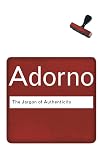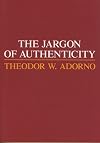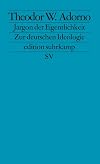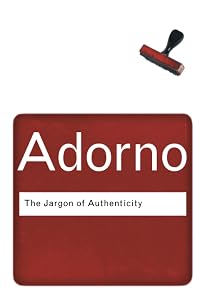
The Jargon of Authenticity
by Theodor Adorno
On This Page
Description
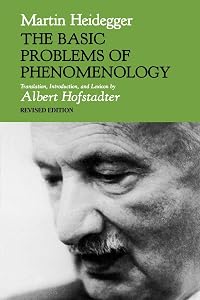
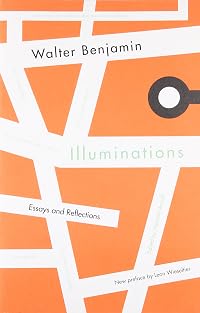
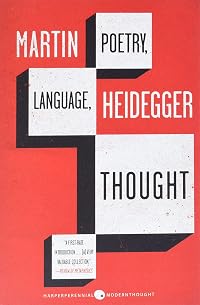
Theodor Adorno was no stranger to controversy. In The Jargon of Authenticity he gives full expression to his hostility to the language employed by certain existentialist thinkers such as Martin Heidegger. With his customary alertness to the uses and abuses of language, he calls into question the jargon, or 'aura', as his colleague Walter Benjamin described it, which clouded existentialists' thought. He argued that its use undermined the very message for meaning and liberation that it sought show more to make authentic. Moreover, such language - claiming to address the issue of freedom - signally failed to reveal the lack of freedom inherent in the capitalist context in which it was written. Instead, along with the jargon of the advertising jingle, it attributed value to the satisfaction of immediate desire. Alerting his readers to the connection between ideology and language, Adorno's frank and open challenge to directness, and the avoidance of language that 'gives itself over either to the market, to balderdash, or to the predominating vulgarity', is as timely today as it ever has been. show lessTags
Recommendations








Member Reviews
I've been getting unnecessarily analytical in recent reviews of dystopian fiction, always a sign it's time to read some philosophy or critical theory. Lars Iyers' [b:My Weil|125078701|My Weil|Lars Iyer|https://i.gr-assets.com/images/S/compressed.photo.goodreads.com/books/1684790532l/125078701._SX50_.jpg|146524627] reminded me that doing so is fun. I consider it important to read things that I find very hard to understand; in this case, a critique of philosophers that I mostly haven't read. I picked [b:The Jargon of Authenticity|201397|The Jargon of Authenticity|Theodor W. Adorno|https://i.gr-assets.com/images/S/compressed.photo.goodreads.com/books/1356446037l/201397._SY75_.jpg|1126042] off the library new acquisitions shelf, knowing show more nothing about it except that Adorno seems to be increasingly quoted as relevant to the present time. That was also my experience a decade ago when I read (and understood about a fifth of) [b:Minima Moralia: Reflections on a Damaged Life|201388|Minima Moralia Reflections on a Damaged Life|Theodor W. Adorno|https://i.gr-assets.com/images/S/compressed.photo.goodreads.com/books/1388215583l/201388._SX50_.jpg|313155].
The first page of the introduction to [b:The Jargon of Authenticity|201397|The Jargon of Authenticity|Theodor W. Adorno|https://i.gr-assets.com/images/S/compressed.photo.goodreads.com/books/1356446037l/201397._SY75_.jpg|1126042] went down like a lead balloon. A major risk of reading any 19th or 20th century philosophy is that it will probably have a recently-written introduction with the density of cold cement. Sometimes this will take longer to get through than the book itself. My faith in the translator was also shaken by a footnote on page 6: 'To occur' our rendering of sich ereignen has been chosen for lack of an English verb corresponding to the noun 'event'. The verb is eventuate, my man! Despite these challenges, and Adorno's blithe assumption that the reader knows exactly who he is talking about when he critiques 'the authentic ones', persistence was rewarded. I appreciated what I could grasp. For example, on words and language:
First published in 1964, [b:The Jargon of Authenticity|201397|The Jargon of Authenticity|Theodor W. Adorno|https://i.gr-assets.com/images/S/compressed.photo.goodreads.com/books/1356446037l/201397._SY75_.jpg|1126042] is concerned not merely with philosophical abstractions but their uses in the destructive authoritarian German politics of the early twentieth century. Sometimes this is made explicit, but mostly it is heavily implicit:
Adorno complains that Heidegger and others present their philosophy of authenticity (his phrase) as authoritative and scientific, which conceals its ideological bias and cultural grounding. He sharply makes the point that there is really no such thing as pure, primal philosophy:
About twenty years ago I read a book about the slippery concept of authenticity, [b:Authenticity: Brands, Fakes, Spin and the Lust for Real Life|1667416|Authenticity Brands, Fakes, Spin and the Lust for Real Life|David Boyle|https://i.gr-assets.com/images/S/compressed.photo.goodreads.com/books/1186591176l/1667416._SX50_.jpg|1662303], which gave an economic rather than philosophical critique. This is the closest I could find to an explanation of why Adorno attaches this label to the loose philosophical group he critiques:
In the final few pages, Adorno concludes that the jargon of authenticity is fundamentally inhumane and that, 'its dignified mannerism is a reactionary response to the secularisation of death'. I'll admit that I didn't understand all the nuances of his beef with Heidegger, Jaspers, et al. Yet [b:The Jargon of Authenticity|201397|The Jargon of Authenticity|Theodor W. Adorno|https://i.gr-assets.com/images/S/compressed.photo.goodreads.com/books/1356446037l/201397._SY75_.jpg|1126042] was still much more fun to read than [b:Ascension|61813107|Ascension|Nicholas Binge|https://i.gr-assets.com/images/S/compressed.photo.goodreads.com/books/1675642495l/61813107._SX50_.jpg|93144065]. show less
The first page of the introduction to [b:The Jargon of Authenticity|201397|The Jargon of Authenticity|Theodor W. Adorno|https://i.gr-assets.com/images/S/compressed.photo.goodreads.com/books/1356446037l/201397._SY75_.jpg|1126042] went down like a lead balloon. A major risk of reading any 19th or 20th century philosophy is that it will probably have a recently-written introduction with the density of cold cement. Sometimes this will take longer to get through than the book itself. My faith in the translator was also shaken by a footnote on page 6: 'To occur' our rendering of sich ereignen has been chosen for lack of an English verb corresponding to the noun 'event'. The verb is eventuate, my man! Despite these challenges, and Adorno's blithe assumption that the reader knows exactly who he is talking about when he critiques 'the authentic ones', persistence was rewarded. I appreciated what I could grasp. For example, on words and language:
Words' own meanings weigh heavily on them. But these words do not use themselves up in their meanings; they themselves are caught up in their context. This fact is underestimated in the high praise given to science by every pure analysis of meaning, starting with Husserl's, especially by that of Heidegger, which considers itself far above science. Only that person satisfies the demand of language who masters the relation of language to individual words in their configurations. Just as the fixing of the pure element of meaning threatens to pass over to the arbitrary, so the belief in the primacy of the configurative threatens to pass into the badly functional, the merely communicative - into scorn for the objective aspect of words. In language that is worth something both of these elements are transmitted.
First published in 1964, [b:The Jargon of Authenticity|201397|The Jargon of Authenticity|Theodor W. Adorno|https://i.gr-assets.com/images/S/compressed.photo.goodreads.com/books/1356446037l/201397._SY75_.jpg|1126042] is concerned not merely with philosophical abstractions but their uses in the destructive authoritarian German politics of the early twentieth century. Sometimes this is made explicit, but mostly it is heavily implicit:
In the jargon, finally, there remains from inwardness only the most external aspect, that thinking oneself superior which marks people who elect themselves: the claim of people who consider themselves blessed simply by virtue of being what they are. Without any effort, this claim turns into an elitist claim, or into a readiness to attach itself to elites which then quickly gives the axe to inwardness. A symptom of the transformation of inwardness is the belief of innumerable people that they belong to an extraorinary family. The jargon of authenticity, which sells self-identity as something higher, projects the exchange formula onto that which imagines that it is not exchangeable; for as a biological individual each man resembles himself. That is what is left over after the removal of the soul and immortality from the immortal soul.
Adorno complains that Heidegger and others present their philosophy of authenticity (his phrase) as authoritative and scientific, which conceals its ideological bias and cultural grounding. He sharply makes the point that there is really no such thing as pure, primal philosophy:
This cannot be avoided and has to be taken into consciousness. In the universally mediated world everything experienced in primary terms is culturally performed. Whoever wants the other has to start with the immanence of culture, in order to break out through it. But fundamental ontology gladly spares itself that, by pretending it has a starting point somewhere outside. In that way such ontology succumbs to cultural mediations all the more; they recur as social aspects of the ontology's own purity. Philosophy involves itself all the more deeply in society as it more eagerly - reflecting upon itself - pushes off from society and its objective spirit.
About twenty years ago I read a book about the slippery concept of authenticity, [b:Authenticity: Brands, Fakes, Spin and the Lust for Real Life|1667416|Authenticity Brands, Fakes, Spin and the Lust for Real Life|David Boyle|https://i.gr-assets.com/images/S/compressed.photo.goodreads.com/books/1186591176l/1667416._SX50_.jpg|1662303], which gave an economic rather than philosophical critique. This is the closest I could find to an explanation of why Adorno attaches this label to the loose philosophical group he critiques:
Thus industriousness is the substantivisation of those characteristics that apply to all industrious people, and which they have in common. By contrast, however, 'authenticity' names no authentic thing as a specific characteristic but remains formal, relative to a content which is by-passed in the word, if not indeed rejected by it - even when the word is used adjectivally. The word says nothing about what a thing is, but questions the extent to which the thing realises what is posited by its concept. The thing stands in implicit opposition to what it merely seems to be. In any case the word would receive its meaning from the quality which it is a predicate of. But the suffix '-keit', '-ness' tempts one to believe that the word must already contain that content in itself. The mere category of relationship is fished out and in its turn exhibited as something concrete.
In the final few pages, Adorno concludes that the jargon of authenticity is fundamentally inhumane and that, 'its dignified mannerism is a reactionary response to the secularisation of death'. I'll admit that I didn't understand all the nuances of his beef with Heidegger, Jaspers, et al. Yet [b:The Jargon of Authenticity|201397|The Jargon of Authenticity|Theodor W. Adorno|https://i.gr-assets.com/images/S/compressed.photo.goodreads.com/books/1356446037l/201397._SY75_.jpg|1126042] was still much more fun to read than [b:Ascension|61813107|Ascension|Nicholas Binge|https://i.gr-assets.com/images/S/compressed.photo.goodreads.com/books/1675642495l/61813107._SX50_.jpg|93144065]. show less
Not really sure how to rate this one, so going down the middle. I guess I glossed over the blurb and wasn't expecting it be an out-and-out critique/criticism of Heidegger's Exisentialism, so obviously I'm not the target reader.
That said, the critique was pretty fascinating in places, especially around the beginning (e.g. on the role of jargon devoid of reality) and toward the end (e.g. the paradox of defining oneself as existing alongside "death"). It seems like these key points are still (more) relevant today as we continue to struggle with a more mediated, structured society still bound by fairly modern-industrial paradigms.
But I drifted off in the middle - the book felt more like a ranting blogpost by a very clever, but very grumpy show more old man at times. Short enough to put up with, but a little too convoluted and negative to really hold my interest.
Give this one a go if you're into this kind of thing, I think :) show less
That said, the critique was pretty fascinating in places, especially around the beginning (e.g. on the role of jargon devoid of reality) and toward the end (e.g. the paradox of defining oneself as existing alongside "death"). It seems like these key points are still (more) relevant today as we continue to struggle with a more mediated, structured society still bound by fairly modern-industrial paradigms.
But I drifted off in the middle - the book felt more like a ranting blogpost by a very clever, but very grumpy show more old man at times. Short enough to put up with, but a little too convoluted and negative to really hold my interest.
Give this one a go if you're into this kind of thing, I think :) show less
Ratings
Members
- Recently Added By
Lists

culture
320 works; 1 member

In Our Time books
4,934 works; 2 members
Author Information

326+ Works 14,328 Members
Theodor W. Adorno is the progenitor of critical theory, a central figure in aesthetics, and the century's foremost philosopher of music. He was born and educated in Frankfurt, Germany. After completing his Ph.D. in philosophy, he went to Vienna, where he studied composition with Alban Berg. He soon was bitterly disappointed with his own lack of show more talent and turned to musicology. In 1928 Adorno returned to Frankfurt to join the Institute for Social Research, commonly known as The Frankfurt School. At first a privately endowed center for Marxist studies, the school was merged with Frankfort's university under Adorno's directorship in the 1950s. As a refugee from Nazi Germany during World War II, Adorno lived for several years in Los Angeles before returning to Frankfurt. Much of his most significant work was produced at that time. Critics find Adorno's aesthetics to be rich in insight, even when they disagree with its broad conclusions. Although Adorno was hostile to jazz and popular music, he advanced the cause of contemporary music by writing seminal studies of many key composers. To the distress of some of his admirers, he remained pessimistic about the prospects for art in mass society. Adorno was a neo-Marxist who believed that the only hope for democracy was to be found in an interpretation of Marxism opposed to both positivism and dogmatic materialism. His opposition to positivisim and advocacy of a method of dialectics grounded in critical rationalism propelled him into intellectual conflict with Georg Hegel, Martin Heidegger, and Heideggerian hermeneutics. (Bowker Author Biography) show less
Series
Belongs to Publisher Series
Work Relationships
Common Knowledge
- Canonical title
- The Jargon of Authenticity
Classifications
Statistics
- Members
- 317
- Popularity
- 100,650
- Reviews
- 2
- Rating
- (3.77)
- Languages
- 9 — Danish, English, French, German, Greek, Italian, Spanish, Swedish, Turkish
- Media
- Paper, Ebook
- ISBNs
- 20
- ASINs
- 5