
Alan Turing: The Enigma
by Andrew Hodges
On This Page
Description
A gripping story of mathematics, computers, cryptography, and homosexual persecution. Hodges tells how Turing's revolutionary idea of 1936-- the concept of a universal machine-- laid the foundation for the modern computer. Turing brought the idea to practical realization in 1945 with his electronic design. This work was directly related to Turing's leading role in breaking the German Enigma ciphers during World War II, a scientific triumph that was critical to Allied victory in the Atlantic. show more Despite his wartime service, Turing was eventually arrested, stripped of his security clearance, and forced to undergo a humiliating treatment program-- all for trying to live honestly in a society that defined homosexuality as a crime. show lessTags
Recommendations





Member Recommendations
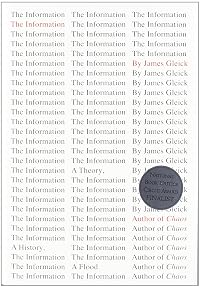
infiniteletters Science fiction, but portions are about Turing, and large portions are about codes and encryption.
32
souloftherose Historical fictional/thriller set in Bletchley Park during WWII
11
Member Reviews
How much do you want to know about Alan Turing? This 675 page biography covers his personal and intellectual life in exhaustive detail. I read it because I’d seen The Imitation Game and was curious about accuracy (IMO, the movie sometimes plays fair with with necessary simplifications, dramatic exaggerations, conflations of characters and events, and sometimes distorts). Intentionally on principle, the personal and intellectual are entwined. This may be true to the spirit of Turing, but it can be tough going for the reader, never knowing when or where the path will wend through a history of societal attitudes toward homosexuality or a disquisition on cryptanalytic methods. If you set the book aside for a day and lose track of a show more mathematical buzzword, well, there’s an extensive index but good luck finding clear stepping stones. On a personal level, the biography is respectful and compassionate, appreciative of Turing’s integrity, quirks, humor, and unconventional brilliance. On an intellectual level, well, the author is a mathematician and perhaps too casually assuming of familiarity with, say, Hilbert and Gödel. The result is engaging here, educational there, and a slog in between. I admired the thorough research, but would’ve been happier with an abridged version. show less
Alan Turing, the enigma. And what an enigma he is. After listning to Hodges book I feel I know him much better and I still think I don't really know him. He was truly one of a kind and he was the square peg for the round hole but his ideas and insights were at times ground breaking. Still he was not the excellent engineer, not the fantastic mathematician, not the wonderful talker, but he was able to step out of those boxes and see a bigger picture than other people.
The book consists of four more or less equal sized parts. His young life, his war life, his post-war computer science life and his life after he moved beyond computers. His early life was dominated by school, first boarding school and then Kings College at Cambridge. During show more the war he was at Bletchley Park, where he contributed to the machines that broke codes. Exactly what went on there seems to be forever lost, but his contribution was major. After the war he ended up in a resource strapped economy that suddenly focused on administration, not execution, and he was not a good player of that game.
All through this his libido and homosexuality forms a red thread. From losing his first, and maybe only love, as a teenager, to the broken engagement with someone that was more friend than lover, to the hysteria surrounding security risks that cut him off from government work, and of course his conviction in a court for indecent behaviour. Still I get the feeling he never really found anybody who he loved and that loved him back. His private self he kept well guarded.
I would, given my background, have liked more information about his early research, but I guess anybody can look up that. The paper "On Computable Numbers" is available online for instance. I also suspect parts were edited out of the audio book edition because it couldn't have been communicated verbally. It was probably a mistake to not read the paper (or ebook?) version of this work.
All in all I think Hodges has done a good job putting together what information there is to a plausible description of the man. He has clearly read a lot of letters from him and to him, but the amount of people that actually knew him is not that large anymore so first hand accounts was probably hard to get so you get to hear about the quirks, those things that stick in your mind, and not about the ordinary day events. show less
The book consists of four more or less equal sized parts. His young life, his war life, his post-war computer science life and his life after he moved beyond computers. His early life was dominated by school, first boarding school and then Kings College at Cambridge. During show more the war he was at Bletchley Park, where he contributed to the machines that broke codes. Exactly what went on there seems to be forever lost, but his contribution was major. After the war he ended up in a resource strapped economy that suddenly focused on administration, not execution, and he was not a good player of that game.
All through this his libido and homosexuality forms a red thread. From losing his first, and maybe only love, as a teenager, to the broken engagement with someone that was more friend than lover, to the hysteria surrounding security risks that cut him off from government work, and of course his conviction in a court for indecent behaviour. Still I get the feeling he never really found anybody who he loved and that loved him back. His private self he kept well guarded.
I would, given my background, have liked more information about his early research, but I guess anybody can look up that. The paper "On Computable Numbers" is available online for instance. I also suspect parts were edited out of the audio book edition because it couldn't have been communicated verbally. It was probably a mistake to not read the paper (or ebook?) version of this work.
All in all I think Hodges has done a good job putting together what information there is to a plausible description of the man. He has clearly read a lot of letters from him and to him, but the amount of people that actually knew him is not that large anymore so first hand accounts was probably hard to get so you get to hear about the quirks, those things that stick in your mind, and not about the ordinary day events. show less
This outstanding biography of a unique, outstanding and challenging human being is full of integrity and insight. The author is himself a mathematician / logician, and is able to communicate Turing's work and scientific principles in an accessible yet rigorous way. Plus, the author's broad knowledge of the modern social history of homosexuality brings a good mix of depth, objectivity and empathy to his view of Turing and the essential dilemmas of Turing's life. To label one's subject an "enigma" might seem at first a cop-out. But here it is a forthright statement of the stubborn and mysterious existential inner conflict and puzzle of the man's life, which his genius could not solve. Turing prized truth above all, but had the same show more subjective longings as all of us, that defeat logic at every turn. One of Turing's achievements was to prove the uncomputability of certain values; this book does the same for a life. show less
Áhrifamikil ævisaga sérvitra og tragíska snillingsins Alans Turings. Hann var stærðfræðisnillingur sem fylgdi engum hefðbundum reglum. Opinskátt samkynhneigður þegar slíkt var bannað með lögum í Bretlandi, guðleysingi og mjög félagslega heftur.
Hann á mestan heiðurinn af því að hafa ráðið mjög Enigma, fullkomið dulmál Þjóðverja, í síðari heimsstyrjöldinni og talið er að það hafi verið eitt af undirstöðuatriðum í sigri bandamanna. Vegna þessa gátu bandamenn lesið nánast öll leynilegustu samskipti Þjóðverja. Ráðning dulmálsins var hins vegar hernaðarleyndarmál og því var ekki greint frá þætti Turings og félaga hans fyrr en undir lok síðustu aldar.
Turing hefur líka verið show more eignaður heiðurinn að hönnun tölvunnar og gerfigreindar en þrátt fyrir þessa snilli hans var hann dreginn fyrir dómstóla fyrir samkynheigð sína og neyddur til niðurlægjandi hormónameðferðar sem hafði m.a. þær aukaverkanir að brjósin fóru að vaxa á honum. Stuttu síðar framdi hann sjálfsmorð sem kann að hafa verið afleiðing þessarar niðurlægingar auk þess sem að á þessum tíma fór breska ríkið mikinn í herferð sinni við að útrýma samkynheigðum starfsmönnum innan sinna raða þar sem þeir voru taldir öryggisvandamál nú þegar Kalda stríðið var í algleymingi.
Andrew Hodges gerir vel við lýsingu sína á lífi Turings bæði hvað varðar mikilvægi hans sem stærðfræðings og sem samkynheigðs millistéttarmanns í Bretlandi enda er Hodges sjálfur samkynhneigður stærðfræðingur. Sagan er líka vísindasaga því Hodges fer ítarlega í sögu og þróun bæði stærðfræðikenninga, tölvufræði og gerfigreindar til að sýna lesandanum fram snilli og framlag Turings. Þeir kaflar verða þó oft á tímum frekar langdregnir.
Að síðustu má nefna að þessi saga hefur nú verið aðlöguð að kvikmyndinni The imitation game með Benedict Cumberbatch í aðalhlutverki og er nú í sýningu. show less
Hann á mestan heiðurinn af því að hafa ráðið mjög Enigma, fullkomið dulmál Þjóðverja, í síðari heimsstyrjöldinni og talið er að það hafi verið eitt af undirstöðuatriðum í sigri bandamanna. Vegna þessa gátu bandamenn lesið nánast öll leynilegustu samskipti Þjóðverja. Ráðning dulmálsins var hins vegar hernaðarleyndarmál og því var ekki greint frá þætti Turings og félaga hans fyrr en undir lok síðustu aldar.
Turing hefur líka verið show more eignaður heiðurinn að hönnun tölvunnar og gerfigreindar en þrátt fyrir þessa snilli hans var hann dreginn fyrir dómstóla fyrir samkynheigð sína og neyddur til niðurlægjandi hormónameðferðar sem hafði m.a. þær aukaverkanir að brjósin fóru að vaxa á honum. Stuttu síðar framdi hann sjálfsmorð sem kann að hafa verið afleiðing þessarar niðurlægingar auk þess sem að á þessum tíma fór breska ríkið mikinn í herferð sinni við að útrýma samkynheigðum starfsmönnum innan sinna raða þar sem þeir voru taldir öryggisvandamál nú þegar Kalda stríðið var í algleymingi.
Andrew Hodges gerir vel við lýsingu sína á lífi Turings bæði hvað varðar mikilvægi hans sem stærðfræðings og sem samkynheigðs millistéttarmanns í Bretlandi enda er Hodges sjálfur samkynhneigður stærðfræðingur. Sagan er líka vísindasaga því Hodges fer ítarlega í sögu og þróun bæði stærðfræðikenninga, tölvufræði og gerfigreindar til að sýna lesandanum fram snilli og framlag Turings. Þeir kaflar verða þó oft á tímum frekar langdregnir.
Að síðustu má nefna að þessi saga hefur nú verið aðlöguð að kvikmyndinni The imitation game með Benedict Cumberbatch í aðalhlutverki og er nú í sýningu. show less
Excellent life of a great mathematician and scientist who happened to be gay. Unfortunately, his contributions to the British war effort did not shield him from discriminatory treatment because of his sexual orientation.
Summary: Perhaps the definitive account of the brilliant mathematician, cryptanalyst, and computer scientist, Alan Turing, who was prosecuted for his homosexuality, not long before the end of his life due to cyanide poisoning.
The title of this work reflects both the important, and long secret work, Turing did to decrypt German transmissions encrypted by their Enigma machine, for which he was awarded an OBE, and that Turing, in life and death was something of an enigma, even to those closest to him. Andrew Hodges wrote this tour de force of a biography, dealing both with the singular scientific accomplishments of his life and the struggles he faced in his time as a gay man. As both a mathematician and a leader in the London Gay show more Liberation Front, Hodges was uniquely suited to write this work and it reflects these qualifications.
This is a complete biography, from his earliest years. We learn of the early roots of Turing’s interest in the function of the mind, and the shift to a materialist focus after the death of his close friend Christopher Morcom, who was his first love. This would be reflected in his efforts to create machine intelligence that worked like human intelligence. He was elected a fellow at King’s College for his proof in 1935. of the central limit theorem, which, unknown to him, had been previously proven, although his proof used a different and innovative approach. A year later, he published his most famous paper, On Computable Numbers, in which he proposed a hypothetical universal computing machine (often referred to as a Turing machine) that laid the theoretical basis for computers. Once again, another researcher, Alonzo Church, had addressed the same problem, again by a different approach. And so Turing went to study with Church at Princeton, building an electro-mechanical binary multiplier while he was there.
This reveals another theme in Turing’s life. He was not only interested in the theoretical but also in the engineering aspects of realizing the machines of which he theorized. This led to the next major involvement of Turing, during the war, in the decryption of German radio transmissions encrypted with their Enigma machines, thought to be unbreakable. Building on Polish efforts, he not only developed innovative statistical methods to break the code but developed the bombes, a type of computer, that would radically speed up the process. It was for this work, kept secret for many years, that he received the OBE (Officer of the Most Excellent Order of the British Empire) from King George VI.
Hodges also covers his post-war work on computers and his further interest in artificial intelligence, resulting in his paper on “Computing Machinery and Intelligence” with his proposal of an experiment that later became known as the “Turing Test.” His ideas of universal machines, that could be used for various computational tasks, led him to write some of the earliest programs, including a primitive chess program.
The account of Turing’s scientific work is interwoven with his relationships with men, his brief engagement to Joan Clark, which he realized would not work out, and the relationship that led to Turing facing criminal charges for his homosexuality. There is extensive background offered as well as discussion of the legal and social conventions of the day. Perhaps the most troubling, and some have suggested it contributed to Turing’s death, was the agreement, in lieu of a prison term, that Turing would undergo estrogen treatments to suppress his homosexual inclinations. I also found it puzzling why Turing incriminated himself with the police investigating a burglary of his home by a friend of his lover.
It seemed to reflect an “out of touchness” that manifested itself in everything from his unawareness of similar research to his own, to his inability to manage others well. He seemed to expect people to act logically as he would, and was surprised when they did not. My sense is that he thought it should be no big deal to love the people he wanted to love, and I think was genuinely surprised that even though such behavior was illegal, the police would look the other way.
His death in June 1954 was another enigma covered by Hodges. It was ruled a suicide by cyanide poisoning through an apple dipped in a cyanide solution and then partially eaten, found by his bedside where he was found dead. He had cyanide on the premises, using it in a process to electroplate gold onto silver spoons. Oddly, the apple was never tested, there seemed no preparations for suicide, and it was speculated that this was an accident during his experiments, either from inhalation or grains on his fingers. Supporting suicide was the way the body was composed on his bed. An enigma.
The book goes into fine detail with his life, reflecting a huge amount of research, due to the limited material left by Turing. This is a strength and weakness. Included in the detail are extensive mathematical and engineering discussions that are heavy going for those unacquainted with these fields. I estimate that probably at least 100 pages of text might be cut out if these were summarized more succinctly.
Hodges work reveals not only the enigma but the genius of Turing. Subsequent to the initial publication of this work in 1983, Prime Minister of Great Britain Gordon Brown in 2009 issued a statement apologizing for the “appalling” way Turing was treated. In August 2014, Queen Elizabeth pronounced a royal pardon of Turing in August 2014 and a law exonerating all men charged with “indecency” was passed in 2017, informally known as “Alan Turing’s law.” These actions removed the cloud hanging over the genius whose theoretical and practical work laid the groundwork for the computer on which I write this review and the “behind-the-scenes” work so crucial in the fight against Germany in World War 2, especially in ending the depredations on Allied shipping. It would not surprise me that this biography played an important part in the recognition of the importance of his work, even as it served as the basis of the film The Imitation Game. show less
The title of this work reflects both the important, and long secret work, Turing did to decrypt German transmissions encrypted by their Enigma machine, for which he was awarded an OBE, and that Turing, in life and death was something of an enigma, even to those closest to him. Andrew Hodges wrote this tour de force of a biography, dealing both with the singular scientific accomplishments of his life and the struggles he faced in his time as a gay man. As both a mathematician and a leader in the London Gay show more Liberation Front, Hodges was uniquely suited to write this work and it reflects these qualifications.
This is a complete biography, from his earliest years. We learn of the early roots of Turing’s interest in the function of the mind, and the shift to a materialist focus after the death of his close friend Christopher Morcom, who was his first love. This would be reflected in his efforts to create machine intelligence that worked like human intelligence. He was elected a fellow at King’s College for his proof in 1935. of the central limit theorem, which, unknown to him, had been previously proven, although his proof used a different and innovative approach. A year later, he published his most famous paper, On Computable Numbers, in which he proposed a hypothetical universal computing machine (often referred to as a Turing machine) that laid the theoretical basis for computers. Once again, another researcher, Alonzo Church, had addressed the same problem, again by a different approach. And so Turing went to study with Church at Princeton, building an electro-mechanical binary multiplier while he was there.
This reveals another theme in Turing’s life. He was not only interested in the theoretical but also in the engineering aspects of realizing the machines of which he theorized. This led to the next major involvement of Turing, during the war, in the decryption of German radio transmissions encrypted with their Enigma machines, thought to be unbreakable. Building on Polish efforts, he not only developed innovative statistical methods to break the code but developed the bombes, a type of computer, that would radically speed up the process. It was for this work, kept secret for many years, that he received the OBE (Officer of the Most Excellent Order of the British Empire) from King George VI.
Hodges also covers his post-war work on computers and his further interest in artificial intelligence, resulting in his paper on “Computing Machinery and Intelligence” with his proposal of an experiment that later became known as the “Turing Test.” His ideas of universal machines, that could be used for various computational tasks, led him to write some of the earliest programs, including a primitive chess program.
The account of Turing’s scientific work is interwoven with his relationships with men, his brief engagement to Joan Clark, which he realized would not work out, and the relationship that led to Turing facing criminal charges for his homosexuality. There is extensive background offered as well as discussion of the legal and social conventions of the day. Perhaps the most troubling, and some have suggested it contributed to Turing’s death, was the agreement, in lieu of a prison term, that Turing would undergo estrogen treatments to suppress his homosexual inclinations. I also found it puzzling why Turing incriminated himself with the police investigating a burglary of his home by a friend of his lover.
It seemed to reflect an “out of touchness” that manifested itself in everything from his unawareness of similar research to his own, to his inability to manage others well. He seemed to expect people to act logically as he would, and was surprised when they did not. My sense is that he thought it should be no big deal to love the people he wanted to love, and I think was genuinely surprised that even though such behavior was illegal, the police would look the other way.
His death in June 1954 was another enigma covered by Hodges. It was ruled a suicide by cyanide poisoning through an apple dipped in a cyanide solution and then partially eaten, found by his bedside where he was found dead. He had cyanide on the premises, using it in a process to electroplate gold onto silver spoons. Oddly, the apple was never tested, there seemed no preparations for suicide, and it was speculated that this was an accident during his experiments, either from inhalation or grains on his fingers. Supporting suicide was the way the body was composed on his bed. An enigma.
The book goes into fine detail with his life, reflecting a huge amount of research, due to the limited material left by Turing. This is a strength and weakness. Included in the detail are extensive mathematical and engineering discussions that are heavy going for those unacquainted with these fields. I estimate that probably at least 100 pages of text might be cut out if these were summarized more succinctly.
Hodges work reveals not only the enigma but the genius of Turing. Subsequent to the initial publication of this work in 1983, Prime Minister of Great Britain Gordon Brown in 2009 issued a statement apologizing for the “appalling” way Turing was treated. In August 2014, Queen Elizabeth pronounced a royal pardon of Turing in August 2014 and a law exonerating all men charged with “indecency” was passed in 2017, informally known as “Alan Turing’s law.” These actions removed the cloud hanging over the genius whose theoretical and practical work laid the groundwork for the computer on which I write this review and the “behind-the-scenes” work so crucial in the fight against Germany in World War 2, especially in ending the depredations on Allied shipping. It would not surprise me that this biography played an important part in the recognition of the importance of his work, even as it served as the basis of the film The Imitation Game. show less
This was possibly the most difficult biography I have ever read. Although it says it was written with lay people in mind, the author is a mathematical physicist at Oxford and probably has a different conception of his audience. Hodges' prose is elegant and dense, and be prepared for a serious read. However, once begun, this is a wonderfully satisfying work about the complex individual who might be "the father of computers." Turing was an independent soul, and his interests were vast--all grounded in whether there was a mathematical formula or concept that could explain the phenomena he was studying. In a 1936 seminal paper, he proposed a universal machine that, in effect, became the computer in all of its manifestations. Possibly even show more more important to history was Turing's pioneering work in breaking the German military codes during WWII, and thus ensuring the Nazis' defeat. His non-conformity extended to his homosexuality, which was, at the time, considered to be a serious, unspeakable crime he was convicted and forced to undergo chemical treatment for many months. Turing was not interested in fame or fortune--just in a life of the mind. This book is, in effect, two works. In one, in beautiful language Hodges conveys Turing's story. In the other, the author seeks to explain his and his colleagues' theories, and I found myself skipping those sections because of their difficulty to this lay person. Steve Jobs described his goal at Apple to be at the nexus of technology and the humanities; Turing spent his adult life at that place 50 years before Apple sold its first computer. And without his foundational work, Apple would not exist. show less
Members
- Recently Added By
Lists

Best Biographies
216 works; 24 members

Cryptology - non-fiction and fiction
57 works; 4 members

Mustich's 1000 Books to Read Before You Die: A Life Changing List
1,001 works; 20 members

In Our Time books
4,934 works; 2 members

Books Read in 1992
11 works; 1 member
Author Information

7+ Works 3,276 Members
Andrew Hodges was born in London, England in 1949. He is a mathematician, author, and activist in the gay liberation movement of the 1970s. Since the early 1970s, he has worked on twistor theory. He is also known as the author of Alan Turing: The Enigma, the story of the British computer pioneer and codebreaker Alan Turing. This book was the basis show more for the 2014 feature film The Imitation Game. (Bowker Author Biography) show less
Some Editions
Awards and Honors
Series
Belongs to Publisher Series
Work Relationships
Has the adaptation
Common Knowledge
- Canonical title
- Alan Turing: The Enigma
- Original title
- Alan Turing. The enigma
- Alternate titles*
- Alan Turing ou l'énigme de l'intelligence
- Original publication date
- 1983-10-25 (1e édition originale anglaise, Simon and Schuster) (1e é | dition originale anglaise, Simon and Schuster); 1983; 1988-10-25 ( 1e traduction et édition français, Bibliothèque scientifique, Payot) ( 1e traduction et é | dition franç | ais, Bibliothè | que scientifique, Payot); 2015-01-29 (Nouvelle édition complétée, Michel Lafon) (Nouvelle é | dition complé | té | e, Michel Lafon)
- People/Characters
- Alan Turing; John Turing; Julius Mathison Turing; Ethel Sara Turing, née Stoney; Christopher Morcom; Frances Isobel Swan (show all 47); [Alfred] Morcom; Howard Aiken; Hugh Alexander; William Ross Ashby; James Atkins; Robert Augenfeld; Charles Babbage; Donald Bayley; Alfred Beuttell; Victor Beuttell; Patrick Blackett; Matthew Blamey; R. R. Braithwaite; Ralph Anthony Brooker; Guy Burgess; Samuel Butler; Georg Cantor; Edward Carpenter; David Champernowne; Alonzo Church; Winston Churchill; Joan Clarke; Fred Clayton; Charles Galton Darwin; Alastair Denniston; Paul Dirac; Karl Doenitz; J. Presper Eckert; Arthur Eddington; Edward VIII, Duke of Windsor; Albert Einstein; D. B. Eperson; Euclid; Gottlob Frege; P. N. Furbank; Galileo Galilei; Robin Gandy; Carl Friedrich Gauss (Johann Carl Friedrich Gauss); Kurt Gödel; Isadore Jacob Gudak (I. J. Good, Jack Good); Franz Greenbaum
- Important places
- Bletchley Park, Bletchley, Buckinghamshire, England, UK; University of Cambridge, Cambridge, Cambridgeshire, England, UK
- Important events
- World War II, Ultra
- Related movies
- The Imitation Game (2014 | IMDb)
- Dedication
- To thee old cause! [from Walt Whitman]
- First words
- A son of the British Empire, Alan Turing's social origins lay just on the borderline between the landed gentry and the commercial classes.
- Last words
- (Click to show. Warning: May contain spoilers.)It was, as the computer might put it, the unspeakable that left him speechless.
- Original language
- English
*Some information comes from Common Knowledge in other languages. Click "Edit" for more information.
Classifications
Statistics
- Members
- 2,752
- Popularity
- 6,720
- Reviews
- 36
- Rating
- (3.92)
- Languages
- 10 — Dutch, English, Finnish, French, German, Greek, Hungarian, Italian, Polish, Swedish
- Media
- Paper, Audiobook, Ebook
- ISBNs
- 47
- UPCs
- 3
- ASINs
- 23