On This Page
Description
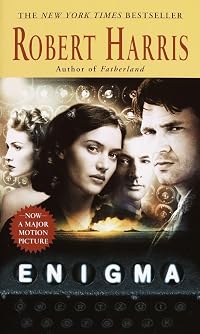
A thriller on the breaking of a secret German radio code during World War II. The protagonists are two British cryptographers, a man and a woman, and their work becomes a race to crack the code in time to save a convoy of U.S. ships from being sunk by U-boats. By the author of The Fatherland.Tags
Recommendations

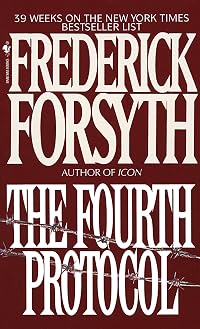
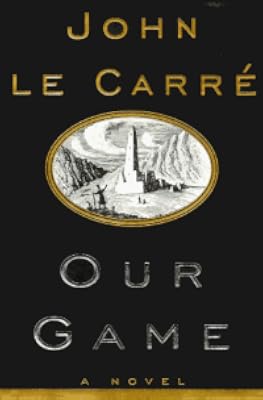

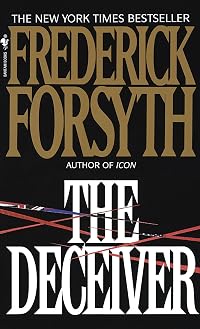

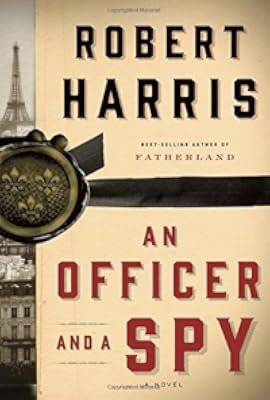


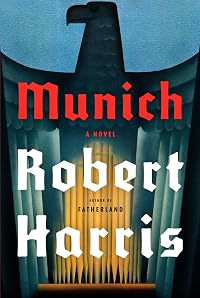
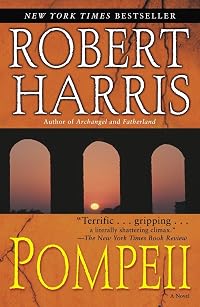

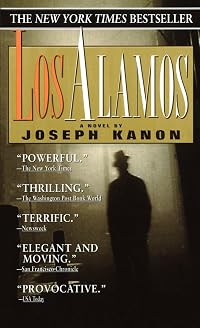
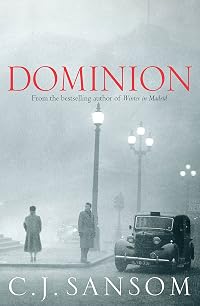








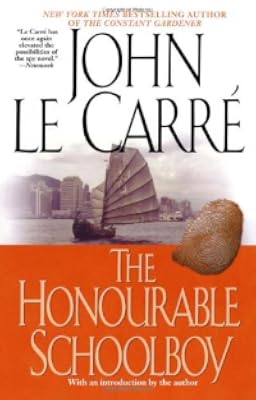

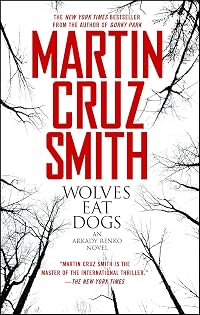

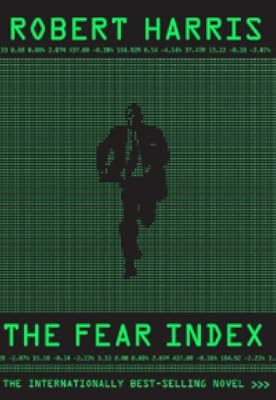
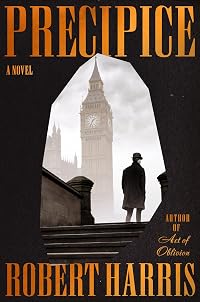
Member Recommendations
souloftherose A fascinating biography of one of the real code-breakers at Bletchley Park. Alan Turing was the mathematician behind the cracking of the Enigma code during WWII.
20
Member Reviews
Enigma is a historical thriller set against the background of WWII England and the cryptology-deciphering HQ at Bletchley Park. Tom Jericho is a brilliant young mathematican who has been sent back to Cambridge University to recuperate from a nervous breakdown brought on by a combination of stress, exhaustion due to working impossible hours with lack of sleep, and the ending of his brief affair with Claire Romilly, who also works at the site. But he is brought back to Bletchley when the Germans change the U-boat code book and it is no longer possible to read their radio traffic. Jericho is seen as the team's best hope despite his fragile mental state, as he had the insight that led to the breaking of the initial U-boat code. Soon show more afterwards, the situation becomes critical as two large Allied convoys leave New York bound for Britain, with vital goods, American servicemen and Red Cross personnel aboard, among others, and the whereabouts of the German U-boats remains unknown.
Jericho hopes to speak to Claire and find out why she threw him over, but just as he discovers that she has stolen intelligence from the site - probably a hanging offence - she disappears and he embarks on a mission to find out what happened to her and why she stole the records of those particular German signals. He is assisted by Hester Wallace, a housemate of Claire's who it seems has a lesbian 'crush' on Claire. Jericho learns to his discomfort that Claire was pretty promiscuous with men by the standards of the day. But it becomes increasingly obvious that she was using them, possibly to obtain information, and could in fact be working for the Germans.
The outcome of the story involves several twists and is quite an absorbing read after a slow start. The sheer awfulness of life in Britain in 1943 is evoked well, with an emphasis on the dreadful food that comes across as all too real: people do obsess about food if they are faced with disgusting fare made from potatoes or very odd seafood. The story is set in winter, further adding to the gloom of the characters, and Harris makes the weather another character in its own right. The whole setting of neglect due to a combination of lack of materials or skilled people to maintain property, bombing damage, and the shortages of every kind of material, is well evoked, as is the stress on the naval code breakers who are among the few people to know how dire the situation is becoming with the convoys.
The book features some effective cameos of rather horrible characters such as Hester's boss who uses his position to sexually harrass women with impunity, as the very term sexual harrassment had not been coined at that time and women were expected to put up with such behaviour without complaint. Harris shows how women of ability such as Hester, who won a cryptic crossword competition that was subsequently used to recruit for Bletchley, were automatically posted to clerical duties whereas the men, including those she beat, were equally automatically employed as code breakers. Hester is rightly embittered by this, and Jericho comes over as yet another man who devalues her when he thinks that she would be pretty if she just made an effort. Her calm demenour, ability to think on her feet and her sheer guts make her the most likeable character in the story, certainly far more than Jericho. Without her, he could not have reached the solution to the mystery. It is rather a cliche that Jericho falls hook, line and sinker for the woman with the looks and sexual allure rather than someone with whom he could have an intelligent conversation, although the hints about Hester's feelings for Claire are possibly the author's way of saying any such relationship would be doomed. Anyway, this contrast of the femme fatale with the sensible bookish spinster is a rather shopworn trope by now.
Code breaking does form a limited but important part of the story. As someone not particulary gifted in maths, I found the explanations quite easy to follow though perhaps I had a little familiarity with the subject, having visited the museum at Bletchley some years ago. Anyway, quite an interesting read about a fascinating period of history although the character cliches mean I can only rate it at three stars. show less
Jericho hopes to speak to Claire and find out why she threw him over, but just as he discovers that she has stolen intelligence from the site - probably a hanging offence - she disappears and he embarks on a mission to find out what happened to her and why she stole the records of those particular German signals. He is assisted by Hester Wallace, a housemate of Claire's who it seems has a lesbian 'crush' on Claire. Jericho learns to his discomfort that Claire was pretty promiscuous with men by the standards of the day. But it becomes increasingly obvious that she was using them, possibly to obtain information, and could in fact be working for the Germans.
The outcome of the story involves several twists and is quite an absorbing read after a slow start. The sheer awfulness of life in Britain in 1943 is evoked well, with an emphasis on the dreadful food that comes across as all too real: people do obsess about food if they are faced with disgusting fare made from potatoes or very odd seafood. The story is set in winter, further adding to the gloom of the characters, and Harris makes the weather another character in its own right. The whole setting of neglect due to a combination of lack of materials or skilled people to maintain property, bombing damage, and the shortages of every kind of material, is well evoked, as is the stress on the naval code breakers who are among the few people to know how dire the situation is becoming with the convoys.
The book features some effective cameos of rather horrible characters such as Hester's boss who uses his position to sexually harrass women with impunity, as the very term sexual harrassment had not been coined at that time and women were expected to put up with such behaviour without complaint. Harris shows how women of ability such as Hester, who won a cryptic crossword competition that was subsequently used to recruit for Bletchley, were automatically posted to clerical duties whereas the men, including those she beat, were equally automatically employed as code breakers. Hester is rightly embittered by this, and Jericho comes over as yet another man who devalues her when he thinks that she would be pretty if she just made an effort. Her calm demenour, ability to think on her feet and her sheer guts make her the most likeable character in the story, certainly far more than Jericho. Without her, he could not have reached the solution to the mystery. It is rather a cliche that Jericho falls hook, line and sinker for the woman with the looks and sexual allure rather than someone with whom he could have an intelligent conversation, although the hints about Hester's feelings for Claire are possibly the author's way of saying any such relationship would be doomed. Anyway, this contrast of the femme fatale with the sensible bookish spinster is a rather shopworn trope by now.
Code breaking does form a limited but important part of the story. As someone not particulary gifted in maths, I found the explanations quite easy to follow though perhaps I had a little familiarity with the subject, having visited the museum at Bletchley some years ago. Anyway, quite an interesting read about a fascinating period of history although the character cliches mean I can only rate it at three stars. show less
I feel distinctly uncomfortable. Shabby and down-at-heel: cold - always marrow-bone cold: under-fed: exhausted. I've been sucked into the world of Bletchley Park, where the code-breakers spent their war years. I was riveted by the picture painted of the privations of the people who served there. The story gripped me at first too, though by the end I felt I wasn't following its twists and turns as I was intended to. As a piece of social history it's a cracking read. As a thriller, a good story, but if I don't rate it more highly than that, It's probably because war thrillers aren't really my thing.
Some parts about coding may have gone swoosh! right over my head, but it didn't matter, I caught the gist of it and it didn't lessen my understanding or enjoyment. Turing has always held a fascination for me and although he didn't actually make an appearance in this story, he got many mentions. I especially liked the way the suspense mounted in the second half. Although I suspected some characters of not being what they claimed to be, I was still caught off-guard. Harris painted a perfect portrait of Great Britain as the war progressed and shortages became more difficult. As well as a captivating story, the details were very interesting. I thoroughly enjoyed this book.
This story inserts itself into some fascinating historical events and is fascinating in itself. A good way of finding out about the role of the Enigma machine in the Second World War whilst also being thoroughly entertained.
Well, as a world war enthusiast among other things, I have read a lot about Enigma and its working. It is safe to say that had it not been for Enigma, Germans would have lost the war a great deal earlier and ironically it was due to Enigma that they lost the war, as they thought that its codes were unbreakable.
Robert Harris has definitely done his research well in the fields regarding Enigma and code breaking done at Bletchley Park during World War II, but I had a feeling that it just served as a backdrop for what could be essentially considered as a love story.
The book lacked excitement, which given the backdrop, should not have been the case.
So, if you have watched the 2001 movie of the same name starring Dougray Scott and Kate show more Winslet, then you are loosing nothing by giving this book a pass.
If you want an alternative, you might want to check out another book called [b:The Enigma|1887173|The Enigma|Michael Barak|http://www.goodreads.com/assets/nocover/60x80.png|6541708] by [a:Michael Barak|1127653|Michael Barak|http://www.goodreads.com/assets/nophoto/nophoto-U-50x66.jpg]. It revolves around stealing Enigma from German hands and while it has some cardboard characters, I found it more memorable than this book. show less
Robert Harris has definitely done his research well in the fields regarding Enigma and code breaking done at Bletchley Park during World War II, but I had a feeling that it just served as a backdrop for what could be essentially considered as a love story.
The book lacked excitement, which given the backdrop, should not have been the case.
So, if you have watched the 2001 movie of the same name starring Dougray Scott and Kate show more Winslet, then you are loosing nothing by giving this book a pass.
If you want an alternative, you might want to check out another book called [b:The Enigma|1887173|The Enigma|Michael Barak|http://www.goodreads.com/assets/nocover/60x80.png|6541708] by [a:Michael Barak|1127653|Michael Barak|http://www.goodreads.com/assets/nophoto/nophoto-U-50x66.jpg]. It revolves around stealing Enigma from German hands and while it has some cardboard characters, I found it more memorable than this book. show less
It's 1943 and the vaunted codebreakers at Bletchley Park have run into trouble. The problem with breaking the enemy's codes is that, if you act on information obtained only through the codebreaking, you run the risk of the enemy discovering what you've done and changing the codes. And when the code in question is part of the Enigma system, that makes re-breaking the code even more difficult. In this novel, it is Tom Jericho's task to break the code and help save a North American convoy from destruction. Meanwhile, his girlfriend, Claire Romilly, has disappeared, and given the circumstances of the war that is very suspicious indeed...
Overall I liked this book, although perhaps it required more concentration than I was able to give it. show more The second half was faster-paced and more riveting than the first, which contained more of the romance bits between Tom and Claire. The descriptions of the codebreaking machines were also interesting and make me want to visit Bletchley Park myself. And while Turing is mentioned frequently, he does not play a major role. If you want Turing-related fiction, try the play Breaking the Code. But for enthusiasts of World War 2 history and the world of codes and ciphers, this is a good bet. show less
Overall I liked this book, although perhaps it required more concentration than I was able to give it. show more The second half was faster-paced and more riveting than the first, which contained more of the romance bits between Tom and Claire. The descriptions of the codebreaking machines were also interesting and make me want to visit Bletchley Park myself. And while Turing is mentioned frequently, he does not play a major role. If you want Turing-related fiction, try the play Breaking the Code. But for enthusiasts of World War 2 history and the world of codes and ciphers, this is a good bet. show less
Tom Jericho, a cryptanalyst working at Bletchley Park during WWII, returns from sick leave to find that his girlfriend, Claire Romilly, has disappeared. Had she been stealing secret information?
I didn't find the plot particularly interestiing but the picture of life in wartime Britain beyond the Blitz was fascinating. I actually spent 3 or 4 years of my childhood on the same street as Bletchley Park, though this was in the 1960s before it became generally known what went on there and although I must have gone past it many times, I have no memory of it at all. I do remember a lot of the other places mentioned and had great fun looking at them on Google Maps.
I didn't find the plot particularly interestiing but the picture of life in wartime Britain beyond the Blitz was fascinating. I actually spent 3 or 4 years of my childhood on the same street as Bletchley Park, though this was in the 1960s before it became generally known what went on there and although I must have gone past it many times, I have no memory of it at all. I do remember a lot of the other places mentioned and had great fun looking at them on Google Maps.
Members
- Recently Added By
Lists

The Guardian's 1000 Novels Everyone Must Read
1,005 works; 547 members

Best Spy Fiction
153 works; 102 members

Historical Fiction
889 works; 89 members

Read the book and saw the movie
1,170 works; 192 members
Best Espionage (Fiction)
55 works; 20 members

Cryptology - non-fiction and fiction
57 works; 4 members

Books Read in 2015
3,299 works; 126 members

THE WAR ROOM
813 works; 24 members

Fiction With Familiar Settings
280 works; 93 members
Author Information

Author Robert Harris was born in Nottingham, England in 1957. He attended King Edward VII College and Selwyn College. He has worked as a BBC journalist, the Political Editor of the Observer, and a columnist for The Sunday Times and Daily Telegraph. He was named Columnist of the Year by the British Press in 2003. He has written both fiction and show more nonfiction books and currently lives in Berkshire, England. His works of fiction include; An Officer and a Spy, The Fear Index, Pompeii, Enigma, Fatherland, Dictator, and Conclave. (Bowker Author Biography) show less
Some Editions
Awards and Honors
Series

Belongs to Publisher Series
Work Relationships
Is contained in
Has the adaptation
Common Knowledge
- Canonical title
- Enigma
- Original title
- Enigma
- Original publication date
- 1995
- People/Characters
- Tom Jericho; Hester Wallace; Guy Logie; Leonard Skynner; Douglas Wigram; Adam Pukowski (show all 8); Rogerio Raposo; Claire Romilly
- Important places
- Bletchley Park, Bletchley, Buckinghamshire, England, UK; Bletchley, Buckinghamshire, England, UK; England, UK; Cambridge, Cambridgeshire, England, UK; Beaumanor Hall, Woodhouse, Leicestershire, England, UK; North Atlantic Ocean
- Important events
- World War II (1939 | 1945); World War II, Ultra; Katyn massacre
- Related movies
- Enigma (2001 | IMDb)
- Dedication
- For Gill,
and for Holly and Charlie
QXQF VFLR TXLG VLWD PRUA - First words
- Cambridge in the fourth winter of the war: a ghost town.
- Last words
- (Click to show. Warning: May contain spoilers.)The way Kite told it afterwards, Jericho must have stood that way for at least five minutes, turning first towards the chapel, then the meadow, and then the hall, before moving off purposefully towards his staircase, passing out of sight.
- Blurbers
- Knightley, Phillip; Binyon, T.J.; Cannadine, David; Millar, Peter; Hurd, Douglas; Fitzgerald, Penelope (show all 9); Andrews, Chistopher; Sereny, Gitta; Quinn, Anthony
- Original language
- English
Classifications
Statistics
- Members
- 3,166
- Popularity
- 5,482
- Reviews
- 42
- Rating
- (3.67)
- Languages
- 17 — Czech, Danish, Dutch, English, Finnish, French, German, Greek, Italian, Korean, Norwegian (Bokmål), Polish, Serbian, Slovak, Spanish, Swedish, Portuguese (Portugal)
- Media
- Paper, Audiobook, Ebook
- ISBNs
- 77
- UPCs
- 1
- ASINs
- 19