On This Page
Description
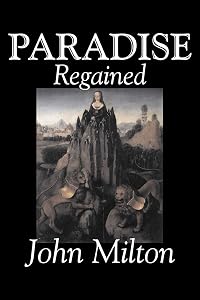
Satan again is on the prowl, having successfully tempted Adam and Eve and forced their departure from the Garden of Eden, here he sets out to tempt again - this time Jesus himself as he comes to the end of his forty days in the desert.Tags
Recommendations









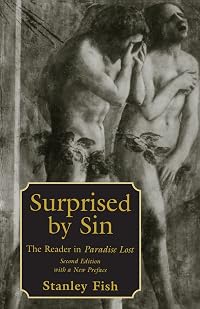















Member Recommendations
Member Reviews
I'd never read this one before, and ended up liking it more than I thought I would. The temptations of Jesus in the desert are presented really well, and in a much less florid language than in Paradise Lost, which fits the subject matter. Again, Satan is a pretty compelling character, and even though his arguments pretty lame and easily knocked down by Jesus, they still bite. Interesting to read this as a compelling metaphor for American evangelicals, who were offered the world by Trump, and instead of turning their backs on him, went for it whole hog.
I'm going to keep this pretty brief because I read this immediately after "Paradise Lost", and I feel like I might need to regain a little bit of my brain power, since I poured forth all of my processing power into understanding both of those epic poems.
With that said, let me begin.
First off, I don't understand why some people consider "Paradise Regained" as lesser than its predecessor. Whereas "Lost" was all about how Adam and Eve were driven from Paradise after Satan was driven out of heaven, thus initiating the fall of man in the same way he fell from the loving grace of God, "Regained" is all about how the Son returns man through him and his sacrifice for the totality of the original sin.
Of course, it's not the complete life of show more Jesus Christ or of the Son as he lived a mortal life. In fact, it's how Satan tried to deceive and even tempt Christ, who denied him in every way. What this short poem lacked in prose, beautifully wrought scenery, and clever fiction to fill in the gaps of the bible's Genesis section, it made up for in theological debate. Satan used all that he could offer to Christ, who rebuffed him at every step. All the empires of the world? What about the current emperor who sat upon the throne and took Satan's offer? What will happen after another comes to be tempted? Everlasting life? Christ already has that. Philosophical discussion to persuade Christ into kneeling? Theological discussion on the nature of the soul vs. that of the earth.
You get the idea. It's mostly just a debate between Satan and Christ but it does at least center out a bit to what Christ was thinking and why he denied Satan's temptations, and I think as a poem based upon some of Catholicism's catchetisms (of which I'm still learning myself), it makes for a nice epilogue to the epic that was "Lost".
Overall, I believe this should be read immediately after "Paradise Lost", since it's a nice capstone to the epic. show less
With that said, let me begin.
First off, I don't understand why some people consider "Paradise Regained" as lesser than its predecessor. Whereas "Lost" was all about how Adam and Eve were driven from Paradise after Satan was driven out of heaven, thus initiating the fall of man in the same way he fell from the loving grace of God, "Regained" is all about how the Son returns man through him and his sacrifice for the totality of the original sin.
Of course, it's not the complete life of show more Jesus Christ or of the Son as he lived a mortal life. In fact, it's how Satan tried to deceive and even tempt Christ, who denied him in every way. What this short poem lacked in prose, beautifully wrought scenery, and clever fiction to fill in the gaps of the bible's Genesis section, it made up for in theological debate. Satan used all that he could offer to Christ, who rebuffed him at every step. All the empires of the world? What about the current emperor who sat upon the throne and took Satan's offer? What will happen after another comes to be tempted? Everlasting life? Christ already has that. Philosophical discussion to persuade Christ into kneeling? Theological discussion on the nature of the soul vs. that of the earth.
You get the idea. It's mostly just a debate between Satan and Christ but it does at least center out a bit to what Christ was thinking and why he denied Satan's temptations, and I think as a poem based upon some of Catholicism's catchetisms (of which I'm still learning myself), it makes for a nice epilogue to the epic that was "Lost".
Overall, I believe this should be read immediately after "Paradise Lost", since it's a nice capstone to the epic. show less
Milton recounts and reinterprets the Biblical story of Satan Tempting Christ in Paradise Regained, in which he lays open to criticism and derision the whole of human existence and history. There is a distinct undertone of defiance and bitterness. In the poem, Christ is represented, not so much as the only begotten Son of God, but a heroic moral figure, who triumphs over Satan, not by His Godliness, but by ethical and philosophical polemics, the very thing he criticizes.
In attempting to “justify the ways of God to men”, Milton fails to do justice to either.
(Read full review with illustrations at Nemo's Library)
In attempting to “justify the ways of God to men”, Milton fails to do justice to either.
(Read full review with illustrations at Nemo's Library)
Reading Paradise Regained for probably the second time. This shorter poem simply glorifies Jesus Christ more than Paradise Lost--that is all. Of course--Paradise Lost is more about Satan than about God.
A fine accompaniment to Paradise Lost and a fitting resolution. Expands upon Satan's attempted temptation of Christ in the desert, and provides a brief "sequel" to Paradise Lost, in which Paradise is regained by the adamancy of Christ.
Not quite as good as Paradise Lost, but it's still a great work.
Not quite as good as Paradise Lost, but it's still a great work.
Members
- Recently Added By
Lists

Harold Bloom - The Western Canon: B. The Aristocratic Age
231 works; 13 members

Greatest Books, allegedly
484 works; 9 members

Books You Read For University
184 works; 3 members

Recommended Reading : 600 Classics Reviewed, Editors of Salem Press, 2015
634 works; 6 members

Works Cited in The Life and Death of Democracy by John Keane
278 works; 1 member
Author Information

764+ Works 35,355 Members
John Milton, English scholar and classical poet, is one of the major figures of Western literature. He was born in 1608 into a prosperous London family. By the age of 17, he was proficient in Latin, Greek, and Hebrew. Milton attended Cambridge University, earning a B.A. and an M.A. before secluding himself for five years to read, write and study show more on his own. It is believed that Milton read evertything that had been published in Latin, Greek, and English. He was considered one of the most educated men of his time. Milton also had a reputation as a radical. After his own wife left him early in their marriage, Milton published an unpopular treatise supporting divorce in the case of incompatibility. Milton was also a vocal supporter of Oliver Cromwell and worked for him. Milton's first work, Lycidas, an elegy on the death of a classmate, was published in 1632, and he had numerous works published in the ensuing years, including Pastoral and Areopagitica. His Christian epic poem, Paradise Lost, which traced humanity's fall from divine grace, appeared in 1667, assuring his place as one of the finest non-dramatic poet of the Renaissance Age. Milton went blind at the age of 43 from the incredible strain he placed on his eyes. Amazingly, Paradise Lost and his other major works, Paradise Regained and Samson Agonistes, were composed after the lost of his sight. These major works were painstakingly and slowly dictated to secretaries. John Milton died in 1674. (Bowker Author Biography) show less
Some Editions
Series

Work Relationships
Is contained in
Contains
Has the adaptation
Has as a study
Has as a commentary on the text
Common Knowledge
- Original publication date
- 1671
- People/Characters
- Jesus Christ; John the Baptist; Satan; God; Simon the Zealot; Andrew the Apostle (show all 11); Mary, mother of Jesus; Belial; Elijah; David, King of Israel, son of Jesse; Alexander the Great
- Important places
- Heaven; Ancient Rome; Ancient Greece; Jerusalem
- Important events
- Baptism of Jesus of Nazareth
- Last words
- (Click to show. Warning: May contain spoilers.)Thus they the Son of God, our Saviour meek, / Sung victor, and, from heavenly feast refreshed, / Brought oh his way with joy. He, unobserved, / Home to his mother's house private returned.
- Original language
- English
Classifications
Statistics
- Members
- 376
- Popularity
- 83,696
- Reviews
- 7
- Rating
- (3.75)
- Languages
- 5 — English, French, Norwegian (Bokmål), Norwegian, Portuguese
- Media
- Paper, Audiobook, Ebook
- ISBNs
- 87
- UPCs
- 1
- ASINs
- 11