On This Page
Description
From the award-winning author of A Beautiful Place to Die comes the next sensational instalment featuring the charismatic detective Emmanuel Cooper.Patrolling the freight yards one evening, Emmanuel stumbles upon the body of a young white boy and the detective in him cannot, or will not, walk away. When two more bodies are discovered at Emmanuel's boarding house, he unwittingly becomes the prime suspect in a triple murder case.At van Neikerk's behest, Emmanuel is given a 48-hour reprieve to show more clear his name and - unofficially - try and solve the murders. And so, temporarily back to being a European Detective Sergeant, he launches headlong into the criminal underworld of Durban, a viper's nest of prostitution, drug running and violence run by a colourful cast of characters including two wannabe Indian gangsters; a mysterious figure who drives a white De Soto convertible; a Zion Gospel preacher; king of the underworld Mr Khan; and the exquisite yet streetwise Lana, who also happens to be Emmanuel's boss's mistress... show lessTags
Recommendations













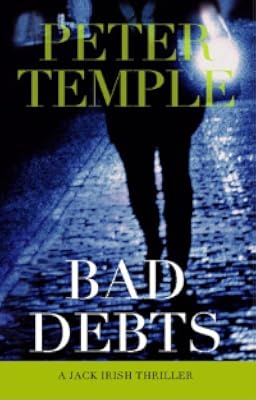


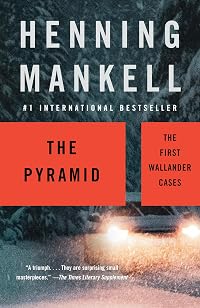
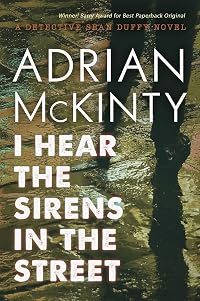
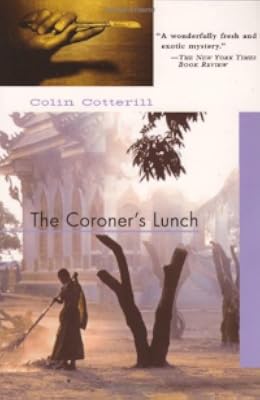

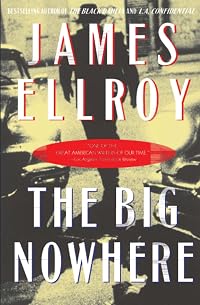
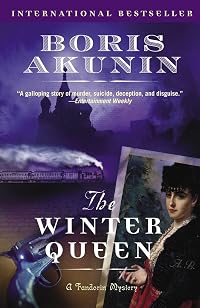
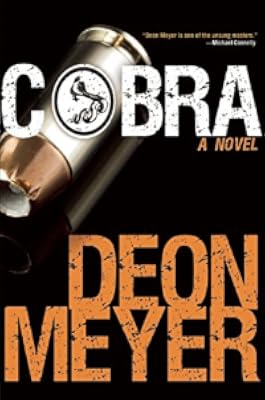

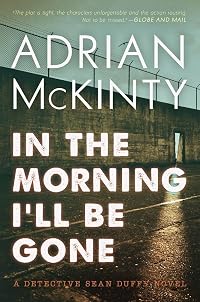
Member Recommendations

Member Reviews
In the 1950′s it’s eight months since the events of [b:A Beautiful Place to Die|2991868|A Beautiful Place to Die|Malla Nunn|http://photo.goodreads.com/books/1255746344s/2991868.jpg|3022332] and, under South Africa’s increasingly draconian apartheid laws, Emmanuel Cooper has been re-classified as non-white and stripped of his job in the police. He’s had to move to Durban and is working a manual labour job by day and doing undercover surveillance work documenting police corruption at the dockyards for his former boss at night. It’s during his night time work that he stumbles across the body of a young boy, Jolly Marks. Of course investigating deaths is no longer Cooper’s job but he is compelled to work the case anyway. When he show more is accused of being the one to have committed the crime, and two subsequent murders, he has only a brief window of time to clear his name.
Once again Malla Nunn has delivered a brilliant depiction of a time and place. In the urban setting the harshness of the political situation is even more starkly displayed than was the case with the first book which took place in the remote Jacob’s Rest. With so many routine day-to-day activities now controlled by the myriad of new laws virtually everyone is in danger of doing something illegal at some point and the distrust, paranoia and necessary self-interest this engenders is portrayed here to perfection. There is also a hefty dose of desperation displayed by many characters caught in horrendous circumstances such as having married before the laws came into effect and now learning the marriage is outlawed because the couple are newly classified as different races. What struck me too here was that on top of all the kinds of hell the regime settled upon the civilian population it made the ever-present ‘us and them’ mentality between police and the wider community that much worse because, essentially, everyone a policeman comes across is a criminal of one sort or another. Even an honourable cop struggles to deal with that.
Characterisations are Nunn’s other great skill. I liked Emmanuel Cooper even more than in the first book though he is not always a likable human being. But as a character, flaws and all, he is the sort of person who leaps off the page. Experiencing first hand the plight of being classified out of the self-appointed ruling race and losing his job, the main thing by which he defines himself as a human being, make Cooper lose some of his confidence and sense of self-worth. He seems even more haunted by the phantom of his former Sergeant Major and is generally not functioning at his best but he strives, not always successfully, to do no harm to others, especially when the two friends he made in Jacob’s Rest come to town to help him. There isn’t a single standout villain here but there’s a criminal under
As far as story goes I found the middle section a bit woolly with a couple of complications too many. Apart from Cooper, who simply can’t let the dead lie, no one seemed to care much about the murder victims because they were too busy worrying about themselves (not without good reason I admit) or, in the case of the cops, were focussed on ‘getting’ Cooper. For a while the story lost its way a little though it ended strongly with a nail-biting but believable climax.
Emmanuel Copper is certainly not the first flawed protagonist in crime fiction but I find him unique in terms of the experiences he’s endured and I’m left wanting to read more about him. And while this is too confronting a setting to be considered a comfort read it is superbly drawn and, alas, all too believable. I heartily recommend this book though would suggest reading A Beautiful Place to Die first to get a full sense of all that Cooper has had and lost before becoming who he is in this novel. show less
Once again Malla Nunn has delivered a brilliant depiction of a time and place. In the urban setting the harshness of the political situation is even more starkly displayed than was the case with the first book which took place in the remote Jacob’s Rest. With so many routine day-to-day activities now controlled by the myriad of new laws virtually everyone is in danger of doing something illegal at some point and the distrust, paranoia and necessary self-interest this engenders is portrayed here to perfection. There is also a hefty dose of desperation displayed by many characters caught in horrendous circumstances such as having married before the laws came into effect and now learning the marriage is outlawed because the couple are newly classified as different races. What struck me too here was that on top of all the kinds of hell the regime settled upon the civilian population it made the ever-present ‘us and them’ mentality between police and the wider community that much worse because, essentially, everyone a policeman comes across is a criminal of one sort or another. Even an honourable cop struggles to deal with that.
Characterisations are Nunn’s other great skill. I liked Emmanuel Cooper even more than in the first book though he is not always a likable human being. But as a character, flaws and all, he is the sort of person who leaps off the page. Experiencing first hand the plight of being classified out of the self-appointed ruling race and losing his job, the main thing by which he defines himself as a human being, make Cooper lose some of his confidence and sense of self-worth. He seems even more haunted by the phantom of his former Sergeant Major and is generally not functioning at his best but he strives, not always successfully, to do no harm to others, especially when the two friends he made in Jacob’s Rest come to town to help him. There isn’t a single standout villain here but there’s a criminal under
As far as story goes I found the middle section a bit woolly with a couple of complications too many. Apart from Cooper, who simply can’t let the dead lie, no one seemed to care much about the murder victims because they were too busy worrying about themselves (not without good reason I admit) or, in the case of the cops, were focussed on ‘getting’ Cooper. For a while the story lost its way a little though it ended strongly with a nail-biting but believable climax.
Emmanuel Copper is certainly not the first flawed protagonist in crime fiction but I find him unique in terms of the experiences he’s endured and I’m left wanting to read more about him. And while this is too confronting a setting to be considered a comfort read it is superbly drawn and, alas, all too believable. I heartily recommend this book though would suggest reading A Beautiful Place to Die first to get a full sense of all that Cooper has had and lost before becoming who he is in this novel. show less
Let the Dead Lie is set in 1950s port town of Durban, South Africa where former Detective Emmanuel Cooper is dealing with the aftermath of inflaming the Security Branch in A Beautiful Place to Die. With no police badge and a different race identification card, Cooper now works undercover in the Victory Shipyards doing surveillance for his former boss, Colonel Van Niekerk.
When Emmanuel discovers the dead body of a ten-year old white errand boy, he cannot let the crime go even though he know it will cause him serious problems. As he becomes a suspect in the crime he's given 48 hours to solve it or end up in jail as the murderer. Several complications and interwoven connections expose layers of corruption and danger. The plot takes so many show more twists and turns that it isn't possible to guess the outcome. The story gets more and more intriguing as the real facts of the boy's killing are exposed with countless characters, policemen and spies. The boy's killing is only a small part of this story.
This suspenseful novel is taut, well written and tightly paced. The reader is immersed into the culture and the atmospherics of the unjust and complex color dynamics of South Africa. Throughout the novel, we are confronted with the race laws and the cruel realities of living at a time where identity is granted only through being officially white. This book develops the series with a more intimate look at Emmanuel Cooper and moves the series forward in a new and interesting plot twist. The insights into his character become even more fascinating here as past and present combine to create one of the most fascinating literary characters I've ever read about. Sometimes an author's work will just “grab” you. This has been my experience so I can't recommend this series enough. show less
When Emmanuel discovers the dead body of a ten-year old white errand boy, he cannot let the crime go even though he know it will cause him serious problems. As he becomes a suspect in the crime he's given 48 hours to solve it or end up in jail as the murderer. Several complications and interwoven connections expose layers of corruption and danger. The plot takes so many show more twists and turns that it isn't possible to guess the outcome. The story gets more and more intriguing as the real facts of the boy's killing are exposed with countless characters, policemen and spies. The boy's killing is only a small part of this story.
This suspenseful novel is taut, well written and tightly paced. The reader is immersed into the culture and the atmospherics of the unjust and complex color dynamics of South Africa. Throughout the novel, we are confronted with the race laws and the cruel realities of living at a time where identity is granted only through being officially white. This book develops the series with a more intimate look at Emmanuel Cooper and moves the series forward in a new and interesting plot twist. The insights into his character become even more fascinating here as past and present combine to create one of the most fascinating literary characters I've ever read about. Sometimes an author's work will just “grab” you. This has been my experience so I can't recommend this series enough. show less
Let the Dead Lie is the exciting second novel from Malla Nunn featuring Detective Emmanuel Cooper series, following on from A Beautiful Place To Die. This crime series, set in Southern Africa in the 1950′s, has a gritty, dark realism that explores the political and social system of the period.
Detective Emmanuel Cooper is working on the docks in the port city of Durban having been forced to resign his position and accept a reclassification as ‘mixed race’ after the events in Jacob’s Rest. Despite his status, he has been recruited by Major van Niekerk to surveil criminal activity at the dock, which leads him to discover the body of a young boy with his throat slit. Emmanuel doesn’t have any faith that the police will solve the show more murder and begins his own unsanctioned investigation but his curiosity turns him into a prime suspect after his landlady and his maid are murdered. Emmanuel has just 48 hours to solve the crimes or be arrested and charged with the triple homicide. Unraveling the mystery sees Emmanuel face international intrigue, police corruption, turf wars, smugglers, and his own ghosts.
In Let The Dead Lie, Emmanuel struggles against himself as much as he does the corruption and crime of Southern Africa. The body of the dead boy affects him so strongly partly because Emmanuel was once a child of the slums, struggling to survive poverty and violence. Emmanuel is not the type of man to ignore a brutal murder, even when it is in his best interests. Led by his conscience, with a moral compass that chafes against the restrictions of 1950′s South African society, Emmanuel is determined to find justice for the murdered boy, no matter the personal cost. Even with just 48 hours to exonerate himself his focus remains on finding the murderer responsible for the child’s death, rather than the man who could set him free. It’s a subtle distinction but an important one because of what it tells you about Emmanuel’s character. Emmanuel would likely do as he pleased and damn the consequences if it wasn’t for the fact that others would be the ones to pay the price for his behaviour. Emmanuel believes himself to be irredeemably flawed and seems to court punishment, which he feels he deserves because of his failure to save his mother and his experiences during the war. He is constantly surprised by the loyalty of Constable Shabalala and Doctor Zwiegman. He doesn’t recognise the positive traits within himself that the men respond to with respect.
The action in Let The Dead Lie is fast paced with the bulk of the action taking place within the 48 hour window Emmanuel has to solve the crimes. Suspects are considered, some dismissed quickly, others studied for longer, but as the case grows more complicated the tension mounts. Investigating the boy’s murder leads Emmanuel into the middle of a turf war between Indian drug smugglers and an Underworld boss, and a Secret Police search for Russian traitors while staying ahead of the police who want their pound of flesh. Emmanuel is convinced the connections are there but can’t figure out how everything fits together. The plot is multilayered and complex but the links resolve into a satisfying conclusion.
The urban setting for Let The Dead Lie is as vivid as the stark country side of Jacob’s Rest, from the bustling, seedy port, to the Durban slums to the gated houses of the white aristocracy. The cultural framework of the novel though is what really sets this series apart from other crime novels. The tenants of apartheid makes my skin crawl and Nunn accurately and honestly portrays the disturbing racism and inequality of Southern Africa at the time. The characters that populate her novels are very much the products of such a twisted regime. Having experienced life with status and without, Emmanuel is more sensitive than most to the unfairness of the social system that determines every aspect of life by the colour of a person’s skin.
Once I had started Let The Dead Lie I found it difficult to put it down, engrossed in the thrilling action, strong characters and fascinating setting. This is a terrific, fast paced read that I highly recommend for readers of crime fiction. Personally I was so eager to prolong the experience I dived straight into the third installment, Silent Valley and wasn’t disappointed. show less
Detective Emmanuel Cooper is working on the docks in the port city of Durban having been forced to resign his position and accept a reclassification as ‘mixed race’ after the events in Jacob’s Rest. Despite his status, he has been recruited by Major van Niekerk to surveil criminal activity at the dock, which leads him to discover the body of a young boy with his throat slit. Emmanuel doesn’t have any faith that the police will solve the show more murder and begins his own unsanctioned investigation but his curiosity turns him into a prime suspect after his landlady and his maid are murdered. Emmanuel has just 48 hours to solve the crimes or be arrested and charged with the triple homicide. Unraveling the mystery sees Emmanuel face international intrigue, police corruption, turf wars, smugglers, and his own ghosts.
In Let The Dead Lie, Emmanuel struggles against himself as much as he does the corruption and crime of Southern Africa. The body of the dead boy affects him so strongly partly because Emmanuel was once a child of the slums, struggling to survive poverty and violence. Emmanuel is not the type of man to ignore a brutal murder, even when it is in his best interests. Led by his conscience, with a moral compass that chafes against the restrictions of 1950′s South African society, Emmanuel is determined to find justice for the murdered boy, no matter the personal cost. Even with just 48 hours to exonerate himself his focus remains on finding the murderer responsible for the child’s death, rather than the man who could set him free. It’s a subtle distinction but an important one because of what it tells you about Emmanuel’s character. Emmanuel would likely do as he pleased and damn the consequences if it wasn’t for the fact that others would be the ones to pay the price for his behaviour. Emmanuel believes himself to be irredeemably flawed and seems to court punishment, which he feels he deserves because of his failure to save his mother and his experiences during the war. He is constantly surprised by the loyalty of Constable Shabalala and Doctor Zwiegman. He doesn’t recognise the positive traits within himself that the men respond to with respect.
The action in Let The Dead Lie is fast paced with the bulk of the action taking place within the 48 hour window Emmanuel has to solve the crimes. Suspects are considered, some dismissed quickly, others studied for longer, but as the case grows more complicated the tension mounts. Investigating the boy’s murder leads Emmanuel into the middle of a turf war between Indian drug smugglers and an Underworld boss, and a Secret Police search for Russian traitors while staying ahead of the police who want their pound of flesh. Emmanuel is convinced the connections are there but can’t figure out how everything fits together. The plot is multilayered and complex but the links resolve into a satisfying conclusion.
The urban setting for Let The Dead Lie is as vivid as the stark country side of Jacob’s Rest, from the bustling, seedy port, to the Durban slums to the gated houses of the white aristocracy. The cultural framework of the novel though is what really sets this series apart from other crime novels. The tenants of apartheid makes my skin crawl and Nunn accurately and honestly portrays the disturbing racism and inequality of Southern Africa at the time. The characters that populate her novels are very much the products of such a twisted regime. Having experienced life with status and without, Emmanuel is more sensitive than most to the unfairness of the social system that determines every aspect of life by the colour of a person’s skin.
Once I had started Let The Dead Lie I found it difficult to put it down, engrossed in the thrilling action, strong characters and fascinating setting. This is a terrific, fast paced read that I highly recommend for readers of crime fiction. Personally I was so eager to prolong the experience I dived straight into the third installment, Silent Valley and wasn’t disappointed. show less
The second Detective Sergeant Emmanuel Cooper book LET THE DEAD LIE has now been released, following on the from highly praised A BEAUTIFUL PLACE TO DIE.
LET THE DEAD LIE takes Cooper into different physical circumstances, working in a very bleak city, doing menial labour and nightly surveillance work, there's a sense of loss and depression surrounding him. This rapidly changes to desperation as he is implicated in further murders and has a limited time, and difficult circumstances in which to clear his own name.
Readers of the first of the Cooper books will be aware that this series is based within apartheid South Africa in the early 1950's. That's a very bleak, uncomfortable and disturbing location and timeframe for readers to be pushed show more into. It's made even more discomforting with the move to the urban setting - somehow there's a loss of a sense of some beauty, probably because there's less of the natural world. The vast majority of people that Cooper encounters in this book are down-trodden or controlled totally by their "racial situation". There are some rare exceptions to that of course, and there's certainly some signs of people making the best of an appalling situation - but sadly there are also signs of depravity and prejudice and tensions within racial groups. Somehow this makes the whole apartheid situation, and the nature of South Africa in that time darker, more depressing, more disheartening.
Cooper himself remains an interesting, challenging character. Not quite an unreliable narrator, he's certainly a flawed human being. Which is something that really appeals to this reader - central characters that engage, make you think, wince or even dislike on occasions. Especially as Cooper has a good streak - his motivations are good, perhaps his methods less clear and sometimes his own relationships are at best hamfisted or at worst manipulative. But it's that sense of manipulation that is strongest in this book - from the "State" manipulating people's rights and opportunities based on a mindlessly arbitrary classification of "race"; through people within those race groups manipulating their own situation, and those around them; to the way that the race groups do (or do not) co-operate or respect each other as well.
Where the circumstances of the setting of the book are so overwhelming, it can sometimes be that the narrative can get a little lost in the crowd. It's an interesting thing that in LET THE DEAD LIE, there is sufficient description and background to the world in which Cooper is operating to give a clear indication of what it must have been like, without losing too much impetus in the investigation. That investigation also twists and turns nicely and quite realistically giving the reader a sneaking suspicion that whilst some things are obvious, others may not be as they seem.
Undoubtedly reading these stories isn't a particularly easy or pleasant task. The world is unpalatable, the society confrontational and profoundly shocking. Cooper himself isn't a knight in shining armour. He is, however, a great survivor and let's hope this series survives with him. show less
LET THE DEAD LIE takes Cooper into different physical circumstances, working in a very bleak city, doing menial labour and nightly surveillance work, there's a sense of loss and depression surrounding him. This rapidly changes to desperation as he is implicated in further murders and has a limited time, and difficult circumstances in which to clear his own name.
Readers of the first of the Cooper books will be aware that this series is based within apartheid South Africa in the early 1950's. That's a very bleak, uncomfortable and disturbing location and timeframe for readers to be pushed show more into. It's made even more discomforting with the move to the urban setting - somehow there's a loss of a sense of some beauty, probably because there's less of the natural world. The vast majority of people that Cooper encounters in this book are down-trodden or controlled totally by their "racial situation". There are some rare exceptions to that of course, and there's certainly some signs of people making the best of an appalling situation - but sadly there are also signs of depravity and prejudice and tensions within racial groups. Somehow this makes the whole apartheid situation, and the nature of South Africa in that time darker, more depressing, more disheartening.
Cooper himself remains an interesting, challenging character. Not quite an unreliable narrator, he's certainly a flawed human being. Which is something that really appeals to this reader - central characters that engage, make you think, wince or even dislike on occasions. Especially as Cooper has a good streak - his motivations are good, perhaps his methods less clear and sometimes his own relationships are at best hamfisted or at worst manipulative. But it's that sense of manipulation that is strongest in this book - from the "State" manipulating people's rights and opportunities based on a mindlessly arbitrary classification of "race"; through people within those race groups manipulating their own situation, and those around them; to the way that the race groups do (or do not) co-operate or respect each other as well.
Where the circumstances of the setting of the book are so overwhelming, it can sometimes be that the narrative can get a little lost in the crowd. It's an interesting thing that in LET THE DEAD LIE, there is sufficient description and background to the world in which Cooper is operating to give a clear indication of what it must have been like, without losing too much impetus in the investigation. That investigation also twists and turns nicely and quite realistically giving the reader a sneaking suspicion that whilst some things are obvious, others may not be as they seem.
Undoubtedly reading these stories isn't a particularly easy or pleasant task. The world is unpalatable, the society confrontational and profoundly shocking. Cooper himself isn't a knight in shining armour. He is, however, a great survivor and let's hope this series survives with him. show less
In the sequel to A Beautiful Place to Die, Emmanuel Cooper, no longer a detective, is working undercover for his former major when he stumbles across the body of a young boy; he can't resist working the case, which results in his being framed for three murders, and he must work against the clock to identify the real killer.
This is more of a thriller than a mystery/police procedural, as A Beautiful Place to Die was, although they should be read in order as characters and plot points from the first book are important in the sequel, and a reader new to the series would probably feel lost. The historical setting of Durban, South Africa, in the mid-1950s was vividly portrayed, playing up the awful racial stratifications of the country at the show more time. However, the plot wasn't as compelling as I would like, despite the "race against time" aspect of it, because it unwound more as a spy thriller than a mystery, and I wasn't that invested in the outcome. I probably won't continue with this series. show less
This is more of a thriller than a mystery/police procedural, as A Beautiful Place to Die was, although they should be read in order as characters and plot points from the first book are important in the sequel, and a reader new to the series would probably feel lost. The historical setting of Durban, South Africa, in the mid-1950s was vividly portrayed, playing up the awful racial stratifications of the country at the show more time. However, the plot wasn't as compelling as I would like, despite the "race against time" aspect of it, because it unwound more as a spy thriller than a mystery, and I wasn't that invested in the outcome. I probably won't continue with this series. show less
Nunn once again gives us a very revealing glimpse into South African life under the ruling National Party's segregation laws. I thought the first book in the series, A Beautiful Place to Die, was excellent. Unfortunately this second book was a struggle to read due to the inclusion of too much from the previous book and an absolutely glacial pace. To say I was disappointed would be an understatement; however, because of that first book, I will continue with the series.
The characters were as complicated as the country that they lived in. I enjoyed everything about this book. The author acknowledged the complicated times that shape these characters, not hiding the horrible aspects of the South African culture.
I will be putting more of this authors books on my TBR.
I will be putting more of this authors books on my TBR.
Members
- Recently Added By
Lists

Books Read in 2015
3,299 works; 129 members

Books With Complete Sentence Titles
502 works; 17 members

Africa
109 works; 8 members
Author Information

11+ Works 1,320 Members
Malla Nunn is the author of Present Darknes which made the Davitt Awards 2015 shortlists in the category of Adult Novel. This title also made the Ned Kelly 2015 shortlists in the category of Best Novel. (Bowker Author Biography)
Some Editions
Series

Common Knowledge
- Canonical title
- Let the Dead Lie
- Original publication date
- 2010-10
- People/Characters
- Emmanuel Cooper
- Important places
- South Africa; Durban, South Africa
- Dedication
- To my parents,
Courtney and Patricia Nunn - First words
- A flashing neon hotel sign lit the narrow cobblestone lane.
- Last words
- (Click to show. Warning: May contain spoilers.)"To my mother," Emmanuel said.
- Blurbers
- Minette Walters
- Disambiguation notice*
- original title: Let the Dead Lie
*Some information comes from Common Knowledge in other languages. Click "Edit" for more information.
Classifications
Statistics
- Members
- 185
- Popularity
- 177,374
- Reviews
- 13
- Rating
- (3.91)
- Languages
- 5 — Dutch, English, French, German, Spanish
- Media
- Paper, Audiobook, Ebook
- ISBNs
- 26
- ASINs
- 5