

The Winter Ghosts
by Kate Mosse
On This Page
Description
By the author of the New York Times-bestselling Labyrinth, a story of two lives touched by war and transformed by courage. In the winter of 1928, still seeking some kind of resolution to the horrors of World War I, Freddie is traveling through the beautiful but forbidding French Pyrenees. During a snowstorm, his car spins off the mountain road. Dazed, he stumbles through the woods, emerging in a tiny village, where he finds an inn to wait out the blizzard...Tags
Recommendations
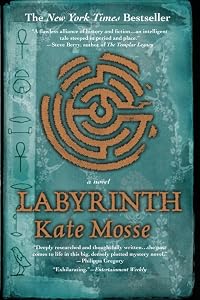


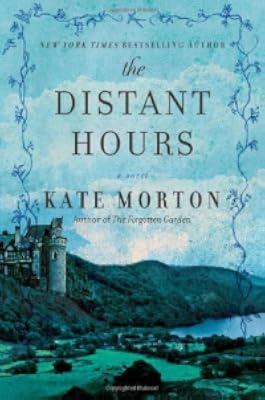
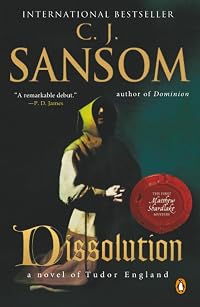
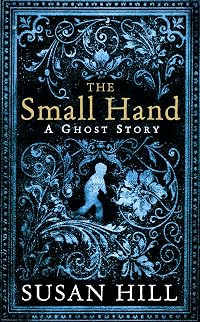

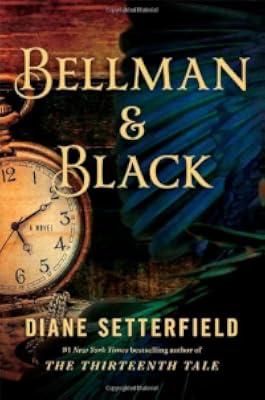
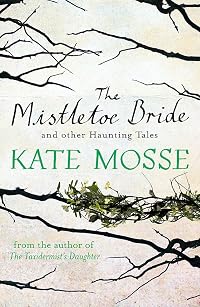
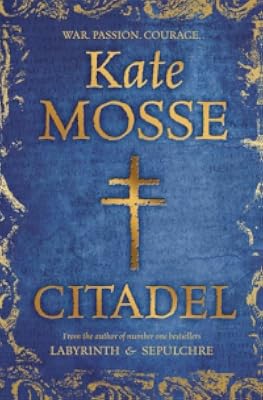
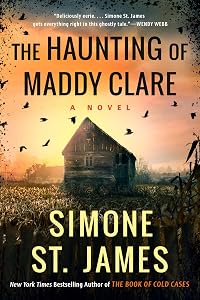
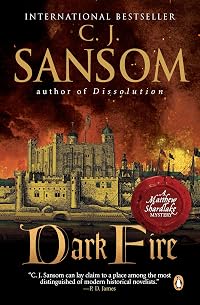
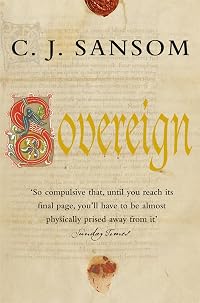
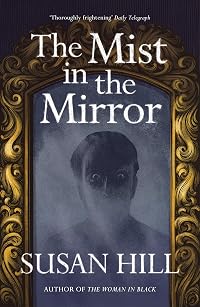
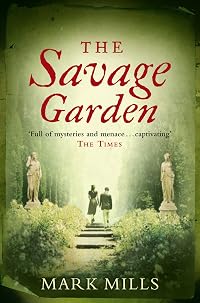







Member Recommendations
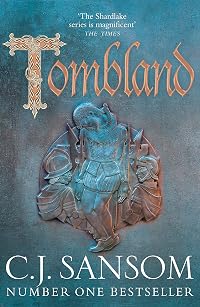
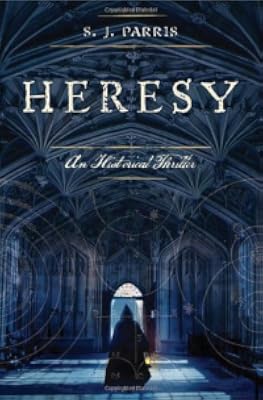
countrylife Historical fiction also about religious persecution & the inquisition, Rora is a much longer book, and recounts the story of the Waldenses and their defense of their homes and territory against the inquisition's army.

Member Reviews
‘’Bones and shadows and dust. I am the last. The others have slipped away into darkness. Around me now, at the end of my days, only an echo in the still air of the memory of those who once I loved. Solitude, silence.’’
Kate Mosse is one those writers that I trust completely. I’d choose one of her books without reading the blurb or a single review without reservations. Although I’ve never read the Languedoc trilogy because I’ve been spoiled to the degree of knowing every single detail, ‘’The Taxidermist’s Daughter’’ is a novel very close to my heart. Choosing ‘’The Winter Ghosts’’ as one of my wintry reads was a no-brainer and what a journey it proved to be!
The story is simple but fascinating. We find show more ourselves in 1933 when our hero, Freddie, visits a special bookseller. Through his narration, we are transported in 1928, the year when Freddie visits the French Pyrenees in an attempt to spend some time with his thoughts while he’s still trying to recover from his brother’s fall during the Great War. One night, he decides to attend the feast of St. Etienne, a day that carries special connotations for the residents of the village, and he meets an alluring young woman. The events that follow are stunning and exciting.
‘’Sunshine and shadows’’
Where to begin? How to contain in a single, inadequate review the wealth that is hidden in this beautiful, haunting tale? Mosse uses so many ingredients to create a marvellous novel. First of all, the richness of the natural environment that becomes a character in itself. The Spanish slopes become a symbol of light while the French side of the legendary mountains symbolize the darkness that has fallen over the lives of the residents. Even the shops and the streets are tokens of a weird, heavy feeling of sadness. The snow, the wind that carries voices through the storm, the caves, the fire, the sound of laughter and weeping. Beautiful, haunting real-life photos make the reading experience even more immediate and realistic.
‘’I do not fear death. But I fear the forgetting.’’
Through the frozen landscape, we have the people. The living and the dead. Mosse writes about suffering and memory with the focus on the male character. I found this extremely refreshing since we have been used to experience similar stories through the eyes of female characters. Here, she decides to place a young man at the centre of the action and this is masterfully done. The primary question that is asked is what happens when we are faced with an untimely, tragic death? How do we go on? We remember our loved ones with fondness but what happens when we feel inadequate compared to them? What are the consequences when the shadows of the dead oppress the living? How does one feel when the possibility of death becomes an immediate certainty? There are questions that cannot be easily answered (if at all) and Mosse communicates her themes through History. She returns to France and the persecutions of the Cathars to create a haunting tale through clear, immediate, poetic writing. Beautiful descriptions, rounded characters and interactions that should be taught on every Creative Writing class.
Freddie and Fabrissa are the main characters. Freddie is a deeply engaging, sympathetic character. His dilemmas, his thoughts and fears can be related to our war-mongering society of today. He is a dreamer because the reality his parents created for him is deeply unjust. Fabrissa is the jewel of the story. We see her briefly but her mark is evident throughout the novel, bringing the aura of an era lost in time, of people who suffered because their beliefs didn’t bow down to the ones in power. The story of the Cathars has always been one of my favourite moments in Medieval History and the way Mosse brings it to focus in this novel is exceptional. I want to add a quote by Freddie here ‘’We remember so that such slaughter is never allowed to happen again.’’ Such sad words because a few years later the Second World War broke out after Hitler’s rise to power in Germany. One of the major beliefs of the Cathars was the duality of the nature and life as an eternal rebirth and transformation. Everything is repeated, a conviction similar to the Gnostic beliefs. Think of the image of a snake that bites its own tail. What evidence could be more tragic than the two Worlds Wars that reaped mankind apart?
This is a ghost story, a love story, a Historical Fiction novel of the finest kind. It rises up through the mists of the ages, through the bloody traces of History and enters the reader’s soul. You definitely want to read it…
‘’But in truth, I felt nothing. And my thoughts insisted on spiralling back to the dead sleeping in the cold earth. Shattered bones and mud and blood. The headstones and the graves, the wild and untended places between.’’
My reviews can also be found on https://theopinionatedreaderblog.wordpress.com show less
Kate Mosse is one those writers that I trust completely. I’d choose one of her books without reading the blurb or a single review without reservations. Although I’ve never read the Languedoc trilogy because I’ve been spoiled to the degree of knowing every single detail, ‘’The Taxidermist’s Daughter’’ is a novel very close to my heart. Choosing ‘’The Winter Ghosts’’ as one of my wintry reads was a no-brainer and what a journey it proved to be!
The story is simple but fascinating. We find show more ourselves in 1933 when our hero, Freddie, visits a special bookseller. Through his narration, we are transported in 1928, the year when Freddie visits the French Pyrenees in an attempt to spend some time with his thoughts while he’s still trying to recover from his brother’s fall during the Great War. One night, he decides to attend the feast of St. Etienne, a day that carries special connotations for the residents of the village, and he meets an alluring young woman. The events that follow are stunning and exciting.
‘’Sunshine and shadows’’
Where to begin? How to contain in a single, inadequate review the wealth that is hidden in this beautiful, haunting tale? Mosse uses so many ingredients to create a marvellous novel. First of all, the richness of the natural environment that becomes a character in itself. The Spanish slopes become a symbol of light while the French side of the legendary mountains symbolize the darkness that has fallen over the lives of the residents. Even the shops and the streets are tokens of a weird, heavy feeling of sadness. The snow, the wind that carries voices through the storm, the caves, the fire, the sound of laughter and weeping. Beautiful, haunting real-life photos make the reading experience even more immediate and realistic.
‘’I do not fear death. But I fear the forgetting.’’
Through the frozen landscape, we have the people. The living and the dead. Mosse writes about suffering and memory with the focus on the male character. I found this extremely refreshing since we have been used to experience similar stories through the eyes of female characters. Here, she decides to place a young man at the centre of the action and this is masterfully done. The primary question that is asked is what happens when we are faced with an untimely, tragic death? How do we go on? We remember our loved ones with fondness but what happens when we feel inadequate compared to them? What are the consequences when the shadows of the dead oppress the living? How does one feel when the possibility of death becomes an immediate certainty? There are questions that cannot be easily answered (if at all) and Mosse communicates her themes through History. She returns to France and the persecutions of the Cathars to create a haunting tale through clear, immediate, poetic writing. Beautiful descriptions, rounded characters and interactions that should be taught on every Creative Writing class.
Freddie and Fabrissa are the main characters. Freddie is a deeply engaging, sympathetic character. His dilemmas, his thoughts and fears can be related to our war-mongering society of today. He is a dreamer because the reality his parents created for him is deeply unjust. Fabrissa is the jewel of the story. We see her briefly but her mark is evident throughout the novel, bringing the aura of an era lost in time, of people who suffered because their beliefs didn’t bow down to the ones in power. The story of the Cathars has always been one of my favourite moments in Medieval History and the way Mosse brings it to focus in this novel is exceptional. I want to add a quote by Freddie here ‘’We remember so that such slaughter is never allowed to happen again.’’ Such sad words because a few years later the Second World War broke out after Hitler’s rise to power in Germany. One of the major beliefs of the Cathars was the duality of the nature and life as an eternal rebirth and transformation. Everything is repeated, a conviction similar to the Gnostic beliefs. Think of the image of a snake that bites its own tail. What evidence could be more tragic than the two Worlds Wars that reaped mankind apart?
This is a ghost story, a love story, a Historical Fiction novel of the finest kind. It rises up through the mists of the ages, through the bloody traces of History and enters the reader’s soul. You definitely want to read it…
‘’But in truth, I felt nothing. And my thoughts insisted on spiralling back to the dead sleeping in the cold earth. Shattered bones and mud and blood. The headstones and the graves, the wild and untended places between.’’
My reviews can also be found on https://theopinionatedreaderblog.wordpress.com show less
The Winter Ghosts is rather a short story, but not a small one. Kate Mosse has chipped off some rocky moments from the mountains of history and used them to construct an intriguing tale of historical fiction.
This was a shivering, chilly, read. Not that it was scary; it wasn't, even with the “ghosts” of the title. I was chilled walking through the winter-time setting in these pages, so real was it, set in an area of the Pyrenees where a religious sect called the Cathars had been exterminated hundreds of years ago.
The story takes place in the years 1928 and 1933. Freddie's life is haunted by his older brother's death in the Great War. Unable to get past his grief, he is wandering France, when icy roads result in an auto accident that show more leaves him stumbling for shelter. In a small village in the valley, Freddie meets Fabrissa at the town festival, and they share an evening of deeply heart-felt conversation. By the end of the story, each has helped bring closure to the other's wounds of the past.
Three things took away a bit from my rating. The first pages were filled with a lot of French street and place names in the narrative, and I entered the story thinking this was another of those snobbish books that imply that the reader is an imbecile if they don't 'know' all those references. Which I don't believe was the case here, but made for a weak start for me.
Midway, there was a reference to “good men” that seemed designed to arouse interest in its meaning, but which was not fulfilled within the story. I learned a great deal more from the web after I finished the book. Which brings me to my last quibble – the story could have been much longer!
Still, it was a very satisfying winter's tale, imparting lines of history through a cleverly wrought story. I enjoyed it VERY much. show less
This was a shivering, chilly, read. Not that it was scary; it wasn't, even with the “ghosts” of the title. I was chilled walking through the winter-time setting in these pages, so real was it, set in an area of the Pyrenees where a religious sect called the Cathars had been exterminated hundreds of years ago.
The story takes place in the years 1928 and 1933. Freddie's life is haunted by his older brother's death in the Great War. Unable to get past his grief, he is wandering France, when icy roads result in an auto accident that show more leaves him stumbling for shelter. In a small village in the valley, Freddie meets Fabrissa at the town festival, and they share an evening of deeply heart-felt conversation. By the end of the story, each has helped bring closure to the other's wounds of the past.
Three things took away a bit from my rating. The first pages were filled with a lot of French street and place names in the narrative, and I entered the story thinking this was another of those snobbish books that imply that the reader is an imbecile if they don't 'know' all those references. Which I don't believe was the case here, but made for a weak start for me.
Midway, there was a reference to “good men” that seemed designed to arouse interest in its meaning, but which was not fulfilled within the story. I learned a great deal more from the web after I finished the book. Which brings me to my last quibble – the story could have been much longer!
Still, it was a very satisfying winter's tale, imparting lines of history through a cleverly wrought story. I enjoyed it VERY much. show less
 This review was written for LibraryThing Early Reviewers.
"And I shall set this last truth down. We are who we are because of who we choose to love and because of those who love us."
A truth for the ages, as it turns out in this story.
I love this book.
Let me start with that. This book is why I can't give up hardcover printed editions. It is physically beautiful, and alluring to a book lover like myself. I can't honestly say when or where I got this book, but I'm certain I first picked it up to look at because of its beauty. The snowy silhouette beneath the embossed title on the book jacket is evocative of the entire tone of the story: a haunting mystery, told with brandy in hand, to those who can still themselves enough to hear what cries the winter winds may carry with them.
And then there is show more the language. This story, written by a contemporary woman, is of a man born in 1901, travelling in France in an early model automobile in 1928. The words Kate Mosse chooses, the cadence, the details, the tempo and rhythm, all match perfectly with the defining characteristics of the main character and his era. There isn't a false note in all 260 pages, no modernizations, no hint of later literary devices. That alone is a notable feat for the author.
And then, first, last, and always, there is the story. It's a ghost story, a mystery, a tragedy, & historical fiction woven into one tapestry. What is written as a period piece, and could be written off as such, is vivid, heart-rending, and meaningful, without being maudlin. The reader could think it would be difficult to care about a man who lost his brother in WWI; and do we need another story about a repressed family dealing with such grief; and what could be gained by a ghost story? Yes, it would be easy to dismiss this book, attractive as it is, on those grounds. But that isn't what the book is really about. The story is really about those we choose to love, and those who love us: what that means to each of us, and what we do about it. And that story is always worth spending time with, in any and every context we find it.
As much as I've raved about the physical aesthetics of this book - and I could say much more, about the cut of the pages, the weight of the paper, the drawings at the beginning of each chapter - if you are inclined to audiobooks, this would be a fantastic book to listen to. I'm sure a listener would easily hear the gentle crackling of a fire before long, and be enveloped into the world of the village of Nulle, France, nestled in the Pyrenees. Enjoy! show less
A truth for the ages, as it turns out in this story.
I love this book.
Let me start with that. This book is why I can't give up hardcover printed editions. It is physically beautiful, and alluring to a book lover like myself. I can't honestly say when or where I got this book, but I'm certain I first picked it up to look at because of its beauty. The snowy silhouette beneath the embossed title on the book jacket is evocative of the entire tone of the story: a haunting mystery, told with brandy in hand, to those who can still themselves enough to hear what cries the winter winds may carry with them.
And then there is show more the language. This story, written by a contemporary woman, is of a man born in 1901, travelling in France in an early model automobile in 1928. The words Kate Mosse chooses, the cadence, the details, the tempo and rhythm, all match perfectly with the defining characteristics of the main character and his era. There isn't a false note in all 260 pages, no modernizations, no hint of later literary devices. That alone is a notable feat for the author.
And then, first, last, and always, there is the story. It's a ghost story, a mystery, a tragedy, & historical fiction woven into one tapestry. What is written as a period piece, and could be written off as such, is vivid, heart-rending, and meaningful, without being maudlin. The reader could think it would be difficult to care about a man who lost his brother in WWI; and do we need another story about a repressed family dealing with such grief; and what could be gained by a ghost story? Yes, it would be easy to dismiss this book, attractive as it is, on those grounds. But that isn't what the book is really about. The story is really about those we choose to love, and those who love us: what that means to each of us, and what we do about it. And that story is always worth spending time with, in any and every context we find it.
As much as I've raved about the physical aesthetics of this book - and I could say much more, about the cut of the pages, the weight of the paper, the drawings at the beginning of each chapter - if you are inclined to audiobooks, this would be a fantastic book to listen to. I'm sure a listener would easily hear the gentle crackling of a fire before long, and be enveloped into the world of the village of Nulle, France, nestled in the Pyrenees. Enjoy! show less
This was an entertaining short novel with a great setting of the Pyrenees in winter after WW1, intertwined with 13th century tales of the persecuted Cathars, familiar to readers of her novel 'Labyrinth.' A young emotionally scarred man on holiday crashes his Austin in a snowstorm and wanders into a haunted town to seek shelter and becomes entangled with a mysterious beautiful woman who sets him a task. The writing is OK - a bit stilted in parts, but the setting is well done and the pages flew by - definitely more satisfying than her first novel which I felt started promising but then went off into left field. This was tighter and fairly well-crafted.
My only issue is with the narrator. I am sure that Mosse meant him to come off as a show more sensitive, histrionic-type - but jeez - I wanted to smack him. I thought that some things were just obvious for the reader, that apparently were not to the narrator and this detracted from the intrigue in my opinion. I was not able to suspend my disbelief enough to truly feel the chilling, haunting vibe that I think was the author's intention. Instead, parts seemed almost silly to me. You know, Is this guy for real? Stop blubbering already.
But overall, decent. A quick little airplane book for historical fiction/mystery lovers. show less
My only issue is with the narrator. I am sure that Mosse meant him to come off as a show more sensitive, histrionic-type - but jeez - I wanted to smack him. I thought that some things were just obvious for the reader, that apparently were not to the narrator and this detracted from the intrigue in my opinion. I was not able to suspend my disbelief enough to truly feel the chilling, haunting vibe that I think was the author's intention. Instead, parts seemed almost silly to me. You know, Is this guy for real? Stop blubbering already.
But overall, decent. A quick little airplane book for historical fiction/mystery lovers. show less
This review was written for LibraryThing Early Reviewers.Winter Ghosts is written in the modern gothic style, narrated in the first person by Freddie Watson. The setting is the French Pyrenees mountains in December of 1928 where Freddie has gone to complete his recovery of a mental breakdown induced by the WWI death of his older brother, George, in 1916.
Freddie is describing his adventure into these mountains to a Toulouse bookshop owner in 1933 and has come to seek his help in translating an ancient document. The adventure entails and auto accident in a mountain snow squall which lands Freddie in a village called Nulle on the Feast of St. Stephen. He attends the community feast where he meets Fabrissa, who mysteriously knows about Freddie's loss and has experienced loss of her own.
There are show more times in the story when details of Freddie's self pity drags the story to near standstill. In contrast, Fabrissa's story is enigmatic and it is not until the author's note at the end of the book that the reader learns what Fabrissa's story is all about. In the end, Freddie is transformed by his experience in Nulle and he finds the ability to embrace life rather than dwell among those who have died.
If the author's goal was inform the reader about the plight of the Cathars during the Inquisition, then I would say she missed her mark. But she has whetted my interest in reading more about the plight of these people through the author's notes. show less
Freddie is describing his adventure into these mountains to a Toulouse bookshop owner in 1933 and has come to seek his help in translating an ancient document. The adventure entails and auto accident in a mountain snow squall which lands Freddie in a village called Nulle on the Feast of St. Stephen. He attends the community feast where he meets Fabrissa, who mysteriously knows about Freddie's loss and has experienced loss of her own.
There are show more times in the story when details of Freddie's self pity drags the story to near standstill. In contrast, Fabrissa's story is enigmatic and it is not until the author's note at the end of the book that the reader learns what Fabrissa's story is all about. In the end, Freddie is transformed by his experience in Nulle and he finds the ability to embrace life rather than dwell among those who have died.
If the author's goal was inform the reader about the plight of the Cathars during the Inquisition, then I would say she missed her mark. But she has whetted my interest in reading more about the plight of these people through the author's notes. show less
This review was written for LibraryThing Early Reviewers.Let me see if I have this straight. Freddie, a young man in his late 20s, never recovered from his brother's death in World War I ten years earlier. Recently released from a sanatorium, he goes motoring around France in search of ... something. He is suicidal one minute, inexplicably pulls himself together, and not much later is on the brink of despair again. Then suddenly he's caught in a blizzard and has a horrific car wreck in which he almost goes off a cliff. He hits his head on the windshield, which shatters in his lap, and he's left bleeding and unconscious. But when he comes to, he dusts himself off and manages to walk several miles down a remote, unmarked path to a village and finds a room for the night. A hot bath proves just show more the ticket, as Freddie is rejuvenated and feels his grief subside, seemingly for the first time since his brother's death. WHAT?
And that's just the first 85 pages. This book was completely improbable and poorly constructed. Freddie's grief was melodramatic and not at all convincing. The beginning of the story should have been believable, but wasn't. The rest of the book was intended to be fanciful, but instead was predictable. And the writing ... ugh. This advance review copy included the usual disclaimer: in quoting from this book for reviews or any other purpose, please refer to the final printed book, as the author may make changes on these proofs before the book goes to press. But I can't help myself. The Winter Ghosts should be entered in the Bulwer-Lytton ("dark and stormy night") fiction contest, for gems like this:
Ironically, in light of my parents' antipathy to my penchant for reading it was a book that did it for me in the end"
Or perhaps this:
Then, one day, it happened. The soldiers came for us.
[End of Chapter]
My heart hit my boots.
On a more positive note, this book was only 260 pages long and I was able to skim through it in about a day. :) show less
And that's just the first 85 pages. This book was completely improbable and poorly constructed. Freddie's grief was melodramatic and not at all convincing. The beginning of the story should have been believable, but wasn't. The rest of the book was intended to be fanciful, but instead was predictable. And the writing ... ugh. This advance review copy included the usual disclaimer: in quoting from this book for reviews or any other purpose, please refer to the final printed book, as the author may make changes on these proofs before the book goes to press. But I can't help myself. The Winter Ghosts should be entered in the Bulwer-Lytton ("dark and stormy night") fiction contest, for gems like this:
Ironically, in light of my parents' antipathy to my penchant for reading it was a book that did it for me in the end"
Or perhaps this:
Then, one day, it happened. The soldiers came for us.
[End of Chapter]
My heart hit my boots.
On a more positive note, this book was only 260 pages long and I was able to skim through it in about a day. :) show less
This review was written for LibraryThing Early Reviewers.On the face of it, this is a great ghost story - were it not sent in rural France, I would have said it had a rather gothic feel to it. A lone man roaming through the wilderness after a car crash in a blizzard, stumbles upon an eerily quiet village before finding a guest house and realising that everything is not as it seems...Had it been nothing more, it would be great. As it happens, it was even better!
At less than 250 pages, I expected either a quick-fire story or a character study. I was pleasantly surprised by this novel actually managing, for the most part, to provide both! The story, as I said, has a very quaint feel about it - rural France has the most idyllic villages and Mosse's descriptions are perfect! Every smudge of dust, show more every dagger of ice and every whiff of liquer is captured with just the right amount of detail. There isn't anything complicated about the way that Mosse writes - she just seems to know how every moment should be described without grandeur or pretence.
And yet every reader knows that even the best descriptions won't carry a story by themselves. The characters and themes, fortunately, live up to the setting. The story is set in both 1928 and 1933 and is told from the perspective of Freddie. Freddie is a touchingly vulnerable Englishman struggling to cope with life after World War I and the death of his older brother, an Englishman like many others of the time trying to bear the unbearable. He is, perhaps, a victim of his own 'English-ness'. One thing I think we're still stereotyped for (although I can't be sure) is our repressed emotions. Freddie is never allowed to show his grief but is supposed to just bury it and live on. Like the novel says:
"He walked like a man recently returned to the world. Every step was careful, deliberate. Every step to be relished....
But nothing is as it seems.
For every step was a little too careful, a little too deliberate, as if he were unwilling to take even the ground beneath his feet for granted"
So even as a ghost story, this book isn't all that it seems. Because underneath the mystery, the snow and the voices on the wind is a man who so desperately needs someone to prove to him that he's worthy of love, worthy of anything, that he doggedly pursues shadows 700 years old...and therein lies the story!
And there isn't really much more to say - just that you should read it before the Spring comes and the snow passes on and takes away the perfect atmosphere for reading this book. show less
At less than 250 pages, I expected either a quick-fire story or a character study. I was pleasantly surprised by this novel actually managing, for the most part, to provide both! The story, as I said, has a very quaint feel about it - rural France has the most idyllic villages and Mosse's descriptions are perfect! Every smudge of dust, show more every dagger of ice and every whiff of liquer is captured with just the right amount of detail. There isn't anything complicated about the way that Mosse writes - she just seems to know how every moment should be described without grandeur or pretence.
And yet every reader knows that even the best descriptions won't carry a story by themselves. The characters and themes, fortunately, live up to the setting. The story is set in both 1928 and 1933 and is told from the perspective of Freddie. Freddie is a touchingly vulnerable Englishman struggling to cope with life after World War I and the death of his older brother, an Englishman like many others of the time trying to bear the unbearable. He is, perhaps, a victim of his own 'English-ness'. One thing I think we're still stereotyped for (although I can't be sure) is our repressed emotions. Freddie is never allowed to show his grief but is supposed to just bury it and live on. Like the novel says:
"He walked like a man recently returned to the world. Every step was careful, deliberate. Every step to be relished....
But nothing is as it seems.
For every step was a little too careful, a little too deliberate, as if he were unwilling to take even the ground beneath his feet for granted"
So even as a ghost story, this book isn't all that it seems. Because underneath the mystery, the snow and the voices on the wind is a man who so desperately needs someone to prove to him that he's worthy of love, worthy of anything, that he doggedly pursues shadows 700 years old...and therein lies the story!
And there isn't really much more to say - just that you should read it before the Spring comes and the snow passes on and takes away the perfect atmosphere for reading this book. show less
Members
- Recently Added By
Lists

Authors from England
147 works; 4 members

Books Read in 2025
4,091 works; 97 members
Author Information

39+ Works 16,430 Members
Some Editions
Awards and Honors
Awards
Work Relationships
Common Knowledge
- Canonical title*
- De wintergeest
- Alternate titles
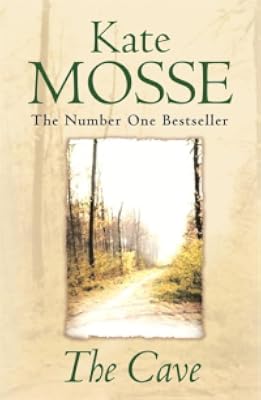
- The Cave
- Original publication date
- 2009 (UK) (UK); 2011-02-03 (USA) (USA)
- People/Characters
- Frederick Watson (Freddie); Fabrissa (Cathar girl); George Watson (fallen brother of Freddie); Madame Galy (hostess); Guillaume Breillac (local man in Nulle); Monsieur Saurat (antiquarian)
- Important places
- Tarascon-sur-Ariège, Occitania, France; Nulle, Occitania, France; Ariège, France; Pyrenees
- Important events
- World War I (1914 | 1918); Extermination of Cathars (1329)
- Epigraph
- 'Known unto God' Rudyard Kipling (epigraph carved on the tombstones raised to the memory of unknown soliders and airmen)
- First words
- He walked like a man recently returned to the world.
- Quotations
- ...for all its rituals grief is a solitary business.
”The dead leave their shadows, an echo of the space within which once they lived. They haunt us, never fading or growing older as we do. The loss we grieve is not just their futures but our own.”
“We are who we are because of those we choose to love and because of those who love us...” - Last words
- (Click to show. Warning: May contain spoilers.)The he turned and walked back up the rue des Pénitents Gris, his shadow striding before him.
- Original language
- English
- Disambiguation notice
- An earlier version of this story was published as The Cave, a novella written for the 2009 Quick Reads initiative aimed at adult emergent readers.
Includes the short story La Tombe de Pyrène.
*Some information comes from Common Knowledge in other languages. Click "Edit" for more information.
Classifications
Statistics
- Members
- 1,451
- Popularity
- 16,083
- Reviews
- 100
- Rating
- (3.28)
- Languages
- 9 — Dutch, English, French, German, Italian, Norwegian (Bokmål), Polish, Spanish, Swedish
- Media
- Paper, Audiobook, Ebook
- ISBNs
- 43
- ASINs
- 16
