Never Smile at a Monkey: And 17 Other Important Things to Remember
by Steve Jenkins
On This Page
Description
Discover how dangerous an animal can be when it feels threatened or trapped.Tags
Recommendations






Member Reviews
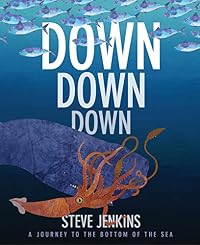
An advice manual of a different kind, this fabulous picture-book from Steve Jenkins - the author/artist behind such innovative natural history titles as Actual Size and Down, Down, Down: A Journey to the Bottom of the Sea - is both educational and informative, giving young readers a list of very important instructions. "Never pet a platypus... Never corner a cassowary... Never bother a blue-ringed octopus... (and of course!) Never smile at a monkey!
Accompanied by Jenkins' distinctive cut-paper illustrations, and followed by a three page afterword that gives more information about each of the eighteen fearsome species profiled here, Never Smile at a Monkey: And 17 Other Important Things to Remember profiles some amazing creatures, all show more deadly if approached in the wrong way (or at all - you won't catch me cozying up to any African buffalo!), and all quite fascinating, as a consequence, to young readers. This is my second Jenkins' title, and I am once again impressed with the engaging manner in which he presents his information, and the consequent excitement about the natural world his books undoubtedly encourage! I look forward to exploring more of this talented author/artist's work, and recommend this one to all young animal lovers - particularly those who enjoy a few thrills! show less
Accompanied by Jenkins' distinctive cut-paper illustrations, and followed by a three page afterword that gives more information about each of the eighteen fearsome species profiled here, Never Smile at a Monkey: And 17 Other Important Things to Remember profiles some amazing creatures, all show more deadly if approached in the wrong way (or at all - you won't catch me cozying up to any African buffalo!), and all quite fascinating, as a consequence, to young readers. This is my second Jenkins' title, and I am once again impressed with the engaging manner in which he presents his information, and the consequent excitement about the natural world his books undoubtedly encourage! I look forward to exploring more of this talented author/artist's work, and recommend this one to all young animal lovers - particularly those who enjoy a few thrills! show less
A fun informational text. Heavy with info, but presented in a fun way that will make kids laugh, while also providing them with information about different animals. Memorable.
This book is a fun mix of factual information about different animals and plays on words. The first sentence of each page creatively uses alliteration to introduce each animal. Ex: Never pet a platypus, never cuddle a cub, never jostle a jellyfish, etc. It has a lot of facts that students would find fun and intriguing. This could be a really good way to introduce a few different animals to the whole group and then students would choose an animal from there to do some sort of research project on.
This is another brilliant book by Steve Jenkins where he reveals the truth behind creatures of all sizes and their dangerous natures that you might not be prepared for. He shares facts about teeth, claws, spins and venom to name a few that could be fatal to unsuspecting observers. He informs readers of what makes these animals dangerous and what you should never do if you encounter them. This unsuspecting aspect and what you should avoid doing will appeal to students. The illustrations while they have an element of simplicity to them the pictures with their colorful and simple details will appeal to students. Some of the animals and their deadly risk may already be known to students but this will only spur their curiosity about the ones show more they don’t like the platypus, cone shell, tang fish, blue ringed octopus, and the electric caterpillar to name just a few. This book is simple in detail and facts that will appeal to your readers. show less
A visually stunning book illustrated with cut paper and torn collages. Jenkins's introductory warnings are gently alliterative: "NEVER pet a platypus"; "NEVER touch a tang."
Good for grades 1-4.
Good for grades 1-4.
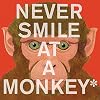
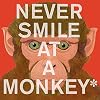
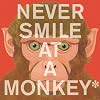
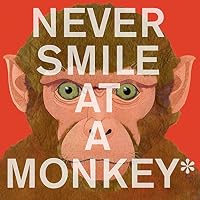
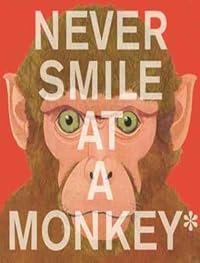
Readers are automatically drawn to the stark illustration on the book's cover and find themselves asking, "Why not?" in response to the title. You just have to open the book to find out why you should never smile at a monkey and all the other things you should not do around other wild animals. Steve Jenkins engages readers in this entertaining and informational nonfiction picture book.
This would be a good mentor text for teaching attention grabbing topic sentences!
This would be a good mentor text for teaching attention grabbing topic sentences!
This is a fascinating informational book that tells about what not to do with certain wild animals. It informs the reader about how dangerous some animals are and what they are capable of. The illustrations make the animals look serene and unassuming, which is often true in reality, but when you read the endnotes you are informed of their behavior.
Members
- Recently Added By
Author Information

75+ Works 21,314 Members
Some Editions
Awards and Honors
Awards
Distinctions
Amazon's Best Books of the Year (#82 – 2009)
Classifications
Statistics
- Members
- 488
- Popularity
- 61,756
- Reviews
- 34
- Rating
- (3.97)
- Languages
- English, Spanish
- Media
- Paper, Ebook
- ISBNs
- 11
- ASINs
- 5