On This Page
Description
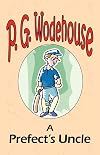
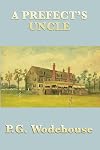
Long before British humor master P.G. Wodehouse created the popular novel series based on the much-beloved character Jeeves, he sent up his native country's private school culture in A Prefect's Uncle. When the mischievous prankster Farnie arrives on campus of tony Beckford College and his shocking true identity is revealed, much hilarity ensues..
Tags
Recommendations



















Member Reviews
As always with Wodehouse's school stories, we get a bunch of one or two-star reviews from readers who wanted Jeeves and did not find any of that here. They might as well read one of those detective novels J. K. Rowling writes under the Robert Galbraith pseudonym and complain that there are no wizards in it. It's a completely different genre, people. If you do not want a boarding school story, then you are going to be disappointed with this novel. It's not a comedy, although there are signs of the author's dry wit.
I thought it was a very solid school novel. My favorite among the Wodehouse ones I have read, along with The White Feather (I haven't read yet his most famous one, Mike). The only problem is, it has an awful lot of cricket show more matches. Lovingly described. Wodehouse clearly knows his cricket very well. I know very little about cricket, but I know enough to be able to follow the description of the matches. It's not necessary to know a lot to follow the story. You are fine if you know when the players are doing well and when they are not, which mostly can be deduced by context. By I admit that if you don't enjoy sports at all it might be a bit too much. Then again, if you don't enjoy sports at all, the this genre is probably not for you. There's usually a fair amount of sports in boarding school stories, because it's important for the boys, and doing well on the sport fields gives a boy social prestige among his peers. Also, I think the purity of these totally amateur games is enjoyable. These boys train and play their hearts out for pure love of the game and, when they are playing for the school, for honour's sake.
Anyway, the reason this is one of my favorites among Wodehouse's school stories is that you see a lot of his wit in the dialogue and the descriptions, particularly in the first half of the novel (the second is more cricket-heavy).
The story is about Gethryn and Marriott, a couple of senior boys in Leicester's House, in a school called Beckford. The previous head boy of the house has departed and now it falls to Gethryn, as new head, to shape the house up with his friend's help. The task is made difficult by presence of several troublemakers in the house. Also, both senior boys receives the news from their respective families that they are expected to look after new boys. One is the son of a friend of a friend of Marriott's aunt, and the other is Gethryn's uncle. Yes, his uncle. Apparently Gethryn's grandfather, an eccentric gentleman, had a son quite late in life.
Marriott's charge is a good sort, who quickly makes himself popular and doesn't require much looking after, but Gethryn's uncle is a rebellius and extremely cheeky kid who has already been expelled from several schools.
The story takes place during a school year. It's a slice-of-life novel, so the focus is not on a single incident. At a certain point, to get his uncle out of a serious predicament, Gethryn has to leave in the middle of an important cricket match, resulting in a defeat for the school. To protect his relative he can't explain why he left, which causes some of his peers to be angry at him, while others stick by him. There's also cheating at a poetry contest, a rebellion of the members of the house cricket team against early morning practices... show less
I thought it was a very solid school novel. My favorite among the Wodehouse ones I have read, along with The White Feather (I haven't read yet his most famous one, Mike). The only problem is, it has an awful lot of cricket show more matches. Lovingly described. Wodehouse clearly knows his cricket very well. I know very little about cricket, but I know enough to be able to follow the description of the matches. It's not necessary to know a lot to follow the story. You are fine if you know when the players are doing well and when they are not, which mostly can be deduced by context. By I admit that if you don't enjoy sports at all it might be a bit too much. Then again, if you don't enjoy sports at all, the this genre is probably not for you. There's usually a fair amount of sports in boarding school stories, because it's important for the boys, and doing well on the sport fields gives a boy social prestige among his peers. Also, I think the purity of these totally amateur games is enjoyable. These boys train and play their hearts out for pure love of the game and, when they are playing for the school, for honour's sake.
Anyway, the reason this is one of my favorites among Wodehouse's school stories is that you see a lot of his wit in the dialogue and the descriptions, particularly in the first half of the novel (the second is more cricket-heavy).
The story is about Gethryn and Marriott, a couple of senior boys in Leicester's House, in a school called Beckford. The previous head boy of the house has departed and now it falls to Gethryn, as new head, to shape the house up with his friend's help. The task is made difficult by presence of several troublemakers in the house. Also, both senior boys receives the news from their respective families that they are expected to look after new boys. One is the son of a friend of a friend of Marriott's aunt, and the other is Gethryn's uncle. Yes, his uncle. Apparently Gethryn's grandfather, an eccentric gentleman, had a son quite late in life.
Marriott's charge is a good sort, who quickly makes himself popular and doesn't require much looking after, but Gethryn's uncle is a rebellius and extremely cheeky kid who has already been expelled from several schools.
The story takes place during a school year. It's a slice-of-life novel, so the focus is not on a single incident. At a certain point, to get his uncle out of a serious predicament, Gethryn has to leave in the middle of an important cricket match, resulting in a defeat for the school. To protect his relative he can't explain why he left, which causes some of his peers to be angry at him, while others stick by him. There's also cheating at a poetry contest, a rebellion of the members of the house cricket team against early morning practices... show less
Before Jeeves and Wooster, there was the boy’s life, and the young Wodehouse explored the world of boys for boys in books such as this. The title refers to an absurdity that could have been the pretext for a Gilbert and Sullivan opera: a new boy arrives at a public school (English = private school, American). Unexpectedly, he turns out to be the uncle of one of the school’s shining lights, “Bishop” Gethryn, in his final year and a prefect (English = dorm monitor, American). The new boy’s distinction is that of having been sent down by three other schools. After this career, his arrival at Beckford gives the reader an indication of where this school might rank in the world of education. The new boy, Farnie, shows no inclination show more to mend his ways nor to show the deference that the bishop expects. Part of Farnie’s reasoning might have been that one does not defer to one’s nephew, no matter how much older or distinguished.
This soon leads to the near ruination of the bishop’s school career, forcing him to disappear during an inter-school cricket match. His school’s unexpected loss can be plausibly tied to the bishop’s disappearance. A worse form of humiliation, and the subsequent shunning he endures, can not be imagined. Not even the fate of two of his fellow pupils, caught in flagrant plagiarism, rivals it.
This book shows its author to be on his way to developing the wry humor that makes his mature (with Wodehouse, one is tempted to place that adjective in quotation marks) work so enjoyable. There are many laughs. For me, the loudest was evoked by the description of the ineffectual headmaster, whose “spirit was willing, but his will was not spirited.”
That Wodehouse had not yet fully mastered his trade is shown in his handling of characters. Another new boy, Wilson, arrives simultaneously and makes an even bigger first impression (on the eye and nose of a would-be ragger) than does Farnie, but quickly becomes tamed as the fag (English = gofer, American) of the bishop’s roommate, Marriott. Farnie, meanwhile, disappears from the book after derailing the bishop’s life. We only hear from him again at the end, when we learn that he withdraws at the end of the term. His next step on the decline of his education will be in France. It seems disjointed that the figure who serves as the title’s subject should turn out to have been no more than a plot device.
This was my first experience with an audiobook, a Librivox product that I accessed through Project Gutenberg. A worthy project, Librivox makes out-of-copyright books available in audio form. This one was created by four or five different volunteers; understandably, their skill at reading varied. Overall, this didn’t detract from my enjoyment, other than the one narrator who seems convinced that something that can’t be avoided is inexcapable.
All in all, an enjoyable way to pass a few hours of enforced immobility. show less
This soon leads to the near ruination of the bishop’s school career, forcing him to disappear during an inter-school cricket match. His school’s unexpected loss can be plausibly tied to the bishop’s disappearance. A worse form of humiliation, and the subsequent shunning he endures, can not be imagined. Not even the fate of two of his fellow pupils, caught in flagrant plagiarism, rivals it.
This book shows its author to be on his way to developing the wry humor that makes his mature (with Wodehouse, one is tempted to place that adjective in quotation marks) work so enjoyable. There are many laughs. For me, the loudest was evoked by the description of the ineffectual headmaster, whose “spirit was willing, but his will was not spirited.”
That Wodehouse had not yet fully mastered his trade is shown in his handling of characters. Another new boy, Wilson, arrives simultaneously and makes an even bigger first impression (on the eye and nose of a would-be ragger) than does Farnie, but quickly becomes tamed as the fag (English = gofer, American) of the bishop’s roommate, Marriott. Farnie, meanwhile, disappears from the book after derailing the bishop’s life. We only hear from him again at the end, when we learn that he withdraws at the end of the term. His next step on the decline of his education will be in France. It seems disjointed that the figure who serves as the title’s subject should turn out to have been no more than a plot device.
This was my first experience with an audiobook, a Librivox product that I accessed through Project Gutenberg. A worthy project, Librivox makes out-of-copyright books available in audio form. This one was created by four or five different volunteers; understandably, their skill at reading varied. Overall, this didn’t detract from my enjoyment, other than the one narrator who seems convinced that something that can’t be avoided is inexcapable.
All in all, an enjoyable way to pass a few hours of enforced immobility. show less
Wodehouse's second novel, and his first to take a decidedly comic slant. This is still a school story, with large chunks of the second half taken up by cricket games that mean very little to me, unfortunately. In the intervening year between The Pothunters and this novel, though, Wodehouse has clearly been praised for his dry turn of phrase; the tone feels more familiar, with at least some of the dry, ironic observation that peppers his later work.
The "Prefect's Uncle" of the title is the most Wodehousian invention, in the most Wodehousian plotline—so it's a shame that it basically fizzles away right at the middle of the book. He hasn't quite learned to balance the different elements of his plot, and there are still too many show more characters, but...he's getting there. show less
The "Prefect's Uncle" of the title is the most Wodehousian invention, in the most Wodehousian plotline—so it's a shame that it basically fizzles away right at the middle of the book. He hasn't quite learned to balance the different elements of his plot, and there are still too many show more characters, but...he's getting there. show less
Much of the book consists of play-by-play descriptions of cricket games. But there is an amazing prank described in Wodehouse's inimitable (if that's the word I want) style :
...On the following morning, more by design than accident, Farnie upset an inkpot. Mr Smith observed icily that unless the stain was wiped away before the beginning of afternoon school, there would be trouble. Fannie observed (to himself) that there would be trouble in any case, for he had hit upon the central idea for the most colossal 'rag' that, in his opinion, ever was. After morning school he gathered the form around him, and disclosed his idea. The floor of the form-room, he pointed out, was some dozen inches below the level of the door. Would it not be a show more pleasant and profitable notion, he asked, to flood the floor with water to the depth of those dozen inches? On the wall outside the form-room hung a row of buckets, placed there in case of fire, and the lavatory was not too far off for practical purposes. Mr Smith had bidden him to wash the floor. It was obviously his duty to do so. The form thought so too. For a solid hour, thirty weary by enthusiastic reprobates laboured without ceasing, and by the time the bell rang all was prepared. The floor was one still, silent pool. Two caps and a few notebooks floated sluggishly on the surface, relieving the picture of any tendency to monotony. The form crept silently to their places along the desks. As Mr Smith's footsteps were heard approaching, they began to beat vigorously upon the desks, with the result that Mr Smith, quickening his pace, dashed into the form-room at a hand gallop. The immediate results were absolutely satisfactory, and if matters subsequently (when Mr Smith, having changed his clothes, returned with the Headmaster) did get somewhat warm for the thirty criminals, they had the satisfying feeling that their duty had been done, and a hearty and unanimous vote of thanks was passed to Farnie. [pp. 36-37] show less
...On the following morning, more by design than accident, Farnie upset an inkpot. Mr Smith observed icily that unless the stain was wiped away before the beginning of afternoon school, there would be trouble. Fannie observed (to himself) that there would be trouble in any case, for he had hit upon the central idea for the most colossal 'rag' that, in his opinion, ever was. After morning school he gathered the form around him, and disclosed his idea. The floor of the form-room, he pointed out, was some dozen inches below the level of the door. Would it not be a show more pleasant and profitable notion, he asked, to flood the floor with water to the depth of those dozen inches? On the wall outside the form-room hung a row of buckets, placed there in case of fire, and the lavatory was not too far off for practical purposes. Mr Smith had bidden him to wash the floor. It was obviously his duty to do so. The form thought so too. For a solid hour, thirty weary by enthusiastic reprobates laboured without ceasing, and by the time the bell rang all was prepared. The floor was one still, silent pool. Two caps and a few notebooks floated sluggishly on the surface, relieving the picture of any tendency to monotony. The form crept silently to their places along the desks. As Mr Smith's footsteps were heard approaching, they began to beat vigorously upon the desks, with the result that Mr Smith, quickening his pace, dashed into the form-room at a hand gallop. The immediate results were absolutely satisfactory, and if matters subsequently (when Mr Smith, having changed his clothes, returned with the Headmaster) did get somewhat warm for the thirty criminals, they had the satisfying feeling that their duty had been done, and a hearty and unanimous vote of thanks was passed to Farnie. [pp. 36-37] show less
While I don't like Wodehouse's school stories as much as either the Jeeves or Blandings ones (too much cricket for this American), I thought this one was better than average.
Schoolboys play cricket and get into trouble. Occasionally funny, but forgettable.
The redeeming feature for me is that Wodehouse's later humour and wit are already apparent in this very early novel; usually, school and sports novels bore me stiff (I usually skip the Quidditch parts in Harry Potter), but here at least I chuckled a few times.
The redeeming feature for me is that Wodehouse's later humour and wit are already apparent in this very early novel; usually, school and sports novels bore me stiff (I usually skip the Quidditch parts in Harry Potter), but here at least I chuckled a few times.
This is one of Wodehouse's early school stories,and was written in 1903,before being republished in 2006 by Bibliobazaar.
While obviously an apprentice work,The genius of 'The Master' still shines clearly through.
The scene is Beckford College where the pupils seem to be spending most of their time playing cricket. For me a little too much in fact. As with all Wodehouse however this book has much to commend it. Not least when the main character is faced with his uncle arriving at the school, This uncle being somewhat younger than he is. This creates,as you might imagine many problems before the end of the story.
While obviously an apprentice work,The genius of 'The Master' still shines clearly through.
The scene is Beckford College where the pupils seem to be spending most of their time playing cricket. For me a little too much in fact. As with all Wodehouse however this book has much to commend it. Not least when the main character is faced with his uncle arriving at the school, This uncle being somewhat younger than he is. This creates,as you might imagine many problems before the end of the story.
Members
- Recently Added By
Lists

Books Read in 2022
5,226 works; 115 members

Children's Literature 1900 - 1950 in order
413 works; 8 members
Author Information

657+ Works 111,117 Members
P. G. Wodehouse was born in Guildford, United Kingdom on October 15, 1881. After completing school, he spent two years as a banker at the Hong Kong and Shanghai Bank in London and then took a job as a sports reporter and columnist for the Globe newspaper. His first novel, The Pothunters, was published in 1902. He wrote over 100 novels and short show more story collections during his lifetime including A Perfect Uncle, Love Among the Chickens, The Swoop, P. Smith in the City, Meet Mr. Milliner, Doctor Sally, Quick Service, The Old Reliable, Uneasy Money, A Damsel in Distress, Jill the Reckless, The Adventures of Sally, A Pelican at Blandings, The Girl in Blue, and Aunts Aren't Gentlemen. His most famous characters, Bertie Wooster and his manservant, Jeeves, appeared in books such as Much Obliged, Jeeves. He also wrote lyrics for musical comedies and worked as screenwriter in Hollywood in the 1930s. In 1939, he bought a villa in Le Touquet on the coast of France. He remained there when World War II started in 1939. The following year, the Germans appropriated the villa, confiscated property, and arrested him. He was detained in various German camps for almost one year before being released in 1941. He went to Berlin and spoke of his experience in five radio talks to be broadcast to America and England. The talks themselves were completely innocuous, but he was charged with treason in England. He was cleared, but settled permanently in the United States. He became a citizen in 1955. He was made a Knight Commander of the Order of the British Empire in 1975. He died from a heart attack after a long illness on February 14, 1975 at the age of 93. (Bowker Author Biography) show less
Some Editions
Series

Belongs to Publisher Series
Work Relationships
Is contained in
Common Knowledge
- Canonical title
- A Prefect's Uncle
- Original title
- A Prefect's Uncle
- Original publication date
- 1903
- People/Characters
- Gethryn aka Bishop; Pringle; Reginald Farnie
- Important places
- Beckford College
- Dedication
- To W. Townend
- First words
- Marriot walked into the senior day-room,and finding no one there,hurled his portmanteau down on the table with a bang.
- Quotations
- Most people, on finding themselves in a strange and empty room, are seized with a desire to explore the same, and observe from internal evidence what manner of man is the owner. Nowhere does character come out so clearly as i... (show all)n the decoration of one's private den. Many a man, at present respected by his associates, would stand forth unmasked at his true worth, could the world but look into his room. For there they would see that he was so lost to every sense of shame as to cover his books with brown paper, or deck his walls with oleographs presented with the Christmas numbers, both of which habits argue a frame of mind fit for murderers, stratagems, and spoils. Let no such man be trusted.
He had been engaged in cleaning up the House against the conclusion of the summer holidays, of which this was the last evening, by the simple process of transferring all dust, dirt, and other foreign substances from the floor... (show all) to his own person.
Skinner's reply was to sit down heavily on the floor, and give him to understand that the fight was over, and that for the next day or two his face would be closed for alterations and repairs.
About two hours afterwards Gethryn discovered a suitable retort, but, coming to the conclusion that better late than never does not apply to repartees, refrained from speaking it.
His spirit was willing, but his will was not spirited. - Last words
- (Click to show. Warning: May contain spoilers.)Reece said it distinctly reminded him of a thing which had happened to a friend of a chap his brother had known at Sandhurst.
Classifications
- Genres
- Fiction and Literature, General Fiction
- DDC/MDS
- 823.912 — Literature & rhetoric English & Old English literatures English fiction 1900- 1901-1999 1901-1945
- LCC
- PZ7 .W817 .P — Language and Literature Fiction and juvenile belles lettres Fiction and juvenile belles lettres Juvenile belles lettres
- BISAC
Statistics
- Members
- 258
- Popularity
- 126,194
- Reviews
- 15
- Rating
- (3.32)
- Languages
- English, Swedish
- Media
- Paper, Ebook
- ISBNs
- 50
- ASINs
- 11