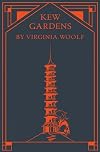
Kew Gardens [short story]
by Virginia Woolf
On This Page
Description
From the oval-shaped flower-bed there rose perhaps a hundred stalks spreading into heart-shaped or tongue-shaped leaves half way up and unfurling at the tip red or blue or yellow petals marked with spots of colour raised upon the surface; and from the red, blue or yellow gloom of the throat emerged a straight bar, rough with gold dust and slightly clubbed at the end. The petals were voluminous enough to be stirred by the summer breeze, and when they moved, the red, blue and yellow lights show more passed one over the other, staining an inch of the brown earth beneath with a spot of the most intricate colour. show lessTags
Recommendations


















Member Reviews
I've never been to Kew Gardens, although I would put it on a bucket list if I had a bucket list.
The last half hour, though, I feel as if I've been, on a hot, strolling afternoon in 1919 when women were carrying parasols and men had their umbrellas. It was during the interwar period when life must have seemed like it was returning to normal and the Kew was a fine place to be, to wander, to get lost in thought, to remember love and kisses, perhaps to think tenderly of ghosts, and the harmlessness of madness. Yes, the War was happily over. No one knew that another was coming, one that would change every life henceforth.
That future, though, was not for the white and blue butterflies, nor for a determined snail. These creatures shared that show more 1919 hot afternoon, their small bodies also reflecting the same red and blue and green flashes from the oval flower bed touched by a breeze. And would have their standard limited number of afternoons remaining.
Woolf was also there, in that afternoon, more intently than anyone would have guessed if they had noticed her as she strolled by, a tall, slender solitary figure with blue and black hematite eyes. show less
The last half hour, though, I feel as if I've been, on a hot, strolling afternoon in 1919 when women were carrying parasols and men had their umbrellas. It was during the interwar period when life must have seemed like it was returning to normal and the Kew was a fine place to be, to wander, to get lost in thought, to remember love and kisses, perhaps to think tenderly of ghosts, and the harmlessness of madness. Yes, the War was happily over. No one knew that another was coming, one that would change every life henceforth.
That future, though, was not for the white and blue butterflies, nor for a determined snail. These creatures shared that show more 1919 hot afternoon, their small bodies also reflecting the same red and blue and green flashes from the oval flower bed touched by a breeze. And would have their standard limited number of afternoons remaining.
Woolf was also there, in that afternoon, more intently than anyone would have guessed if they had noticed her as she strolled by, a tall, slender solitary figure with blue and black hematite eyes. show less
There are many characters that pass through a spot in Kew Gardens. Virginia Woolf’s brings the florals that surround them with colour and shapes. We go back and forth between people who pass-by with their dreams, and hopes and memories, and the florals they look at, where it begins and ends with the rich colours of the flowers. Their descriptions read like prose poetry that made me feel I was in that garden looking at the flowers and inhaling the gorgeous colours where everything felt alive. The story has no ending, just like there is no beginning, instead it’s a continuum, the people come and go, people live, experience life, and age, but the one thing that doesn’t change are the flowers.
This is a beautifully published edition of Virginia Woolf's 1919 short story that takes us through an afternoon in Kew Gardens with passing people, shifting light, and the deliberate and engaging progress of a snail. Woolf excels at her descriptions of nature and her critical eye on humans, and those strengths both shine here. The book itself (published by the Kew Gardens) is lovely, with strong line illustrations, thick paper, and perfect proportions. This story is in the public domain so you can (and should!) read it anywhere, but if you like a nice physical book, this is worth picking up.
Tres piezas muy cortas que más que cuentos son ensayos donde V. Woolf desarrolla brevemente algunas de sus obsesiones: lo efímero de la vida, qué es real y qué no, la importancia de lo que los demás piensan de cada uno, la utilidad de las normas y convenciones sociales... Todo rodeado de naturaleza en estado puro y con un toque "fantasmal" en el segundo cuento. Un gusto leer cualquier cosa de esta mujer, y al ser tan corto te quedas con ganas de más.
Kew Gardens was originally published with illustrations by Vanessa Bell, Virginia Woolf's sister. I'd love to read that edition (or a reproduction, something that doesn't cost a hundred dollars). I imagine it would add another layer to this interesting slice-of-life story. Kew Gardens is very fluid, but I suppose that is just part of the Stream of Consciousness style. I think you have to be in the mood to read Stream of Consciousness/Virginia Woolf. She is not a writer you can casually pick up, I think. Her work requires a certain amount of focus.
Kew Gardens feels like an escape from the city. Four different sets of people move in and out of the narration as they pass an oval flower bed in Kew Gardens. It's an observational story. The show more reader gets to watch these people (and the snail) and hear little snippets of their conversations. I enjoyed it and it's left me wanting to read more Woolf. Maybe next week I'll take on Solid Objects. If you want to sample Woolf, get a taste of her style, Kew Gardens is a great place to start. It's a wonderful and very short story. However, if you can't handle the style of Kew Gardens, I'd steer clear of To The Lighthouse and Mrs. Dalloway. For me, Kew Gardens was a reminder of how much I enjoy Woolf. show less
Kew Gardens feels like an escape from the city. Four different sets of people move in and out of the narration as they pass an oval flower bed in Kew Gardens. It's an observational story. The show more reader gets to watch these people (and the snail) and hear little snippets of their conversations. I enjoyed it and it's left me wanting to read more Woolf. Maybe next week I'll take on Solid Objects. If you want to sample Woolf, get a taste of her style, Kew Gardens is a great place to start. It's a wonderful and very short story. However, if you can't handle the style of Kew Gardens, I'd steer clear of To The Lighthouse and Mrs. Dalloway. For me, Kew Gardens was a reminder of how much I enjoy Woolf. show less
Interesting play with scale and interspecies' perspectives, I love the way the language blends at the end.
This is a short story that reads like an impressionistic painting in words. Just beautiful!
Members
- Recently Added By
Author Information

649+ Works 118,987 Members
Virginia Woolf was born in London, England on January 25, 1882. She was the daughter of the prominent literary critic Leslie Stephen. Her early education was obtained at home through her parents and governesses. After death of her father in 1904, her family moved to Bloomsbury, where they formed the nucleus of the Bloomsbury Group, a circle of show more philosophers, writers, and artists. During her lifetime, she wrote both fiction and non-fiction works. Her novels included Jacob's Room, Mrs. Dalloway, To the Lighthouse, Orlando, and Between the Acts. Her non-fiction books included The Common Reader, A Room of One's Own, Three Guineas, The Captain's Death Bed and Other Essays, and The Death of the Moth and Other Essays. Having had periods of depression throughout her life and fearing a final mental breakdown from which she might not recover, Woolf drowned herself on March 28, 1941 at the age of 59. Her husband published part of her farewell letter to deny that she had taken her life because she could not face the terrible times of war. (Bowker Author Biography) show less
Some Editions
Work Relationships
Is contained in
Has as a student's study guide
Common Knowledge
- Canonical title
- Kew Gardens [short story]
- Original title
- Kew Gardens
- Original publication date
- 1919 (privately); 1921 (in book form) (privately | in book form)
- People/Characters
- Simon; Eleanor; Caroline; Hubert; William; Trissie
- Important places
- Kew Gardens, Richmond, London, England, UK; London, England, UK; England, UK
- First words
- From the oval-shaped flower-bed there rose perhaps a hundred stalks spreading into heart-shaped or tongue-shaped leaves half way up and unfurling at the tip red or blue or yellow petals marked with spots of colour raised upon... (show all) the surface; and from the red, blue or yellow gloom of the throat emerged a straight bar, rough with gold dust and slightly clubbed at the end.
Classifications
Statistics
- Members
- 136
- Popularity
- 239,882
- Reviews
- 13
- Rating
- (3.75)
- Languages
- 5 — English, German, Portuguese, Spanish, Swedish
- Media
- Paper, Audiobook, Ebook
- ISBNs
- 22
- ASINs
- 4