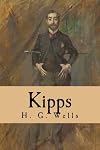
Kipps
by H. G. Wells
On This Page
Description
Fans of Dickens' Great Expectations will love H. G. Wells' classic novel Kipps. This tale follows the life and rapid social ascension of a humble orphan and textile worker who discovers he is actually the heir to great wealth. Will Kipps be able to survive and thrive in the unfamiliar milieu of the ultra-affluent?.
Tags
Recommendations

























Member Reviews
https://nwhyte.livejournal.com/3781272.html
I wasn't really satisfied. Arthur Kipps, the protagonist, comes from a humble background, gets a girl, unexpectedly becomes rich, gets a different girl, decides he can't take being middle class, goes back to the first girl, loses his money, gets it back again and ends up happy having found his place. Wells is trying to write about the evils of class distinction and inequality, but comes across as rather patronising of poor Kipps. I think it would have been interesting to speculate a bit about the absence of his father and early death of his mother made it difficult for Kipps to make relationships work; and a bit more editorial comment on the ritual humiliation meted out by the middle classes on show more a parvenu would have been welcome. (Having said that, I found Helen, the dumped girlfriend, rather sympathetic even though she is one of the main agents of this process.) So in the end I felt that the book rather pulled its punches. show less
I wasn't really satisfied. Arthur Kipps, the protagonist, comes from a humble background, gets a girl, unexpectedly becomes rich, gets a different girl, decides he can't take being middle class, goes back to the first girl, loses his money, gets it back again and ends up happy having found his place. Wells is trying to write about the evils of class distinction and inequality, but comes across as rather patronising of poor Kipps. I think it would have been interesting to speculate a bit about the absence of his father and early death of his mother made it difficult for Kipps to make relationships work; and a bit more editorial comment on the ritual humiliation meted out by the middle classes on show more a parvenu would have been welcome. (Having said that, I found Helen, the dumped girlfriend, rather sympathetic even though she is one of the main agents of this process.) So in the end I felt that the book rather pulled its punches. show less
Hilarious 'rags to riches' comedy (literally, as the hero starts his career as a lowly apprentice in a drapers') with some excellent set pieces (the hotel scene is lovely, very funny but with a shade of pathos to it) and detailed observations (the shop, and the different residences of the characters). Another comic highlight is drunken playwright Chitterlow, a delightful farce writer with ambitions to outshine Ibsen by incorporating comic mishaps with insects into psychological dramas. I would love to see "The Pestered Butterfly"!
Lately, I've been on an H.G. Wells binge. It happened more or less by chance. I picked up Mr. Britling Sees It Through on a whim, and discovered that Wells was an author capable of more than science fiction. That novel was a moving exploration of the emotional growth of a complacent man of means (a British country squire) coming to grips with the tragic waste of life brought about by World War I. That read lead me to Tono-Bungay, The Croquet-Player, a couple of biographies of Wells, and Kipps (the subject of this review).
Wells is a complex study. He was brilliant, blunt, brave, prophetic, and prejudicial. His life story is one of rags to riches. He struggled with early poverty and tubercular ill health until his popular tales like The show more Time Machine catapulted him to fame and wealth. He never forgave the class system which almost squelched his fortunes at the start. He flirted for a time with the Fabian Socialist movement but found it too timorous. He feuded with its leader, Bernard Shaw, and often made enemies unnecessarily with his demanding viewpoints. His amorous forays outside the boundaries of marriage scandalized many of his potential readers. His publishers, MacMillan and Co., refused some of his works because he wrote too autobiograpically of free love. As he became more polemic with age, his Darwinian bias led him to make unfortunate comments about Jews, Catholics, and non-white races. He died, after eighty decades, seeing some of his darkest visions of humanity confirmed when Hiroshima was bombed.
Like Wells, Kipps is a young man who gains sudden wealth. Kipps, an illegitimate child, suddenly inherits a fortune from his true grandfather and is delivered from a career of drudgery as a draper's apprentice. He attracts a coterie of bourgeois friends, and a fiancee, who seek to "help" him "ascend" above his former social class - and help themselves financially in the process. The effort to transcend his roots makes Kipps uncomfortable, conflicted, and eventually miserable. He abandons them all for the love of a childhood sweetheart, and friends of his own class.
Wells executes the story skillfully, almost as well as Dickens might have, with a paced narrative and close attention to dialogue. Kipps' chagrin as he struggles with mysterious new customs and snobberies are more painful, however, than comic. Wells himself once ran away from his own apprenticeship to a draper. It's hard not to read into Kipps, the origin of Wells own lifelong grudges against middle class morality and obedience to custom. The time is perhaps ripe for a re-evaluation, or at the least, a remembrance of Wells. Our age seems to be reliving the turbulence of Wells' day, if not the reemergence of an economic class system. Social Darwinism persists as a troublesome and treacherous force. We might do well to re-examine Wells insights and errors as he struggled with the unfairness of a system that seemed to have fate, if not science, on its side. show less
Wells is a complex study. He was brilliant, blunt, brave, prophetic, and prejudicial. His life story is one of rags to riches. He struggled with early poverty and tubercular ill health until his popular tales like The show more Time Machine catapulted him to fame and wealth. He never forgave the class system which almost squelched his fortunes at the start. He flirted for a time with the Fabian Socialist movement but found it too timorous. He feuded with its leader, Bernard Shaw, and often made enemies unnecessarily with his demanding viewpoints. His amorous forays outside the boundaries of marriage scandalized many of his potential readers. His publishers, MacMillan and Co., refused some of his works because he wrote too autobiograpically of free love. As he became more polemic with age, his Darwinian bias led him to make unfortunate comments about Jews, Catholics, and non-white races. He died, after eighty decades, seeing some of his darkest visions of humanity confirmed when Hiroshima was bombed.
Like Wells, Kipps is a young man who gains sudden wealth. Kipps, an illegitimate child, suddenly inherits a fortune from his true grandfather and is delivered from a career of drudgery as a draper's apprentice. He attracts a coterie of bourgeois friends, and a fiancee, who seek to "help" him "ascend" above his former social class - and help themselves financially in the process. The effort to transcend his roots makes Kipps uncomfortable, conflicted, and eventually miserable. He abandons them all for the love of a childhood sweetheart, and friends of his own class.
Wells executes the story skillfully, almost as well as Dickens might have, with a paced narrative and close attention to dialogue. Kipps' chagrin as he struggles with mysterious new customs and snobberies are more painful, however, than comic. Wells himself once ran away from his own apprenticeship to a draper. It's hard not to read into Kipps, the origin of Wells own lifelong grudges against middle class morality and obedience to custom. The time is perhaps ripe for a re-evaluation, or at the least, a remembrance of Wells. Our age seems to be reliving the turbulence of Wells' day, if not the reemergence of an economic class system. Social Darwinism persists as a troublesome and treacherous force. We might do well to re-examine Wells insights and errors as he struggled with the unfairness of a system that seemed to have fate, if not science, on its side. show less
The story of Artie Kipps; a simple soul whose attempted climb up society's rigid ladder is mocked unmercifully by Wells in one of his most popular novels. Kipps a lowly drapers assistant surprisingly inherits a tidy sum of money, which would be enough for him to live like a gentleman, he is taken in hand by those who wish to see him prosper and his befuddled attempts to live up to his means provide some laughs as well as some satire of Britain's class ridden society circa 1905.
Unusually for H G Wells he spent a long time over this novel, it was over seven years in the writing and he and his publishers thought he was on to a winner and so it proved. It is a novel with a popular rags to riches story with a rich vein of comedy and such a show more likeable hero that many readers will want him to succeed despite laughing at him rather than with him. This was a re-read for me and this time round I could see the cracks in the novels structure, especially as the humour seems rather too gentle and Well's 'social issues' make the book a little disjointed. In the 21st century the set piece comedy situations appear a little quaint, it is though we are looking at an old British black and white film seen so many times on a Sunday afternoon, that it takes on the appearance of an old friend. It has lost it's bite.
The best thing about the novel is Artie Kipps himself. This is a sustained piece of characterisation by Wells that doesn't let up throughout. Kipp's story is told in linear fashion, he features on every page, there is no mystery or suspense, even when the reader might wonder what is going to happen next with Kipps enjoying his new found wealth; Wells interjects to tell us that "One cannot hide any longer that all this fine progress of Kipps is doomed to end in collapse" (as if we could not see this coming.) Wells subtitled his novel the story of a simple soul and this is indeed what Kipps is. He knows his place as an honest drapers assistant and hardly looks beyond it. He is not particularly intelligent, has no great insight into the human condition and he knows his place. People like him for no other reason than he is a genuine sort and when he comes into his money, people are prepared to guide him because "he confided, he submitted,....... he had the realist, the most seductively flattering undertone of awe and reverence". Kipps is not blessed with any insight into other characters, he realises there are bounders and cheats around but he would never be able to spot them for himself. (although as readers we can see them). Wells uses plenty of dialogue and much of this comes from Kipps, but it is entirely in keeping with his character, short sentences spoken in working class language with appropriate spelling to boot. Kipps remains Kipps throughout, this is no bildungsroman and towards the end of the novel he reflects on his life in typical fashion:
"I don't recollect.......No........ Life's jolly rum; that's one thing any'ow. And I suppose I'm a rum sort of feller. I get excited sometimes, and then I don't seem to care what I do. That's about what it was reely.............
There are some other fine characterisations; Henry Chitterlow (Chit'low) an actor and would be playwright who runs into Kipps on his bike; Masterman the socialist agitator who Kipps thinks is so clever, but of course he doesn't hold with all this socialism and Kipps' fiancé (Helen) who aspires to climb the social ladder. The town of Folkstone as it was in 1905 comes alive as does the seafront along Romney Marsh and there is an excellent description of the newly built Crystal Palace. Wells cannot help tub thumping with his socialism and Masterman gets a speech in which he puts the world to rights and while Wells does not overdo the social commentary, in this case he does in part three of the novel, spend a little too much time telling us about the state of house building in England at the time and this produces a bit of an in balance in the flow of the story.
Towards the end of the novel Wells interjects for the readers benefit, increasingly, and it feels like he wants to change the tenor of what has gone before; perhaps he has made Kipps too likeable, the satire too gentle. it is though he realises he might not have got the balance quite right he addresses the reader directly:
What is the good of keeping up the idyllic sham and pretending that ill-educated and misdirected people 'get along very well' and that all this is harmlessly funny and nothing more? You think I am going to write fat, silly, grinning novels about half-educated, undertrained people and keep it up all the time, that the whole thing is nothing but funny.........
Perhaps then Kipps is not the vitriolic satire on the class system that Wells wanted to write and he settled for a more gentle comedy that would not upset the majority of his readers. He did make people laugh whether he still does will depend on how far the reader can place himself in England at the turn of the century. Wells himself started his working life in "a crib" in a large drapers emporium, and he draws on his experiences to make Kipps' early career all too believable. He describes what is now a different world with an authenticity that is compelling. This is not my favourite novel by H G, but one can't help liking it. I rate it at 3.5 stars. show less
Unusually for H G Wells he spent a long time over this novel, it was over seven years in the writing and he and his publishers thought he was on to a winner and so it proved. It is a novel with a popular rags to riches story with a rich vein of comedy and such a show more likeable hero that many readers will want him to succeed despite laughing at him rather than with him. This was a re-read for me and this time round I could see the cracks in the novels structure, especially as the humour seems rather too gentle and Well's 'social issues' make the book a little disjointed. In the 21st century the set piece comedy situations appear a little quaint, it is though we are looking at an old British black and white film seen so many times on a Sunday afternoon, that it takes on the appearance of an old friend. It has lost it's bite.
The best thing about the novel is Artie Kipps himself. This is a sustained piece of characterisation by Wells that doesn't let up throughout. Kipp's story is told in linear fashion, he features on every page, there is no mystery or suspense, even when the reader might wonder what is going to happen next with Kipps enjoying his new found wealth; Wells interjects to tell us that "One cannot hide any longer that all this fine progress of Kipps is doomed to end in collapse" (as if we could not see this coming.) Wells subtitled his novel the story of a simple soul and this is indeed what Kipps is. He knows his place as an honest drapers assistant and hardly looks beyond it. He is not particularly intelligent, has no great insight into the human condition and he knows his place. People like him for no other reason than he is a genuine sort and when he comes into his money, people are prepared to guide him because "he confided, he submitted,....... he had the realist, the most seductively flattering undertone of awe and reverence". Kipps is not blessed with any insight into other characters, he realises there are bounders and cheats around but he would never be able to spot them for himself. (although as readers we can see them). Wells uses plenty of dialogue and much of this comes from Kipps, but it is entirely in keeping with his character, short sentences spoken in working class language with appropriate spelling to boot. Kipps remains Kipps throughout, this is no bildungsroman and towards the end of the novel he reflects on his life in typical fashion:
"I don't recollect.......No........ Life's jolly rum; that's one thing any'ow. And I suppose I'm a rum sort of feller. I get excited sometimes, and then I don't seem to care what I do. That's about what it was reely.............
There are some other fine characterisations; Henry Chitterlow (Chit'low) an actor and would be playwright who runs into Kipps on his bike; Masterman the socialist agitator who Kipps thinks is so clever, but of course he doesn't hold with all this socialism and Kipps' fiancé (Helen) who aspires to climb the social ladder. The town of Folkstone as it was in 1905 comes alive as does the seafront along Romney Marsh and there is an excellent description of the newly built Crystal Palace. Wells cannot help tub thumping with his socialism and Masterman gets a speech in which he puts the world to rights and while Wells does not overdo the social commentary, in this case he does in part three of the novel, spend a little too much time telling us about the state of house building in England at the time and this produces a bit of an in balance in the flow of the story.
Towards the end of the novel Wells interjects for the readers benefit, increasingly, and it feels like he wants to change the tenor of what has gone before; perhaps he has made Kipps too likeable, the satire too gentle. it is though he realises he might not have got the balance quite right he addresses the reader directly:
What is the good of keeping up the idyllic sham and pretending that ill-educated and misdirected people 'get along very well' and that all this is harmlessly funny and nothing more? You think I am going to write fat, silly, grinning novels about half-educated, undertrained people and keep it up all the time, that the whole thing is nothing but funny.........
Perhaps then Kipps is not the vitriolic satire on the class system that Wells wanted to write and he settled for a more gentle comedy that would not upset the majority of his readers. He did make people laugh whether he still does will depend on how far the reader can place himself in England at the turn of the century. Wells himself started his working life in "a crib" in a large drapers emporium, and he draws on his experiences to make Kipps' early career all too believable. He describes what is now a different world with an authenticity that is compelling. This is not my favourite novel by H G, but one can't help liking it. I rate it at 3.5 stars. show less
If you're looking for another War of the Worlds or New Machiavelli you may not enjoy this as much, but if you read past the chirpy narrative (and heavily accented dialogue) you'll find Wells's wit as sharp and acerbic as usual. His prose is enjoyable and not overblown; by keeping the narrator apart from the characters Kipps is more sympathetic than he might have been otherwise - he's charmingly inoffensive, but he's better filtered through Wells's more knowledgable narrator. This is not a typical fish out of water story, avoiding the cringe-inducing moments such usually produce, but is a very enjoyable rags-to-riches tale. I thoroughly recommend it.
www.solelyfictional.org
www.solelyfictional.org
Not as good as his later The History of Mr. Polly (with which it shares several themes), but although the author sometimes seems uncertain whether his anti-hero behaves the way he does because of natural predisposition or simply out of callowness, he's a character I could certainly relate to.
This social novel started out well enough, but soon began to drag and fall by the wayside. The premise was intriguing, and there seemed to be a good set-up, but then the novel did not deliver what was expected and seemed to haphazardly lead in all different directions. For these reasons, I do not recommend it.
2.5 stars.
2.5 stars.
Members
- Recently Added By
Lists

Literature About Social Class
134 works; 19 members

Best Workplace Fiction
47 works; 18 members

stories at work
43 works; 7 members

Trinity College Booklist (1951): Class Ten, English Literature
358 works; 5 members

Canon de la narrativa universal del s. XX (cicutadry)
499 works; 3 members
Author Information

1,553+ Works 108,995 Members
H. G. Wells was born in Bromley, England on September 21, 1866. After a limited education, he was apprenticed to a draper, but soon found he wanted something more out of life. He read widely and got a position as a student assistant in a secondary school, eventually winning a scholarship to the Royal College of Science in South Kensington, where show more he studied biology. He graduated from London University in 1888 and became a science teacher. He also wrote for magazines. When his stories began to sell, he left teaching to write full time. He became an author best known for science fiction novels and comic novels. His science fiction novels include The Time Machine, The War of the Worlds, The Wonderful Visit, The Island of Doctor Moreau, The Invisible Man, The First Men in the Moon, and The Food of the Gods. His comic novels include Love and Mr. Lewisham, Kipps: The Story of a Simple Soul, The History of Mr. Polly, and Tono-Bungay. He also wrote several short story collections including The Stolen Bacillus, The Plattner Story, and Tales of Space and Time. He died on August 13, 1946 at the age of 79. (Bowker Author Biography) show less
All Editions
Some Editions
Awards and Honors
Series
Belongs to Publisher Series
Work Relationships
Common Knowledge
- Canonical title
- Kipps
- Original title
- Kipps
- Original publication date
- 1905
- Related movies
- Kipps (1921 | IMDb); Kipps (1941 | IMDb); Kipps (1960 | IMDb); Half a Sixpence (1967 | IMDb)
- Blurbers
- James, Henry
- Original language*
- Inglés
*Some information comes from Common Knowledge in other languages. Click "Edit" for more information.
Classifications
Statistics
- Members
- 586
- Popularity
- 50,186
- Reviews
- 14
- Rating
- (3.44)
- Languages
- 10 — English, Finnish, French, German, Hungarian, Italian, Portuguese, Spanish, Swedish, Turkish
- Media
- Paper, Audiobook, Ebook
- ISBNs
- 76
- ASINs
- 44