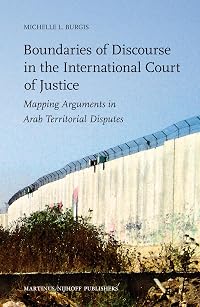
Boundaries of Discourse in the International Court of Justice
by by Michelle L. Burgis
On This Page
Description
How can Third World experiences of colonialism and statehood be expressed within the confines of the International Court of Justice? How has the discourse of international law developed to reflect postcolonial realities of ́universal ́ statehood? In a close and critical reading of four territorial disputes spanning the Arab World, Burgis explores the extent to which international law can be used to speak for and speak to non-European experiences of authority over territory. The book draws show more on recent, critical international legal scholarship to question the ability of contemporary, international adjudication to address Third World grievances from the past. A comparative analysis of the cases suggests that international law remains a discourse only capable of capturing a limited range of non-European experiences during and after colonialism. show lessTags
Members
- Recently Added By
Author Information
1 Work 4 Members
Classifications
Statistics
- Members
- 3
- Popularity
- 3,970,830
- Languages
- English
- Media
- Paper, Ebook
- ISBNs
- 2